On Oct. 6, Western Illinois University's Multicultural Center hosted a discussion of “Latine Homelessness in Illinois: Structural Drivers of Inequality,” a May 2026 report drafted by the Institute for Research on Race and Public Policy (IRRPP) at the University of Illinois Chicago. The report was ordered by the Illinois Office to Prevent and End Homelessness, and its purpose was to research socioeconomic and structural factors leading to homelessness amongst Latine Illinoisans.
Speakers at the Wednesday event included Iván Arenas, a contributing author of the report and associate director at the IRRPP, and Julia Albarracin, a professor in the WIU political science department and CEO of the nonprofit Western Illinois Dreamers.
The event also included as its guest of honor René Sanchez Martinez, a local Hispanic man recently evicted from his home who personally experienced many of the problems outlined by the report.
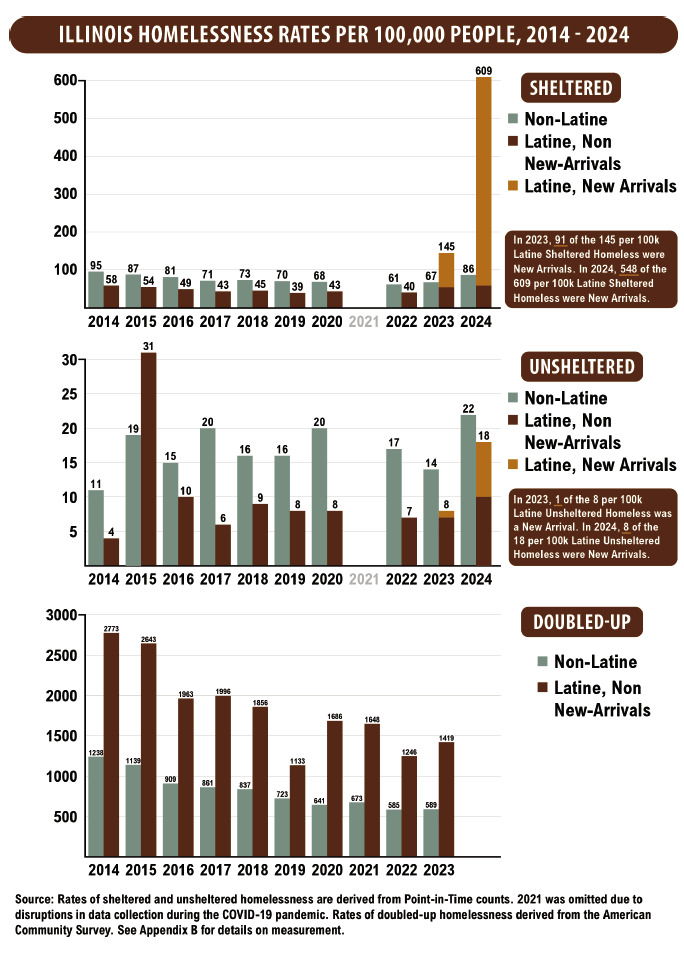
Arenas introduced three types of homelessness discussed in the report: sheltered homelessness, unsheltered homelessness, and doubled-up homelessness. The sheltered homeless are “an individual or family living in a supervised public or private shelter designated to provide temporary living arrangements.” The unsheltered homeless are “an individual or family living in a public or private place not designed for . . . regular sleeping accommodations for human beings, such as a car, abandoned building, [or] park.” Finally, the doubled-up homeless are “an individual or family experiencing housing instability who is not formally sharing in household costs . . . while residing with a relative or a non-relative who is not a partner and typically on a temporary basis.” Doubled- up homeless people are sometimes referred to as “the hidden homeless,” or more idiomatically, as “couch surfing.”
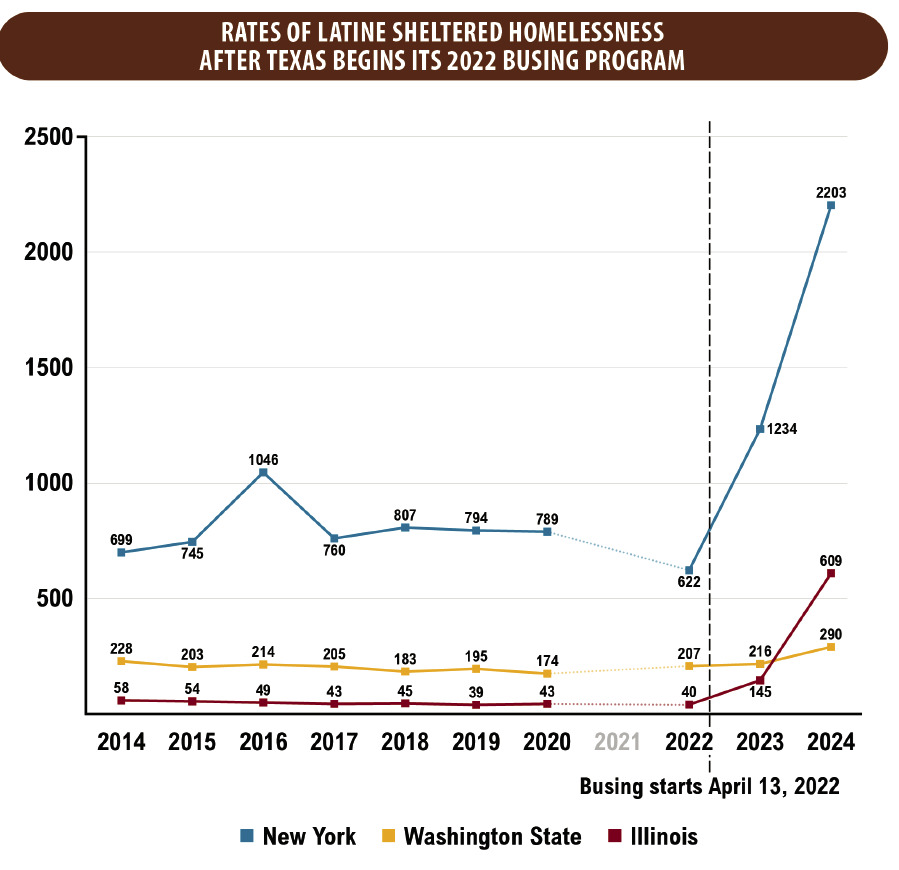
Arenas revealed that prior to 2022, Latine sheltered and unsheltered homelessness in Illinois were considerably lower than non-Latine homelessness. Despite disproportionate exposure to risk factors like poverty, limited access to affordable housing, employment discrimination, and other structural barriers . . . Latine residents had historically exhibited lower rates of homelessness than we might expect.” Instead of sheltered or unsheltered homelessness, Latine Illinoisans are more than twice as likely as non-Latine residents to live “doubled-up.” Arenas commented that rather than turning to shelters or to live in the streets, Latine residents experiencing housing insecurity often rely on family, friends, or others in their networks for temporary or emergency housing.” However, the years following 2022 saw a more than tenfold increase of the number of Latine individuals living in Illinois shelters.
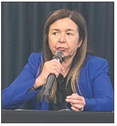
Julia Albarracin
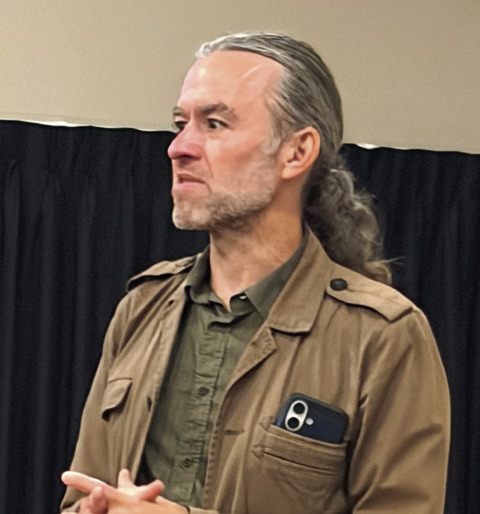
Iván Arenas
This explosion in the data was primarily due to two factors: first, a surge of illegal migration across the southern border during the Biden administration which saw an average of about two million people per year crossing the border. Second, the launch of “Operation Lone Star” by Texas state authorities, which began a policy of busing migrants to sanctuary cities across the union. According to the report, Texas has thus far bused more than 100,000 migrants into major U.S. cities, including 37,000 sent to Chicago.
“All the migrants bused to Chicago greatly affected the numbers of Latine homelessness in the state, which we are going to see reflected in the data,” Arenas commented. He also called Operation Lone Star “the most visible example of what it means to reduce immigrant lives to political tools.”
Arenas emphasized the socioeconomic risk factors that push people into homelessness. Most pronounced amongst these are economic factors such as rent burden, lack of liquid assets, strain of accumulated debt, and stagnant wages. Contrary to the popular perception of homeless people being out of work, the United States Interagency Council on Homelessness reports that between 40% - 60% of homeless people have a job.
Housing remains unattainable for them, however, because wages have not kept up with rising rents. The National Low Income Housing Coalition calculated in 2025 that a minimum wage worker in Illinois making $15 / hour would need to work 69 hours a week to afford a modest 1-bedroom rental home at Fair Market Rent.
While these risk factors affect the entire population, racial minorities tend to see the worst of it. Despite having the highest overall level of participation in the labor force, Latine people disproportionately end up in jobs that are low-paying, part-time, or temporary with little to no healthcare or retirement benefits.
Latine people are often chased into these poor jobs because of limited English proficiency or because they lack documentation to apply for better positions. The study found that for every percentage point increase of Latine workers employed part-time rather than fulltime, rates of doubled up homelessness increased by 2.3 percent. In Illinois, about a quarter of Latine workers are employed part-time.
Likewise, Arenas noted that even when Latine people are able to find housing, they are often forced to settle for bad apartments with negligent landlords.
Sometimes the only affordable units will be located in bad neighborhoods and lack basic amenities like heating in the winter or a working stove. Landlords have also been documented leveraging immigration status against tenants and threatening to call immigration enforcement in response to requests for repairs or when asked to return a security deposit.
“There’s a part to play for all state and local agencies as well as each of us in our own neighborhoods to better support Latine residents and other vulnerable communities,” Arenas concluded.
“I think that that awareness of how housing insecurity and homelessness are caused by structural drivers rather than by personal failings and putting that awareness into practice will go a long way towards helping . . .
Latine Illinoisans and others not just to survive, but to thrive.”
Martinez spoke through a translator for the event.
Martinez was recently evicted from his home, and he was able to confirm how much in the report matched his own personal experience. He worked construction on a casino up until 2024, at which point the job ended and he was only able to find part-time work at a local restaurant.
The pay from this job was not enough for him to support his wife and four children, and eventually the police evicted the family from their home (they were later provided shelter by Julia Albarracin and the Western Illinois Dreamers).
Martinez commented that the biggest issue he had was the difficulty finding good work. He echoed findings of the report about the trouble navigating the language barrier as a Spanish speaker and providing proper documentation.
Finally, Albarracin herself commented on how issues mentioned in the report seem to be especially pronounced in western Illinois. She cited a general lack of homeless shelters throughout rural Illinois, with some counties lacking facilities altogether.
She noted that other times when a county does have a shelter, it will have a policy of reporting new check-ins to local police, which can scare away Latine individuals afraid of having their immigration status questioned. She also cited a problem with something she called “false affordable housing,” i.e., housing where the rent seems affordable at first glance but contains tons of hidden costs in the utility bills. Finally she commented that in McDonough County many rentals are not up to code, and she has suggested to Mayor Inman a new system for doing rental inspections.
Bound copies of “Latine Homelessness in Illinois: Structural Drivers of Inequality” were given out at the event, and a free PDF copy is available online at: tinyurl.com/UIReport LatineHomelessness. Each section begins with a testimonial and photograph of a Latine individual who was interviewed for the project.
However, because of fears of persecution by federal agencies like ICE, it was decided to provide the seven individuals with pseudonyms and to obscure their portraits with a quotation taken from the interviews to prevent identification.