From Alligators to Guinea Pigs to Sea World - The Tales of Dick Weller
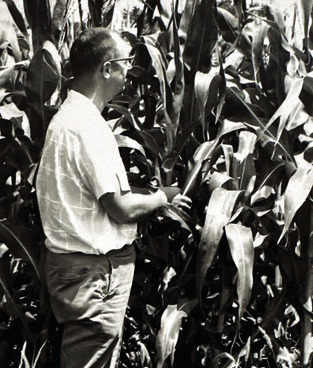
Grasshoppers. That was one of the topics appearing in the Feb. 16, 1962, Colchester Chronicle column “This Week on the Farm,” authored by Illinois Extension Farm Advisor Dick Weller — how best to combat an emerging insect infestation in west central Illinois. As one of the leading advocates for up-to-date agricultural practices, over the years Weller has shared a wealth of farm related advice while serving his community and living an adventure-filled life.
Roots
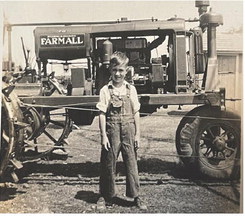
Born in 1930 and raised on a farm near Princeton, IL, with his parents Bernadine and John and brother Roger, the Wellers survived the Depression years.
“The first farm I grew up on was 160 acres,” he recalled. “We didn’t have electricity until I was about 9 years old. We lived on that place for 10 years, and then we moved to a 240-acre farm about 20 miles away. It had electricity, which made a big difference.”
Weller can recall the exact date: “We moved there on the day Japan bombed Pearl Harbor, December 7, 1941.”
Dick is seven years older than Roger, who was a gifted athlete and became a track and cross-country coach at Illinois State University but has since passed away.
Dick and first wife Vi were high school sweethearts at La Moille High School up in Bureau County. In 1948, he came to Western Illinois University for two years and then moved on to the University of Illinois where he got his degree in agriculture. While at Urbana-Champaign, the couple decided to marry, but upon graduation in 1952, as he said, Uncle Sam came calling.
At that time, the U.S. was engaged in the Korean Conflict. Dick served at Camp Carson in Colorado and then was transferred to Fort Knox in Kentucky where he served as an army personnel specialist keeping records for one of three battalions there.
While at Fort Knox, their first daughter Peggy was born. He ended his military commitment as a sergeant, a rather rare achievement for such a short time in the service. The second daughter, Linda, came along a couple of years later, born like many McDonough County boomers at St. Francis Hospital.
That marriage to Vi lasted for 24 years.
It’s after these formative experiences that Weller began a decades-long career with the Cooperative Extension Service through the College of Agriculture at the University of Illinois.
Farm Adviser
Weller’s first job after the military was as a farm advisor in Mercer County in Aledo, IL. Then he had a chance to move up. “I tried for a few other county areas, but I knew Macomb because of Western, so I came here as an associate farm advisor.
That was the term for it — associate. I then had a chance to move up here in the McDonough County office to be a farm advisor. I lasted in that job with the Extension for 33 years.”
Weller’s primary responsibility as an advisor was to be up-to-date on a host of ag-based issues — crop production, conservation, insect and weed treatments, livestock nutrition, and marketing, to name a few. When he first started working in the area in the 1950s, the extension office was located in the Farm Bureau building on West Jackson Street, the current site of Lackey Monuments and the Macomb Sewing Center. Weller and the staff would often host presentations by ag specialists on a wide range of topics. Eventually in about 1964, the ag extension outgrew its facilities on West Jackson and decided to move even further west to its present location on the 4-H grounds. Technically, the Center is owned by the McDonough County 4-H Building and Grounds organization, and the Illinois Extension rents its offices from the 4-H. In fact, Weller designed the white-sided, ranch-style office building, which was constructed in 1966. “They’ve added on since I was there,” he said.
He was also instrumental in the expansion of facilities.
“The only things there when I started were a hog barn and a cattle barn and an open auditorium,” he recalled.
Weller was involved in the construction of a show barn as well as the enclosure of the auditorium to create the brown-sided building.
As mentioned earlier, Weller wrote many farm columns for area newspapers.
But he also ventured into radio broadcasting as well.
For 30 years, he was featured on local radio stations WKAI, WJEQ and TSPR.
“At first, I was live, on the air very early in the morning, but I couldn’t take that for very long,” he joked. “So I talked the stations into giving me some tape cartridges. I would make a week’s worth of tapes and number them for each day of broadcast. I usually had time to go to the station and make them. It didn’t take too long, maybe an hour or so.”
Though the broadcasts only lasted five minutes, production time as well as coming up with daily material kept him busy. He even made a weekly farm broadcast on a Galesburg radio station.
When asked about his experiences out on farm visits, Weller would speak only in general terms. He’d discuss crop and forage issues when asked or examine hog or cattle lots.
“Our basic point was to disseminate information to area farmers,” he said. “We’d also attend a lot of meetings, and we’d host specialists from Champaign/Urbana out at the 4-H auditorium, but I don’t think they do that much anymore.
“They don’t even have a farm advisor anymore,” he lamented. “About the time I retired, it started to change.”
In the Community
Weller served on the McDonough District Hospital board for 12 years as treasurer. “We wanted to get more physicians,” he said, and then he backed up a bit to recount some history.
The current skilled nursing facility known as The Elms, according to their website, “first originated as the County Poor Farm in 1856. It then became the Almshouse in 1884 in Scotland Township. In 1949 the Almshouse or McDonough County Farm was turned into a nursing home, and given the name The Elms Nursing Home. By 1950, as the nursing home needs grew, the facility was moved to the former TB Sanatorium in Bushnell. In 1973 the facility had deteriorated beyond reasonable repair. The current facility opened on October 9, 1977, and is currently called The Elms.”
Weller recounted that The Elms wanted to purchase land for the new construction along what is now Madelyn Avenue, going south from Grant Street. However, Weller said, “the County filed a suit against The Elms because they didn’t want to pay the money.”
Meanwhile, McDonough District Hospital wanted to buy land to construct a health services building (south of the hospital).
Walter Horrabin went to Harold Lucy, father of Jim Lucy, to purchase the property, but he wouldn’t sell it for the price being offered.
Eventually, the hospital was able to buy about 15-20 acres and then sold the current plot of land that The Elms wanted so that they could build there. Weller thought that was in 1973. As treasurer, Weller was actively involved in the negotiations and planning for the county’s certified nursing facility.
Returning to his original thought, Weller said this expansion helped the hospital recruit more physicians. And it all started with Weller’s role in acquiring the land.
Editor’s Note: Watch next week’s Community News Brief for part two of Weller’s adventures.
Photos and transcripts courtesy of Peggy Weller McFeeters