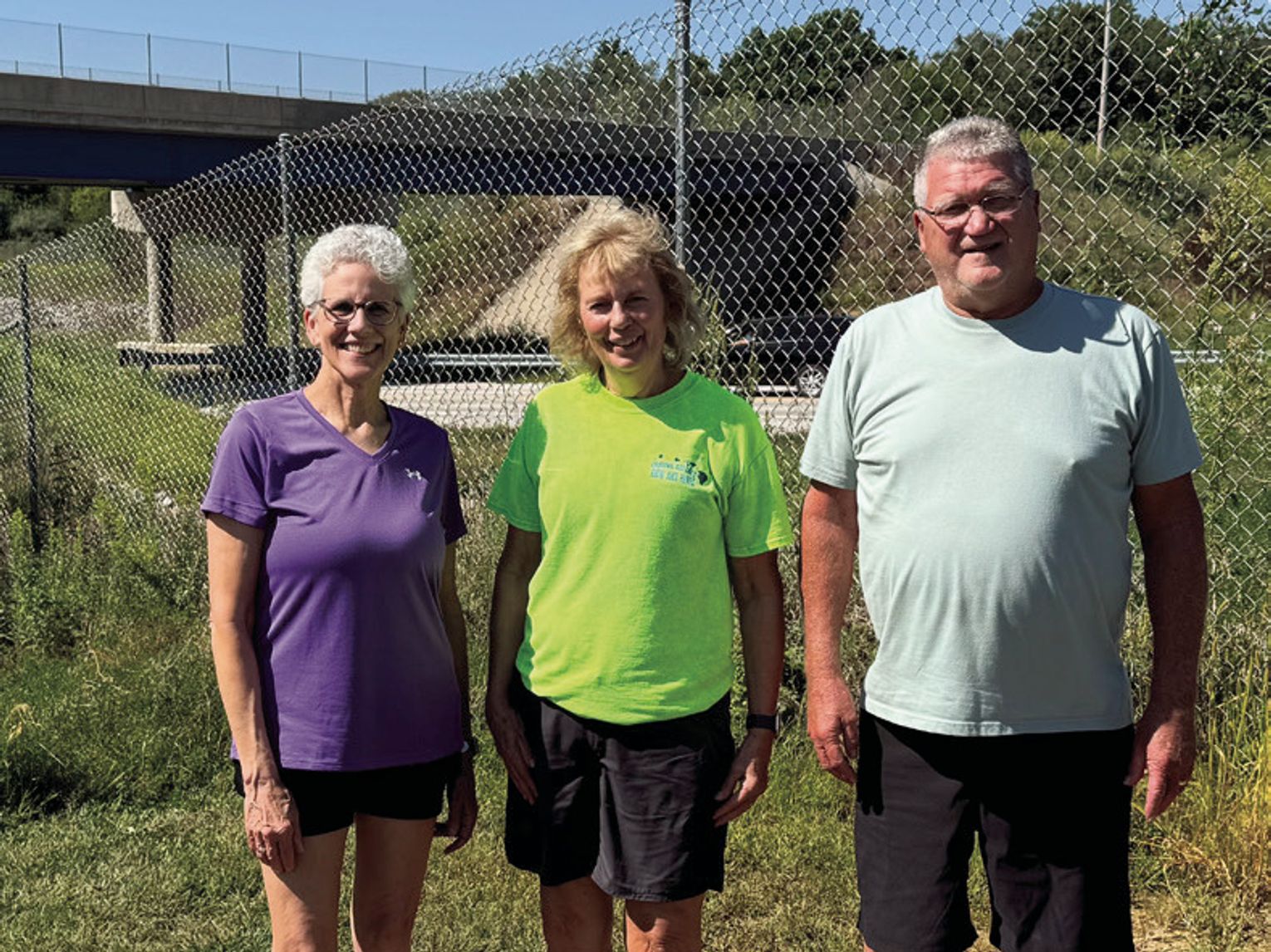
Their last names are Downey and Nudd, but a trio of striders often seen on the west side of town is known by many as “the Walkers.”
Karen Nudd and Pam Downey have been walking together since the late 1980s, and Dan Nudd, Karen’s husband, joined them after he retired from NTN Bower in 2013. Their routine began with walking around the Nudds’ circular drive a few miles west of Macomb when their children were young.
“We don't even know why we decided to walk,” Downey said, addressing Nudd. “We were probably See Walkers on page 7 bypass was created.
sitting on your front step and decided we needed to be doing something while the kids were playing.”
Walking in Circles
When they began walking, the Nudd and Downey families, each with three children, lived in houses across from each other along an asphalt-covered road. Although the Downey children were older, they played with the Nudd children because that’s what country kids do. Karen taught kindergarten in Macomb and Pam worked at McDonough Telephone Cooperative in Colchester. When Pam returned home from work in the summer months, they walked around the driveway while the kids played.
When Karen and the children returned to school, the walks became weekend-only events. That continued until the youngest child reached middle school.
The women continued walking in circles for several years because they determined walking along the narrow country road was dangerous. That changed around 1999 when a sidewalk was created along West Adams Street from Wigwam Hollow Road to the Georgetown subdivision.
For more than 25 years, the walkers have been driving to Georgetown and then setting off on more linear walks. At first, they went to Wigwam Hollow and back. Then they expanded their route to the Corbin-Olson residence halls on the southwest corner of the Western Illinois University campus.
Ready for All Types of Weather After the sidewalk was built, they began meeting at 5:15 p.m. for their daily walks. On school days, Karen prepared her classroom for the following day until Pam left work at 5. They were nearly unstoppable.
“When I left home in the morning, I had no idea what the weather was going to be like after work, so my trunk was full of clothes for every imaginable kind of weather,” Karen said. “We walked in the rain, we walked in the snow, we walked in sleet. We just walked in everything – unless there was lightning.”
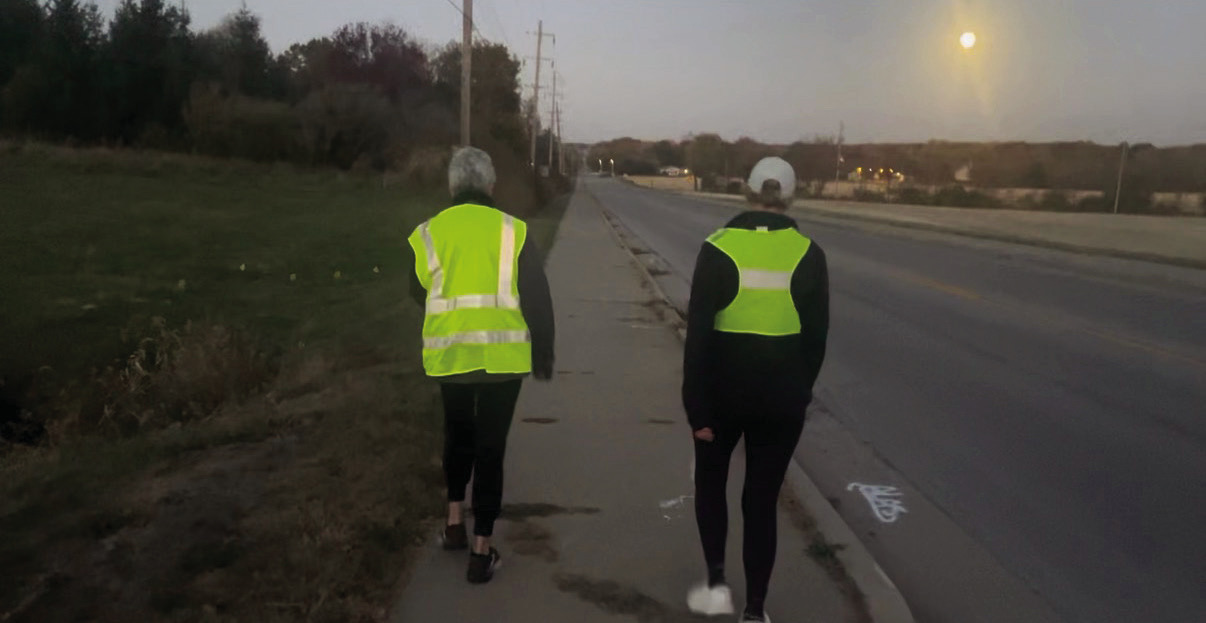
The walkers wear out shoes every three to five months. Their gear also includes reflective vests, handwarmers, heated socks, a heated vest and traction devices that attach to the soles of their shoes.
“We bought everything that we need to keep comfortable the best we can,” Karen said.
Now in their 70s, the trio doesn’t take to the sidewalk on icy or other harsh weather days to protect themselves from potential falls. But that doesn’t mean they don’t walk. The women are at Walmart when the doors open at 6 a.m. On those days, Dan stays home.
Taking Off Before Dawn When Karen’s youngest child graduated from high school in 2006, the women decided mornings would be more convenient for their walks. They have kept this schedule, despite being retired and having a more leisurely schedule.
“Everyone thinks we're crazy because we continue to walk at 5:15 every day,” Pam said. But Karen explained: “It's nice because you get done and you still have the rest of the day.”
Dan wears a headlamp to light their path.
“When I'm walking right behind them, I shine the light between them so it's on the sidewalk ahead of them,” he said.
When the three are walking abreast, he walks nearest to the road, turning the headlamp to the side. But not too much or it shines in his wife’s eyes.
“He’s very patient with us,” she said.
Besides illuminating the sidewalk, Dan leads the walkers’ eyes to the sky. He uses an app to determine when the space station is overhead. They can see it when the sky is especially dark, usually in the winter months.
He also carries pepper spray in case a nocturnal animal gets feisty. Although he hasn’t used the spray, the group has seen deer, raccoons, foxes, skunks and opossums. They hear, but don’t see, other identified creatures in the dark.
During the COVID19 pandemic, the walkers encountered several students near Olson Hall who were making their way on foot to the Amtrak station to catch the 7 a.m. train. One had more luggage than she could handle.
“She'd pull one suitcase half a block or less, and then walk back and get the other one,” Dan said. “When we caught up to her, I said, ‘Hey, we're going to help you.’ So we all got a piece of luggage.”
They accompanied the students down Adams Street to North Lafayette Street, a short distance from the station.
Sharing a Moving Experience
In 2011, the women added “therapeutic” to the description of their daily walks. For 10 years, the Nudds and the Downeys knew their homes were in the path of the proposed Highway 336 bypass around Macomb. Finally, it was going to happen. The state would buy their property, and they had only a few months to find new places to live.
“We did a lot of talking about what we were going to do, and it was a good therapy session for that time,” Nudd said.
Downey said sharing the stress of the situation with her friend was helpful. They considered locations and whether to build or buy new homes.
“We even went to open houses together,” she said.
Their solutions weren’t surprising. The Downeys chose to move their house to a small acreage west of the new highway and the Nudds built a new home on the easternmost section of land they already owned. The couples live less than a mile apart. The new highway separated their homes but it strengthened their bond.
Making Changes
The walkers have taken breaks over the years when they were busy with active teenagers and caring for aging parents. Their last break from walking ended in 2002.
They have cut their steps, however. Pam has had two foot surgeries and Karen has hip pain. They can no longer do five miles a day, so they reduced their walks to 3.5 miles.
“We noticed it was maybe a little more for us than what our bodies needed. You get older and start getting aches and pains,” Pam said. “My daughter, who’s a physical therapist, told me, ‘You don’t need to walk as far since you walk every day.’” At one point, the women were walking all the way to HyVee to get Starbucks coffee. Dan turned around at Corbin-Olson, returned to Georgetown and then drove to HyVee to pick them up. Now, they all walk their regular route and then the women drive to get coffee three or four times a week. Dan goes home; he doesn’t like coffee.
When the walkers aren’t walking, people often asked if they walked that day.
“I think people are waiting for us to just stop,” Nudd said.
That isn’t in the plan.