State of Mind Returns to Macomb for Al Sears Music Fest
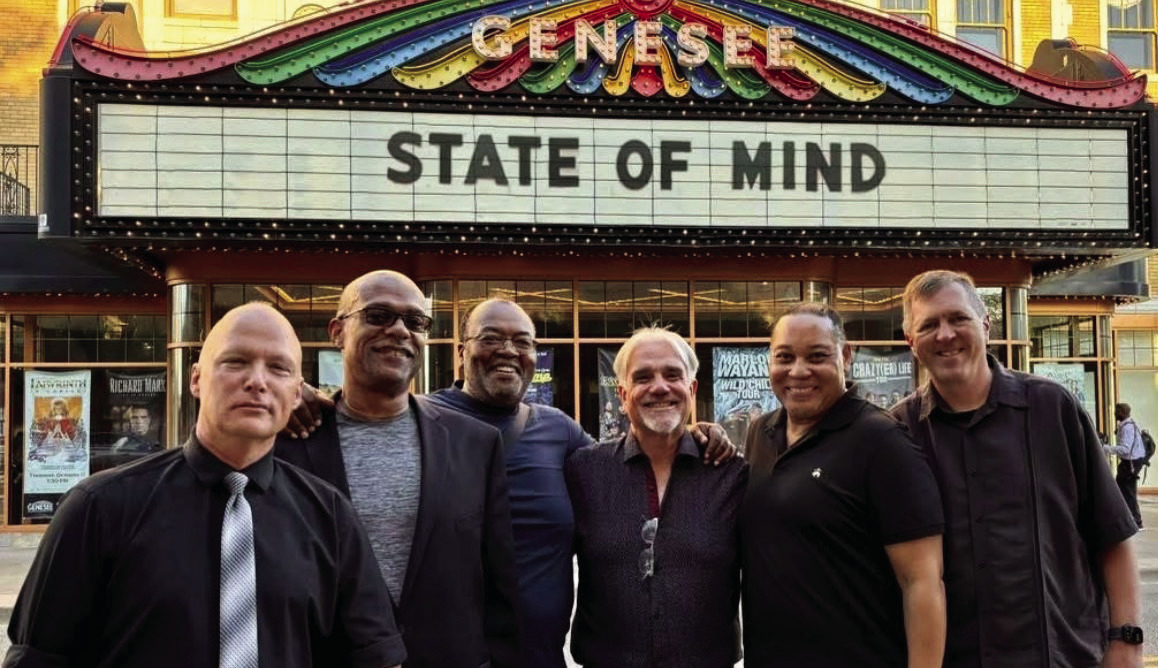
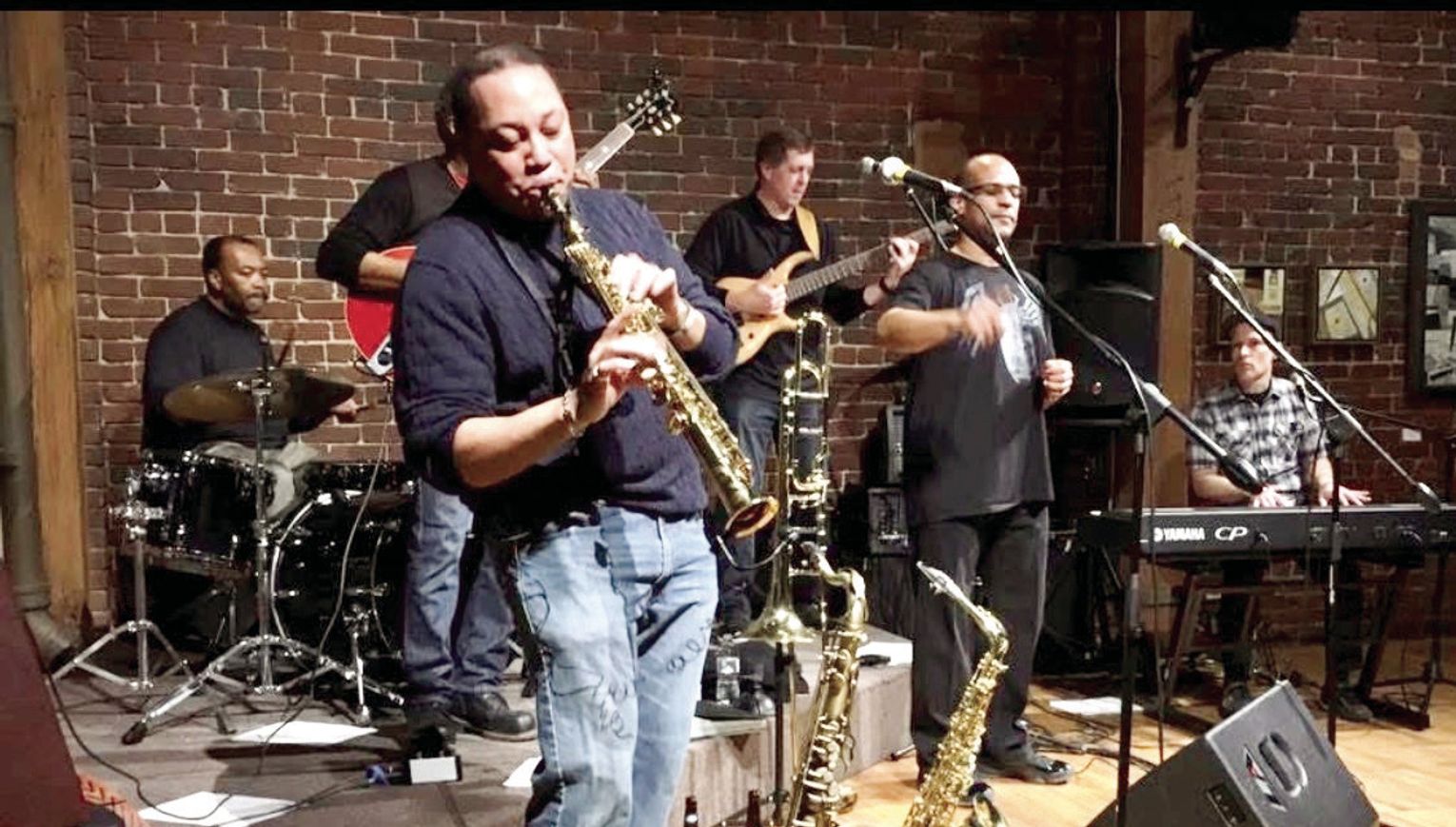
A band that formed during the initial year of Western Illinois University’s jazz combo program is returning to Macomb to play at the Al Sears Music Fest. State of Mind will bring high-energy jazz, funk, blues and rock to Western Illinois Museum at 7 p.m., Friday, Sept. 18.
“I'm excited,” said James Conyers, a 1988 graduate who is the lead singer and trombonist. “I haven't been back in a long time. It's going to bring back a lot of memories.”
The players
The nucleus of the band consists of four men who have been making music together for more than four decades: Drummer Barry Applewhite earned undergraduate degrees in music education and music business in 1988, and a master’s degree in education in 1991. The Waukegan native was the principal of Milwaukee High School of the Arts before retiring in 2021. Then he started Instructional Professional Development Design Services, a resource for school administrators and music educators.
Conyers, who lives in Peoria, earned a pre-medicine degree at WIU and planned on becoming a physician. Instead of a career in medicine, the East St. Louis native specializes in project development and leadership management. The Lean Six Sigma black belt worked at Caterpillar for 22 years and is now a senior project manager for Samaritan Ministries International, a health expense-sharing organization.
Saxophonist Tony Edison has been superintendent of the Posen-Robbins School District in the south Chicago suburbs for 14 years. He grew up in Robbins and now lives in Olympia Fields. Edison earned a music education degree in 1987 and began his career teaching general music and band.
Steve King plays bass. He moved with his family from Pennsylvania to Jacksonville, Illinois, when he was a high school junior. He majored in logistics and transportation, graduating in 1987. King’s varied career includes those fields plus selling software, being a worship music pastor and, now, working in industrial real estate for Ozinga Brothers. He lives in Tarpon Springs, Florida.
The Music
State of Mind is rooted in jazz, but the band has expanded its repertoire to blues, funk and rock that reflects each member’s favorite styles. Its song library of more than 200 songs has one thing in common: Their music makes people want to move.
“I would just use one word, groove,” King said. “It doesn't matter what style we're playing.”
In the beginning, most of their music was instrumental. Now, they estimate about 70 percent of their songs have vocals.
They continue playing their first songs from the 80s because long-time fans expect to hear them. But State of Mind isn’t stuck in the past. They continue learning new tunes to please their audiences.
“We can do a gig, depending on what the gig is, we can do an all-singing gig or all jazz gig,” Edison said. “Each of us has a thing that we lean on. and then it just grows within the band.”
Edison said he could play blues all day. Conyers likes funk and King favors jazzfunk fusion.
“It depends on the day – jazz, funk, R&B, gospel, world beat and new age,” Applewhite said. “
The Hopper Effect When they were in high school, Applewhite and Conyers met at a University of Illinois summer band camp. After their first year at WIU, they were counselors for the university’s jazz band camp, where they met King. Before that, none of the men, including Edison, planned on attending WIU. That changed when they each met the late Dale Hopper, former director of bands.
All of their decisions to attend Western could be considered close calls.
“I was waiting for an acceptance letter from the U of I, and it was coming down to the wire,” Conyers said. “Mr. Hopper came to our high school and the rest was history.”
Applewhite was a signature away from beginning Air National Guard bootcamp when he chose Western. Although he was planning on joining the guard, he auditioned for Hopper in a North Chicago auditorium. The director expressed his approval of the audition, and Applewhite received an acceptance letter from WIU before he signed the final enlistment papers.
“I was going into the army,” Edison said. “I auditioned for the army band and they said, ‘We’ve got a spot for you.’ That was going to be my destination.”
And then he met Hopper, who was judging a high school jazz band competition. After hearing Edison play, the director spoke to him, and a new path was set.
King’s parents knew of his decision to attend Western before he had an opportunity to tell them. He had already been accepted to a university in New York when he attended that WIU jazz camp the summer after graduating from high school.
“By the end of the week, I told Hopper that I'd go to Western,” King said. “My mom and dad come to the concert at the end of the camp and he (Hopper) walks up to them and says, ‘Congratulations, Mr. and Mrs. King.’” “Hopper was a really good recruiter,” Conyers said.
Through another connection, guitarist Mike Lewandowski and keyboardist Chris Heroldt joined State of Mind about 30 years ago. Edison has known Lewandowski since they were in first grade, and he met Heroldt in high school. At one time, the three were in a band together.
The Right Combo It took a year of adjustments to get the right players in the band. Applewhite and Edison were the first members of the long-lived combo. Conyers and King, who had been in other combos, joined them the following year.
“That's when we actually started doing some gigs,” Edison said. “What really launched us was a Battle of the Bands.”
State of Mind won the competition and the honor of playing at the university’s first West Fest spring celebration in 1986. The following academic year, it was chosen to be the opening act for Chuck Berry when the musician played at Western Hall.
Former WIU art professor Preston Jackson helped the band get its first off-campus gig. They met the artist and musician when he played during Tuesday jazz nights at the former Tom’s Café.
“He was really influential with us at the onset,” Edison said. “He got us our first gig at (The Change of) Pace.”
Although graduations took State of Mind members in different vocational directions, they played even more in their earliest years away from Macomb.
“We did Taste of Chicago. We did Milwaukee Summerfest. When we were young spring chickens, we were gigging pretty much every weekend,” Edison said. “But then as we start getting older and having wives and families, everybody scattered. It slowed down a whole lot, but we still make sure that we're always playing every year.”
The band comes together two or three times a year. Every January, it plays at Live at Five Spot, the Peoria Contemporary Art Center’s bimonthly music. The gig goes back to band’s roots: Jackson is founder of the art center, and he invited State of Mind to play at its first musical gathering. The guitarist also plays a few songs with them.
The band doesn’t rehearse like it used to, but their years of playing together make reuniting easy.
“Usually, James and Steve work out the set list and send it out,” Edison said. “We take a look at it, and everybody has some input in it. Then it's on the individual to make sure that they're prepared. When we get something new, sometimes those who are close together will get together and kind of brush through it. But a lot of times, we get there before the gig and run through the new stuff.
A couple of the musicians also play with other bands. The night after the performance in Macomb, King will be playing in Indiana, Heroldt has a gig in Ohio.
The Heart of It
“One of the things that has kept us together for all of these years is that we're like brothers. We're very close to each other,” Conyers said. “No egos are involved. We may have some issues with a chord change or a key of a song, but we can work those differences out. No one person is going to love every song we do. So sometimes you just have to say, ‘I'm not real crazy about that song, but I think the audience that we play for likes it. So we'll just do it.’ We’re all about each other as opposed to ourselves.”
When the band began more than 40 years ago, four young men resolved that decisions about their music would be made democratically. From the onset, they recognized their differences, like the instruments the play, could be used to create something good – really good.
“Our friendship is more important than anything else,” Conyers said. “It's what keeps us together.”
That, and the music.