The medical heritage of McDonough County is very complex, involving many fine doctors, various facilities, and a broad range of services. Due to space limitations, this account will just focus on some notable early physicians and the development of several hospitals.
On the McDonough County frontier, the earliest doctor who stayed any length of time was Charles Hays. Born in Virginia during 1790, he came in 1833, when tiny settlements and log cabins characterized our culture. At first, he purchased land to start a farm in Scotland Township, where he erected a log cabin, but two years later he moved into Macomb and opened his office in a small frame building on the square. He then practiced medicine for about thirty years.
According to our county histories, Dr. Hays had studied medicine in Kentucky. However, medical knowledge was very limited 200 years ago, and there was often little that a doctor like him could do to save patients who had serious diseases. However, he was at least familiar with what might help or hinder someone’s recovery. Of course, he could often help a patient cope with injuries and could assist with delivering babies as well.
On the frontier, doctors often traveled on horseback or in a carriage to where someone needed medical assistance. As the 1870 obituary for Dr. Hays indicates, “He often had to go fifteen or twenty miles, on the darkest nights, fording swollen streams or crossing wild prairies,” so he became an icon of social commitment.
Another notable early physician was Dr. James B. Kyle, who was born in frontier Ohio during 1808.
After growing up, he was a physician’s apprentice there and then studied medicine in Cincinnati and St. Louis.
He came to McDonough County in the mid-1830s.
After practicing medicine successfully for many years, he enlisted in the 87th Illinois Infantry during 1862—a year after the Civil War had begun. The oldest county resident to sign up for service, he was then 54 years old. His medical ability and devotion to duty soon made him the surgeon of his brigade, and he also managed a hospital for soldiers in Nashville. His practice in McDonough County continued after the war.
As his June 6, 1873, obituary later said, in the Macomb Journal, “Dr. Kyle was a kind-hearted man,” and when called to serve the sick or injured, “He went wherever and whenever humanity called,” regardless of “the probability of getting paid for his services.” So, Dr. James Kyle did much to establish the long tradition of meaningful public service that has characterized the medical profession in our county.
Like Dr. Hays, when Dr.
Kyle died, he was buried at Oakwood Cemetery. And longer accounts about them (and a dozen other doctors) are available in my book Here to Stay (2012).
Another notable early physician, Dr. Beverly R.
Westfall, was born in 1824 and raised in Ohio, where he also studied medicine.
He moved to Macomb in 1846, where he continued his studies and married a daughter of Dr. Hays.
From 1848 to 1855, Dr.
Westfall was an allopathic, or old-school, physician, who often shared office space with his father-in-law. But he also briefly attended Rush Medical College in Chicago—our state’s first medical school—and then switched to homeopathic medicine. Both medical systems were common but not very effective in fostering disease prevention.
As S. J. Clarke says of Dr.
Westfall, in his 1878 History of McDonough County, “no physician in this part of the state ranks higher in the [medical] profession, or among the masses of the people,” and he is “wellposted in the science of medicine” and “enjoys the respect and confidence of all.” (He was also a wellknown horse breeder, who operated a model farm.)
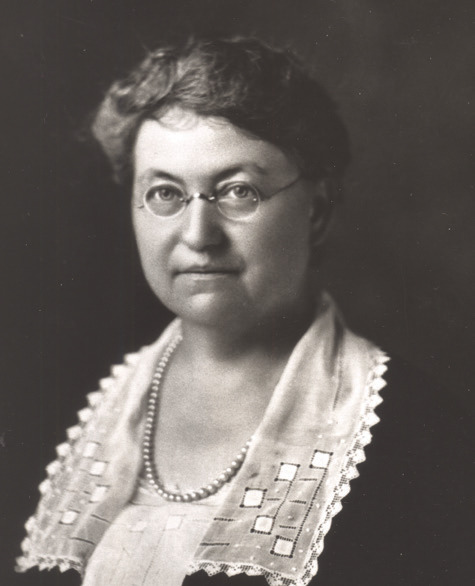
In addition to being one of the central figures in the McDonough County Medical Society, Dr. Elizabeth Miner served as a delegate to the Illinois State Medical Society from 1918 until 1938. In 1935, she was elected vice-president of the Illinois State Medical Society, and in that year she also headed the Illinois branch of the American Women’s Medical Association.
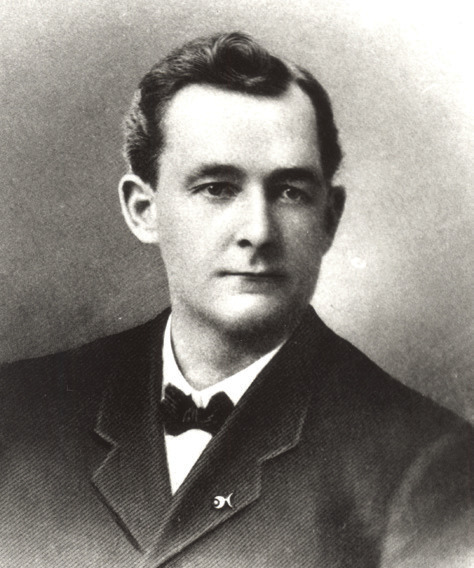
Shown here is Dr. S.C. Stremmel, the first administrator of the Phelps Hospital. Born in 1863 in Gettysburg, Pennsylvania, he first studied at Pennsylvania College, noted for its classically focused curriculum, and in 1889 he graduated from the College of Physicians and Surgeons of Chicago, well knows for its advanced facilities and its faculty, among the first in the region to integrate into their teaching early discoveries related to bacteria and its role in disease transmission.
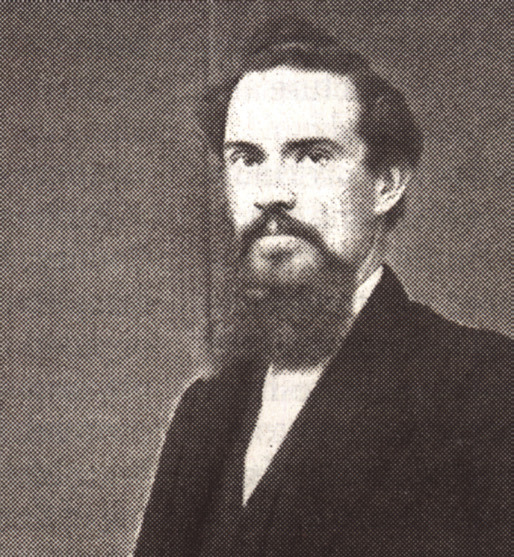
Pictured here but not mentioned in the text is Dr. T.M. Jordan, a graduate of the University of Maryland School of Medicine, recognized for its emphasis on observation and experimentation, as opposed to repetition of established theories. He established a practice in Macomb in the fall of 1856. In 1862, he joined the 78th Illinois U.S. Infantry under the command of Col. Carter Van Vleck and served as surgeon for three years. Upon his return, he opened a private bank, served three one-year terms as Macomb mayor, and in 1868 moved with his wife and young daughter to Chicago.
After his wife died in 1882, Dr. Westfall moved, with some of his 12 children, to Spokane Falls, Washington, where he died seven years later.
Our medical tradition also has numerous other highly regarded physicians, including many who started their careers during the early twentieth century. One who deserves remembrance for being a groundbreaker was Dr. Elizabeth Miner, who was born in Iowa during 1867. She first graduated from a teachers’ college and taught school, but when her husband died, she decided to become a physician, to support herself and a child—partly because her brother had recently become a doctor. So, she attended Denver Medical College— which had not allowed any female students before— and she received her M.D. degree in 1895. After briefly practicing in Colorado, she married William Miner, and they moved to Macomb. As I mention in an overview of her life in Here to Stay, “The start of her practice was a dismal failure, chiefly because of local prejudice against women in the medical profession. However, she did some work for almshouse patients, cared for men in the county jail, and examined women for an insurance company, so she slowly gained public confidence. When the county medical society was founded in 1897, she became the first secretary and slowly gained the friendship and support of male doctors.
Local women soon valued her, too.”
Fortunately, things changed for women, and in 1935 she was elected vice president of the Illinois Medical Society and president of the Illinois branch of the American Woman’s Medical Association. By then, no local physician was more well-known.
Dr. Miner practiced until the late 1940s and died in 1961, at age 93. Her struggle to be of service to society, despite the social restrictions on women, makes her a figure who is truly inspirational. And she deserves to be remembered as a well-educated, insightful, and committed figure in our county’s remarkable medical tradition.
Aside from many other talented doctors, who came along later, our Macomb hospitals also provide an engaging story of social commitment. The first one was Phelps Hospital, in the 200 block of East Carroll Street, which was developed in 1900. It was originated from an $8,000 donation by Marietta Phelps, who had lost her husband in a tragic accident back in 1872 and was later being treated by Dr. S. C. Stremmel. He also provided $7,500 of his own for that facility.
The building opened on December 20, 1900. It was just 38 feet wide and 55 feet long, as well as two stories high. And it had only fourteen patient rooms, as well as an operating room. The Phelps Hospital had a staff of just six doctors.
Due to that new hospital, Macomb became a regional medical center, and 181 patients were admitted during 1901. There were also 144 operations that year. Dr.
Stremmel managed the hospital and created a school of nursing there. Also, he soon contributed another $8,000 for an addition that provided more rooms as well as a laboratory. After he died in 1916, the hospital was managed by Dr. John Hermetet, who had practiced medicine in Industry and Macomb.
But only three years after Dr. Stremmel had founded that hospital, with financial assistance from Marietta Phelps, Dr. J. B. Bacon opened the St. Francis Hospital, at the corner of Grant Street and South Johnson Road. Aside from $7,000 that he raised from local donations, he also arranged for a $30,000 contribution from the Sisters of St. Francis, in Clinton, Iowa, and that new hospital was dedicated on March 14, 1903.
Those Catholic sisters not only provided medical assistance but also raised food supplies on adjacent acreage. Additions to the hospital were created in 1912, 1922, and 1929—and a school of nursing also became located there.
In 1909 our county seat also became the site of a facility devoted to the birth of children. Known as The Macomb Lying-In Hospital, it was developed by a woman, Mary Johnston, in a sizable house at the corner of Jackson and Madison streets. She was a 1903 graduate of the prestigious Illinois Training School for Nurses in Chicago. She operated the facility from the spring of 1909 to the late fall of 1912, and then she sold it to Dr. J. B. Holmes, who was associated with the Phelps Hospital. By 1915 he had re-named it the Holmes Hospital and had built an addition to it. Later, in 1922, the Sisters of St. Francis purchased it from him. (However, they eventually sold it in 1927, and it then became an apartment building.)
Of course, the largest, most extensive hospital in the county’s history is McDonough District, which opened on June 30, 1958.
Phelps Hospital was closed in 1966, and St. Francis was closed in 1967. The creation of McDonough District Hospital was fostered by a public referendum in 1954, which led to the construction on ten acres of land on Grant Street. At that time, Dr. A. P. Standard was the selected leader, and the medical staff was then quite large, being composed of two dozen doctors, as well as many nurses. Among the early physicians who served for many years there, and became noted figures, are such doctors as William E. Carnahan, Donald H.
Dexter, William Holland, Kenneth T. Pawlias, A.
P. Standard, and Russell Trummel.
As WIU Archivist and local historian Kathy Nichols indicated in her excellent discussion of our medical heritage in a 2015 Heritage Days booklet, “Since McDonough District Hospital was established, the medical community in general has expanded to encompass not only services provided by that fine facility but ones available through the McDonough County Health Department, as well as various senior citizen living, nursing, and rehabilitation centers, counseling and behavioral health facilities, therapeutic and fitness centers, the speech, language, and hearing clinic at WIU, numerous home healthcare agencies, and more.” Macomb has also had several schools of nursing and various clinics in the 20th and 21st centuries. So, our county has become a center for quality healthcare. Indeed, McDonough County’s medical history is remarkable, and many doctors and other healthcare professionals today deserve public appreciation for their medical expertise and outstanding public commitment.
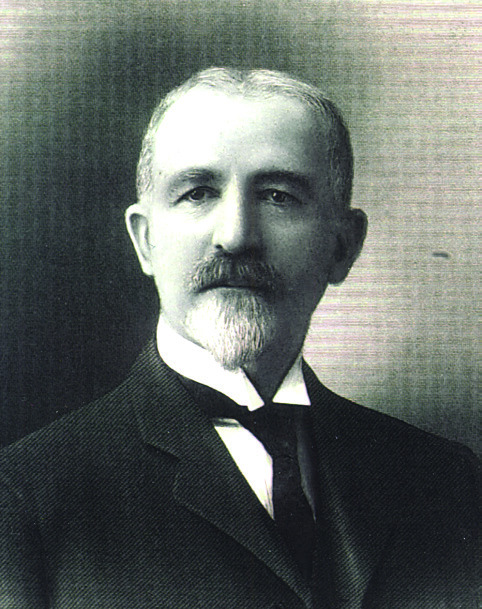
Pictured here is Dr. Joseph B.
Bacon, born in 1854 on a farm near the village of Tennessee in McDonough County. He first studied at McDonough College in Macomb and then at Galveston College and Northwestern University, from which he graduated in 1881. He later studied at the University of Heidelberg and the University of Vienna.
Both schools had worldwide reputations for excellence in medical studies. In addition to founding the St. Francis Hospital, he established the Bacon Clinic on the square, modeled after the famed Rochester Mayo family philosophy of medical practice.
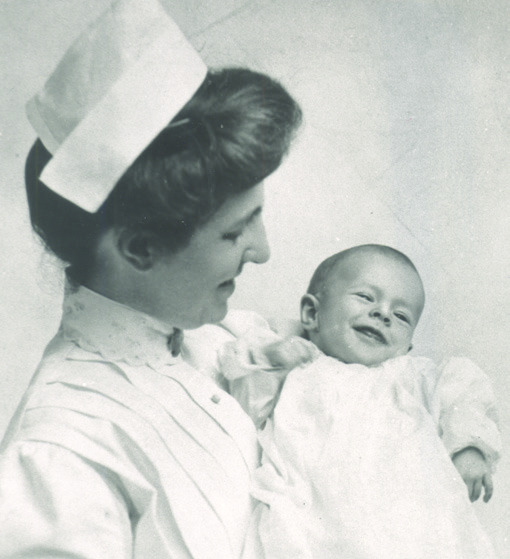
In the spring of 1909, Mary Johnston opened the Macomb Lying-In Hospital on the southeast corner of the intersection of Jackson and Madison streets. It was for its time a modern facility for mothers giving birth.
In an early advertisement, Johnston states, “I have opened [a facility] for the purpose of giving to the women of this vicinity the opportunity of having the benefit of scientific aid at the time of confinement and of two weeks aftercare, also that the babies may have the advantage of two weeks care in establishing regular habits of feeding and of rest upon which means so much to the future health of the child.” She operated the hospital until 1912, when she moved to Chicago to be married.