Project Insight Provides Opportunity & Skill Development
'Project Insight isn't about where a student has been. It's about helping them develop the skills they need for where they're going.'
When you walk into the hallway of Project Insight, the former Grant Elementary School on North McArthur in Macomb, you immediately notice the black and gold color scheme and a menacing eagle logo. You get the impression that this is a traditional junior/senior high school. And you'd be right.
Project Insight is one of several programs offered through the Western Central Illinois Special Education Cooperative (WCISEC) designed for students with socio-emotional learning and behavioral needs as identified through a regular school's Individualized Education Program (IEP).
Unlike the ROE26 program ROYALS (Regional Office Youth Alternative Learning Services), which tends to focus on student academic credit deficiencies, truancy or misconduct issues, Project Insight is designed for students who need a smaller, more structured learning environment similar to their home school, but with more attention on social/emotional development, behavioral management skills and relationships for life beyond school. As one program in WCISEC, Project Insight is funded through local school district fees for services, Illinois State Board of Education (ISBE) disbursements and federal grants.
Mission
According to Principal Stephanie Winship, the school services students who have an IEP with social/ emotional disabilities who need more social/emotional educational services as well as some specific learning disabilities. The program makes accommodations to their needs, and students go through a school day in normal classroom environments, only with smaller numbers. At the beginning of this school year, 15-16 students are in the high school curriculum while eight are in the junior high program.
“We differentiate instruction based on student needs. If we have a population of students at a specific level, that's the level we're going to teach. If we have two different groups in a class, we'll teach at two different levels,” Winship said. “We'll have the teacher and a paraprofessional working together and going back and forth to teach those different levels. As much as we want to cover the academic portion, we also want to build relationships with these kids because that part is going to come first before we can get to the academic areas.”
Referral Process
A student who comes to Project Insight has been referred by the home school district special education program.
'We look at the social/ emotional portion that they need and provide them with structure along with the student, the family, and the home district,' said Winship.
A quick glance at their curriculum offerings reveal course descriptions in every academic category, just as one would find at any of the area junior and senior high schools. A core group of five educators, all who are male this year, which Winship said was a coincidence, with special education degree certifications. They work with students in classroom settings but with smaller numbers. This allows teachers to provide more individualized support. The program follows state guidelines for learning objectives, uses normal in-house as well as required assessment tools, all to make sure that students get what they need to be taught.
'We also are doing some cross-curricular things,' noted Winship. 'We just implemented an Eagle Legacy program which incorporates communication skills, conflict resolution, career readiness, and independent life skills with regular English classes, or social students classes, even math and PE.' Continued from page 13
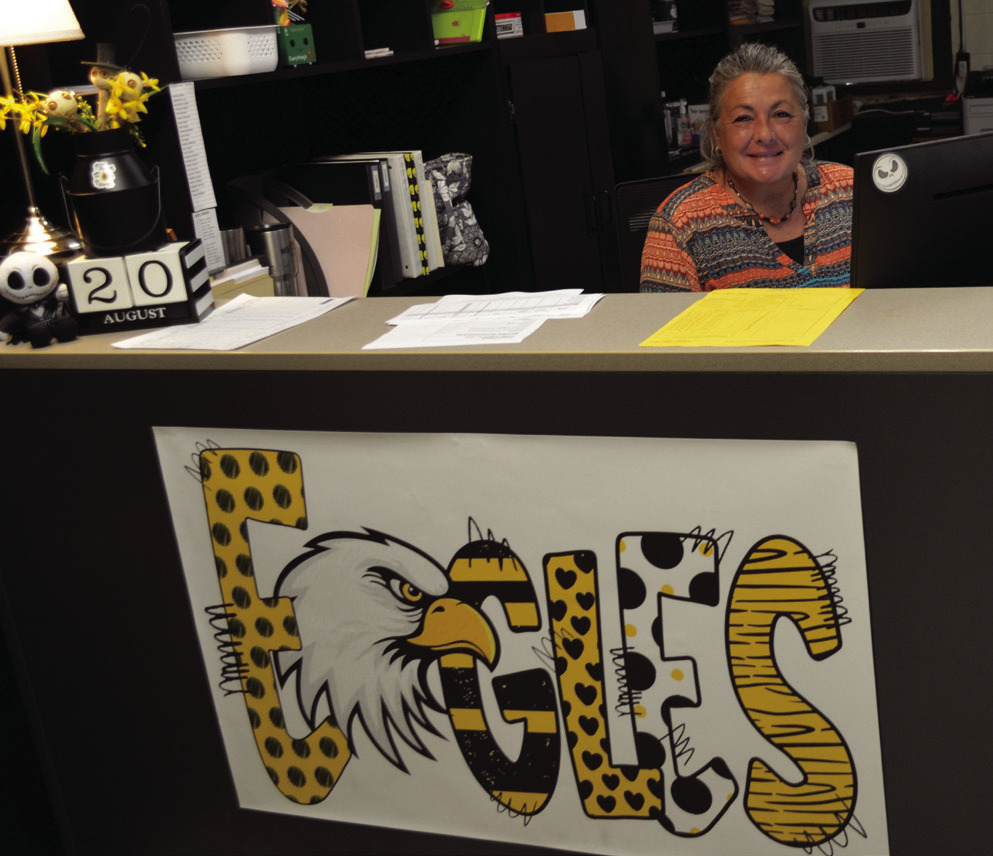
Michelle Taylor, Project Insight office secretary
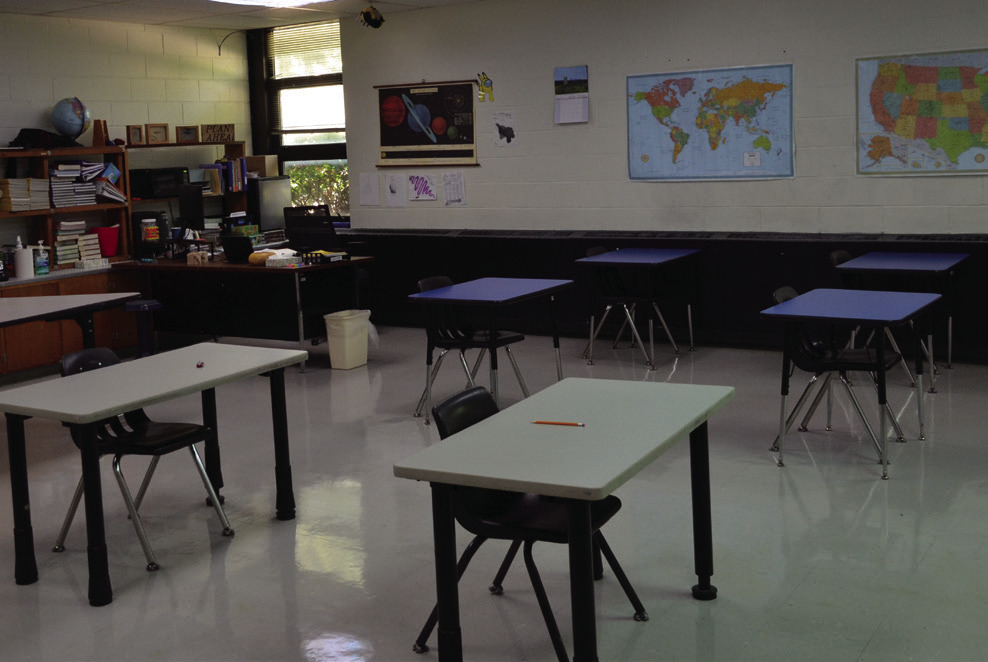
junior high classroom
Eagles
With five teachers teaching cross-curriculum, there's opportunity for rotation, depending on the students and their needs. They all teach the core courses with one teaching English and others teaching, math, science and history. They also teach an elective area.
When it comes to defining 'success,' Winship said, 'Success looks different for every student. It might be improved attendance, completing assignments, earning credits, going an entire day without a behavioral incident, appropriately asking for a break, resolving a difference with escalating, developing positive relationships, returning successfully to the home district, graduating, getting a job, or developing a life plan after high school. Those accomplishments matter.'
The Eagle
A quick tour of the hallways reveals every effort to create a regular, not a special, school environment. Murals and bulletin boards promote the Eagle motif. According to Winship, the students got a say in choosing a school mascot and colors a few years ago, which helps to develop school spirit. While there are no extracurricular activities for students, they participate in their home school programs. The school dismisses at 2:15 p.m., which allows students to return in time for practices and events usually through district provided transportation. When a student graduates, they walk with their peers at the home school's regular spring commencement.
Facilities
Glance in any of the school rooms, even the gym, and one will get the impression of a regular classroom in any area school. Because of low numbers, there is little crowding of desks, allowing ample movement around the room for both teachers and students. Walls are decorated with charts, learning tools and home-like decorations. Some of the rooms also have areas for de-stressing situations when students need a way to self-manage issues.
The Grant Street building has eight classrooms available with one class room devoted strictly to the junior high students. It is also the biggest classroom in size. Instead of desks, each student has an individual small table. A guidance counselor and a part-time social worker are also part of the staff, each with their own room.
There is also an entire room devoted to behavior regulation.
'When a student in another classroom starts getting anxious or frustrated, there's always a teacher in here. They can come in and have five or ten minutes to themselves to get their behavior under control,' said Winship.
Regular PE classes are part of the day's schedule in the Grant School gym. It also serves as the cafeteria with meals brought in from a food service. Though the gym is small, it provides ample space for exercise and meals given the enrollment numbers.
Postscript
Winship came so well prepared for this interview that she even posed a follow-up question of her own. She agrees with former ROYALS director Lori Bilbrey of the need to dispel notions that these schools — ROYALS and Project Insight — are for 'bad kids.'
'I would invite them to come see what we actually do. They would see students learning, working toward graduation, developing job skills, building relationships, learning how to manage difficult situations, and preparing for their futures,” Winship concluded. “Our students are young people who need support, structure, accountability and opportunity. Sometimes they simply need those things delivered differently.”
Just like students everywhere.
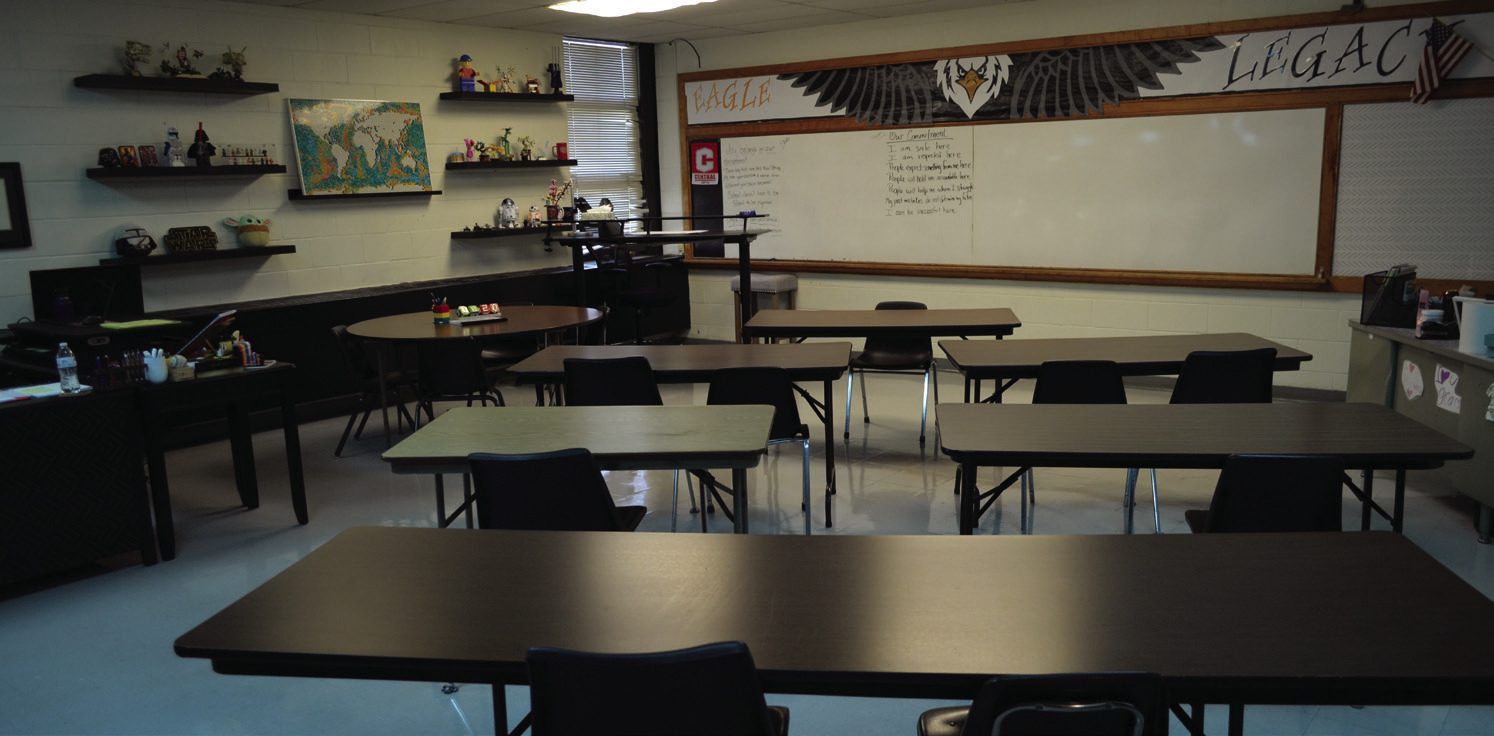
High School Classroom