Go to main contentsGo to main menu
Friday, August 21, 2026 at 12:40 PM

Iverson Brings Team Back to Macomb for Final Season

Iverson Brings Team Back to Macomb for Final Season
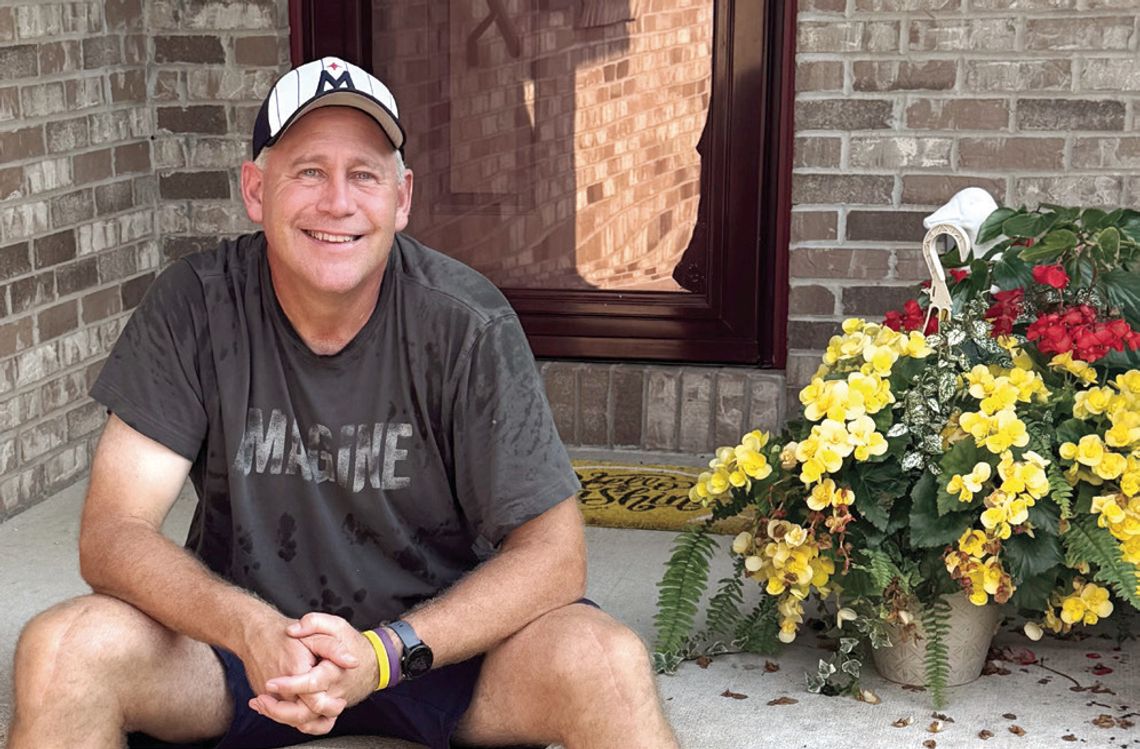
Coach Dan Iverson

Successful Cross-Country Coach Begins with Spring Lake Campout

Nearly 50 years ago, a little boy moved to Macomb with his parents and younger brother and sister. His father began running. His mother began running. The little boy began running, and he never stopped. Now, the winningest cross-country coach in Naperville North High School’s history and member of the Illinois Track and Cross-Country Association Hall of Fame has begun his final athletic and teaching seasons. Here is Dan Iverson’s story.

Iverson became an assistant girls’ cross-country coach the same month he began teaching in the social studies department at Naperville North in 1994. Two years later, he became head coach. He also is head coach of the girls’ track and field team, but this story is about going the distance.

Iverson’s teams have made appearances at the state cross-country meet every year since he has been head coach. They have won nine state championships, including four in a row from 2016 to 2019. On the national level, his teams have qualified for Nike Cross Nationals, the country’s unofficial national championship, nine times, earning two second-place and two fourth-place finishes.

Every season begins with a two-night campout in Macomb.
An Unusual Team Building Concept

The campout information in Naperville North’s Cross-Country Guidebook, a 314-page encyclopedia developed and perfected by Iverson, contains this “why” statement: “Quite simply we cannot become a championship team without this. Without a common vision, we cannot take the steps that we need to take to become great. We do have a tradition of excellence here at North, and our camping trip annually is a major part of that tradition.”

Iverson and some of the team’s six assistant coaches bring the team to Macomb to set individual and team goals, run where he ran as a child and visit his parents’ house, where Monica and Rick Iverson, family members and friends – including his first coach, Randy Ames – serve a meal that has become another team tradition: sloppy joes, cheesy potatoes, baked beans, fruit slush, assorted vegetables and dessert.

The early August retreat is not mandatory because some team members may be on vacation and some just don’t like camping. Iverson estimates 75 percent of girls who participate in the retreat for the first time have never been camping – at least not in a tent. Many haven’t seen stars outside away from the glare of city lights.

“It's more and more common that teams are going away and doing things. I think what we do is unusual because there's a rusticity and kind of hometown feeling to this that doesn't exist,” Iverson said. “A lot of people will go to a university or an established youth camp where they have air-conditioned dorms that people stay in. We don't have that.”

Iverson has a reason for his unusual team-building method.

“I've thought about that a lot because it’s a question I get a lot from colleagues,” he said. “I think hard things are good. We've moved so far towards convenience, and we could spend all of our lives in air-conditioned comfort. But the best things in life are often pretty hard, so taking kids out of their comfort zone is an intent for us and for this trip.

I don't mind that they have to deal with bugs and whether it’s hotter than they might like it to be. I don't mind having to deal with some uncertainty with respect to the weather because that's kind of life.

“At Spring Lake, there's hardly any cell service so they can't spend much time on social media,” Iverson added. “There’s some anachronistic benefits to that. I think there's an argument to not do what we do, but I genuinely believe it's a good thing. Maybe more than ever.”

The annual trip became so popular that girls were joining the team and quitting when the trip was over. There were a couple of years when two buses brought 100 girls. Iverson then made a requirement that girls meet summer running goals to earn their spot in a tent. Participation now ranges from 50 to 80 girls.

Besides the expected aspects of a runners’ campout – a fire, s’mores, games and running, the captains lead the girls in creating personal and team goals for the season, which become a contract that each girl signs.

Iverson said signing a contract isn’t the norm for high school athletes.

“Most of the time, the coach makes the rules and then everybody just follows them,” he said. “I think it's helpful for them to be able to see the benefit between what you want to accomplish and why you need to do certain things. They become the rules and you commit to them.”

Learning How to Be a Coach Iverson was a standout runner on Macomb Senior High School’s cross-country team, and he was valedictorian of its 1990 class. He chose to run at North Central College in Naperville for one reason – its coach. Al Carius, who passed away in September 2025, was the winningest cross-county coach in Division III NCAA history. He was named the United States Track & Field and Cross-Country Coaches Association’s National Cross Country Coach of the Year 12 times and was considered one of the best college coaches in the country in any sport. Carius became Iverson’s coach, mentor and friend.

“Al’s philosophy was ‘Run for fun and personal bests.’ It’s so deceptively simple that I think most people thought it was maybe just a joke or something people say to make people feel good about not being good at something,” Iverson shared. “We had tremendous competitive success off of a philosophy that was super simple.”

While at North Central College, Iverson was part of three national championship teams – two in cross country and one in track.

Iverson’s coaching philosophy is based on his winning experiences under Carius’ direction.

“We want the kids to be the very best athletes they possibly can be, and we want them to be committed to making sure that their teammates are also the best athletes that they possibly can be,” he explained. “We do that through steadfast support for every individual on the team and maintaining a strict adherence to a team concept. We want to make sure that, at the end of the day, if kids are willing to work hard for themselves and work hard for each other, good things almost always happen.”

“The thing that stops most people from trying to achieve really big things is the fear of failing, the fear of what happens if you set this big target for yourself and you don't get it. You're embarrassed. You don't want to look stupid,” Iverson continued. “It takes those relationships to be able to give people the courage to be able to say, yeah, I'm going to go after this. And yeah, I might not make it, but I'm going to go after it. I'm going to be better because I did.”

Distance Running Explained

Distance runners are different from most other athletes because they don’t put full effort into the entire run. If they did, their bodies would stop before the finish line.

“If you're a baseball player, you run as fast as you can to first base. If you're playing football, you better be running as hard as you can. If you’re a golfer, you're swinging as hard as you can to make the ball go where you want it to go,” Iverson pointed out “Distance running is a matter of expending effort over time in a submaximal way. Very often with this kind of running, you can talk reasonably comfortably while you're training. Distance running is running at a pace that you can hold for a certain amount of time. Most anyone can do it. The difficulty is when you want to do it fast and you want to do it competitively. Then it becomes a trick to see how fast you can run for the longest amount of time. It's a very mental sport. Most of the things that slow these kids down is lack of mental skills necessary to maintain focus over a long period of time.”

Iverson understands the mentality of the sport and the meaning of perseverance firsthand. Although he won many races while running for Macomb High School, he failed to qualify for the state meet. However, after the pressure of his final season was over, he won the 3200-meter event at the 1990 Peoria Journal Star Honor Roll Meet.

He went on to become an All-American college athlete in the 3,000-meter steeplechase, an obstacle race in which runners clear 28 fixed wood barriers and jump over seven bodies of water. Although Iverson stumbled over one of the barriers, slowing his finish time, he carried the single point needed to earn North Central College the national championship in 1994 for the second consecutive year.

A Family’s Athletic Tradition

Rick Iverson began long-distance running when he was a young teenager living in suburban Minneapolis. After a hiatus for school and service in the Air Force, he took up the sport again when the family moved to Macomb. His mother, Monica, started running for the first time.

“Dan started running when he was probably 5 or 6 years old, and he loved it from the get go,” Rick Iverson said. Their two other children, Scott and Nicole, also ran.

Dan Iverson’s 1997 marriage to his wife, Laura, was an athletic union. She played basketball and volleyball in high school, and she was on the volleyball team at Eastern Illinois University, where she was an academic All-American, which recognized her sport and academic skill. Laura was a counselor and boys’ varsity volleyball coach at Naperville North.

Their children, Colin, 25, and Lucy, 22, began playing soccer when they were about five years old, and the sport is still part of their lives.

When Colin was in high school, he was named Chicagoland’s Soccer Player of the Year and Illinois Gatorade Player of the Year. He continued his career in college, earning academic All-American recognition, and graduated from Calvin University in 2024. Now he is a special-education teacher and soccer coach in Michigan.

“If he's got any kind of coaching questions, he's going to Dan,” Laura said. “Colin realizes all the insight [Dan] gave through the years and what he’s done with the program, and he respects it.”

Although soccer is Lucy’s primary sport, she ran cross-country for four years in high school.

“I came into high school thinking I was just going to run as a freshman,” said Lucy, who recently began her final soccer season and semester at Calvin University. “I originally did it with the idea of wanting to get in shape for soccer, and I'd never had my dad as a coach, although I've been around the program all my life.”

She stayed on the team because of the culture her father had created.

“I definitely felt like I became a much stronger person through running,” she said. “And, of course, my dad's being able to coach me was an experience that I wasn't ready to give up until I had to give it up.”

During her college career, Lucy has been a two-time All-American soccer player and academic all-American.

“Coaching my daughter was wonderful,” Iverson said. “I think she did it because she got what we were trying to do and wanted to be part of that. That was cool. Of all the things that I've accomplished in my career, coaching her was definitely a highlight.”

While his children were growing up, Iverson balanced coaching and parenting. Immediately after Lucy’s traveling soccer team won the national championship in 2022, he posted this on his Facebook page.

“As wonderful as today was, today was also likely our final day as club soccer parents,” he said. “For the past 15 years, like many of you in similar positions, much of our “vacation” time has been spent [traveling to games] … When your kids do travel sports, a portion of your social life is surrendered to that commitment.

“We chose that path, and we have loved it. We loved it when the kids won, and we loved it when they did not,” Iverson shared. “In each case, we have grown as a family, and our kids have grown as people … After all, there is nothing more valuable we have to give than our time. And there is little time more valuable than that which we spend with our kids.”

Searching for More After Retirement In earlier decades of his career, Iverson’s passion for teaching and coaching were equal. His teaching effort will not wane this year, but his future is focused on coaching. Although he could continue coaching at the high-school level after retiring from teaching, it’s not the best fit for him.

“He's a really big believer, like I am, that it's really important that the head coach is in the school, if possible,” Laura said. “Because then you have contact with the kids all the time throughout the whole day. The kids can come see you. He would feel like he's not giving his all to those kids.”

The coach has become a nationally recognized expert on distance running for young female athletes. In 2021, Iverson began participating in and then coordinating coaches’ and athletes’ clinics for Wildwood Running, an organization founded by two women in Portland, OR. It provides professional development for young female athletes, especially long-distance runners, and coaches of young women.

Iverson said the clinics target topics specific to adolescent female athletes.

“We talk about body image, we talk about menstrual health, we talk about bone health, we talk about nutrition, confidence issues – things that don't affect male runners or they affect them differently than they affect young women,” he said.

“We're doing good work with that. There's an epidemic lack of understanding of the female athletic body,” Iverson stated. “And I think it really leads to high school girls dropping out of sports at twice the rate that young men do. That's a major problem, and the reasons are fixable. We don't provide this kind of support because young women experience their high school years and their physical development very differently than young men do. It has to do with when they hit their primary growth spurts and those sorts of things. It’s a much bumpier ride through high school for girls.”

Besides doing more work with Wildwood Running, Iverson is ready for coaching on the collegiate level.

“We’re looking at Michigan because that’s where Colin and Lucy are,” he said.“ I will be content to sort of let it happen. I'll pursue things eventually.”

Iverson began planning for the immediate future on the way home from the campout. The motor coach stopped in Peoria for a team run at Detweiller Park, the site of the annual state girls’ cross-country meet. It wasn’t just another practice; it set a goal for the girls to do their best during Coach’s last season. That’s all he asks of his team.

Camp Chicagama at Spring Lake becomes a tent city in August for the Naperville North girls’ cross-country team.
Nicole Iverson Halstead and Laura Iverson serve sloppy Joe’s to the team.
Dan Iverson competed in the steeplechase event for North Central College in the early 1990s.

Share
Rate

Facebook