Local Quilters Cover People in Kenya With Love
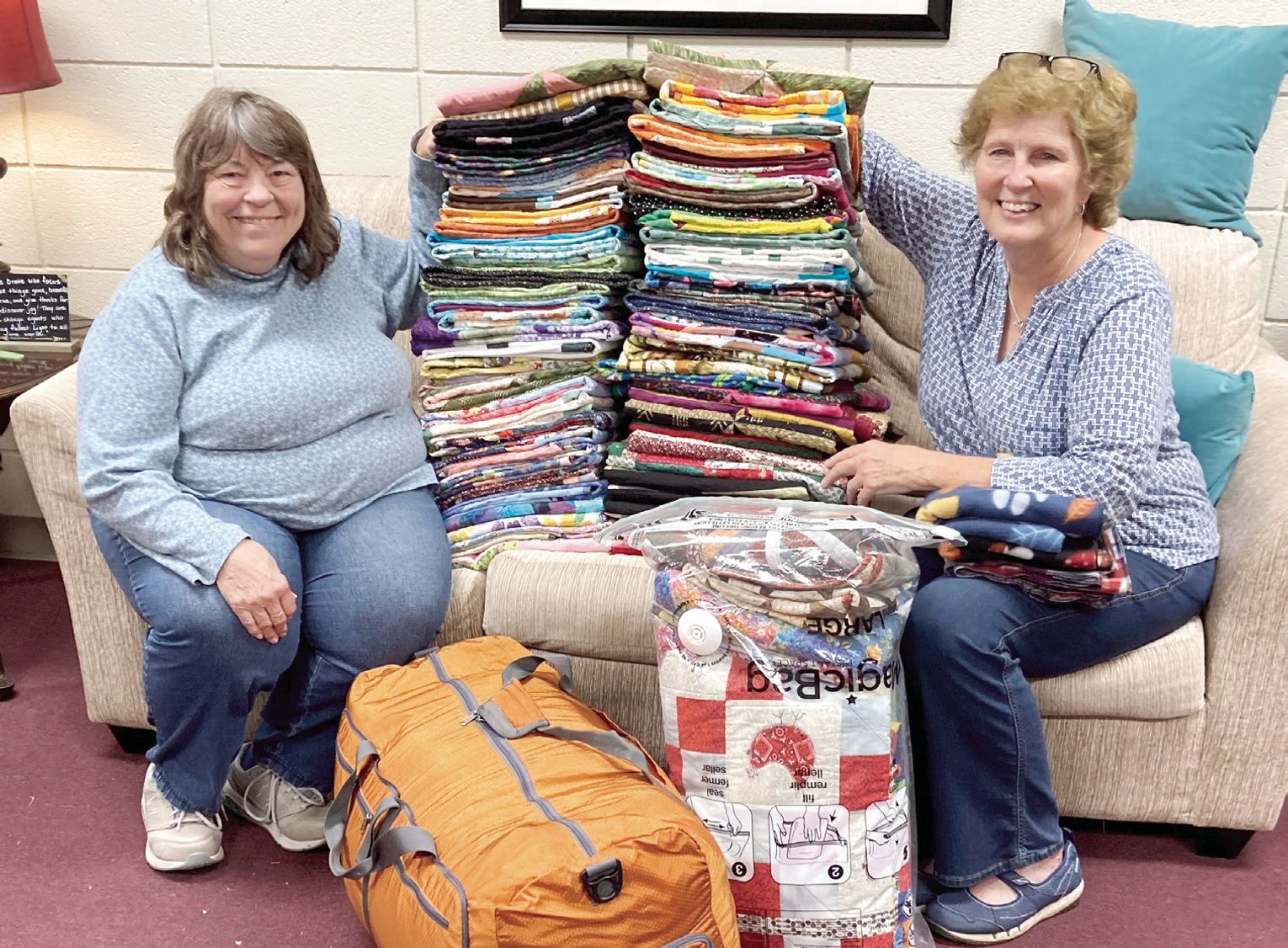
This summer, 110 people in Kenya are living with a little piece of Macomb in their homes. Pieces to be exact. The local Prairie Quilters guild responded to a call for handmade gifts to be used in conjunction with a multiorganizational effort that provides wheelchairs to people of all ages in a country that often regards disability as a curse.
Last fall, Darlene LaPlue, co-founder of Luke 14 Ministries in Morristown, TN, posted a request for 36-inch square blankets, which would be given to Kenyans during the organization’s wheelchair distribution mission this past May. Koreen Caldwell of Macomb, her friend since their first days at Bryan College, saw the post and responded in a big way.
“I presented it to our guild in November and they said, ‘Yes, we'd love to do that,’” Caldwell said. Details of the project were presented at the guild’s February meeting but, by then, many members had already started sewing to meet the April 30 deadline. In early May, Caldwell and her husband, Dennis, took the quilts to Tennessee. Although Wheels for Kenya received 400 blankets, including fleece and crocheted pieces, the gifts from Macomb were extra special.
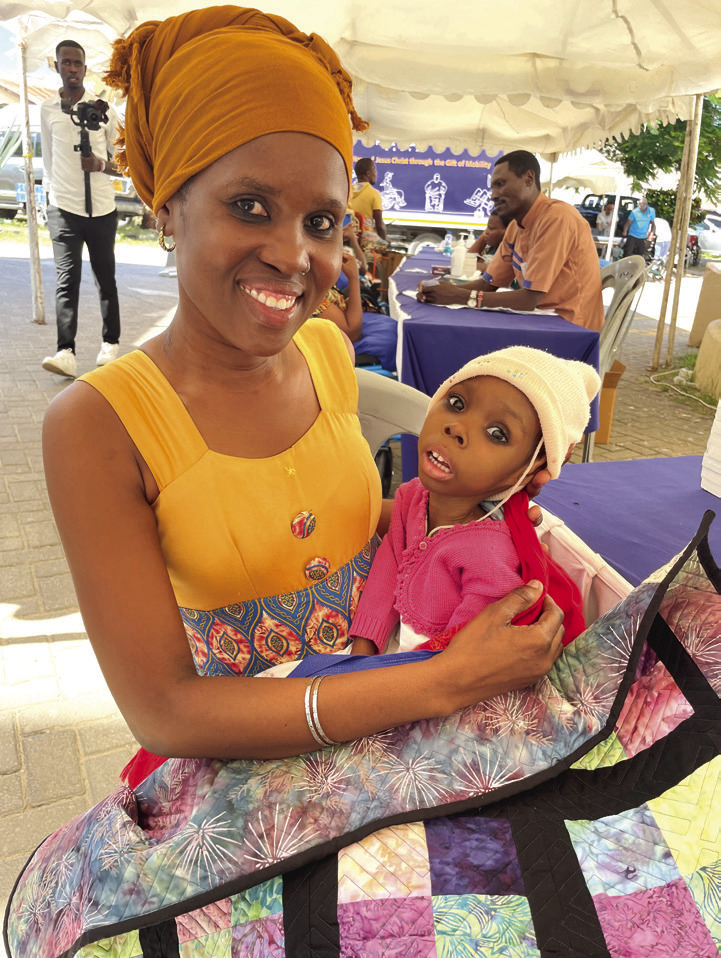
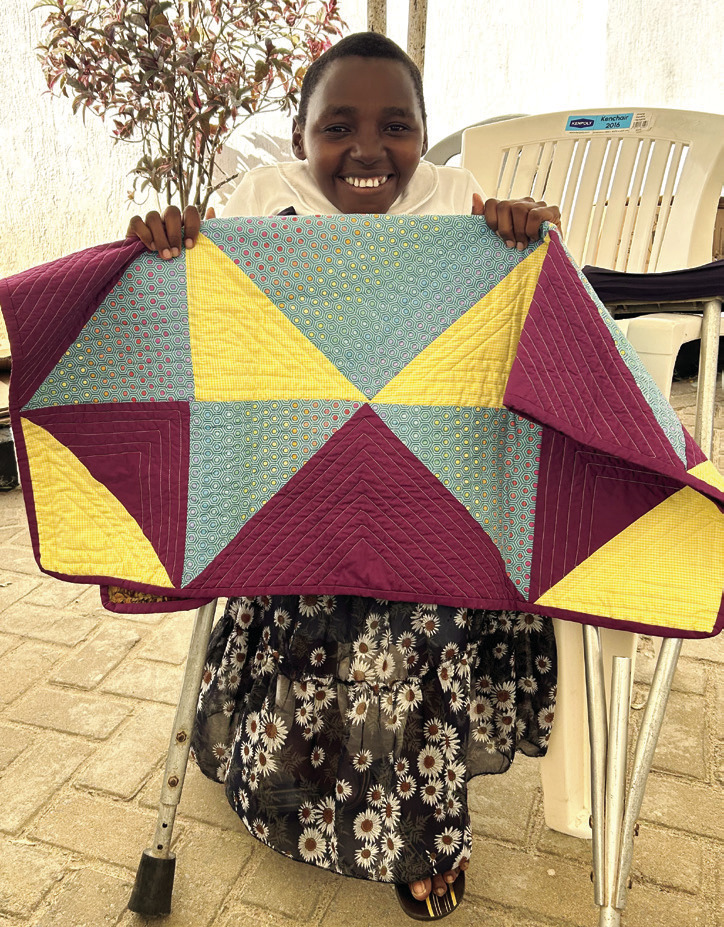
“These women gave their best, and it communicated volumes to the people in Kenya,” La Plue said. “I'm telling you, they felt so honored and loved by those quilts. I could just cry thinking about it. I wish you could have seen their faces.”
Understanding Wheels for Kenya Wheels for Kenya is one of four missions central to Luke 14 Ministries’ mission to “help families and individuals affected by disability find community and connection through Jesus and his church.” It has distributed between 1,200 and 1,400 wheelchairs plus walkers, canes and crutches in Kenya since 2017.
Once a year, a team of physical therapists, nurses, mechanics, and support people organized by Wheels for Kenya travels to Africa to fit and adapt wheelchairs of all sizes to people who often travel great distances to receive them. Two other organizations help prepare for the expeditions.
Joni and Friends, led by evangelical Christian Joni Eareckson Tada, who was paralyzed in a diving accident nearly 60 years ago, collects used adult wheelchairs and sends them to federal prisons, where they are refurbished by prisoners in wheelchair workshops. Then the wheelchairs are shipped to Kenya.
Pediatric wheelchairs are built in a new factory in Kenya, the result of a ministry led by Michael Panther, who became paralyzed as a child while living in South Sudan. Panther organizes the distribution in Kenya. His presence at the event is an important part of the mission.
“He rolls up in his chair and he starts talking, telling them that God loves this child and God loves you,” LaPlue said.
Changing Cultural Beliefs
In Kenyan culture, according to LaPlue, many children with a disability and the women who bear them are believed to be cursed by God. The children remain hidden in homes, some growing into adulthood without neighbors knowing of their existence.
“It carries such shame to have a child like this,” she said. People with disabilities who do leave their homes, crawl on their hands and knees or scoot. Others are carried.
“When a group like Wheels for Kenya brings them wheelchairs all the way from the United States and gets them up off the ground, they feel seen. They feel like God does love them after all. It really makes a difference in their lives to know that someone loves them and they’re not cursed.”
Despite having 250 wheelchairs to distribute in late May, Wheels for Kenya didn’t have enough.
“It was heartbreaking,” LaPlue said. “We saw some of them just sobbing their eyes out.”
And that’s when the quilts from Macomb became especially important to the mission. Although everyone who received a wheelchair also got a blanket, most of those who didn’t get wheels received quilts.
Through an interpreter, LaPlue told the women who didn’t receive wheelchairs for their children that she had a gift for them.
“I wish you could have seen their faces. It just went from agony, literal agony, to shock [that someone was giving them a gift],” she said. “These quilts were not just any quilt. They were gorgeous. Every single one of them was a work of art, fine craftsmanship. The quilts were the nicest gift that we had by far. I feel certain that those lap blankets are not on people's laps… I am pretty sure if we went there today, we would find those quilts on the wall.”
Besides the quilt, LaPlue and Wheels for Kenya gave promises that they would come back again with more chairs.
Knowing Quilting Lingo
Although the finished piece is called a quilt, quilting is only part of the work. It begins with choosing a pattern, then fabric for the pattern. Sewing each piece of fabric together for the quilt top is called piecing. A full-sized quilt top can have more than 500 pieces. Quilting is the process of sewing together layers of the quilt top, a thicker piece of fiber called batting and the bottom piece of fabric. This had been done by hand for millennia, but modern quilters use a special sewing machine called a long arm to connect the pieces of large quilts, often with an ornate stitch pattern. Not all quilters have long arm quilting machines. Many take their completed quilt tops to specialists to finish their projects.
Quilting is an ancient craft that began in Egypt, with evidence of its origin around 3400 BCE. The thick fabrics were used for warmth. The availability of sewing machines, patterns and an unending selection of fabrics have made it an art more than a necessity.
Specialized tools have sped up the process. The rotary cutter was a game changer, according to Prairie Quilters members. It’s scissors on wheels – one to be precise.
“A rotary cutter is a circular blade, like a pizza cutter, only it’s smaller. Most quilters these days use a rotary cutter, a mat and rulers, rather than what grandma did with the template, where you draw it out on the fabric and cut it out with scissors. That's why people are able to produce so many quilts in such a short time.”
Caldwell said quilting is easy to learn, but the right tools, patience and persistence are required.
Working Together for Good
“Quilters collect lots of fabric – and then feel guilty about it,” said Caldwell, who has been quilting for five decades. For many, that guilt is relieved by sewing for special causes.
“Quilting seems like a selfish thing that I do. But when you have a project like this and you feel like it is really making a difference, then it's worthwhile – more than just for fun,” she said.
Despite most quilters keeping a robust supply of cloth in their homes, former Prairie Quilters president Cheri Allison is the keeper of the guild’s fabric, most of it donated. She recently counted nine totes, not including batting, in her basement.
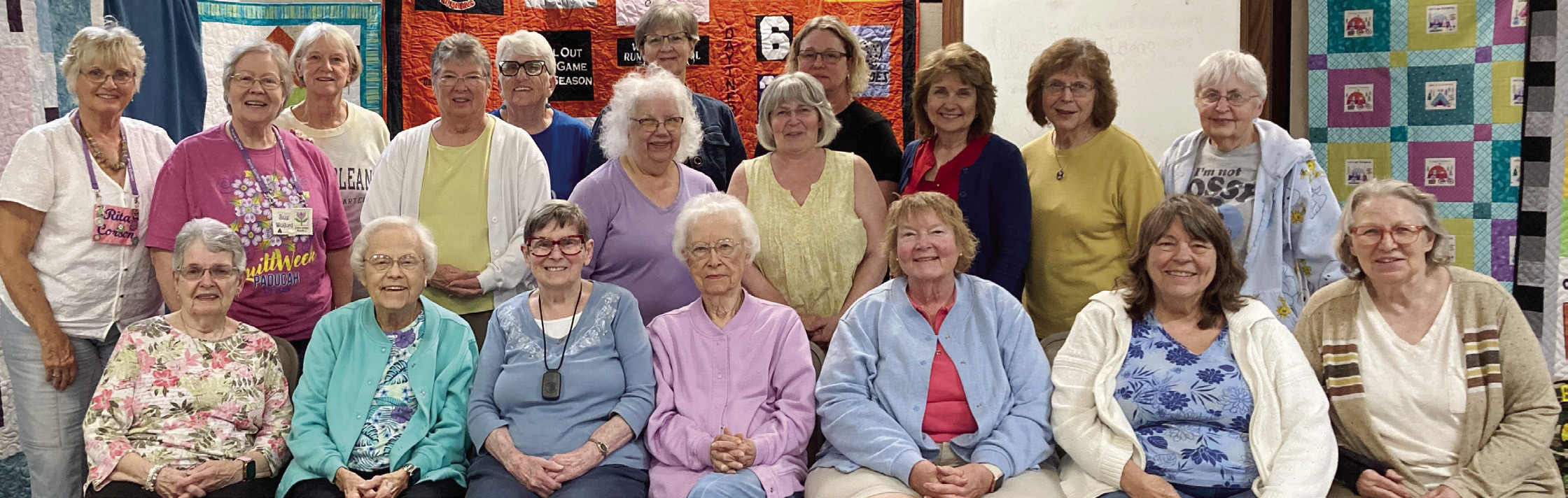
To begin the Wheels for Kenya project, a few guild members spent a day in Allison’s home creating several 36-inch quilt kits that included precut fabric and patterns. The members also chose their own patterns and fabrics. On one of the guild’s two yearly workdays, they sewed together. However, most of the 110 quilts were made by members in their own homes.
Because of the quilts’ size, a long arm machine was not required.
“Since these were 36-inch quilts, it was easier completing the quilting by the creator,” Allison said. “Most of the quilts that were created by the Prairie Quilters were probably done on the quilters’ own domestic sewing machines.”
Caldwell, whose favorite part of quilting is piecing fabric, said, “This was so fun because it was a small project. You could whip one out in a couple of days, easily. It's like a puzzle. I love the way it fits together.”
Accepting New Guild Members
Although Prairie Quilters members are female and most are retired, neither is a requirement for membership. An increasing number of younger people are picking up the art. Guild members are willing to help. Prairie Quilters meets at 7 p.m. the second Thursday of every month at University Baptist Church, 315 Sherman Ave., Macomb.