County Board to Discuss, Act on Moratorium Resolution Next Month
*Editor’s Note: This is the final story in the five-part series by A.J. Rocca and Darcie Shinberger on rising electrical costs.
Following Ameren Illinois’ June 1 hike in the cost of electricity from 8.8 cents per kWh to 11.3 cents per kWh, The Community News Brief published four articles exploring factors contributing to these historically high prices.
In the course of writing the series, writers queried several authorities on the energy situation in Illinois, including the Illinois Power Agency (IPA), the Illinois Commerce Commission (ICC), Ameren Illinois and the Midcontinent Independent System Operator (MISO). While several factors were identified as influencing rising electric costs including climate change and the green energy push, nothing was mentioned more frequently than data centers. A spokesperson for the Illinois Power Agency commented that rising prices in recent years were almost entirely due to “current and forecasted electricity demand surges, primarily fueled by the proliferation of new data centers.” For the final entry in the series, the story provides an overview of what data centers are, why they use so much electricity and how people have responded at the local, state and national levels.
What is a Data Center?
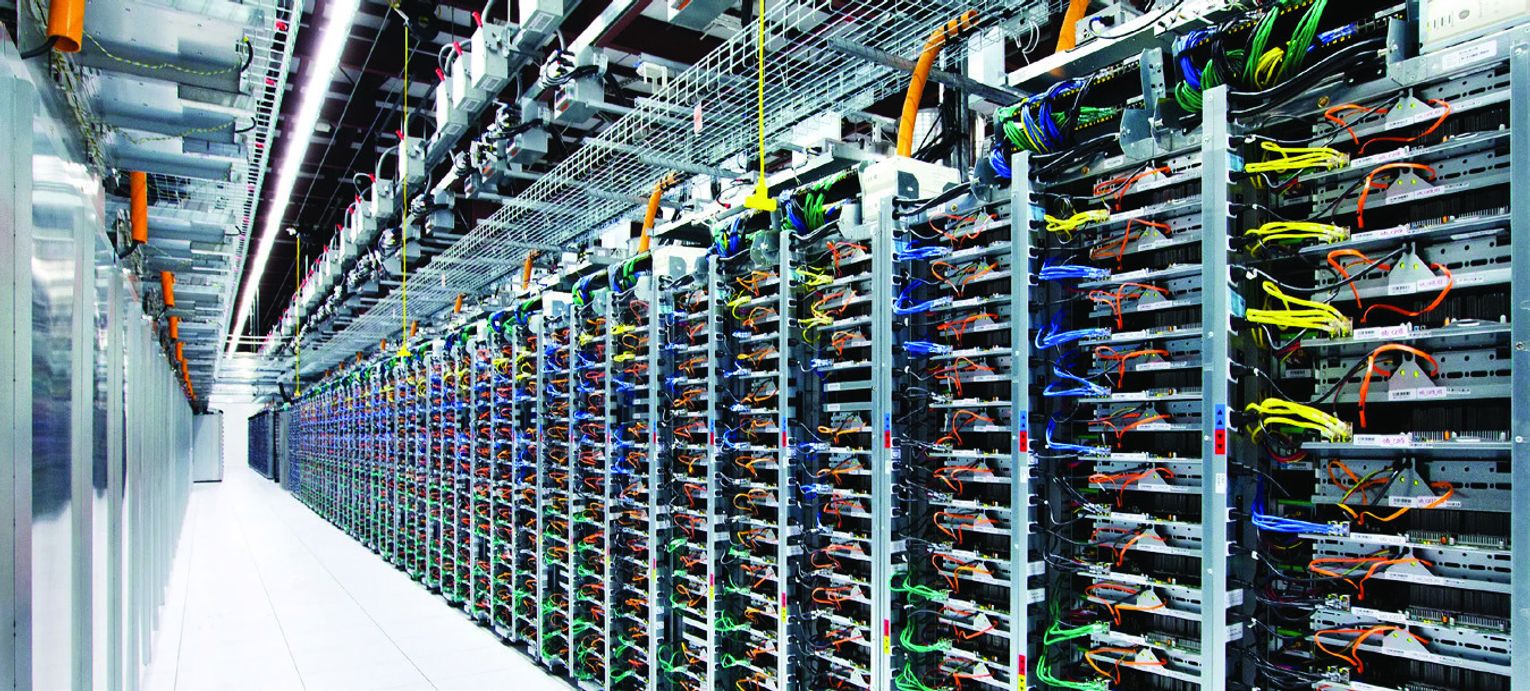
A data center is a facility housing the computer servers needed to process the data making the Information Age possible, enabling things like social media, email and the internet. Data centers have been around for decades; however, they represented a relatively minor strain on the electric grid before the arrival of new compute- heavy technologies like cloud computing, cryptocurrency mining and most dramatically, artificial intelligence (AI). Before an AI system can even be used, it must be trained using massive amounts of information. For example, OpenAI’s ChatGPT-3.5, which kicked off the AI boom in 2022, was trained using 45 terabytes of data (one terabyte represents enough data to store about 80 million pages worth of text). Interactions with users also prove data and energy intensive. According to a report by Goldman Sachs, the average ChatGPT query requires about ten times as much electricity as the average Google search query; OpenAI last year reported that ChatGPT handles about 2.5 billion such interactions every day.
Energy Consumption & Data Centers New data centers are being constructed across the country to facilitate the new data processing needs: in Illinois alone, there are 139 known data centers currently operating, with another 123 planned for development. According to a recent report by BloombergNEF, data centers already use 5.9 percent of the energy consumed in the United States, and they are projected to use up to 20 percent of U.S. energy by 2035 if current trends continue. Even the smallest data center typically requires about one megawatt (MW) to function, enough electricity to power several hundred residential homes.
A larger facility like Elon Musk’s “Colossus” facility in South Memphis, TN uses 150 MWs, enough electricity to power 100,000200,000 residences. There are also several “hyperscale” data centers planned across the country like “the Stratos Project,” which was recently approved to be built in Box Elder County, UT: if completed, it will be the largest data center ever built and at full capacity will consume 9 gigawatts (GW) worth of electricity.
9 GWs is 9000 MWs— double the amount of electricity currently consumed by the entire state of Utah.
The rapid proliferation of data centers has proven difficult to plan for both power companies like Ameren and ComEd, as well as the government agencies like the IPA and ICC, which regulate them. The sheer amount of electricity used is not itself unprecedented: large-scale industrial projects like factories also use power in the MW and GW range. What makes data centers so tricky when planning for the state’s energy future is the sheer number of them currently jockeying to come online along with how quickly they can be built. As ICC Executive Director Jonathan Feipel put it, new data centers “can put gigawatts of power on the grid practically overnight,” rapidly outpacing the time it takes for new generation sources to come online to meet demand. A data center can be developed in as little as 18 months; a new nuclear power plant, by contrast, takes at least five or six years to start operating. This imbalance between new demand from data centers and lack of supply from new generation sources is largely responsible for the current boost in prices.
Supply and demand imbalance also creates problems for states attempting to transition to green energy.
Illinois, for example, in 2021 passed into law the Climate and Equitable Jobs Act, which mandates the state to gradually wean off fossil fuels like gas and coal and shift to 100 percent green energy by 2045. However, green energy efforts like these have been frustrated nationwide by the sheer amount of load data centers are exerting on the grid.
Currently 56 percent of data centers nationwide are powered by fossil fuels. This discourages the shuddering of coal and gas-fired plants, and it incentivizes the existing plants to generate more electricity, thereby increasing CO2 emissions. Writing for the MIT Power Initiative, Nancy Stauffer said, “There are simply not enough sources of renewable energy to serve both the [new data centers] and the existing users, including individual consumers. As a result, conventional plants fired by fossil fuels such as coal are needed more than ever.”
A Speculative Market Another problem presented for a utility like Ameren or ComEd when negotiating with data centers is that the developers will often come in on a highly speculative basis without a solid guarantee that the project will ever actually materialize. Data center developers will consider locations in several different states and compare offers between them to see who will give them the best deal (tax breaks, discounted water and electricity rates etc.) before finally deciding on a location. Often data center projects will be abandoned only after the power company has started to build infrastructure to connect them to the grid, leaving the utility, and ultimately, the ratepayers are stuck paying for the stranded assets. In response, ComEd, the electric utility for the Chicago area, has introduced penalties to discourage these large demand projects which never actually materialize.
“Earlier this year, the ICC approved deposit protections for ComEd and its customers in the event a large demand project is canceled or abandoned to help curb speculative data center projects who are willing to shop around,” said ICC Executive Director Jonathan Fiepel “Ameren has filed for similar protections.”
The Government & Data Centers There have been a variety of responses to data centers across different levels of government. The Trump administration on the federal level has championed AI developments. One of the first things President Donald Trump did after returning to office was to announce the Stargate Project on Jan.
21, 2025, which promises $500 billion to develop data centers across the country.
Gov.
Illinois Gov. J.B. Pritzker, on the other hand, has grown increasingly critical of them. Last month, he suspended tax credits that he himself signed into law in 2019, which incentivize data center development in Illinois, citing their effects on electric and water prices for consumers as a leading reason for his decision.
Pritzker has also championed the Protecting Our Water, Energy and Ratepayers Act, or the POWER Act introduced to the Illinois General Assembly last February, which would require data centers hoping to set up in Illinois to provide for their own water and energy needs. While the bill failed to pass during the assembly’s last legislative session, the idea that data centers should be forced to provide their own energy has grown increasingly popular with Illinois Democrats.
Eric Sorensen, U.S. Representative for Illinois’ 17th Congressional District, which includes McDonough County, broadly agrees with it.
“I don't believe there should be a moratorium [on data centers] as we need data to innovate,” Sorenson told The Community News Brief during a recent interview.
He went on to argue that there are four criteria a data center should meet before setting up for business: “Before a center is approved in a community, it needs to meet the following criteria: have a water-use plan [like gray water or a closed loop system] in place—no one's water rates should go up; homeowners' energy bills should not go up—they need to use wind and solar to produce their own power and use battery storage to store to use later; the center is not sited anywhere near a residential area as they produce a hum; and, every one of these need to be built with union labor. When those four criteria are met then we should be able to welcome them as we've safeguarded our communities,” he added.
Off the Grid
Several data centers have already opted out of connecting to the grid. Constellation Energy, a company which owns several nuclear power plants including the Clinton Power Station in Illinois, has offered to have data centers “co-locate” with their facilities, meaning their energy gets directly supplied by the plant without going through the electric grid. The Stratos Project mentioned earlier plans to supply for its energy needs by constructing its own gasfired power plant supplied by the Ruby Pipeline. While this spares Utah ratepayers from having their energy bill go dramatically up, it will come at a steep cost for the environment: Utah Clean Energy estimates the plant will produce about 30.2 million tons of carbon dioxide a year, increasing Utah’s CO2 emissions by 55 percent.
Experts further estimate that energy output from the plant could raise Utah’s daytime temperature by five degrees Fahrenheit and nighttime temperatures by 28, threatening to transform Utah’s semi-arid climate into a desert.
Had it passed, the POWER Act would have required that data centers not just offset their energy needs, but offset it with green energy. They would need to either locate off the grid and provide for their own needs with something like a solar farm, or they would have to invest in green energy facilities elsewhere on the grid to offset the electricity they draw from it. While most Big Tech companies have produced a huge uptick in net-emissions since the AI boom—Microsoft’s sustainability report, for example, shows a 23 percent increase in emissions over 2020—they’ve also proven some willingness to invest in green energy similar to what the POWER Act would have mandated. Amazon has 13.6 GWs worth of capacity in solar farms currently under development, equal to the total amount of solar energy produced by Texas, California and Florida combined.
These companies have also increasingly invested in nuclear power: Mark Zuckerberg last year agreed to provide a 20-year stipend to Constellation Energy to support the Clinton Power Station.
Local Government Action Perhaps where data centers have encountered the stiffest resistance has been on the local level. There are currently more than 100 moratoriums against the construction of data centers passed by towns and cities throughout the country, and organizing by residents have defeated several attempts to place a data center in their county.
There are several pros and cons a community must weigh when deciding whether they want to host a data center. On the pro side, a data center can bring in hefty tax revenue, and contrary to popular belief that doesn't bring any jobs, economists Dany Bahar and Greg Wright found that counties with data centers tended to experience a boost in employment of about 4-5 percent. On the other side, data centers can drive up the price of water and also bring noise and air pollution.
They also impact the cost of electricity, but it’s important to remember that because of the way energy markets work, data centers would still impact your energy bill whether they’re in your backyard or not. Even if data centers were outlawed throughout all of Illinois, they would still compete for our energy resources if located in surrounding states on our electric grid as us.
McDonough County itself is currently considering whether to pass a two-year moratorium on data center construction.
The proposition is being discussed by the County Board’s Law and Legal Committee at its Aug. 3 meeting and will be brought before the full board for a vote on Aug. 19.
The Community News Brief also reached out to Macomb City Administrator Scott Coker to ask whether the City of Macomb had any plans underway regarding the construction of data centers.
“The City hasn't had any discussions with developers for data centers,” Coker commented. “Currently, they are only allowed by the special use process in B-2 and M-1 zoning districts.
We are researching the best path forward for the City with data centers, whether they should be allowed or not, and what the restrictions should be.”
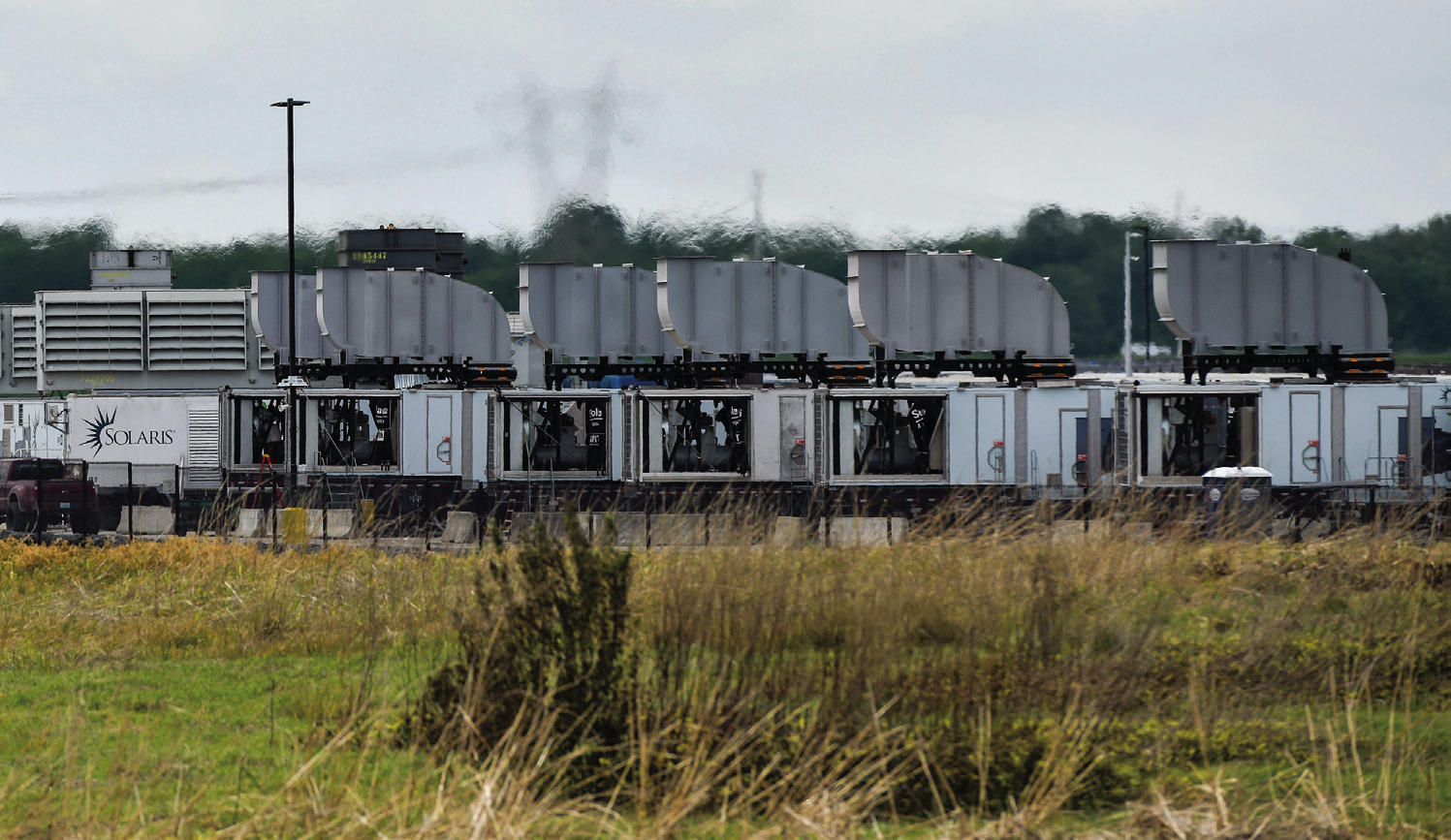
Elon Musk’s Colossus Data Center in South Memphis, TN.