For the second consecutive year, the American Heart Association (AHA) has awarded Memorial Hospital in Carthage with its Get With the Guidelines- Rural Stroke Gold Award. It recognizes the hospital’s commitment to delivering timely, evidence- based stroke care. Gold is the highest level of the AHA award.
“There's a higher incidence of death and permanent disability from stroke in rural areas due to the fact that patients do not come into the emergency room early enough,” said Victoria Popela, Dr.., chief medical officer and emergency department physician at Memorial Hospital.
Recognizing and Diagnosing Stroke Symptoms
The AHA encourages people to memorize the acronym B.E. F.A.S.T. to recognize stroke symptoms:
• Balance loss
• Eye (vision) changes
• Facial drooping or twisting
• Arm weakness
• Speech difficulty
• Time to call 911 The symptoms are the same for the two kinds of strokes – ischemic and hemorrhagic. Most strokes are ischemic strokes, which are caused by the blockage of a blood vessel in the brain. The main cause of blockage is a blood clot. In a hemorrhagic stroke, a blood vessel leaks or ruptures in the brain. The extra blood adds pressure in the brain, potentially making this a surgical emergency.
A transient ischemic attack (TIA) mimics a stroke but symptoms clear on their own in about 12 to 24 hours, Dr. Popela said. Some people refer to a TIA as a “mini stroke” or “warning stroke,” although it isn’t a true stroke. But it can be a precursor.
Quick diagnosis and treatment are required for the best outcome after a stroke.
“When a patient comes in with stroke symptoms, they go right to the CT scanner, generally,” Dr. Popela said. “That's time-critical as one of the goals is to do that within 20 minutes, and then have the report back in 45 minutes.”
The CT scan may indicate a stroke is occurring, in early stages the NIH stroke scale helps with the diagnosis, the emergency department physician consults with a Neurologist at a Stroke Center for next steps in treatment.
Beginning Treatment Quickly If there is a clot, it’s important to receive clot-busting medication through an IV within 4.5 hours of the onset of symptoms. It isn’t effective after that amount of time.
The medication usually is administered at Memorial Hospital. Then the patient is transferred to another hospital with a higher level of stroke care.
“Rural providers are a little bit hesitant to pull that trigger because sometimes when you dissolve a clot too fast, an ischemic stroke can turn into a hemorrhagic stroke where it's now bleeding profusely. And that requires potentially emergency management in a tertiary center.”
Dr. Popela explained that patients who miss the timing for the IV medication may be candidates for a procedure called a thrombectomy, which also is performed at a hospital with a stroke center. An interventional neurologist removes the clot through a catheter inserted in the wrist or neck.
“If that’s done within six to 16 hours, then they may reverse some of the damage of the stroke,” she said.
Memorial Hospital also is certified as an Emergent Stroke Ready Hospital by the Illinois Department of Public Health.
“We're proud of our team,” Dr. Popela said “It takes a team to make this work because you have to coordinate radiology and laboratory. EMS has to do their part. People need to make the phone calls, and you need to get the neurologist on the phone. It takes a team to really make this work.”
Meeting the Criteria The Get With the Guidelines- Rural Stroke Gold Award is based on Memorial Hospital’s percentage of performance opportunities that were met among 10 individual stroke care measures. These measures include:
• Having a CT scan within 20 minutes of arriving at the hospital
• Documentation of the last time the patient was seen without stroke symptoms or the time symptoms began
• Being in the hospital emergency department for no more than 90 minutes before being transferred to a hospital that provides a higher level of stroke treatment • Receiving screening for dysphagia (difficulty swallowing foods or liquids) before being given any food, fluids, or medication by mouth or taking nothing by mouth during the time in the emergency department
• Arriving at the hospital within 3.5 hours of the onset of symptoms and receiving clot-busting IV medication within 4.5 hours of the onset of symptoms
• Determining the severity of stroke using the NIH Stroke Scale
• Having the patient’s CT interpreted within 45 minutes of the patient’s arrival
• Receiving advanced notification from emergency medical services of a suspected stroke patient’s arrival in the emergency department
• Receiving telehealth consultation with a neurologist at a stroke center
• Ischemic stroke patients receiving IV medication to dissolve a clot within 60 minutes of arriving at the hospital
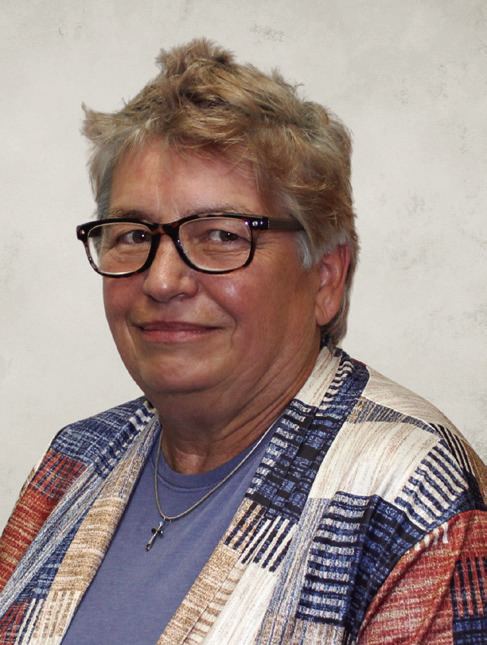
Dr. Victoria Popela