Alternative Energy – Part 4: Climate Change, Rising Costs & Dealing with Mother Nature's Extremes
A Discussion with U.S. Rep & Meteorologist Eric Sorensen
From rising temperatures to more frequent floods and droughts, scientists at the National Oceanic and Atmospheric Administration Home point out that climate change is transforming the environment and the resources people rely on every day, including air conditioning and heating their homes and businesses.
In part of the series on alternative energy, rising electricity and gas costs and the factors contributing to rising costs, The Community News Brief sat down with U.S. Rep. Eric Sorensen, the only meteorologist serving in Congress and the author of a bipartisan bill to establish a National Weather Safety Board (NWSB). According to Sorensen, summers are getting hotter, which has a drastic impact on consumers' electric bills.
'When we look across the country, we are having way more record highs being set than record lows. Even during the colder seasons, it's even harder to afford our heating bills,' Sorensen explained. 'Programs like Low Income Home Energy Assistance Program (LIHEAP), which provide assistance, have been drastically reduced at the federal level at a time when utility rates are rising faster than take-home pay. We have to have the ability to provide assistance with utility bills, and programs such as weatherization, which can help lower utility bills.'
According to Sorensen, a straightforward way to explain how climate change is impacting the Earth, and all that goes with it, the more heat (or energy) that goes into the climate system, the more energy that comes out. As more heat is added to the lowest part of the atmosphere, it's not just affecting air temperature, it's providing more energy for storms.
'We're seeing increased severe weather across the country. I never thought we'd have 80 to 100 miles per hour winds in thunderstorms and we're getting that nearly every time,' he added. 'This is also why I want to establish the bipartisan National Weather Safety Board Act, which is similar to the National Traffic Safety Board. I became a meteorologist because when I was growing up in the 1980s, there were a lot of plane crashes that were caused by severe weather. A lot of discoveries happened, and from that, now the weather isn't causing plane crashes like it once was.
'I also realized just what an impactful role weather plays on our lives, and the need to predict severe weather and keep tabs on what's happening, even more so after July 4, 2025 and the Camp Mystic tragedy in Texas. This flood killed dozens of small children. If that was a plane crash, we'd want to know what went wrong, but when it's weather-related, we have politicians pointing fingers at everyone else,' Sorensen shared. 'The NWSB will be a 10-person board composed of some of the smartest people to figure out how we can build weather-resistant communities. We must do more to legislate resilience so we don't have another Camp Mystic tragedy. I have a Republican representative from 'tornado alley' who is very interested, as well as a Republican representative from Florida. We understand the impact of these severe weather events and we need to better prepare our communities. This also has the potential to have a positive impact on rising costs for consumers.'
While climate change is happening rapidly and the Earth's population can't undo everything done to date, Sorensen stressed it's about making good decisions going forward to further reduce the future risk. Every year that actions are delayed, the costs grow, he added.
'I'm a big believer in that we need an all-of-the-above approach to energy: wind, solar, nuclear. It was a slap in the face to every American when we had wind generation that was going to go online in Knox County and the current federal administration just pulled the plug. Politics are being with people's livelihood and that has to end,' Sorensen stressed. 'We have to bring back incentives for people to install solar panels, to weatherize their homes. Anything that can take the burden off the grid. We also have to stop going after these critical organizations that study and predict weather.
'DOGE also went after the National Weather Service (NWS), and made drastic cuts to that office. I found a Republican colleague in Nebraska who wanted to work to save the NWS,' he said. 'Now we can celebrate that DOGE is no more and that the NWS has been restored. We need to support the National Oceanic and Atmospheric Administration (NOAA), as well as FEMA for post-disaster help.' Because of climate change impacting the environment, funding – and supporting – organizations like the Federal Emergency Management Agency (FEMA) is critical because severe weather is going to only get more dangerous, the longtime meteorologist noted.
'Tornados, derechos, flash floods, drought – they're like a dart hitting a dart board. They can hit in the same place once, twice or three times or somewhere else the next and come back around. No community is immune to a disaster, and again, knowing that we must build resilience. We have to react,' Sorensen stated. 'It's not about politics, it's about being smart. Seven of the top 10 floods on the Mississippi River have happened since the great Flood of 1993. That's our barometer and it's happening so frequently. We have to make sure our flood plains can withstand flooding. Stop building on the flood plain and stop creating this energy that impacts our weather.'
Sorensen also noted that a variety of power sources are necessary, such as hydrogen, wind, nuclear and solar. He suggests decarbonizing power sources, as well as the transportation sector. For him, it's about doing everything he can as a member of Congress to make sure people keep money in their pockets.
According to Sorensen, the Inflation Reduction Act, which also provides Investment Tax Credits for solar panel installation and other clean energy projects, needs to be restored. He explained the administration's 'big beautiful budget' bill cut not only food and other social services assistance for individuals, it cut energy-related incentives that lower costs. Community News Brief writer A.J. Rocca covered the effects of H.R. 1 on green energy projects, especially the additional strain it creates for local ratepayers to make up for the loss of the tax credits.
'One thing we don't think about every day is that our failures to respond to climate change are already costing us money. We're already paying for this, and it has become very, very expensive for everyone,' Sorensen said. 'What we do today is our down payment for the future. This is why I do this. That's why we have to bust the political divide.
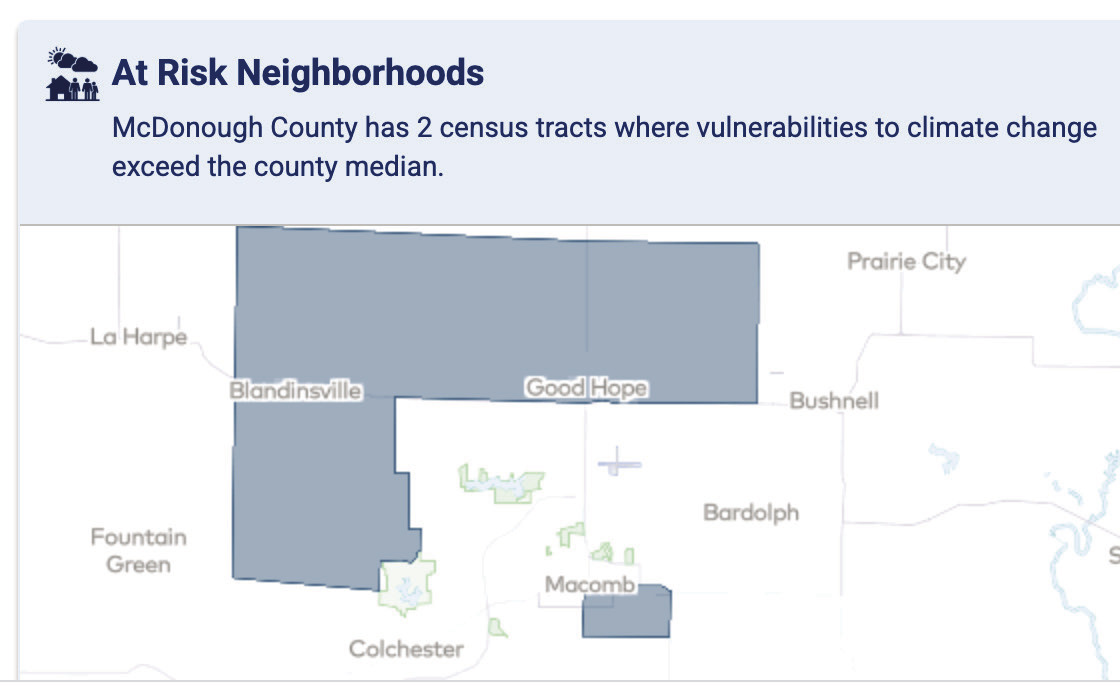
You can't tell a farmer that climate change is a hoax. They're dealing with the most extreme of Mother Nature, and they're dealing with it on their own.'
What can the average citizen do to help in terms of not contributing to global warming and climate change?
Sorensen said it's simple: do what is responsible. These efforts take numerous collectives, he said … pennies turn into nickels, nickels turn into dimes and so on.
'Save energy wherever you can. Ride an e-bike, walk, turn the thermostat up or down, but one of the most important things we can do is teach the next generation so they understand they need to take care of what's around that,' he concluded. 'I learned that growing up. I went to a Catholic school for 12 years, and we had a priest who said we must be good stewards of what God has given us. Whether you're a person of faith or not, it's very important to do what's right.
Our farmers believe this. They're tending to what has been given to them through regenerative farming practices and doing what's right for the land.'