Village Experiences Greatest Growth in Last Quarter of the 19th Century
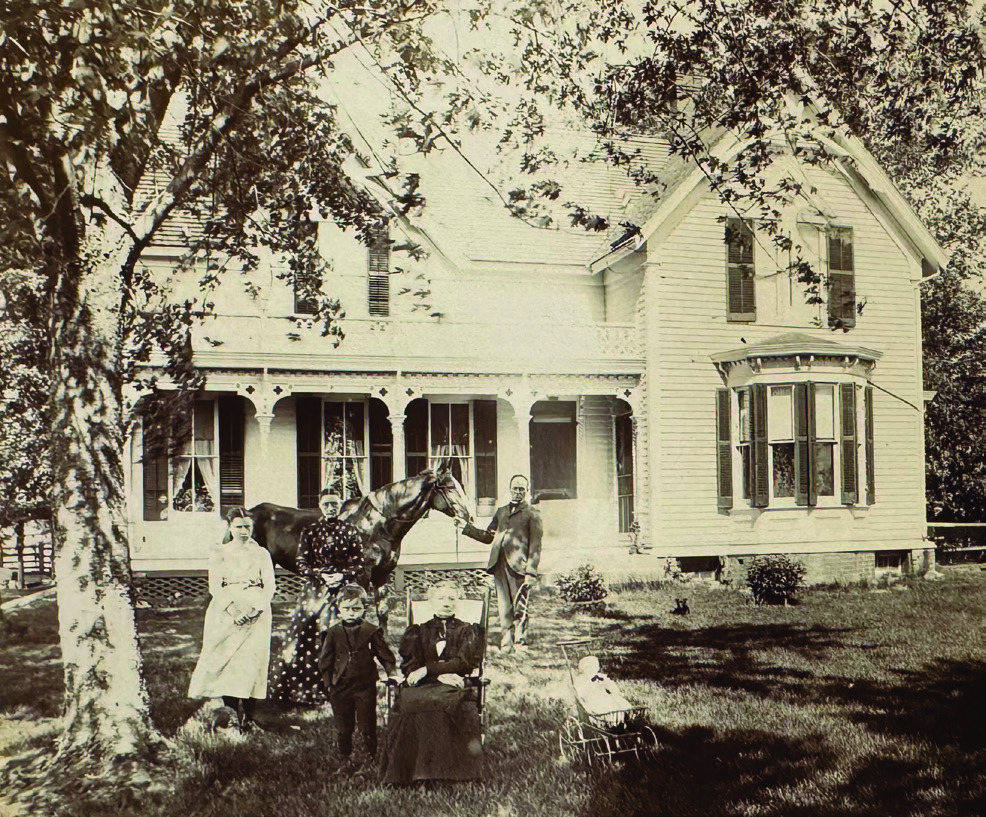
In 1860, Vermont native William F. Blandin built a home immediately south of what is now Good Hope, near the junction of U.S. Highway 67 and Route 9. In the home, he operated a post office for an unincorporated area in Sciota Township, which he named “Good Hope.”
Note: Joseph L. Blandin founded Blandinsville, about 10 miles west of Good Hope, in 1842. He also came to Illinois from Vermont. Willam Blandin was not a son of Joseph Blandin, but they were related.
In 1867, the Toledo, Peoria & Western Railroad had completed its line to Bushnell and was ready to continue building westward. After the line was surveyed, J. E. Morris, who lived on land where West Prairie North Elementary School sits, quickly laid his stake for a town on the northeast side of the proposed tracks, which he named Milan. Soon after, Blandin platted a town northwest of where the new tracks would be laid. He named it Sheridan.
The confusing rivalry continued for a couple of years. The railroad issued its first tickets to Sheridan, the conductor called out “Milan” when the train stopped, and letters were addressed to Good Hope.
The residents came to a consensus and named the community the Village of Good Hope when it was incorporated on May 12, 1869. The first village president was James L Harden.
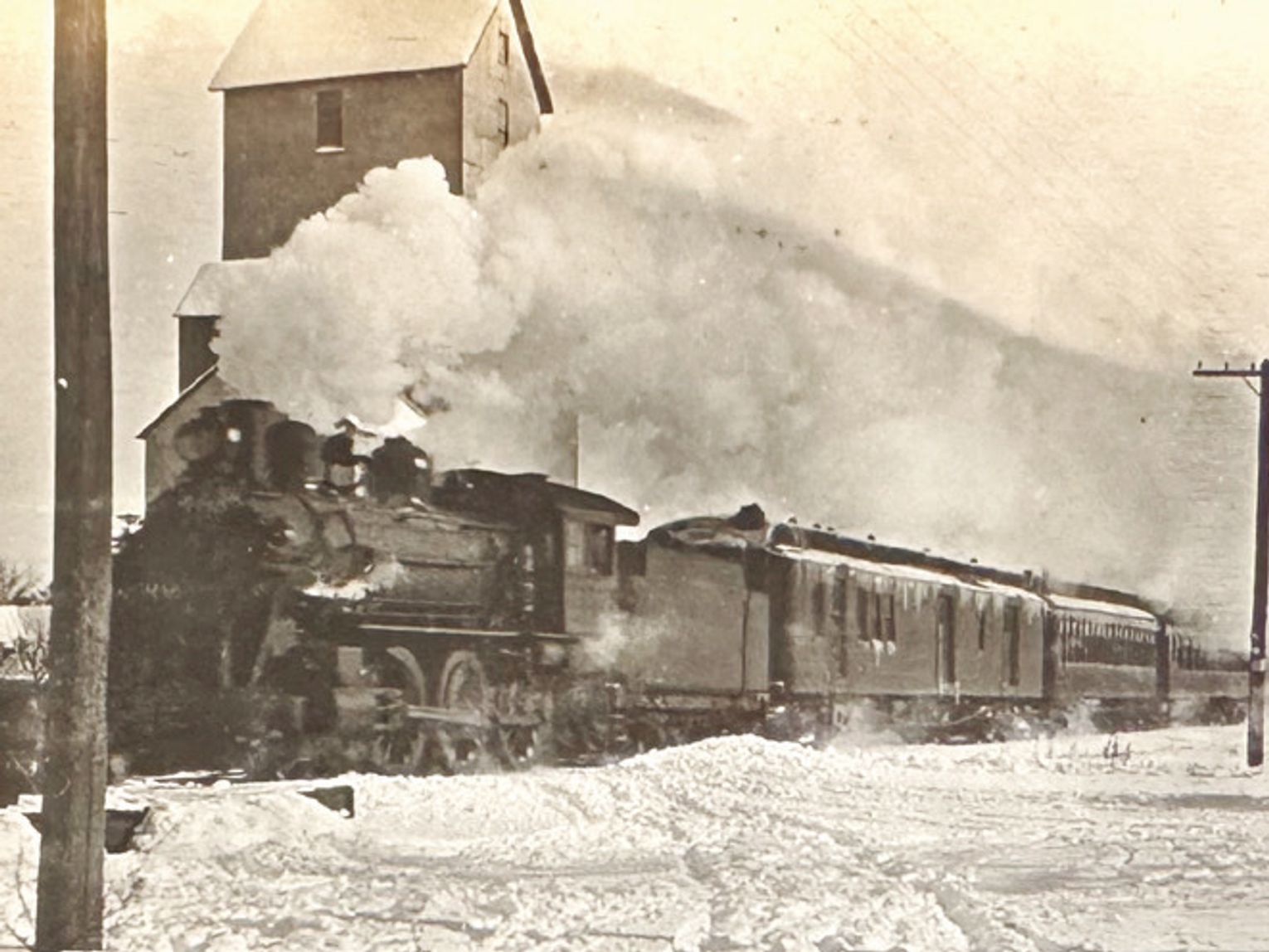
Although houses were built on the east and west sides of the village, businesses opened on the west side near the train depot. By 1875, most residents had moved to the west side of town to be near its commerce center. In 1890, there were four passenger trains and four freight trains every day. Mail was carried twice a day on the passenger trains.
Businesses Develop Quickly
The Collins & Hannaford Lumberyard was the first business in town. In 1885, Good Hope had three grocery stores, livestock dealers, an agricultural machinery dealer, a harness maker, a hotel, restaurant, three doctors, two lumber yards, a drug store, a livery barn, a wagon shop, a shoemaker, two blacksmith shops, three general stores, a hardware store, a tin shop, building contractors and a tonsorial artist (barber).
In the late 1800s, Good Hope Tile Works was the most profitable industry in town. Having opened in 1883, its mill manufactured 600,000 tiles a year using a 45-horsepower engine and boiler, and three round kilns. The factory also made bricks from local clay.
Perhaps the only thing that didn’t thrive in Good Hope was the village’s only saloon. According to an article in the May 15, 1890, issue of the Macomb Journal, “There has never been but one year of saloons and is probably more than the citizens will ever allow again.”
The May 15, 1890, Macomb Journal article highlighted these businesses: · A man named G.A. McCartney ran the post office. He was described as a “red-hot Republican” who also sold stationery, books, tobacco and cigars in the post office.
· The first issue of The Index was published on Jan. 29, 1885. The newspaper’s name was changed to The Torpedo and, later, The Reflector.
· The first bank was built in 1890 on the southeast side of the square.
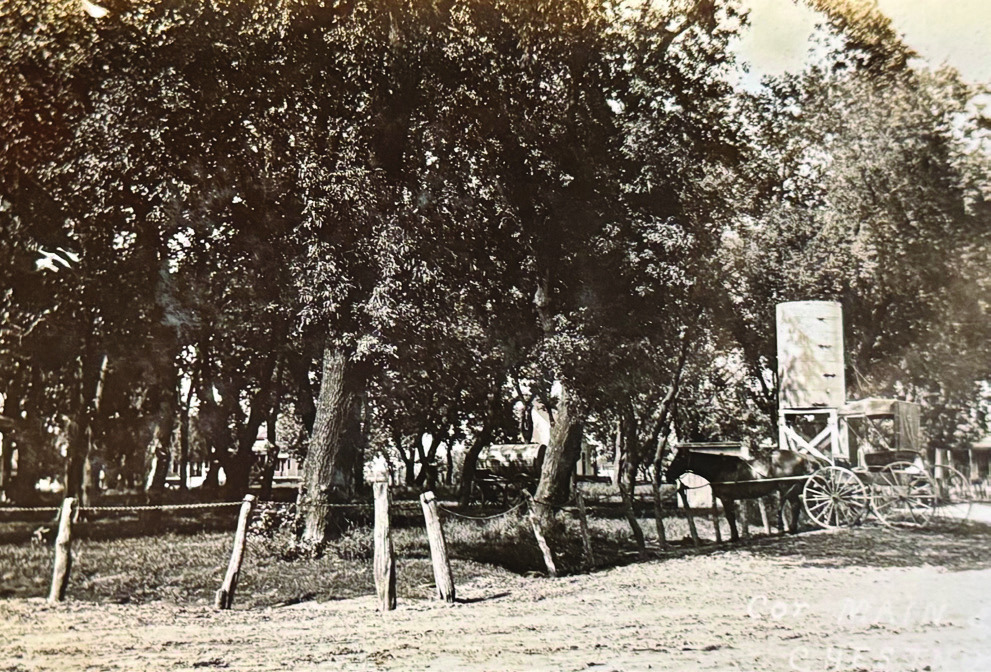
· A hotel was located just east of the square on Main Street. · James Statler operated three elevators with a storage capacity for 70,000 bushels of wheat. His mercantile was on the corner of Main and Chestnut streets.
· A store owned by J.E. James on Chestnut Street was noted for carrying about $3,000 in stock, including drugs, medicines, books, wallpaper, toilet articles, jewelry, cigars and tobacco, “temperance (nonalcoholic) drinks” and a soda fountain. He was a registered pharmacist.
· Hardin, Wagner & Co. on Chestnut Street sold lumber, agriculture implements and furniture. They also served as undertakers and provided embalming services. Furniture was on first floor and caskets were on second floor.
· C.H. Creel & Sons at the corner of Main and Chestnut streets sold dry goods, boots, “ladies’ fine shoes,” hats and notions.
· Dr. E.N. Campbell grew up near Good Hope and attended Keokuk College, where he became a physician and surgeon. Besides his general practice, he specialized in “diseases peculiar to women.”
· H.A. Allison was the grocer on Chestnut Street. He also sold grain, stock and coal.
· S.G. Ritter was the butcher on Main Street. He ran a meat wagon to feed farmers in the summer.
· S.R. Sapp and his son Elmer were horse breeders. They had two horses, a Clydesdale named Strathkyle and a dapple black named King Percha.
· Dr. W. R. Allison was an expert at removing moles, warts, superfluous hair and other blemishes.
· Dr. Rush, who graduated from Rush College in Chicago, practiced medicine, and he also was village president.
· E.C. McCartney made work harnesses, buggy harnesses and every kind of accompanying strap.
· J.F. Bonwell was the blacksmith. · S.W. Creel on Main Street ran a restaurant on Main Street in an “elegant” dining room. Oysters were on the menu when they were in season.
· Mrs. Orm, a milliner (hat maker) shared her shop on Chestnut Street with Miss Rena Barlow, a dressmaker.
· M.H. Bush painted and repaired carriages. · A.J. Hankins had a stable. His horses were Royal, an English Shire, Royal Prince, a Clydesdale, and Norman, who had a five-cross pedigree.
· W. Keithly was a wagon maker and woodworker. · Dr. VanPelt was the police magistrate who also ran a jewelry repair shop.
Schools and Churches Meet Villagers’ Needs The first district – public – school was built one-half mile north of town in 1874. Before that, a woman known as Miss Blandin conducted a “subscription school” in town. A subscription school was a private school in which the instructor sought out students whose families would pay tuition. In 1920, a three-room building that housed grades one through 10 was built in Good Hope.
Good Hope’s first house of worship was a Presbyterian church that was built in 1868. In 1875, the Cumberland Presbyterian Church building was moved from 2.5 miles outside of town to a lot in Good Hope. The two churches united and a new building was erected after a fire.
The church closed in 1933, although it was occasionally used for funerals, meetings and playing Pitch in the basement. The Church of Latter-Days Saints rented the building for two or three years before it was sold to a private owner in 1966.
The United Methodist Church is the only remaining congregation in Good Hope. It began as Franklin Centennial Church in 1856. The first church building was moved from the country to West Main Street, Around 1909, the old church building was sold and moved to a farmstead northwest of town. The existing church building was completed in 1910 for a cost between $12,000 and $17,500, based on a record of two construction bids.
Beginning around 1888, Missionary Baptist Church congregants met in a church building on the west side of the square.
The Good Hope Cemetery was established in the spring of 1882. According to one historical report, “The first person buried was a man by the name of Knox, a transient Odd Fellow who was buried by that lodge.”
Men Join Organizations and Clubs
The Good Hope Cornet Band, consisting of men, formed in 1890. Other early men’s organizations were the Masonic and Independent Order of Odd Fellows lodges, Ancient Order of United Workmen, Modern Woodmen and Royal Neighbors. Women joined Eastern Star, a branch of the Masons, and the Rebekah Lodge, which is associated with Odd Fellows.
A Highway Changes What the Railroad Built In 1967, the late Huldah Ruebush, who lived near Good Hope from her birth in 1898 to her death in 1991, compiled an early history of Good Hope.
“Years ago, many cattle were driven through town, and the park was fenced to keep them from wandering over the park,” she wrote. “Later on, hitching racks were put up on the south, east and north sides of the park. It has been said that when young men drove to town of the evenings, they could hardly find a place to tie their horses.”
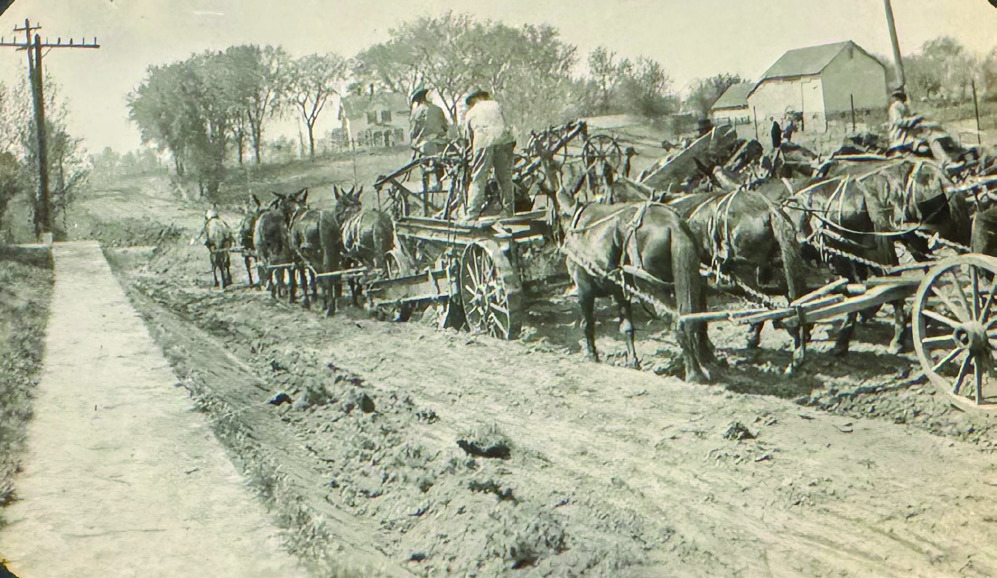
Good Hope continued to thrive until the 1920s, when the “hard road” (U.S. Highway 67) cut through the village, connecting Good Hope to Macomb to the south and Monmouth and the larger Moline and Rock Island to the north.
“Large trailer trucks began to truck cattle and hogs that used to go by train, and with cars and trucks of all sizes being so plentiful, Good Hope businesses began to close,” Ruebush wrote. “The depot was closed and passenger trains were taken off. Tractors and high-powered machinery replaced horses on the farms.”
According to DataUSA, Good Hope today is home to 438 people who still use the “hard road” to access services that are no longer available in the village.
More About William F. Blandin
William Blandin and his family left Good Hope around 1873 and moved to Texas. He died at the age of 80 on June 27, 1898 in Fort Worth. According to his obituary, “he was a prominent factor in the upbuilding of Fort Worth in its early days.” Blandin built and ran a successful flour mill until it was destroyed by fire. Then he raised fruit and operated a vineyard.
Sources for this story are a May 15, 1890, article in the Macomb Journal and written histories compiled by Good Hope-area residents Huldah Ruebush, Oska Loy and Lee Ren.