Alternative Energy – Part 3: Let the Wind Blow & the Sun Shine In
Harnessing the power of Mother Nature, while no small feat, can reap big rewards in terms of energy savings, especially at a time when “traditional” power from the grid is getting more and more expensive.
In Part 3 of The Community News Brief’s alternative energy series, the impact of climate change on electric bills and more, the focus is on area wind and solar farms. Cardinal Point Wind, owned by Capital Power; the newest wind farm going up, Camp Creek, owned by RWE; and NexAmp Solar answered numerous questions about their operations in McDonough County.
Cardinal Point Wind
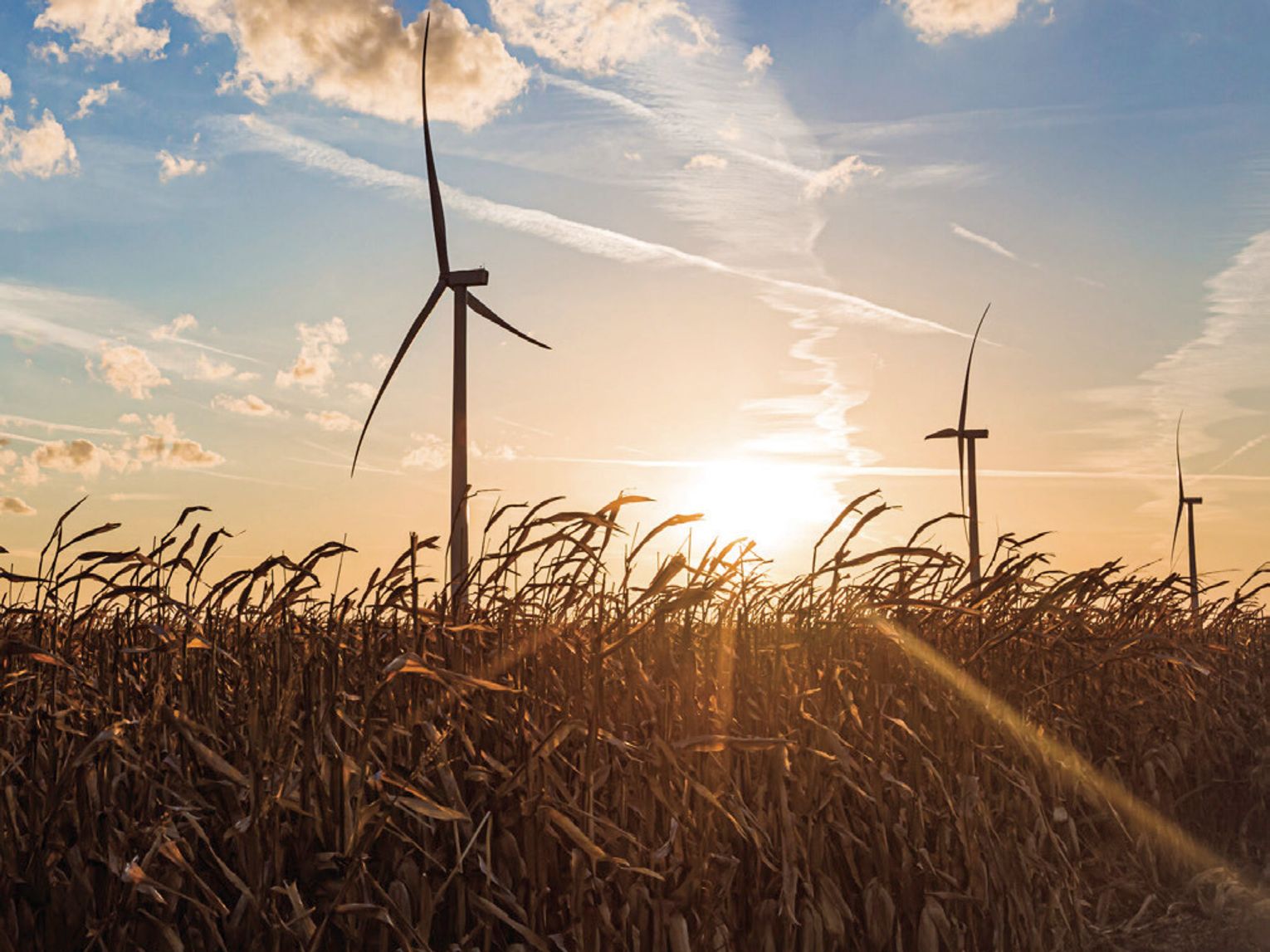
Driving north on Rt. 67 from Macomb, behemoths in the form of wind turbines dot the western landscape. Capital Power’s Cardinal Point Wind is a 150-megawatt (MW) facility located across approximately 20,000 acres of privately-owned land in McDonough and Warren counties. According to Michael Sheehan, a senior specialist indigenous and stakeholder engagement with Capital Power in Alberta, Canada, the facility comprises 60 GE wind turbines, each with a 2.5 MW or 2.8MW capacity, and generates enough clean electricity to meet the average annual power needs of 60,000 Illinois homes.
“Cardinal Point achieved commercial operation on March 16, 2020, completed on schedule and within its projected capital cost of $236–$246 million. During construction, workers on site peaked at approximately 250, and today, the facility is supported by a dedicated permanent operations manager and OEM equipment technicians,” he said.
So where does that wind energy go that’s “harvested” from McDonough and Warren county fields? Sheehan shared that electricity from Cardinal Point is delivered into the MISO regional grid via Ameren’s 138-kV Macomb-Niota transmission line. According to Karly Combest of Ameren Communications, the electricity generated by Cardinal Point Wind is fed through the transmission system by Ameren’s interconnection and becomes part of the Midcontinent Independent System Operator (MISO) regional grid, which transmits power to multiple states. Once energy leaves the generation source and is served onto the MISO grid, there is no fixed way to track that unique energy flow.
“It travels wherever it is needed most at any moment, which may or may not include local communities,” Combest explained. “Ameren is developing a robust transmission system to improve reliability and increase customers’ access to lower-cost generation resources located across the Midwest.”
She noted that the impact of generation on customer energy bills is a product of whether there is ample electric supply available to meet demand on the highest energy usage days (think successive hot days of summer when many families are running their air conditioning). Electricity produced by a facility like Cardinal Point contributes to the broader availability of regional energy supply, and when ready-to-dispatch electric supply is available, the more positive the impact on power and capacity prices. With that said, a variety of factors have created supply/demand imbalances that are driving historically high summer supply prices, Combest said.
“Wind facilities like Cardinal Point strengthen the regional grid with clean power, diversifying the energy mix with zero-emission capacity,” Sheehan added. “Locally, the project generates ongoing tax revenue, provides lease payments to participating landowners and supports the community through Capital Power’s community investment program.”
Wind energy works by harnessing wind to turn turbine blades connected to a generator, converting mechanical energy into electricity, Sheehan explained. The power travels through underground collector lines and a substation onto the high-voltage grid, ultimately reaching homes and businesses through local utility distribution. While 20,000 acres of farm land and property were developed for the farms, Sheehan stressed his company is deeply committed to environmental stewardship.
“We work closely with the U.S. Fish and Wildlife Service and the Illinois Department of Natural Resources on the development and implementation of a science-based Habitat Conservation Plan and mitigation strategy that protects bat species within our project area, particularly during migration periods when bat activity is at its peak,” he noted. “Mitigation includes the use of smart curtailment technology such as acoustic microphones and thermal cameras to inform when we should or should not be operating our turbines. We’ve committed to an adaptive management program that ensures we continuously work to refine our mitigation strategy and reduce our impacts to sensitive bat species over time.”
Once the lease is up, financial assurances are provided for turbine removal and full site restoration are built into the company’s landowner agreements, ensuring land is returned to its original condition at end of life.
“Capital Power is proud to be a neighbor of choice,” he concluded. “We work collaboratively with landowners to address any concerns related to drainage, crop impacts, or land restoration, because strong, respectful relationships are foundational to how we do business.”
Camp Creek
The county’s latest wind farm, Camp Creek, owned by RWE, is going up on approximately 68 acres in southeastern McDonough County. According to Ryan Ferguson, director of external communications for RWE, Camp Creek I, which is a 200 MW wind farm composed of 45 turbines, can generate enough locally produced electricity to power the equivalent of more than 46,000 homes.
Like Cardinal Point’s wind farm, the electricity generated by Camp Creek will be gathered into a substation and then fed into the local grid. This project (like most other utility- scale wind or solar projects) will be contracted by a power purchase agreement (PPA) to supply a certain amount of electricity for an agreed price, so a buyer is agreeing to pay for an equivalent amount of the new capacity being added to the grid, Ferguson explained. The capacity of the project is contracted through a private power purchase agreement for the equivalent amount of electricity at an agreed price.
“The supply of more new and affordable energy in the regional grid can help meet rising demand and keep electricity prices from increasing even further, which benefits all ratepayers,” he shared. “Wind energy is safe, reliable, clean and increasingly one of the most affordable sources of electricity generation in the United States.”
How does a project of this scope benefit area residents if the power generated doesn’t necessarily stay local? Namely, from property taxes.
“Camp Creek I will generate $63.1 million in property taxes over 30 years to McDonough County. This new source of public funding can reduce the tax burden on local residents and be used to support essential services such as schools, roads, fire departments, libraries, and first responders,” he added. “In addition to the millions of dollars in new property tax revenue generated by the project, wind farms create hundreds of jobs during construction, including direct and indirect economic benefits. Local lodging, restaurants, housing, repair shops and fuel sales will see an economic boost during this time.”
However, before a project of this scope can even get started, there are numerous stringent planning and permitting processes, including compliance with all state, local and federal environmental statutes and standards. Camp Creek has undergone comprehensive environmental studies and turbines have been sited and designed to minimize or avoid impacts to natural resources and wildlife. The site complies with all federal and state requirements governing natural resources and wildlife.Plus, wind farms generate electricity without producing pollution, resulting in cleaner air and water when compared to conventional sources of power, he said.
“Wind energy generation also consumes far less water than conventional sources,” Ferguson pointed out. “The project will conserve 219 million gallons of water per year compared to traditional power plants.
At the end of the project’s useful life, equipment will be removed and the land returned to its original uses.”
NexAmp: The Power of the Sun
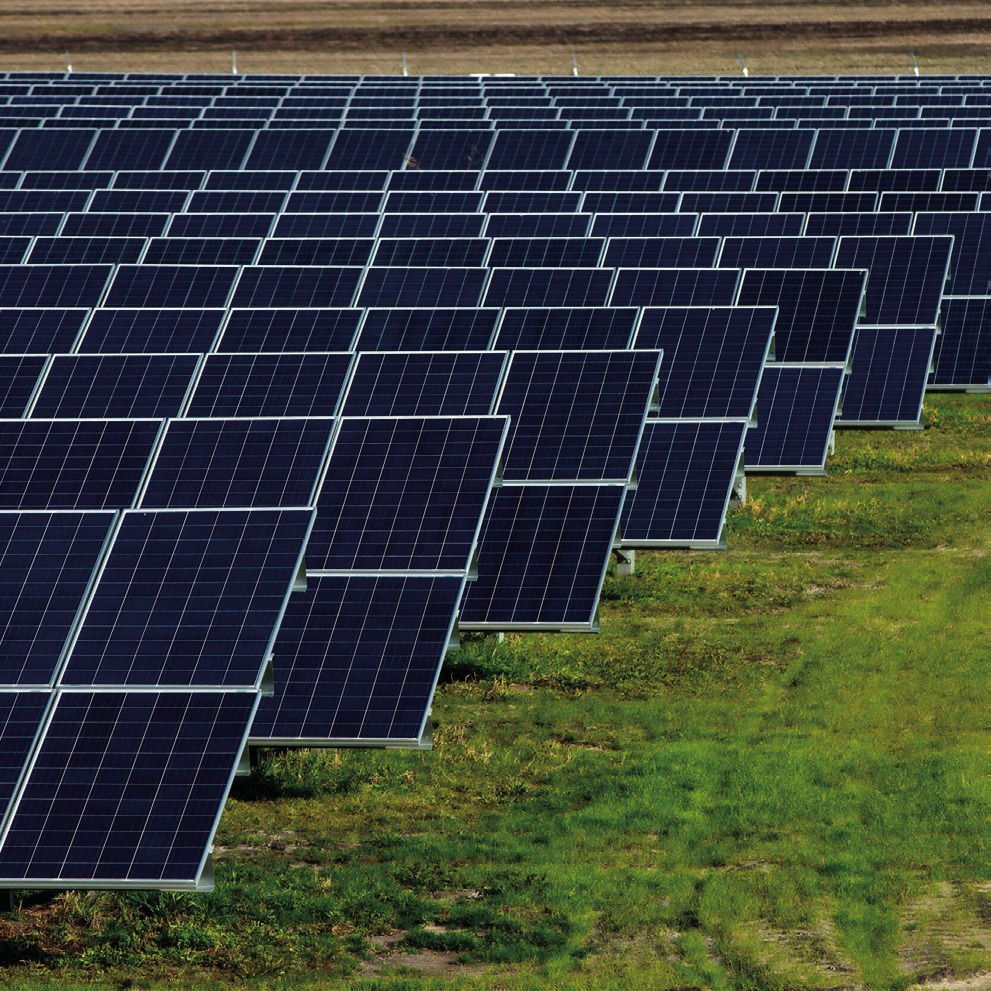
The other major source of renewable energy in Illinois is solar power. The Community News Brief has already published a series about local McDonough County solar farms (find the three-part series about Community Solar in the January and February 2026 issues) where Keith Hevenor of Nexamp, which operates four solar farms in McDonough County, was interviewed. In this series, Hevenor provided more information about the current energy situation.
Hevenor emphasized that Nexamp’s community solar farms operate under a different business model from most other energy suppliers. Unlike most wind farms, for example, which sell electricity directly to utilities in exchange for money, Nexamp allows local consumers to subscribe to a solar farm in exchange for a discount on their electric bill. Subscribers pay Nexamp, and they get credited by utility providers like Ameren for however much electricity their portion of the solar farm generated for the grid that month. The amount of the credit varies depending on the output of the solar farm, but it typically results in a 10-15 percent net saving for the subscriber.
Hevenor also discussed the implications of H.R. 1 (Trump’s “Big Beautiful Bill”) for Nexamp. H.R. 1, which goes into effect on July 4, phases out Investment Tax Credits, which provide a beneficial discount on taxes paid to the federal government, for solar and wind farms. Despite the new tax burden, Hevenor’s attitude was optimistic as the tax credits will still apply for all solar farms that were established before the July 4 deadline.
Further, the solar farms are still receiving support in the form of state-level legislation like the Illinois Clean and Reliable Grid Affordability Act (CRGA), passed at the beginning of this year. Finally, Hevenor commented that solar energy companies seem to be reaching a tipping point where fiscal incentives from the government are no longer required to keep them in the black.
“When we got started a few years ago, the costs of things like solar modules and transformers and all those kinds of things were quite a bit higher because the industry was still young and maturing,” he said.
“We’ve seen the costs on things like solar modules come down exponentially.
Like any industry, as manufacturing has scaled up, the cost of equipment has come down.”
Further, the equipment itself is becoming more efficient, he added. For example, the maximum wattage a standard solar panel can produce has grown from 325 watts to 600 watts, almost doubling productive capacity. Hevenor also commented that the widescale adaptation of battery storage—one of CRGA’s biggest goals for the state—will change the game by allowing solar to become more of a 24-hour energy asset. Nexamp is currently building battery storage co-located with their solar farms so that the electricity generated by the solar farm does not need to be consumed immediately after generation, i.e., when the sun is shining. Instead, it can be stored for when it’s most needed. Nexamp is also building several standalone battery storage units, which they intend to use to buy energy off the grid when the price is low and sell it back when demand peaks and the price is high.
Hevenor commented that utility providers are actually in favor of this practice since the batteries “plug the gaps” in the grid, which saves them having to build unnecessary infrastructure to transport energy from faraway locations.
Like with wind, the energy from solar farms goes to where it’s needed, and it’s hard to say exactly how much of the output is consumed locally. Hevenor did comment; however, that generally the economics of energy seems to be moving more and more towards a distributed model where electricity produced by smaller suppliers is consumed locally. Historically, electricity has been produced by a few massive, centralized power plants that would often have to transmit the electricity quite far to get it to consumers.
Transmitting over distances is inefficient and results in loss, but that didn’t matter so much when the price of electricity was low. Now, those prices are at historically high levels.
“With these skyrocketing electricity costs, those losses and inefficiencies are being felt more by utilities and consumers,” Hevenor noted. “So there’s a little more interest in distributed energy resources that are generating closer to where the electricity is being consumed.”
Not only is more energy likely to be produced and consumed locally in the future, but a larger and larger share of it will come from renewables like solar and wind. Hevenor shared a statistic from the Solar Energy Industries Association that solar power along with battery storage accounted for over 90 percent of the new power capacity added to the grid in the first fiscal quarter of 2026, and this despite the passage of H.R. 1 disincentivizing renewables.
“Regardless of headwinds that the federal administration is putting on renewable energies, we’re still seeing the fastest growth by far in that space compared to nuclear or coal or oil or natural gas, “Hevenor said.
“Solar and wind are continuing to quickly outpace all those other traditional energy sources.”