Macomb Fire Department Provides Safety, Service to Community for 13-Plus Decades
The Macomb Fire Department has been serving the community for well over 130 years, and in those 13-plus decades, firefigthers throughout the years battled their fair share of fires. The Community News Brief, using excerpts from Macomb Fire Department history compilation, courtesy of the Macomb Fire Department (with information from old Macomb Journal editions), along with a presentation from Chief Dan Meyer and Western Illinois Museum Director Sue Scott, pulled together notable fires over the years. This year marks the fire department's 50th anniversary of calling the new Macomb Fire Station One its home.
When the citizens of Macomb formed a fire brigade in 1883, they were addressing the need of their time, which has continued on today.
January 8, 1881
Fischers' Foundry Fire: The whistle at Fischers' Foundry shrieked out the shrill alarm of fire. Huge volumes of smoke issuing from Fishers' Foundry showed the location, and in a short space of time two or three hundred willing workers had assembled there. Gash's water wagon, containing 13 barrels, arrived and a bucket line was formed. The fire started by the spark of an anvil. Total loss was close to $100.
September 8, 1897
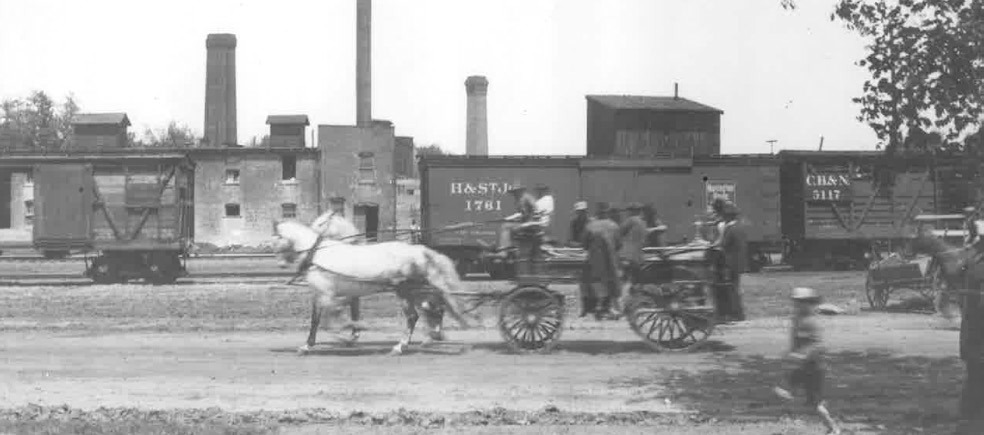
Burned Ten Dollars: Dan and Dick, the new fire department horses, had their first official duty to perform when an alarm sounded a 10 p.m. from Danley's Greenhouse on West Jackson Street. The fire started in the attic of the Danley's home, and was extinguished but not before $10 in cash was burned up.
May 22, 1899
A Bad Fire: One of the most disastrous fires that has occurred for the city in years in point of loss, and the one requiring the hardest work for the fire department, occurred May 21, 1899. At 8 p.m. a bolt of lightning struck the oil tank at the Macomb Gas Works and the whole tank went up in flames. The department could do nothing as the water only made the blaze fiercer. After 11 p.m., the tanks burst and the burning oil ran out on the ground. Three loads of chemicals finally extinguished the blaze. The loss was over $2,000.
Jan. 28, 1908
Train Severs Hose: When the fire department was called to a fire at the Cannon home on West Washington Street, the hose crossed the railroad tracks. A person stood at the tracks to stop any oncoming trains, with another stationed further up the tracks. At 11 a.m., freight train No. 75, west bound, passed through and ignored the emergency signal.
The hose was severed and the train company was fined.
Oct. 17, 1910
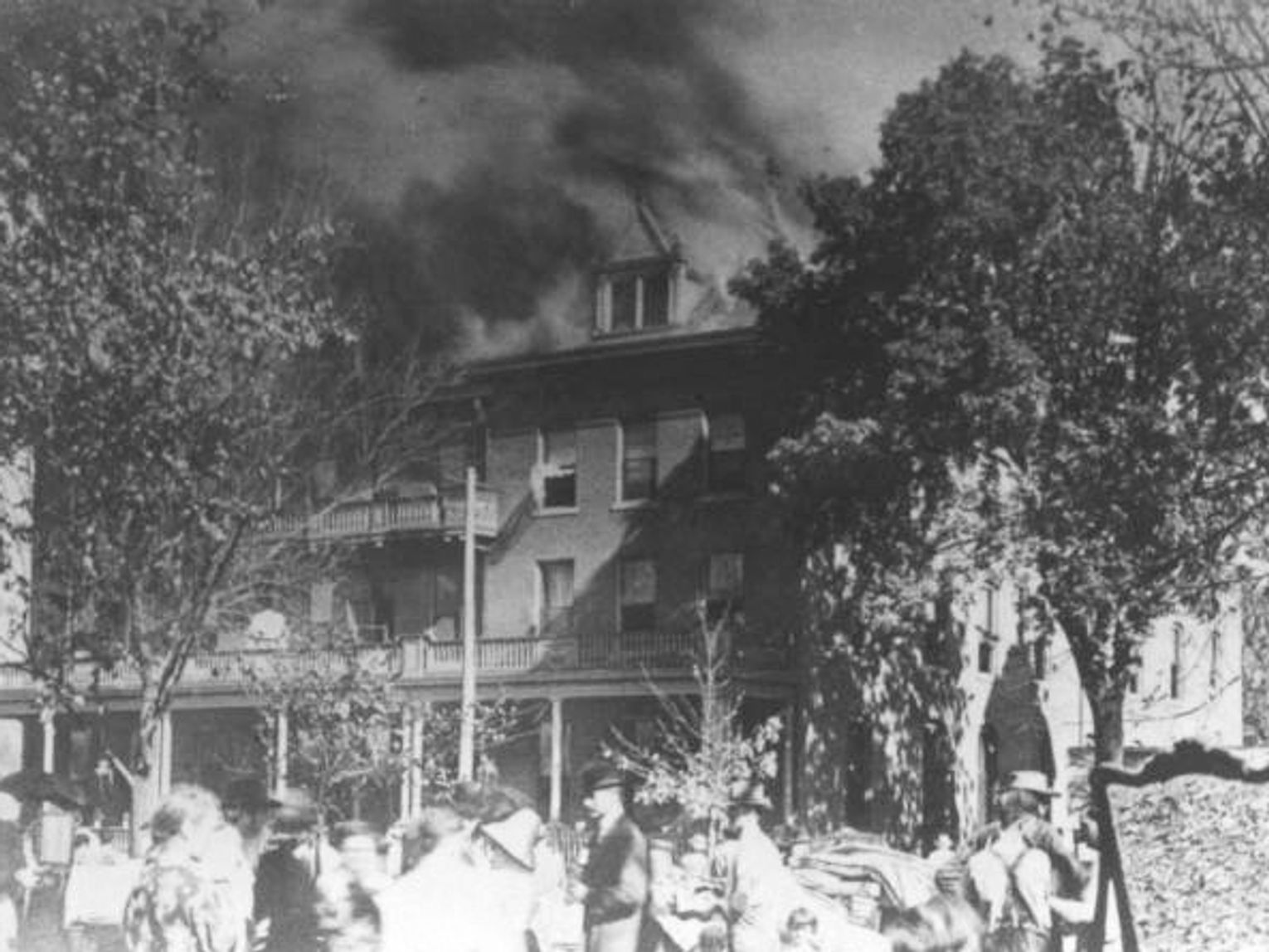
Hotel Chandler Damaged by Fire: Hotel Chandler, the leading hotel in this part of the state, was wrecked by fire on the morning of Oct. 17, entailing a loss of any thousands of dollars. The fire was discovered at 10 a.m. and nearly the entire north side of the roof on the north wing was on fire.
By the time the fire department arrived, the flames had burst through the roof. The fire started in the attic from what was thought to be a crossed electrical wire.
July 31, 1913
Burned to Death in Fire Which Destroyed Pottery: Plant No. 3 of the Western Stoneware Company, known as the Blout Shop, was almost totally destroyed by fire, which broke out in the kiln shed. Loss was estimated at $50,000- $100,000. Herman Peters, a volunteer firefighter who was assisting, stepped through a skylight and fell instantly to his death as the building underneath was filled with smoke and flames. His body was later recovered. The fire originated on the second floor near kiln no. 3. It was impossible to fight the fire as the firefighters could not get to it and it was so dry due to the lumber from the heat that it burned like powder.
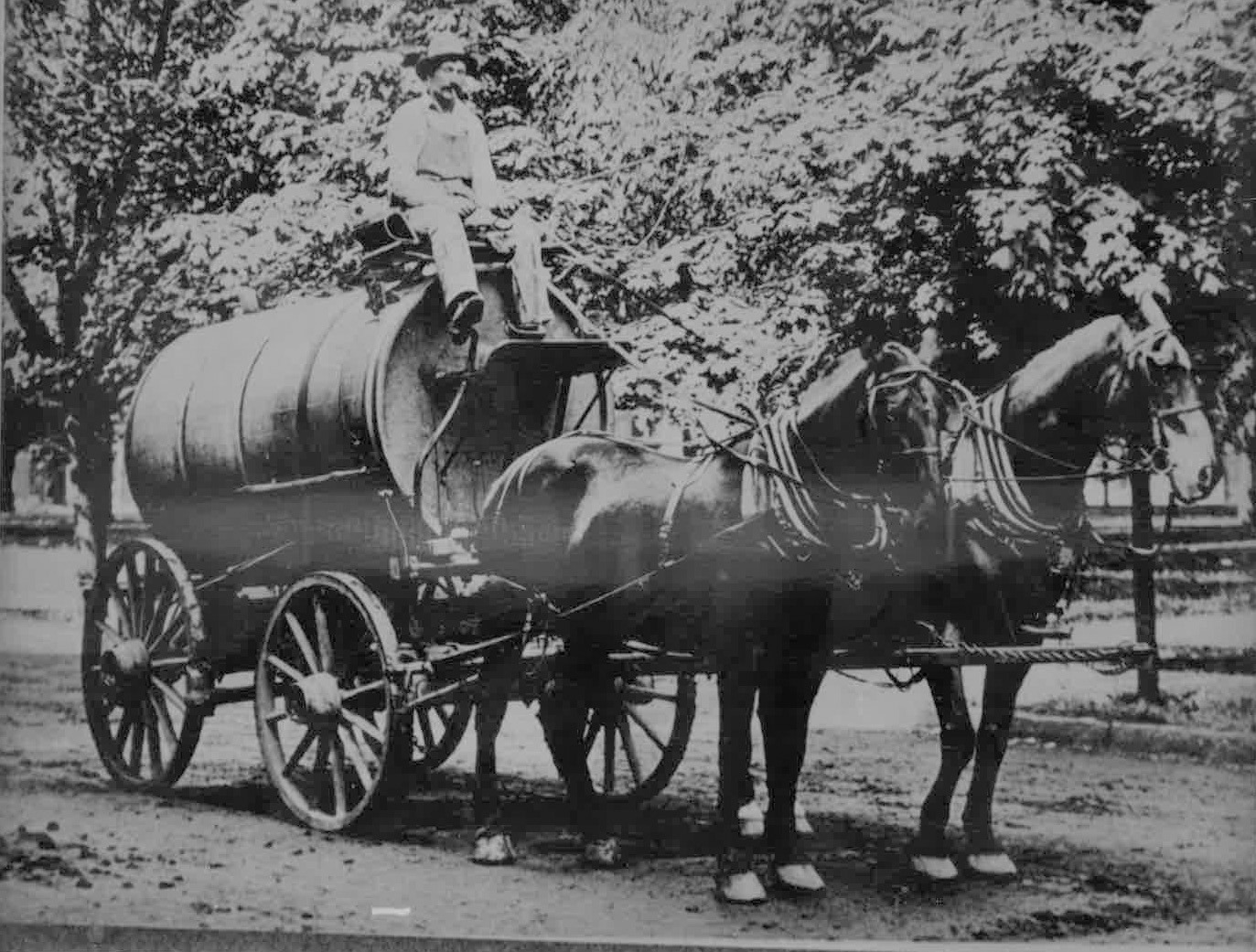
This was the worst fire to date in Macomb.
June 22, 1941
Flames Gut Garage, Burn Dozen Autos: Fire of undetermined origin gutted the Macomb Motor Company building. Lafayette and Washington Streets at 6:30 p.m. Eleven cars and a light truck were destroyed, with the total damage estimated at $44,000. While J.E. Trapp was waiting to get an operator – about 10 minutes - to contact the fire department, the fire advanced from a small blaze and the heat and smoke forced Trapp out.
Fed by cans of exploding oil and paint, the fire spread rapidly and raged for more than an hour. Bushnell and Colchester fire departments were sent to help. The fire was the third garage fire within a block in the past 10 to 12 years. The fire was the largest here since the hemp factory burned five or six years ago (Editor's Note: No reference was found in the history book about this fire, nor could any articles be found in Macomb Journal archives available online).
Aug. 6, 1959
Fire Sweeps Country Club Clubhouse: An early morning blaze apparently touched off by a bolt of lightning during a severe electrical storm destroyed most of the clubhouse at the Macomb Country Club. The fire gained considerable headway before fireman were alerted, and although they battled the blaze in a downpour for nearly three hours, it was a losing cause.
The best guess was that the fire started shortly before 5 a.m. The fire started on the east end of the top floor and burned the east half of the building to the ground. Most of the west half was gutted.
The lower floor was ruined by fire, smoke and water.
The clubhouse was built in 1951, and the new addition was built in 1957.
April 14, 1966
Fire Damage at Bakery to Top $100,000: Fire that gutted the Galloway Bakery early Saturday evening caused damage to contents and equipment estimated to be in excess of $100,000. The fire spread rapidly after its start but was soon brought under control by Macomb firemen and firemen from nearby communities. The Davis Maguires had only been gone from the bakery only about 15 minutes when they were called by back the report of a fire.
Mrs. Maguire said she had been through the rear of the building several times just before leaving and did not smell smoke. A woman at the Elks Club looked out the window, saw the heavy smoke and called the fire report at 6:52 p.m. The last person in the building had left at 6:30 p.m. The fire was under control within an hour. Fire Capt. John Ebey said they believed the fire started in the employee locker room in the basement under the truck loading area. Eight of the bakery's nine trucks were reported total losses.
Nov. 27, 1970
Blaze Destroys Gym at Western – Firemen Save University's Power Plant: A raging fire destroyed the gymnasium area of Western Illinois University's Brophy Hall, once the home of the Leathernecks, blotting out 42 years of sports and school memories and leaving the women's physical education department without a home. The building formerly named Morgan Gym, caught fire about 3:10 p.m., and the blaze roared out of control in moment. About 50 persons were evacuated from the building without mishap. The blaze apparently started when sparks from a workman's acetylene torch ignited foam rubber material. Firemen theorized that the origan fire may have burned through the hoses attached to the torch, releasing highly flammable gas.
The swimming pool area to the east of the gymnasium was saved but there was structural damage to the west wall.
The wall that separated the gymnasium area from the pool area was the location of the firefighters' last ditch line of defense in their efforts to save the university's power plant which is connected to Morgan Gym.
They stopped the fire at that point. WIU's students were on their Thanksgiving vacation at the time of the fire. Had school been in session, it is likely that hundreds of coeds would have been attending classes in the gymnasium at the time of the fire.
Feb. 3, 1975
Thompson Hall Blaze: A Saturday evening fire on the 16th and 17th floors of Thompson Hall resulted in approximately $150,000 in damages. No one was hurt.
The fire was reported to the Macomb Fire Department at 9:06 p.m. It began in room 1601, and when the firemen got to the 16th floor, they were unable to get to the blaze because of the heat and the smoke in the corridor. After breaking a window at the end of the corridor for a vent, firemen got to the room. By that time, the fire had spread to an adjacent lounge and fire spread through the open window to room 1701 and across the exterior of the building to the 17th floor lounge.
By 9:40 p.m. the fires were extinguished. An investigation revealed that the blaze was caused by an electrical short in a light fixture on a student desk in room 1601.
It was estimated that 500 of the 1,200 students residing in Thompson were in the building when the fire started.
Because of the fire in Thompson, there was discussion that Macomb would be a regional training center as the department, under Herb Pollock, had already gained national attention after developing a plan to attack the Thompson Hall blaze. The procedure for fires in high-rise buildings was documented in training manuals throughout the U.S. and Europe.
Dec. 30, 1975
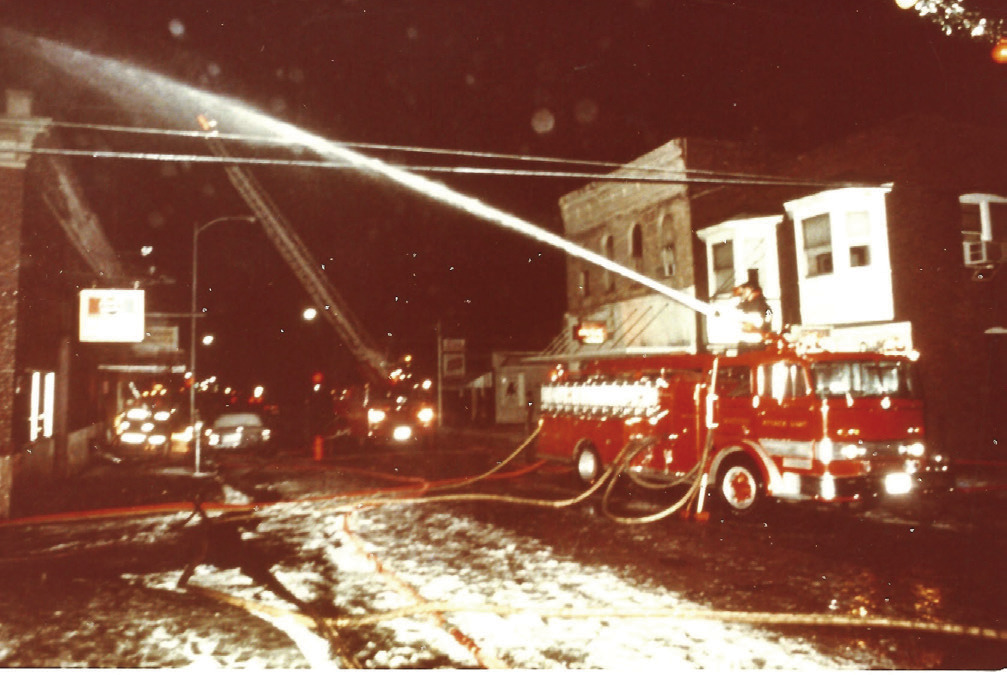
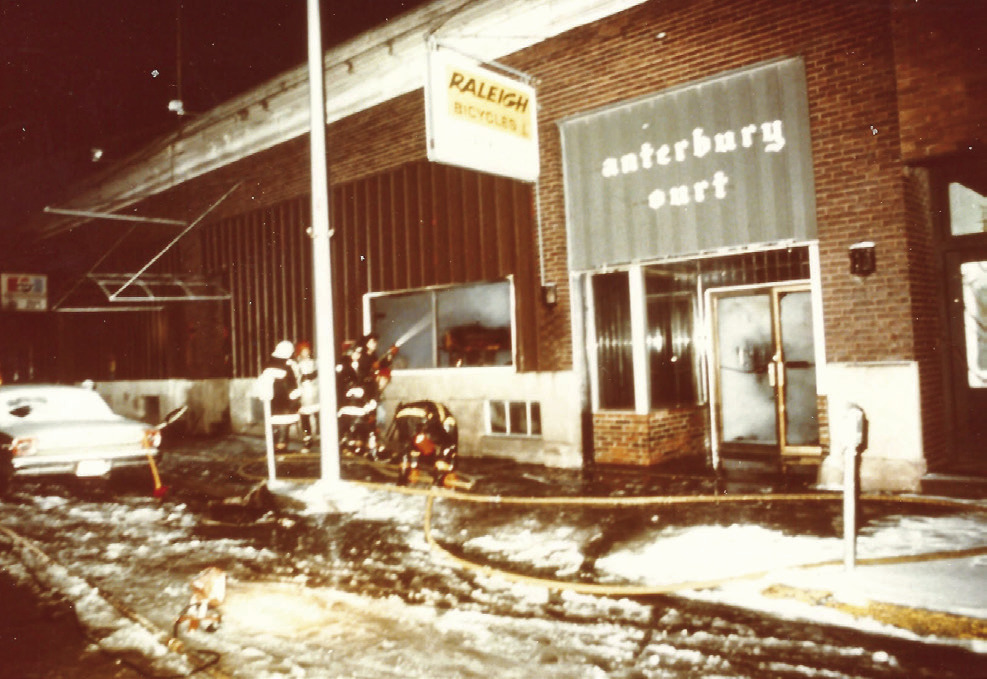
Fire Guts Macomb Nightclub: An early morning fire gutted the Kings Castle/ Chances Are Nightclub at 115 W. Jackson Street. The blaze was reported at 2:14 a.m. by John Carson, a night radio dispatcher at the McDonough County Jail.
Carson said he looked out the window at the jail and saw orange flames from the structure located one-half block from the jail. Macomb firemen remained on the scene through the morning and at 9 a.m. were still spraying water. The building was a total loss.
On April 15, 1966, a fire in the same building caused over $100,000 in damages and led to the closing of the Galloway Bakery.
The cause of the fire was not yet determined, but it was believed to have started on the main floor in the center and southern part of the building. The roof of the structure collapsed in the center, and water from the five hoses was several feet deep in the basement.
Oct. 19, 1979
Fire Destroys Yeast Printing: Fire officials were investigating damage done Thursday afternoon and evening when fire swept through the Yeast Printing Company, 319 N. Lafayette St. According to Fire Chief Ed Holzwarth, the nature of the cause of the blaze that destroyed the structure was 'probably electrical.'
Reportedly before 3:30 p.m., the fire began on the east end of the second floor in the paper storage area. One of the barriers to fighting the blaze, which was not fully extinguished until 11 p.m., was the design of the ceiling structure, which was designed with plaster over lathe. The fire became trapped in the layers of roof, insulation and ceiling.
Aug. 12, 2000
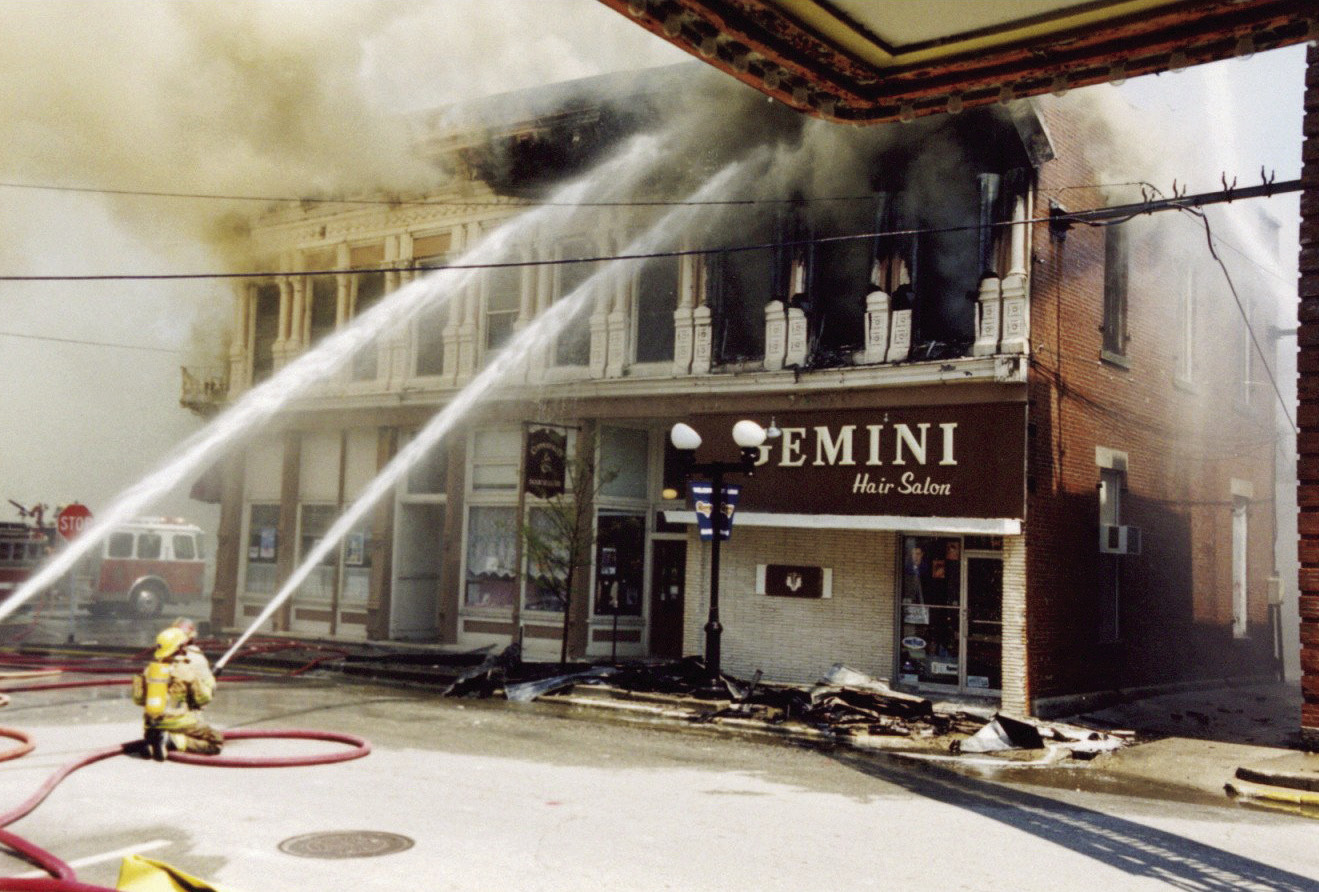
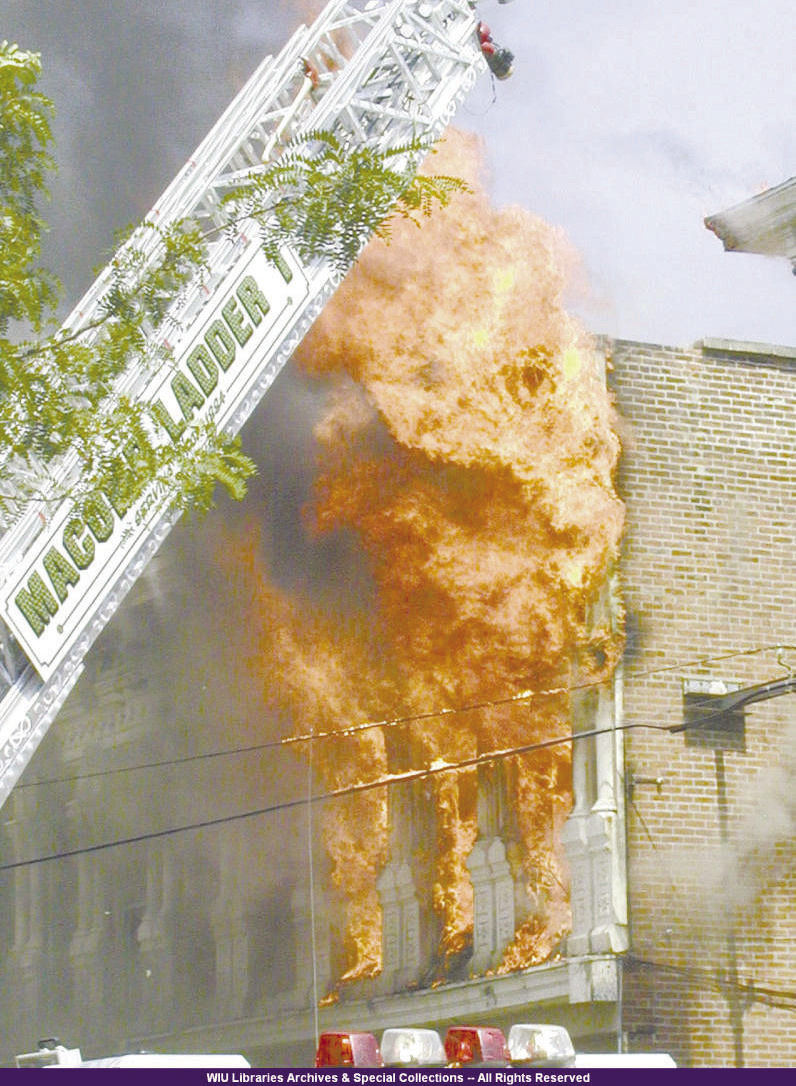
Chandler Block Fire (information from a variety of sources, including the Western Illinois Museum): Macomb saw one of its worst downtown fires to date on Aug. 12, 2000. The Chandler Block Fire resulted in the loss of multiple buildings in the 100 block of East Carroll Street across from Chandler Park. The size of this incident coupled with the extreme high temperatures led to departments from across the area providing assistance. The fire broke out shortly after 1 p.m., Saturday, Aug. 12.
The scale of the Chandler Block fire required a significant emergency response and became a major event in Macomb’s firefighting history. The Chandler Block was part of Macomb’s historic courthouse square, where many buildings dated back to the 19th century. The fire started in the afternoon, leading to a massive, hourslong response that stretched into the night, with nearly 75 firefighters and local departments from across the region called to assist the Macomb Fire Department.
Firefighters struggled against intense, sweltering upper-80s temperatures as they battled the flames.
The fire destroyed the popular Damone's restaurant, Copperfield and Co., Tech Pro Family Eyewear, Gemini Hair Salon and several apartments.
March 3, 2010
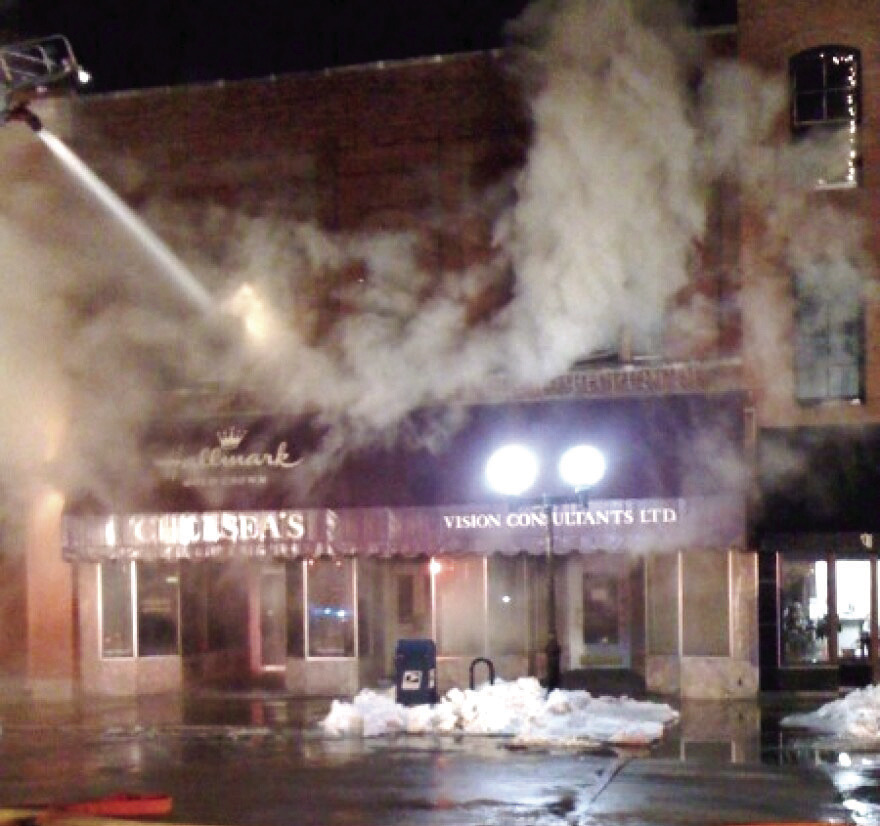
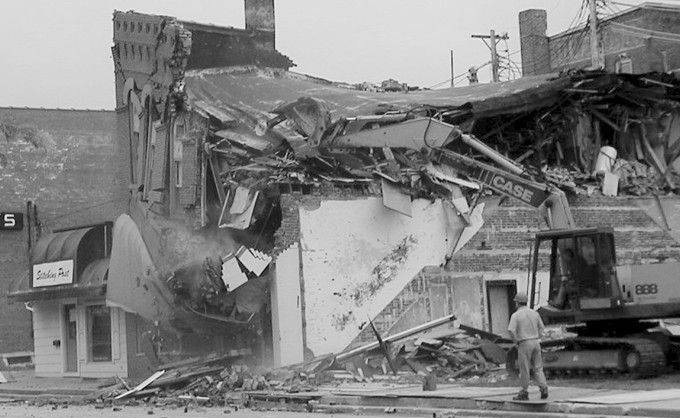
Chelsea's Hallmark Fire (from a TSPR report provided by the Western Illinois Museum from an April presentation on fires in Macomb: An excavator was used to clear out debris from the back of the structure to extinguish some hot spots in the debris as a result of a fire March 3 that destroyed Chelsea's Hallmark and Vision Consultants Ltd at 119 South Side Square and 121 South Side Square, respectively.
At the time, the cause of the fire was undetermined; however, firefighters concluded it started in the basement of Chelsea's. The fire wall between buildings was up to code. The building was built in 1896. Dr. Elizabeth Miner (Macomb's first female doctor) ran her practice in 119 South Side Square until she she moved upstairs to 119 1/2.
After the fire, the building was torn down and the space was turned into a small park.