Those traveling into Macomb from the south on Highway 67 will notice on the left some out buildings being torn down, freshly planted corn where for decades there was only grass, and recently the rubble of what looks to have been a house or a business.
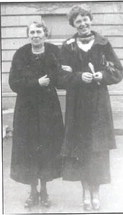
What that picture does not tell is what a hustling, bustling small town fixture that acreage used to be. A place where hundreds of pilots learned to fly. A place where dreams came true. A place that even saw legendary visitor Amelia Earhart stop by while on a visit to the now Western Illinois University.
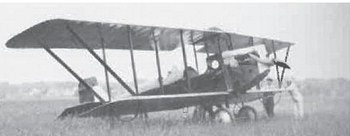
At the McDonough County Fair, August 5-8, 1913, many Macomb citizens probably laid eyes on the first airplane they had ever seen. A barnstormer named Jimmy Ward performed stunts in a Curtiss biplane.
At that time airplanes had almost no commercial use, but had proven their worth during World War 1. In the 1920s they would become an important means by which both passengers and mail was transported.
Macomb’s first pioneer aviator was motorcycle racer and auto mechanic Roy H.
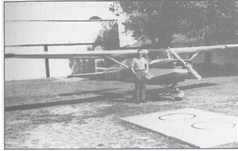
Pearce. Pearce purchased his Curtiss Canuck in August 1919, a war-surplus plane that at that time might have been bought for around $600. Pearce kept the plane at a small strip near South Dudley Street, and hired Colchester aviator Albert Shields to teach him to fly.
In May 1927, Charles Lindbergh made his solo flight to Paris, thrilling the American public and lighting a fire in the souls of thousands of wannabe pilots. In 1926, a year earlier, Roy Pearce had moved his airfield from the family farm to a location two miles east of town, at the junctions of routes 2 and 9, which is now 67 and 136. He built a hangar and established Pearce Field, which became Macomb’s first airport.
Pearce, like so many early pilots, lost his life flying.
On March 29, 1929, he died when his Swallow airplane clipped a tree and nosedived into the ground. He was 34 years old. Prior to this tragedy, Pearce had experienced numerous near-fatal accidents.
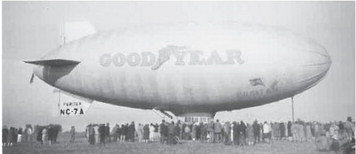
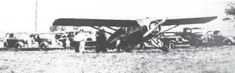
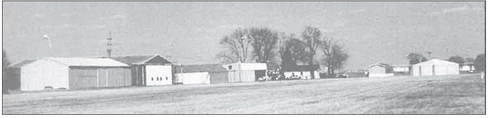
From 1928 to 1932, the airport was operated by Frank Clugston and Richard Granere, and was then taken over by Harry and Doris Clugston. Harry and Doris enlarged the airport and managed it until 1958, and during that time trained more than 500 pilots. Doris became the first woman pilot in McDonough County and only the second one in Illinois. The first air mail flights out of Macomb were flown on May 19, 1938 by Harry Clugston and Paul Bourrell. Ameilia Earhart visited Macomb’s first airport in April of 1936, and the Goodyear Zeppelin had visited the airport in 1930.
The first Macomb Airport was no doubt an exciting place to be.
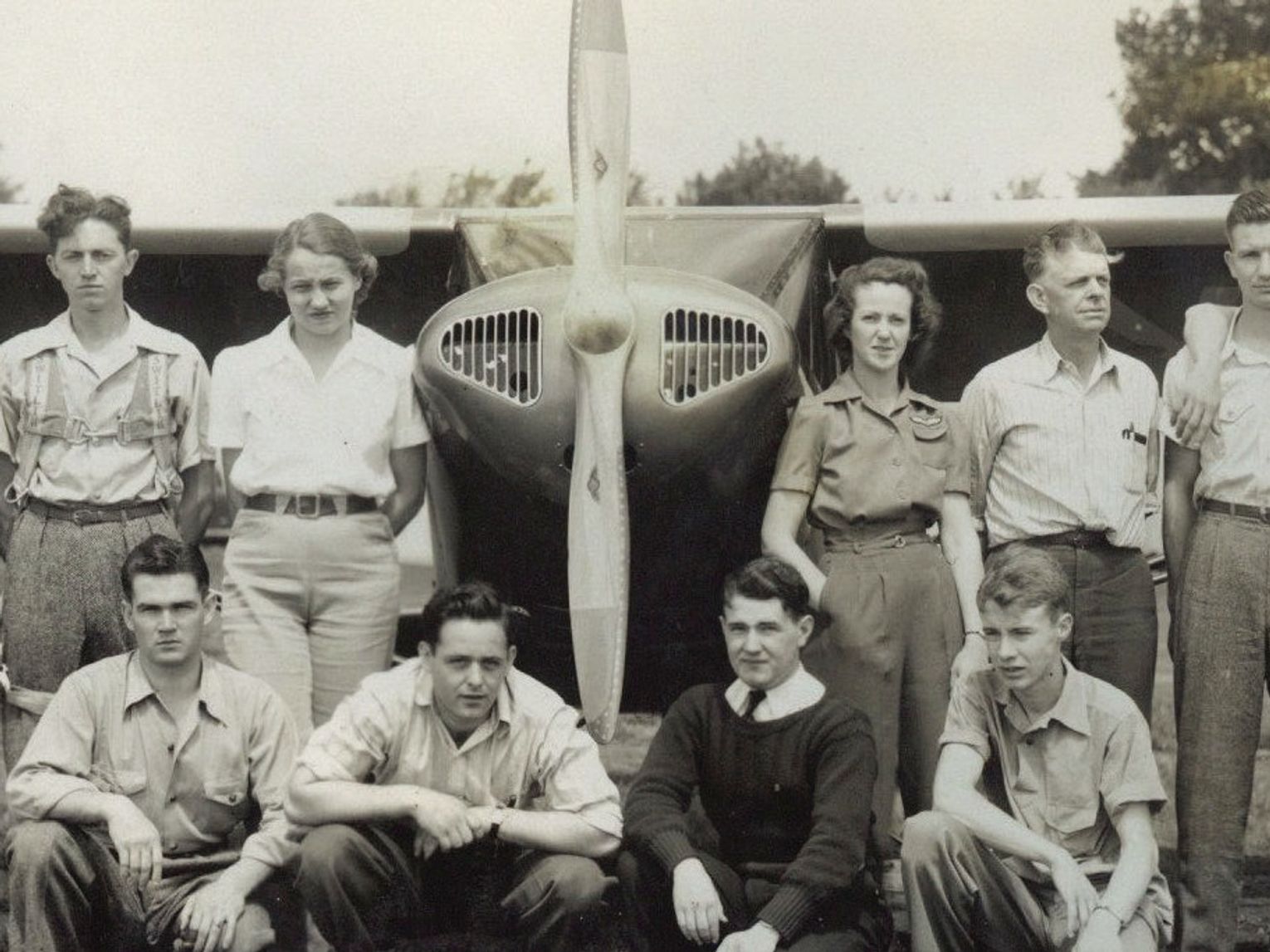
Under Harry and Doris Clugston’s management, the official name of the airfield was Macomb Airport, Harry Clugston, Owner. It flourished during World War II. Beginning with the first Civilian Pilot Training Program class of 10 in the spring of 1941, and subsequent classes after that, Macomb Airport was kept busy. The War Training Service Program added to the airport clientele.Clugston, in accordance with the CAA contract (Civil Aviation Authority), expanded the dimensions of the airport and constructed the required classroom in 1941.
Prior to the expansions, the field consisted of northeast/ southwest runways. The expansion consisted of a 2400 foot east/west runway constructed at the south edge of the existing field.
The following year Harry and Doris built a residence at the airport and moved out of the hangar apartment in which they had lived since 1933. Since the airport ground was leased, they built a small house which could be moved should that occasion ever arise.
They never had to move it. Another improvement during that time period was the construction of another hangar.
Wartime prosperity brought area citizens to the field to take flying lessons.
After Camp Ellis opened in 1943, several military personnel, who had begun their service in the Army Air Force, wished to continue their flying. Weekends were a busy place at Macomb Airport when student pilots came to get checked out in one of Harry Clugston’s Taylorcafts.
When the War Training Service Program ended in 1944, and Camp Ellis was demobilized in early 1945, flying at the airport substantially declined. The only remaining instructor besides Harry was Russell Steinmetz, who incidentally taught this writer’s father, Gene Douglas, to fly.
In 1945, an attempt was made to create a Macomb Airport Authority. A law was passed by the Illinois General Assembly providing a means for the creation of a separate taxing body dedicated to airports. The law became effective on April 4, 1945, and municipalities no longer had to justify to local taxpayers the use of general revenue funds to support local airports.
In May 1945, the Burlington Transportation Company of Burlington, Iowa, proposed to provide airline service from Chicago to Kansas City and included several stops at cities in between including Macomb. Nothing came of Macomb’s application, as it was determined that the present airport was inadequate to accommodate large passenger aircraft. The seed was, however, planted.
By the fall of that same year, the Chamber of Commerce expanded the aviation committee to include Dewey Ewing, chairman, Wayne Wetzel, secretary, Don Carrison, Harry Hall, Harry Clugston, Joel Gloyd, Bill Ward, Alex Games, Charles Harris, T. Mac Downing and James Baily.
On October 2, 1945, the committee voted unanimously to circulate a petition calling for an election to create an airport authority at Macomb - the first step towards the establishment of a municipal airport.
Territories were drawn up that showed feasible areas proposed for a new airport. When the news of the ground in the proposal became public, landowners were quick to voice their complaints. The suggestion of a new tax on farmland was far from acceptable when they felt they were already taxed too much. Many thought the new airport was unnecessary and would be of little or no value to Macomb. Critics also felt that some of those on the board had conflicts of interests in the matter, prompting the formation of a new, smaller committee.
By the summer of 1946, a new petition was circulated and was placed on the ballot to be voted on September 27, 1946. The proposed territory of possible airport sites amounted to 12.5 square miles. Some of the land included was not desirable on which to construct an airport. The petition failed.
With the G.I. Bill in 1946, there came a renewed interest in flying. Harry Clugston sought out additional instructors to keep up with the demand between 1946-1950. Many of these instructors were ex-service flyers who were also attending Western Illinois State College.
The early Harry Clugston Macomb Airport was not without shortcomings. Outbound charter flights could not depart with a full load of three passengers after heavy rains when the field was soft. Also, the airport was without lights, making it unsafe and difficult at night, sometimes pilots landed by car headlights.
Bruce Clugston, nephew to Harry, gradually assumed much of the instruction and charter work after 1953. In 1958, Harry discontinued as operator at his field, which became named Clugston Flying Service under the ownership of Bruce.
In 1969, Macomb Municipal Airport was opened for operations north of town. (See next part of this series to learn how the new airport finally came about). The old grass field was then referred to as the Macomb - Clugston Airport. The new airport had an all weather runway and became preferable to owners and pilots of heavy corporate aircraft. The Clugston Flying Service officially ended on September 1, 1973.
In 1974, Harry and Betty Smith purchased the land and buildings from Harry Clugston. By the end of the century the airport was still known as the Smith Airport.
See part two - Macomb Municipal Airport Credits - Shadows of Wings by James Haynes, Macomb - A Pictorial History by John Hallwas, Western Illinois Museum, Clugston photos, Archives and Special Collections at the WIU Library.