June is Men’s Health Month
Despite the country’s growing acceptance of mental health treatment, men oftentimes remain reluctant to seek help because they may think choosing treatment is akin to admitting weakness.
“Men and boys are socialized to be tough, independent and emotionally controlled,” said licensed clinical social worker Max Holmes, a provider at McDonough District Hospital Behavioral Health and Mental Health. “Messages they receive are ‘don’t cry,’ ‘toughen up,’ ‘it doesn’t matter.’ While this teaches resilience, it is restrictive in the sense that it leads to the repression of emotion, which paves way for maladaptive coping.”
Coping mechanisms for mental health issues, Holmes said, include becoming angry toward others instead of showing sadness, using alcohol or drugs to numb emotional pain, taking risks, becoming aggressive and focusing on logic over feelings.
“It typically takes 11 or so years after the onset of symptoms for a male do something about it,” Holmes said. “That’s a lot of stuff to unpack when they come to see you. And it also means that their symptoms were given the opportunity to become more severe.”
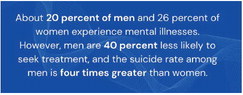
About 20 percent of men and 26 percent of women experience mental illnesses, which include depression and anxiety. However, men are 40 percent less likely to seek treatment, and the suicide rate among men is four times greater than women.
June is Men’s Health Month. Mental health is a focus of the annual observance.
Anger may mask other emotions Holmes said men are less willing to share their emotions and risk vulnerability because stoicism – hiding one’s emotions – is culturally expected. Sharing emotions may lead to judgment for being weak or not being master of their emotions.
Men who seek help from a mental health practitioner often want help in managing their anger. But Holmes said anger often is a secondary emotion.
“Sometimes anger is the mask over the issue,” he said. “Such is the case with depression, where sadness is being repressed and replaced with anger, which is something more familiar.”
Besides depression, Holmes helps men cope with anxiety, panic disorder and personality disorder.
Although most people are anxious about starting therapy, Holmes said, they become more relaxed after a few sessions. Also, they are grateful to know there is a name for what they are experiencing, and they can feel better with help.
Experience leads to expertise After graduating from high school in Springfield, Holmes joined the Army and was assigned to the infantry. When he was discharged in 2013, he didn’t want to start college right away.
“I found this entry level job called a patient companion at Memorial in Springfield,” he said. Holmes spent eight-hour shifts sitting in hospital rooms with patients who required monitoring because they had attempted suicide, had dementia or were going through drug withdrawal.
“I was like, ‘If I’m going to be sitting next to you for eight hours, we might as well start talking. I got into a lot of conversations with a lot of different people, and I got interested [in social work],” he said, adding that his infantry experience helped him gain confidence for the job.
Holmes earned bachelor’s and master’s degrees. He worked in a couple of central Illinois locations before coming to MDH nearly three years ago.
Connections and confidentiality
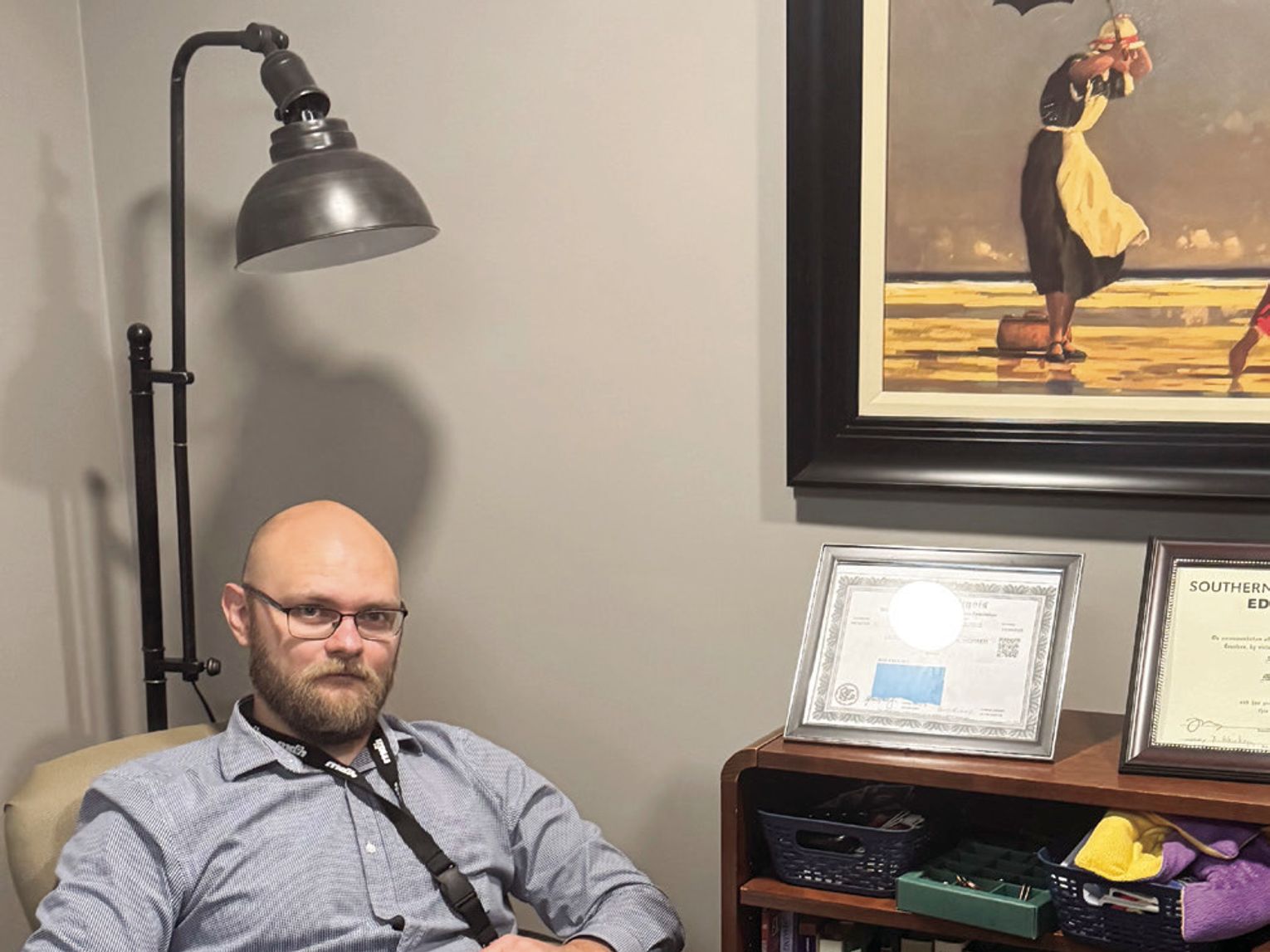
Holmes’s office on the lower level of Health Services Building 1 lacks a clinical vibe. The relaxing atmosphere includes comfortable seating, dim lighting and art on the walls. Greeting patients by matching their demeanors is the first step in establishing a connection in what could become up to a year-long therapy relationship.
“If somebody's coming in and not doing too well, they’re not going to connect with me at all if I’m super excited and joyful,” he said, adding that the first session is about gathering information. “I'm asking a lot of questions and being curious about them. I'm not sharing about myself. There's space for it as time goes on. But my full focus is on them. If there's an opportunity for humor, I am throwing it in there. Laughter can break tension.”
Oftentimes, tension comes from patients’ concerns about confidentiality.
“One of the first things I explain is that what we talk about is between you, me and the four walls,” Holmes said, adding that confidentiality is broken only when patients threaten to harm themselves or others.
He said patients’ reactions when they see him in public vary from awkwardness to friendliness.
“I also explain to them, if you see me out public, it's my obligation to ignore you,” Holmes said with a smile. “But if you want to say, ‘What's up?’ to me, I'm absolutely willing to say. ‘Hey, how’s it going?’ We won't jump into talking about anything that we talk about in session.”
Meeting goals in therapy
Holmes usually meets with patients for one-hour therapy sessions every other week. One method of therapy is helping patients identify and reach specific goals. He explained: “Someone who is experiencing depression may struggle to get out of bed. But staying in bed keeps them rooted in that negative feeling. So we search for ways for them to get out of bed and perform something that has the best chance of producing another emotion. If they used to get out and run in the morning, that might be something to try.”
A small number of Holmes’s patients take medication in addition to therapy. Holmes cannot prescribe medication, but with a patient’s written consent, he can refer treatment to a psychiatrist, who is a medical doctor.
“For some people who are experiencing some pretty severe symptoms, medication serves as that extra booster for us to work on coping mechanisms, skills and taking that next step,” he said.
Helping men show their
emotions
Society’s acceptance of men expressing their emotions can lead to men seeking help for mental health issues. That’s not an easy task.
“Culturally, people have to be ready to receive men having more than one emotion,” Holmes said. “What happens if men flip the script and start getting vulnerable, putting it out there? Are people going to know how to handle it?”
Holmes said men, in general, may have difficulty being their authentic selves instead of an idealized masculine version because they fear the responses they will receive. He offered these tips for helping men express their feelings:
• Create a space where there aren’t negative consequences for being vulnerable.
• If a man starts sharing his feelings, don’t change the conversation to another topic because you’re uncomfortable.
• Allow the expression and processing of emotion, ask relevant follow-up questions and help identify the feeling if the moment calls for it.
• Do not shame. Although men and women are different, they both need connection, comfort and safety.
“Don’t let a guy tell you they don’t have feelings,” Holmes said. “Everyone expresses emotions all the time.”
To make an appointment with a provider at MDH Behavioral Health and Psychiatry, please call 309836-1582.