On Jan. 1, 1863, Abraham Lincoln issued the Emancipation Proclamation, legally freeing about 3.5 million slaves throughout 10 of the 11secessionist states forming the Confederacy.
Newspapers throughout the country immediately started spreading the news.
“The President’s proclamation of yesterday is the great event of the day and of the century. It is the beginning of the end, the commencement of the only course of treatment which can put an end to the rebellion . . . It is not necessary to say that we rejoice over this proclamation with exceeding joy,” read The Daily National Republican on Jan. 2.
“The long looked for and anxiously awaited document, which is fraught with mightier consequences than any that ever emanated from a President of the United States, which secures freedom to thousands of enslaved and oppressed human beings, has at length been put forth,” read The Cleveland Morning Leader on Jan. 3.
“Despite the efforts of semi-Unionists of the Border States and the frantic efforts of the rebel sympathizers in the North added to those of Jeff Davis and his co-traitors, the President has issued his Proclamation for the Emancipation of the slaves in the rebellious states . . . The South comes under the benign influence of Liberty,” read The Independent of Oskaloosa, Kansas on Jan. 10.
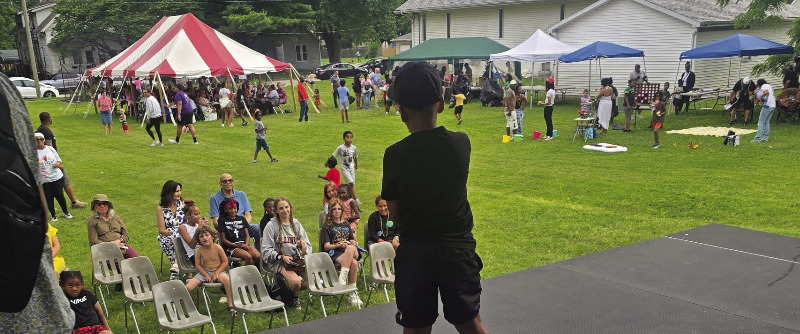
But the holiday of Juneteenth, recently celebrated in Macomb by the Mt.
Cavalry Church of God in Christ (COGIC), does not commemorate the date the Proclamation was made or when any of these newspapers announced it. Instead, it celebrates June 19, 1865, when enslaved people in Texas finally learned about the Proclamation from Maj. Gen. Gordon Granger and the Union Army. Shannon Smith, a speaker for Friday’s event, commented that “because news traveled slowly during the Civil War, many people in faraway places did not hear about the new law right away.
Some slave owners tried to hide the news. In Galveston, Texas, American soldiers arrived on June 19th, 1865 and told people that slavery had ended. The newly freed people celebrated with prayers, food, music, and dancing.”
Over 160 years later, African Americans in Macomb and throughout the country are still celebrating the good news. This year marked the sixth Juneteenth celebration that Mt. Cavalry COGIC has orchestrated for the community since Joe Biden signed the Juneteenth National Independence Day Act recognizing Juneteenth as a federal holiday.
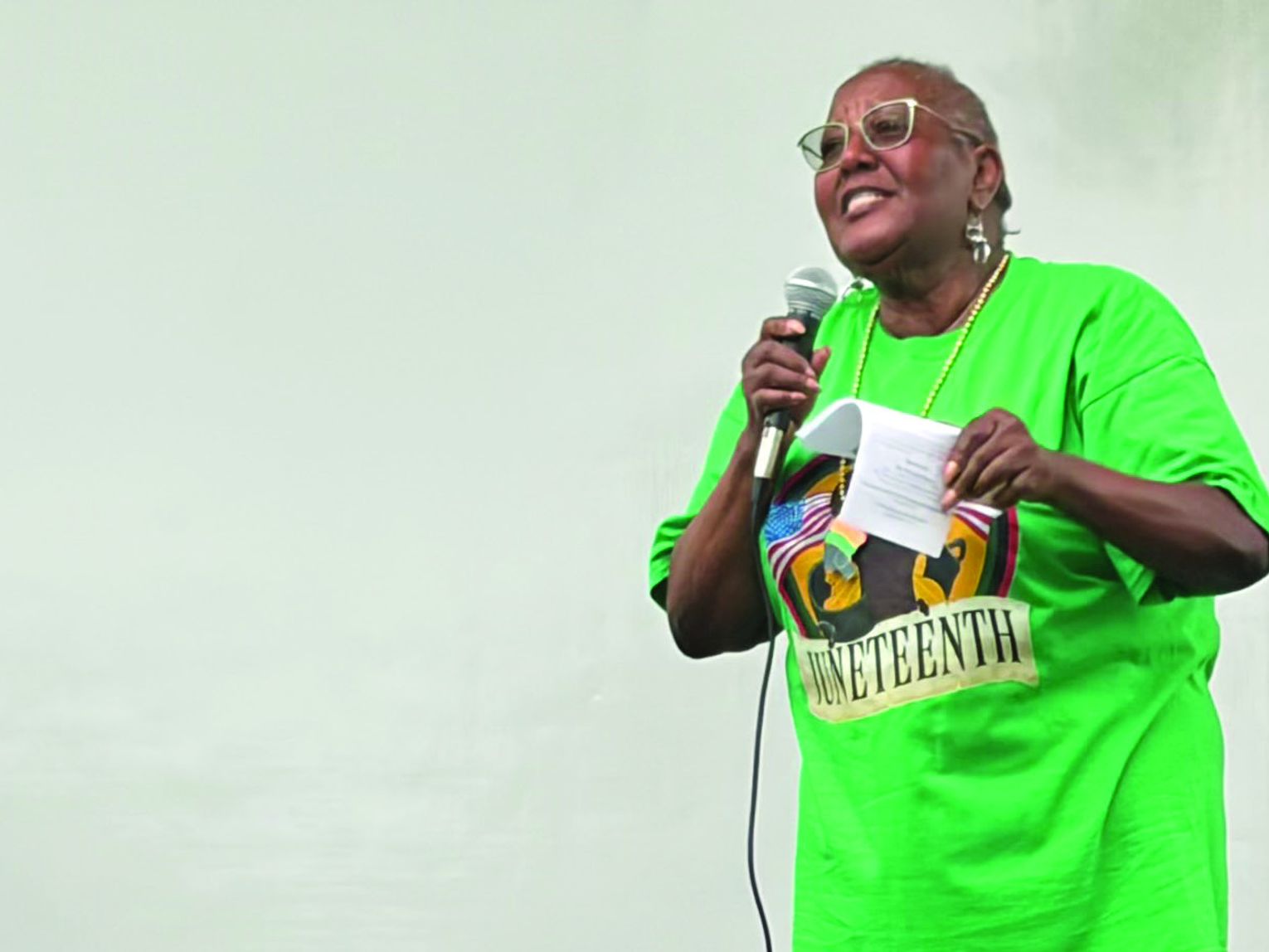
Belinda Carr kicked off the opening welcome for the event by inviting Elder Allen Henderson to offer a prayer.

Henderson emphasized the theme for that year’s celebration, 'Freedom: Yesterday’s Legacy, Today’s Promise, Tomorrow’s Hope,' and spoke to what it means to carry a tradition like Juneteenth forward. Veronica Stewart, a Western Illinois University alumna, also spoke. Comments were also provided by Mayor Michael Inman, Spoon River College Interim President Holly Norton, WIU Director of Public Safety Derek Watts, and Fire Chief Dan Meyers.
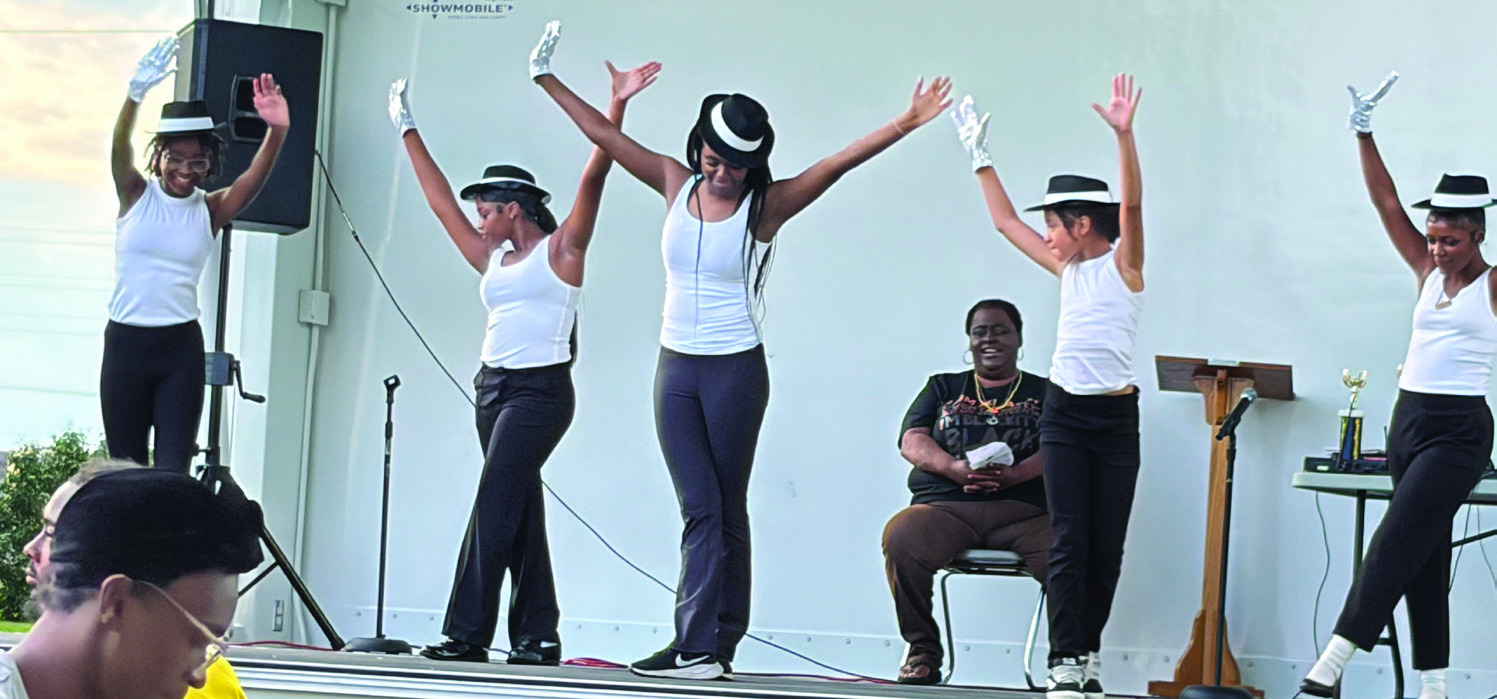
The Juneteenth celebration also featured several musical performances, including J.J. Redd of the Hip Hop Group “The Redd Boyz” performed onstage with his father, and Bill Maakestad played guitar, and the Quincy-based dance troupe, “The Beatniks” danced to a medley of Michael Jackson songs.
There was also a talent show featuring local area children. As reported in “Mt.
Cavalry Plans for a Vibrant Future” in last Friday’s edition of the Brief, Mt.
Cavalry COGIC has recently finalized plans for 20262029 to grow its ministry.
The church’s strategic planning committee emphasized three priorities it wishes to pursue: discipleship, community impact and youth development. As part of the Church's mission – and vision – Juneteenth fits right in.
A goal that is important to Elder Henderson is youth outreach, which is part of the annual celebration's mission. A former youth pastor, Henderson has been placed in charge of the church’s youth development program. He described how part of the hope for this Juneteenth was to get more young people involved in the church.
“We’re not going to be around forever to organize this,” Henderson said.
“We need to start bringing people in early so they can get it inside them, so they can feel it.”
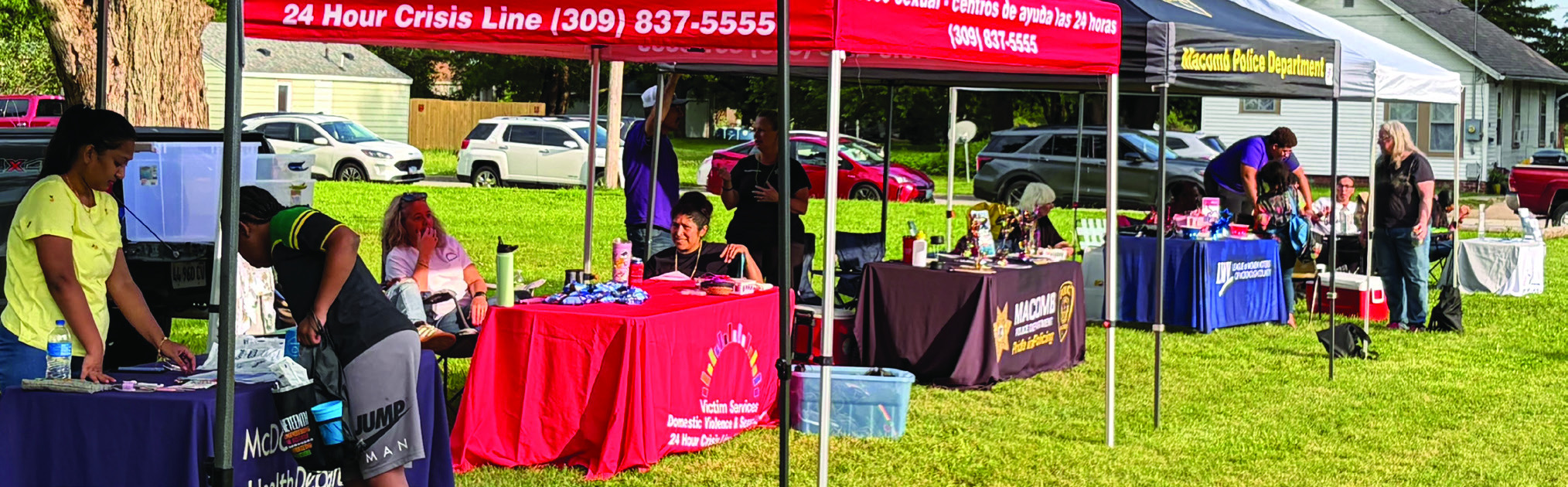
In addition to the fun, throughout the event, there was this inescapable sense of history, both local and national. WIU Department of History Chair and historian Tim Roberts and his students curated a tent with materials related to C.T. Vivian, a renowned civil rights leader who grew up in Macomb and studied at WIU starting in 1942.
The tent contained historical documents pertaining to Vivian and what it meant to be a person of color attending university during World War 2. In one clipping from The Western Courier, one of Vivian’s classmates reported how even in Macomb in a non-Jim Crow state like Illinois, Vivian wasn’t allowed to enter some restaurants in town with him because of the racial situation.
Before the other musical events took to the stage, WIU Associate Professor Sharon Hunter led the audience in singing the hymn “Lift Every Voice and Sing.”
This famous hymn, written by civil rights activist James Weldon Johnson and set to music by his brother, is sometimes referred to as “the Black national anthem” and frequently sung to punctuate moments of high importance in African American history. Some of the lyrics to the song speak profoundly to Elder Henderson’s theme of freedom as a promise that must be carried forward: Sing a song full of the faith that the dark past has taught us, Sing a song full of the hope that the present has brought us; Facing the rising sun of our new day begun, Let us march on till victory is won.
Seeing so many young people invited in to enjoy themselves and absorb some of our shared history made it clear how Juneteenth wasn’t just a cookout. In a sense, Mt. Cavalry COGIC and all the other organizers of Juneteenth are doing the same work as Maj. Gen.
Gordon Granger and his 1,800 bluecoats when they enforced the Emancipation Proclamation to slaves in Texas 16 decades ago: carrying forward the good news of freedom, transforming it from a dead letter into a living tradition.