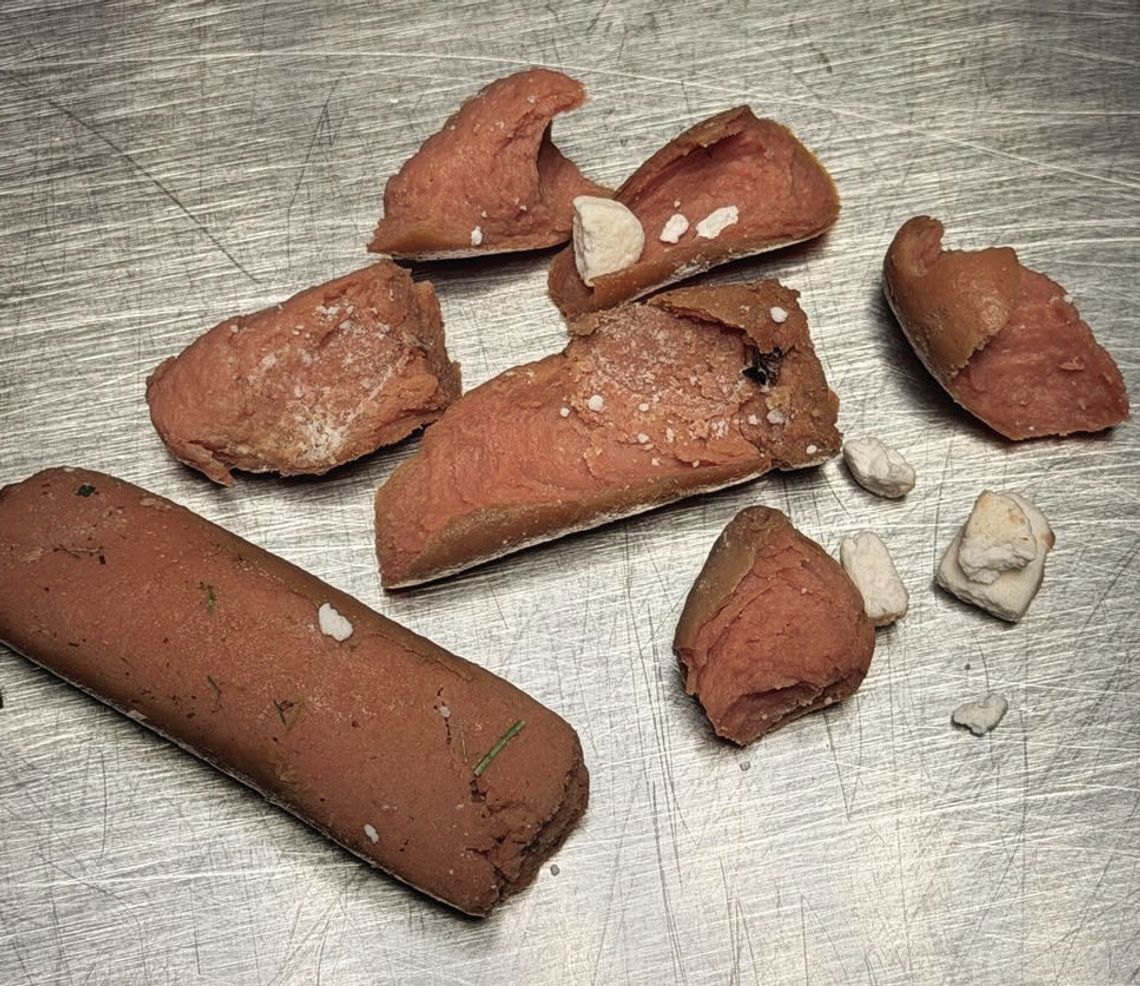
Macomb Resident Reports Finding Hot Dogs Stuffed with Unknown Meds in Yard
The Macomb Police Department and All Pets Veterinary Clinic are warning Macombarea residents to keep an eye out for potentially dangerous items in their yard, in this instance, hot dogs, containing an unknown medication that could harm their pets. Authorities noted this is the only reported incident they have received at this time.
On Tuesday afternoon, All Pets Veterinary Clinic reported on its Facebook page that a pet owner on Pierce Street in Macomb found, on his property, multiple hot dogs containing pills. The incident was also reported to the Macomb Police Department. A Google search of similar instances found that two months ago, a Sacramento, CA news story featured a dog owner who found a hot dog with crushed pills along their walk near a popular park. Three years ago, the Newport, RI Police Department took to Facebook to warn dog owners of what was found littered across area lawns after a resident who was walking their dog found pieces of hot dog cut up and filled with nails.
A recent search of TikTok revealed a trend that included using hot dogs as a 'hack' for dog owners to disguise their dog's medicine.
Dr. Karen Blakeley, All Pets veterinarian and owner, said it was not possible to tell what kind of pills were in the hot dogs as they were partially dissolved from the moisture from the hot dogs so none of the letter/ number codes were visible. Macomb police conducted a field test for narcotics, which yielded negative results.

According to Blakeley, signs of ingestion vary by toxin. Some will affect the heart, while others can impact the GI tract and other toxic substances can affect the respiratory system or renal system. For example, acetaminophen, which is highly toxic, can include vomiting, lethargy, difficulty breathing, blue or pale gums and swelling of the face or paws. However, Blakeley stressed that at the sign of illness (lethargic, depressed, lack of appetite, vomiting, diarrhea, etc.), a call to the vet is warranted.
'Inducing – or not inducing – vomiting depends on the item ingested. Things like petroleum products, you do not want to induce vomiting for. If you know what your animal has eaten, or have an idea, it's best to call a vet. You also do not want to induce vomiting if they have any breathing, swallowing, issues or are very lethargic as there is higher risk for aspiration,' she said.
'Absorption of toxins varies greatly by many factors, including age of the animal, if stomach was empty or full/ last meal, metabolism, health of pet, etc., as well as the item/ toxin, the formulation (some pills are meant to be absorbed quickly, some are not.) Generally, if it safe to induce vomiting, it is only worth it if the pet ate it within the last two hours.'
Blakeley added the two biggest problems with toxicity are that people don't always know if their pet ate something they shouldn't have. If the dog in the situation that occurred in Macomb had been let into the yard unattended, she likely would have eaten all the hot dogs and the owner may not have known. It just so happened that she didn't go to the bathroom in the yard that morning so the owner found them first. The other problem is that people will wait to call. Time is of the essence if you suspect your pet has ingested something harmful, she stressed.
'There is an ASPCA Animal Poison Control Center (888-426-4435) that will provide a consultation for a fee, but consulting your vet is important,' Blakeley concluded. 'Whenever possible, knowing active ingredients, weight of package, contents of package, if the package was full or empty, when they got into it and weight of pet are very important, so if owners are able, they need to have that information at hand.'
Macomb Police Chief Todd Tedrow said they currently do not have any suspects. Individuals who find any suspicious objects in their yard or when walking their dog, should contact Macomb Police at (309) 833-4505.
'It's always a good idea to check your pet's area on a regular basis, and be aware of when you're walking your pet,' Tedrow said. 'Again, if you find anything suspicious in your yard, or along your walk, please call our department's non-emergency number.'