I’ve had a long interest in researching and writing about women of the local past who had an impact. That was especially prompted by my awareness, decades ago, that remarkable women of the past were commonly overlooked in early local histories—which were written by and about men. Over the years, I’ve written articles or book chapters on more than fifty women from our heritage— who deserve remembrance and appreciation. In some cases, I’ve also spoken about them and urged modern residents to do memorial efforts focused on them.
Because journalist Darcie Shinberger has recently written good brief overviews about several of those women for the Community News Brief, I will not focus again on the twentieth-century figures she mentions.
But I want to emphasize a selection of others.
One reason that we should be proud of our county’s notable female tradition is the various groundbreakers that have had an impact, working in many fields and roles that were distinctive in a culture that normally confined women to managing households and raising kids.
One early figure is Matilda Jane Randolph (1819-1907), a daughter of Brooking family pioneers who became the wife of William H. Randolph, a noted store owner, banker, realtor, sheriff, state legislator, and circuit clerk. As many of us in Macomb know, he built and managed the wellknown Randolph House hotel, where Lincoln stayed twice during 1858.
For one thing, she was clearly the idea person behind the creation of our Oakwood Cemetery, which was laid out in 1857 on the land where her pioneer parents had settled in 1834—and where she had been married to Randolph a few years later. Of course, her husband was formally in charge of the cemetery operation, but it was clearly a sacred site for her—and she also moved the graves of her dead relatives to that location. And when the Randolph House was erected in 1857 as well, she helped to operate it. For whatever reason, she was unable to have children, so she devoted herself to working with her open-minded husband—and she raised several nieces and nephews who had lost their parents.
The big change in her life came in November, 1864, when her husband was murdered in Blandinsville, by southern sympathizers, while he was enforcing the Civil War draft. Matilda Jane was devastated by the loss, but she simply continued to operate the hotel and the cemetery. Indeed, she moved to the hotel, where she could manage things better than from her home.
But she also had some assistance from her brother.
In any case, she became the first woman in the county to own and manage a prominent business—and of course, her management of the cemetery was a distinctive public role as well. She later sold Oakwood Cemetery to the City of Macomb, in 1877, and she retired the following year and then simply leased the noted Randolph House hotel. She also became renowned for her acts of kindness to other residents.
Another remarkable woman who had a big impact outside the home was Mahala Phelps, the first librarian in the county, who became a public icon. Born in frontier Macomb during 1846, she became a teacher and was committed to promoting reading. In 1877 she became the co-developer and the caretaker of the White Ribbon Reading Room, located on the second floor of a building on the north side of the square. (At that time, “White Ribbon” was a symbol of the Woman’s Christian Temperance Union’s opposition to drinking alcohol and its commitment to various social reforms—including women’s suffrage.)
When the first Macomb library opened during 1882, in the back room of the Stocker Jewelry Store, Mahala was hired as the librarian. She organized and circulated the books, but was also the caretaker and janitor of that site. And she took a personal interest in the patrons who stopped in and helped them find books they would surely appreciate, so she became the town’s beloved librarian.
When the new city hall opened on the southwest corner of the square, in 1883, the public library was moved to that location.
Mahala worked there for about twenty years, and she also promoted the idea of seeking funds from Andrew Carnegie. When Macomb acquired $15,000 from him, early in the twentieth century, a separate library building was finally constructed. It opened in 1904, and Mahala was the initial librarian there, for twenty- three years, before she retired in 1927.
No one else in a Macomb public position had such a long impact as Mahala Phelps, and she became a beloved figure because of her personal commitment to helping so many adults and children find engaging and helpful books. As she later said in a 1930 letter, “The library was life to me,” and “I felt a proprietary interest in all the people who came there.” So, when she died in 1932, exactly fifty years after the town’s first library had opened, she was an icon of commitment to the public good.
Another woman who had a distinctive position was Macomb’s first female lawyer, Alice Curran. Born in 1878 and raised in nearby Mercer County, she married Daniel J. Curran, a native of New York who wanted to become a lawyer. In 1903 they moved to McDonough County, where he studied law and then started his practice at Macomb in 1906. But Alice also developed the desire to be an attorney, so she studied in the office of W. H. Neece and William Elting, and in 1909 she was admitted to the bar. She and her husband had an office together, on the east side of the square.
Of course, Alice’s role was groundbreaking, for Illinois women had been denied a license to practice law during most of the nineteenth century, and female lawyers were very rare in the early twentieth century. The main reason for that was the view, held by most men, that women were secondary figures, whose gender placed them under male control. It is not surprising that Alice Curran not just the first Macomb lawyer but the first one in all of western Illinois.
And she was not restrained by lingering anti-female attitudes. She handled a variety of civil and criminal cases, and she was active, too, in the development of the McDonough County Bar Association.
Indeed, she spoke briefly at that group’s first substantial meeting, in 1917.
And she was ambitious, and anxious to continue her groundbreaking efforts, so she actually ran for McDonough County State’s Attorney in 1916. She was defeated, but her effort was certainly inspiring to other women—who didn’t even have complete voting rights until 1920.
Her most audacious challenge to the male-dominated status quo came in 1927, when she became a candidate for Mayor of Macomb.
The town had never even had a female alderman, much less a female mayor, so her effort was a groundbreaking assertion—that women could, and should, be leaders in local government. Of course, Alice lost the election, but she was inspirational to many women. And she should continue to be.
Alice Curran continued to practice law into the 1930s, but unfortunately she came down with cancer and died in 1935, at age 58. By then, she had been a successful lawyer, and civic activist, for 27 years. And she showed the male-dominated society in western Illinois that females could not only make a professional contribution but also become a voice for civic improvement.
Another McDonough County woman who deserves remembrance and appreciation had a similar impact. Harriet (“Hattie”) Polk was born in 1871 and raised in Colchester. As I pointed out in The Bootlegger: A Story of Small Town America, that community of 2,000 people had considerable drinking in the late 19th and early 20th centuries. But it also had a Woman’s Christian Temperance Union, and by the early 1920s Hattie was the president of that local organization. After 1920, women were activated by voting rights, so Hattie ran for Mayor of Colchester in 1923—and she was elected.
She was then the only female mayor in Illinois, and she naturally struggled to combine the traditional duties of a housewife with the public responsibilities of a mayor. Because she was something of a statewide celebrity, she was soon invited to address the Illinois League of Women Voters in Chicago, and in that speech she discussed the challenge of having a hard, busy, fulltime public job—while carrying on with her woman’s job as a housekeeper. She also declared that “probably the toughest job of all—even worse than getting our worst bootlegger (Kelly Wagle) indicted—was convincing my husband that it wasn’t a disgrace (for him) to have a mayor for a wife. . . .” So, Mr. Polk, who had a traditional male point of view, had to reconcile himself to being less prominent and authoritative than his wife.
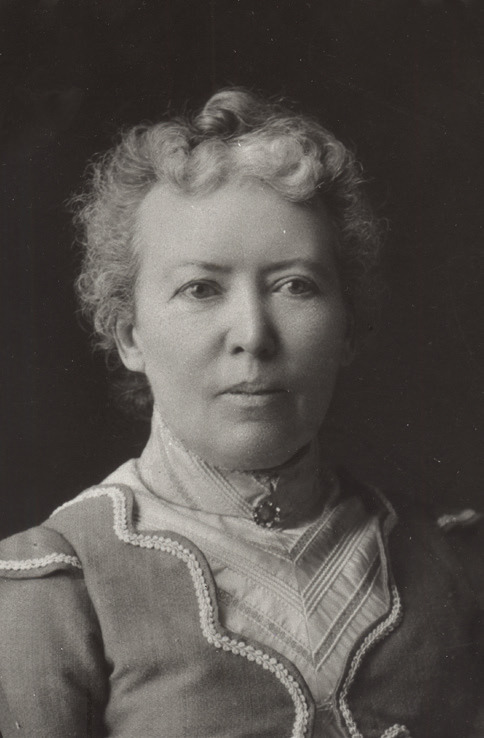
Macomb Public Librarian Mahala Phelps.
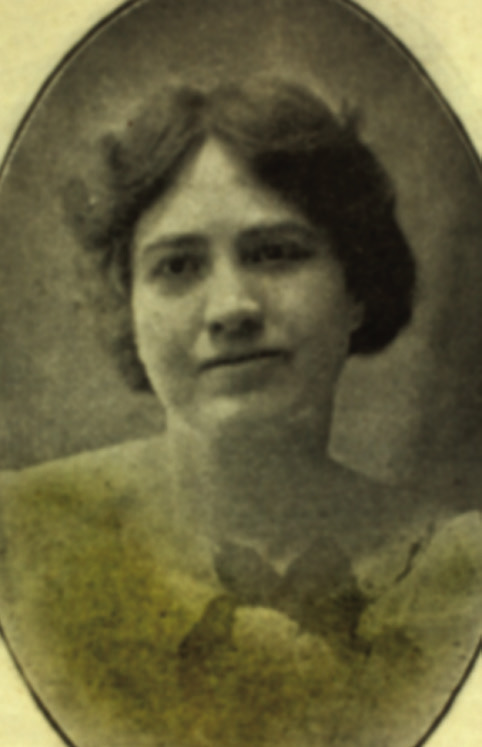
Macomb attorney Alice Curran.
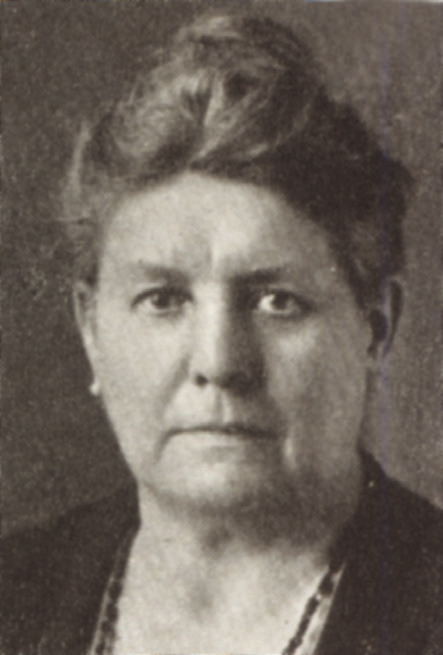
Western Illinois State Normal School Training School Teacher Carolyn Grote.
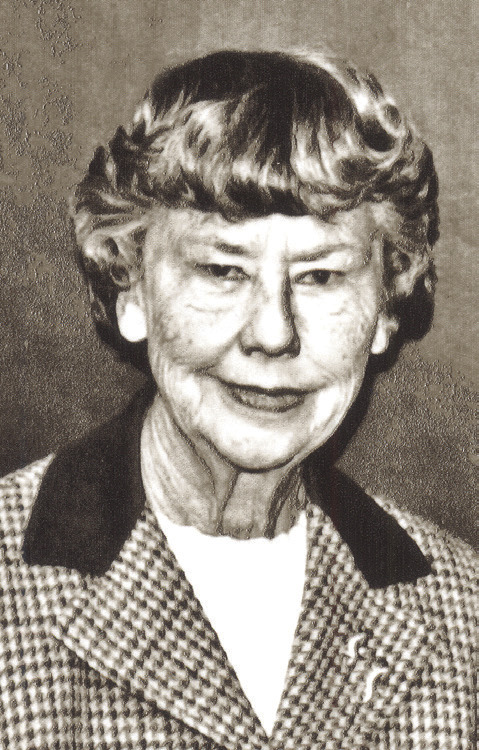
Macomb banker and social activist Mary Ewing.
As this suggests, too, there was a good deal of public controversy about her civic leadership role, as a female, and she got caught up in Colchester’s huge conflict over drinking and bootlegging as well. It is therefore not surprising that in 1925 Hattie lost her bid for re-election. But she should be more appreciated than she has been—for surely prompting other women to speak out and strive for a positive public impact. Indeed, her role certainly inspired Alice Curran, mentioned above, to run for Mayor of Macomb in 1927.
The local conflict in Colchester prompted Hattie Polk and her husband to move to Macomb in 1927, and unfortunately, he died a year later, but Hattie remained there until the early 1950s. She died in 1955, and the groundbreaking female mayor has been largely forgotten.
Of course, the coming of Western Illinois State Normal School (and later, Teachers College and University) to Macomb also fostered various new leadership roles for women. I’ve written about many of them in the past fifty years, including noted early figures like Cora Hamilton, the beloved first principal of Western’s teacher training school; Mabel Carney, the manager of Western’s “model country school” who wrote a noted book about country schools; Susie B.
Davis, the initiator of Western’s theater tradition; Mabel Corbin, who started the Western journalism program and was a renowned English teacher; and Mary Bennett, a biologist who was the first Western department chair in a science field.
But as I mentioned in an article forty years ago, “No woman was more important to the development of Western during the first half of the century than Caroline Grote.”
Born in 1863, to German immigrants, she was raised in the village of Perry, Illinois, and she received a high school diploma in 1879—back when few women did. Grote then taught in Pike County schools, and her administrative career began in 1889, when she became superintendent of the Augusta schools. She was later (in 1896-1898) the high school principal in Pittsfield, the county seat. And then she was a groundbreaking woman in education, for in 1898 she became the superintendent of schools for Pike County—the first Illinois woman to serve in such an administrative position.
In 1906 Western’s superb second president, Alfred Bayliss, hired her as a training teacher, and a year later she was appointed as the Director of Country School Training— which was the center of Western’s educational emphasis. And in 1908 Bayliss also asked her to take general charge of the women students. She did so, residing in the woman’s dormitory, Monroe Hall. Grote was the much-admired Dean of Women until her retirement in 1935.
She was also a leader in various educational and civic groups. For example, she was a prominent figure in the State Teachers’ Association, and in 1915, to promote that organization’s purposes, she inspected all the rural schools in western Illinois, to issue a report on matters that needed attention, including filthy buildings and inadequate teachers. She was also a leader in the Business and Professional Women’s Club of Macomb, encouraging women to expand their career purposes with administrative positions. Grote was active in the National Education Association, too, and she crusaded for various non-educational goals as well.
It is not surprising that when the much-celebrated reference volume titled American Women (the first “Who’s Who of Notable Women in the U.S.”) appeared in 1937, it included an overview of Caroline Grote’s life and work. She was a groundbreaking female leader, who devoted her life to not just teaching and educational administration, but to promoting public understanding of, and commitment to, educational and social issues.
Also, of the many remarkable McDonough County Women who were born in the 20th century, none made more significant contributions to the public good than Mary Ewing. I knew Mary, late in her life, and interviewed her more than once. No one that I knew had broader commitments.
She was born in Macomb during 1906, to parents, James and Eleanor (Eads) Bailey, who were both from well-to-do banking families and were devoted to serving the community. After graduating from Western High School in 1923 and Knox College (with honors) in 1927, she married H. Dewey Ewing in 1928, who also became a banking leader.
Mary raised a son and a daughter, but as she told me, she had wanted to go into social work since she was a teenager. However, early in the 20th century, when she was young, most people, including everyone in her family, frowned on the idea of career-focused, working mothers. So, she turned instead to volunteer efforts.
For example, she was impressed by the great efforts of Josie Westfall and Rose Jolly, who helped many orphaned and abused children, so in the early 1930s she canvassed the area to raise money for the new McDonough County Orphanage. Because she was from a socially prominent family, she had extensive connections that opened many doors, and wallets, even during the Depression.
As the years went by, she also held leadership positions in the Macomb Salvation Army, the McDonough County Heart Association, the county Tuberculosis Association, the county Welfare Service Committee, the Altrusa Club, the Girl Scouts, the United Way, Wesley Village, Macomb Beautiful, the McDonough District Hospital Auxiliary, and other local charities and social service organizations.
And she had activism that extended beyond our locality, too. In the 1960s, for example, she was the McDonough County representative to the Illinois Conference of the White House Committee on Children and Youth (held in Chicago). For that effort, she investigated and reported on such matters in our state as children’s health, family life, and vocational training. She was also a board member of both the American Association of University Women and the Home for the Aging (developed by the PEO, a national woman’s group).
Because Mary also had increasing involvement in the Union Bank, and two other family-owned banks (the First National Bank and the Bank of Industry), and she served on the boards of those institutions, she was also eventually selected as the Union Bank vice president for marketing and public relations.
She held that position until 1983. And, as a business leader in that field, she co-founded the National Association of Banking Women—an organization that helped to recognize and support the struggle of women to emerge and succeed in that field. She also chaired the Illinois Advisory Council of the Small Business Administration.
As all of this suggests, no woman in the county has had a broader record of volunteer service and commitment to social causes. It is not surprising that she received the Outstanding Citizen Award from the Macomb Chamber of Commerce, as well as other civic recognitions.
Various other women in our local heritage deserve remembrance and appreciation, too—as I reveal in books like Here to Stay and On Community. But as even this brief account of local women suggests, our county has a remarkable tradition of contributions by women to the public good—and to the expansion of women’s roles in our culture.
Modern residents should be proud to live in a county that has such a fine record of distinguished female achievement.