While the annual National Autism Month, which is held every April to raise awareness of autism, is over, that doesn't mean support, recognition and understanding ceases until the next year. One west central Illinois center is working every day to assist area children who are neurodivergent – and their families –resources, skills and educational activities at no cost.
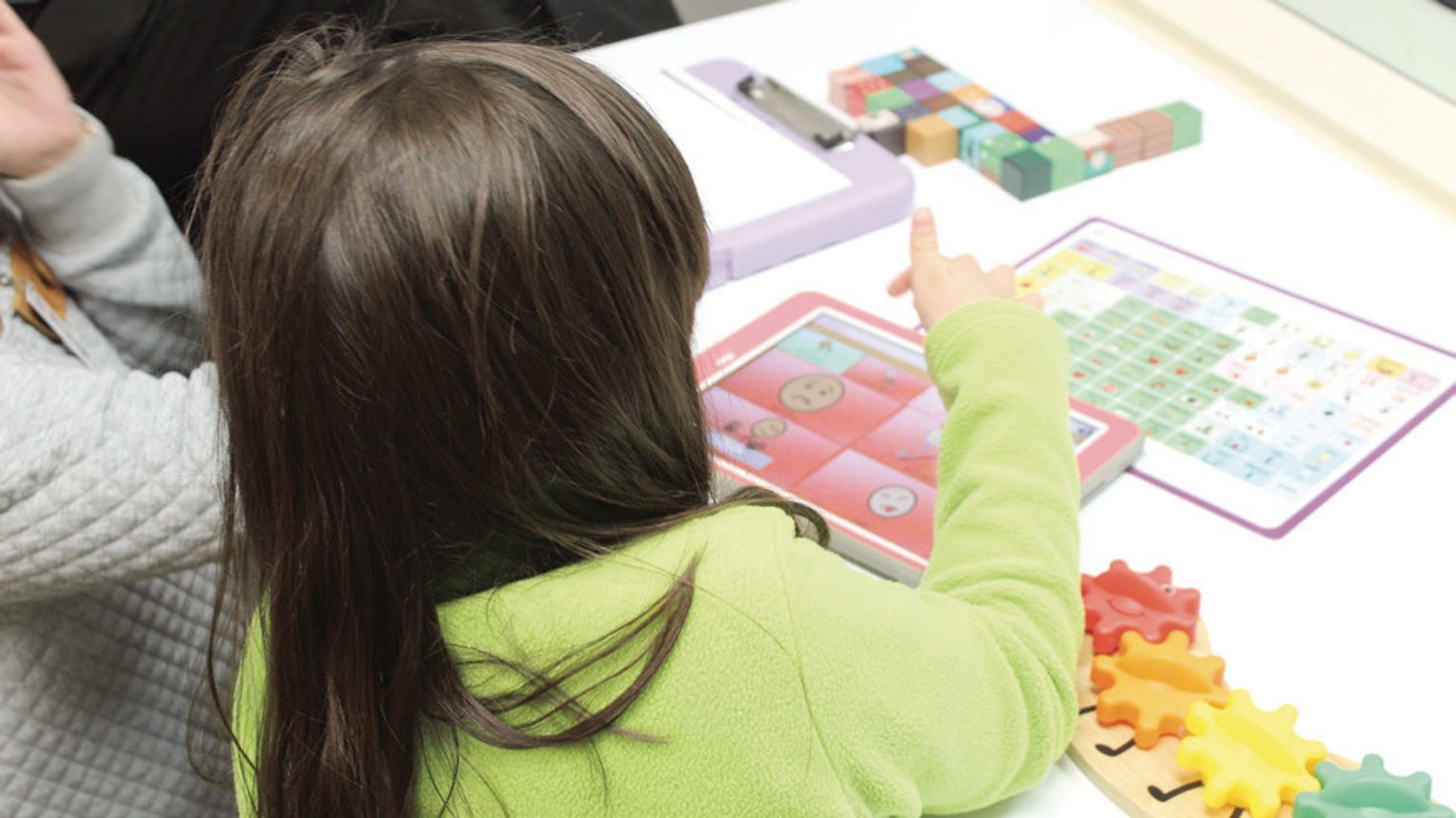
The Western Illinois University Autism Center of Excellence (WACE), which is part of the longstanding WIU Speech-Language-Hearing Clinic, collaborates with WIU's speech pathology and audiology and psychology departments, to provide speech therapy services, play therapy and more.
The center is led by Nicole Pierson, assistant professor of speech-language pathology, in conjunction with Leigh Fisler, an associate professor in WIU's psychology department.
WACE, which launched in August 2023 to provide autism assessments, received over 60 calls for service in just that first year, Pierson noted. The WIU Autism Center of Excellence has received a significant investment from the Fellheimer Foundation, as well as Tracy Family Foundation (TFF) to expand WACE's efforts to better support families in the west central Illinois region. Fisler and Pierson credit Terry Jenkins, mental health program manager at the Tracy Family Foundation, for the inspiration to dream bigger with the impact WACE can have on local children and their families.
'Terry spent an afternoon with us for a site visit,' Pierson and Fisler shared. 'He not only valued our passion, he fueled it. He connected us with funding and offered his support and encouragement every step of the way. Terry sparked a new idea for our team. With the recognition that children continue to need services in our region, the reality struck us that we may only be providing a ‘bandage' service while the regional waitlist for accessing an appropriate assessment only grows.'
Through the in-house evaluations conducted, WACE has identified children who need speech therapy services offered through the clinic, directed children and families to therapy and identified children who meet the criteria for autism.
'Since a typical comprehensive evaluation can take three to four hours, our model was reconceptualized as a 'triage' model to maximize efficiency so that we can reach more families,' she added.
The evaluation for children up to age eight begins with a screening day, and from there, families are routed into one of four groups for continued assessment(s): the need for a comprehensive evaluation to determine if Autism Spectrum Disorder (ASD) is present, which can be completed at the WIU clinic; local community and school resources are provided if no needs are identified; if communication issues are present, referrals are made for speech therapy, which can be provided at WIU's clinic; and if family, mental health or trauma concerns appear, family therapy referrals are issued. According to Pierson, this has greatly improved efficiency, not only within the center and the clinic, but for families who are seeking assistance for their child(ren).
During the 2024-2025 school year, WACE screened 43 children, and conducted comprehensive evaluations for 14, with another six evaluated during the summer months. During the Fall 2025 semester, Pierson, other center staff and students completed 10 comprehensive evaluations and 16 screenings.
'We are caught up on our waitlist and are able to accept families who are waiting for assessments,' Pierson said.
Before WACE was able to begin providing evaluations, parents in the McDonough County region were referred to the Easter Seals district office in Peoria or Bloomington, but the wait list was as long as two years. The office called WIU's clinic to discuss ways to partner to alleviate the wait, Pierson said.
'Because of the bureaucracy involved, we couldn't be a satellite office of the Easter Seals, so we created a diagnostic clinic model and created the center,' she added. 'And then we ended up with a lengthy wait list, so we had to come up with a new plan to better serve families.'
That plan led to the creation of group screenings and assessments so more children can be seen at once.
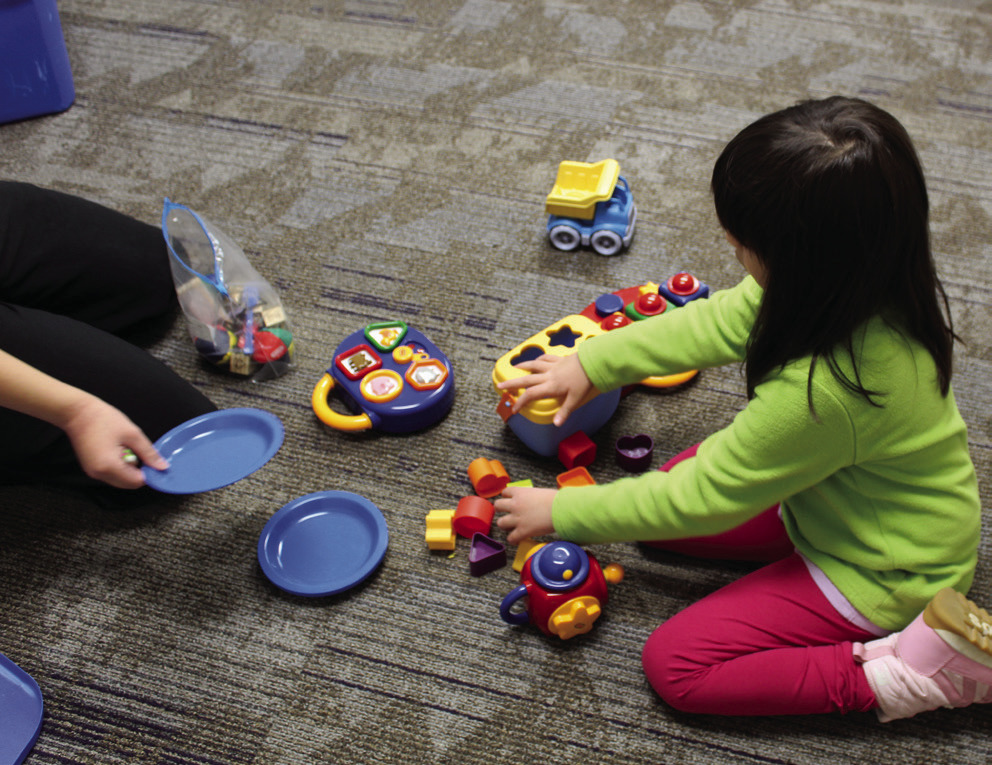
From there, WACE staff can provide the next steps in regard to referrals and services needed (speech, hearing, etc.). Lego League, Speech Sprouts and individualized services are also offered.
'If we see an indicator, we can then do a more in-depth individual assessment,' Pierson pointed out.
To further help tackle obstacles that parents of children diagnosed with ASD, WACE has become an ECHO Hub, a virtual telemonitoring system and cohort that connects autism specialists with primary care providers and educators, including paraprofessionals.
Through the online hub, educators learn best practices, collaborate on meeting student needs and participate in case-based learning.
'Many children who have been evaluated by WACE may have been removed from early childhood programs because providers aren't equipped to handle behavior and sensory needs.
This leaves parents with trying to find care, or even having to homeschool their child,' Pierson explained.
'That's what moved us to become an ECHO Autism Hub so we can share resources, training and other support so teachers and others are well-equipped.'
The hub, which meets every Monday afternoon online, is led by a team composed of an occupational therapist, a special education teacher from Dunlap, IL, a social worker from Chicago and a lived-experience expert (a parent from Macomb).
Topics covered include neurodiversity, maximizing educational outcomes, supporting sensory needs, visual supports, communication, challenging behaviors and effective team approaches.
More information is available on echoautism.org. Educators can register at tinyurl. com/WACEEchoto join the hub at any time.
'For underserved areas like our region, this hub is a critical component to helping educators and families,' Pierson said. 'We can deliver knowledge and provide a learning community so families and children receive the support they need and deserve.
'It's our hope and our goal to make a big difference in kids' and families' quality of life,' Pierson concluded. 'I have high hopes for what our model can do.'
To learn more about WIU's Autism Center of Excellence, visit wiu.edu/ autismclinic.