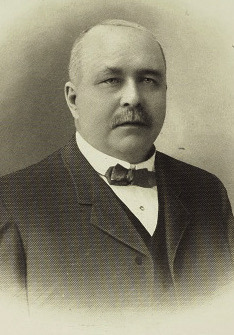
Haeger Pottery expanded to Macomb, Illinois in 1939 by acquiring the existing Buckeye Pottery building to increase production of florist artware. Joseph P. Estes, who was leading Haeger at the time, established this second location to diversify manufacturing, which later included a dedicated Royal Haeger lamp plant in 1969.The Macomb facility operated until 2004.
One cannot really talk about the Haeger Pottery decision to expand their business to Macomb, Illinois, without first mentioning another business, Buckeye Pottery.
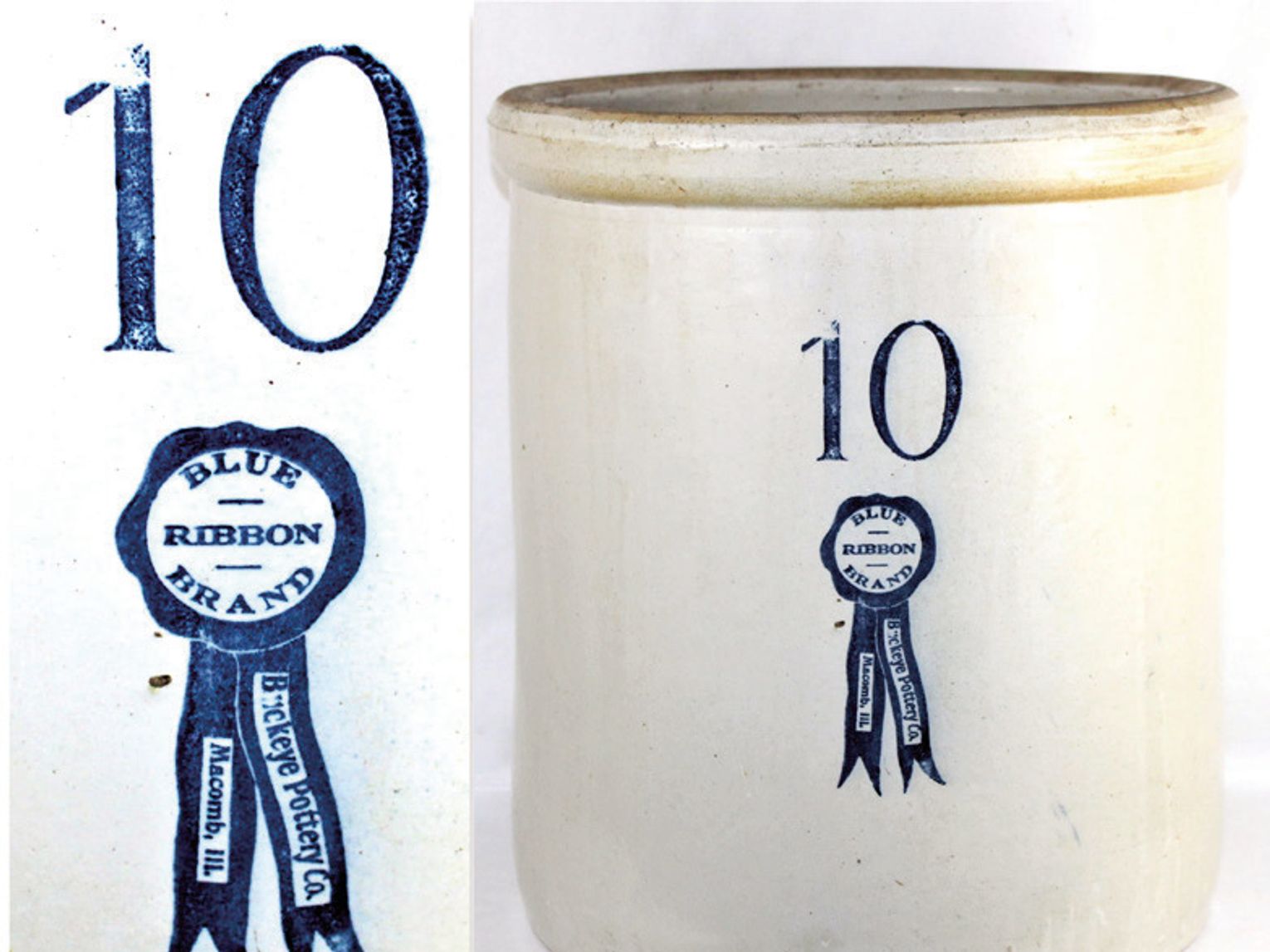
The Buckeye Pottery Company was a prominent, family-owned stoneware manufacturer based in Macomb, Illinois, operating from 1882-1938. Founded by the Pech family, it is best known for producing “Blue Ribbon Brand” stoneware, including crocks, jugs, and garden items. Their pieces are highly collectible, often featuring distinct stamps, and are characterized by their durable farmhouse style.
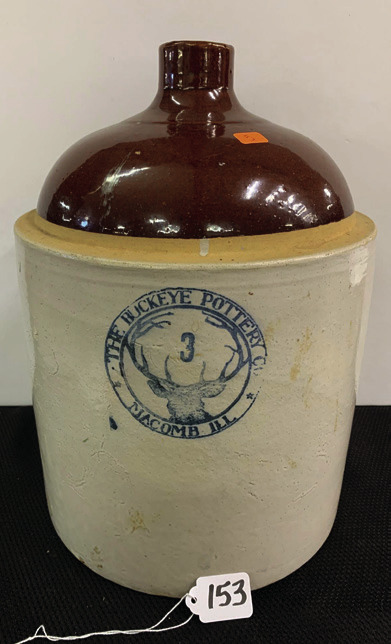
Buckeye Pottery was established in 1882 in Macomb, Illinois by Joseph Pech and his son Frank, who named it in honor of their home state of Ohio. They produced a wide range of stoneware including such unique items as jugs, mixing bowls, jardinieres (a decorative pot, stand or urn often used to hold plants or flowers), bird baths and cemetery vases.
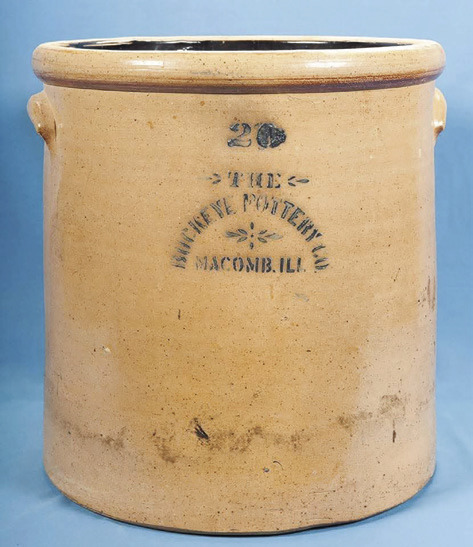
Early pieces were marked “J. Pech & Sons/ Macomb, Ill.” Later, the company became famous for its “Blue Ribbon Branding” used in the early 1900s. Since its closing in 1938, its items are highly sought after, including the popular 3-gallon jugs, stoneware crocks and yellow ware.
Local historian Marla Vizdal has done extensive research on Buckeye Pottery. Vizdal has documented the following information on the precursor to Haeger Pottery. From Vizdal’s article entitled “Buckeye Stoneware:” According to the 1880 Federal Census, Joseph Pech’s oldest son, Washington, had moved to Illinois, married, and found employment working at the A. W. Eddy & Co. Pottery. Having learned of the good quality of clay and the abundance of coal in McDonough County, it made sense to settle here and find work doing what he knew best - working as a potter. Washington then encouraged his father and family to follow him to Macomb, and start a family business.
In 1882, Joseph Pech and his son Frank, and their family had joined Washington in Macomb and opened Buckeye Pottery.
The Pottery was located on West Carroll adjacent to the railroad tracks. The twostory brick building was, according to the Macomb Journal, equipped with “all the latest improved machinery and appurtenances, which included a handsome 20 horse-power engine and a clay crusher which was “without a doubt, the best in town.” The drying department, instead of utilizing steam pipes, was warmed by fires from which the warm air was drawn from the brick flues. The Pech family originally invested $20,000 in the Buckeye Pottery, employed about 20 people and in 1882 put out about 4,000 “gallons” or jugs a week. By the early 1900s, their production had increased to 50,000 gallons a week and the product line had increased.
These products could easily be identified by the stencil on their wares. As late as the turn of the 19th century “J Perch & Sons/ Macomb/Ill,” along with a wreath, were put on the product pieces. In the early 1900s, the more familiar “Blue Ribbon Brand/Buckeye Pottery” depicted by a blue ribbon over the company’s name, was found on their crocks and jugs.
In 1919, Buckeye Pottery suffered a huge loss. A fire of undetermined origin burnt the main building of the pottery, which was declared a total loss. Fortunately, some freestanding sheds or warehouses were untouched and the stock of pottery was unharmed and the Pechs were able to keep their sales going. Other potteries in the area offered their assistance and as soon as the steam had disappeared from the blaze, cleanup and rebuilding began. A new structure was built with modern conveyors and elevators, which allowed clay to dump directly from the railroad cars into a hopper or conveyor track, which would deliver the clay to its destination. This eliminated the old method of utilizing wheelbarrows for the transfer.
Elevators made it easier to move wares from floor to floor, and soon Buckeye was making mixing bowls, bird baths, decorative flower pots and saucers, pitchers, egg beater jars, bread jars and many other items.
By 1938, the son of Washington Pech, C.A. Pech was running the business. Buckeye Pottery employed 65 people, with five being women. A new type of kiln had been added to handle kitchen and oven wares. This new kiln was built in a circle with different areas of it heated to various temperatures so that once a piece was put into the kiln, it would be affected by both extremely high temperatures and fan-driven cooler temperatures.
The wares didn’t have to be removed until the entire firing process was done. Tables within the kiln moved at a rate of four feet per hour, with the entire process taking 36 hours. The previous method of the old kilns had taken 120 hours.
Unfortunately in mid-1938, the pottery was closed due to a steep downturn in sales. This family-owned and -operated business, the Buckeye Pottery, which had added so much to the economy of the town of Macomb, fired its last pots and closed its doors for good. Today, the names of J. Pech & Sons, and Buckeye Pottery, are highly collectible and the pieces housed in Western Illinois Museum are an excellent representation of the products once produced “just over the railroad tracks.”
The demise of Buckeye Pottery made way for Haeger Pottery of Dundee, Illinois, to come to Macomb. The pottery and name became world-famous and was recognized as the world’s largest art pottery manufacturer by the mid-20th Century. It was renowned for its high-quality, mid-century designs, signature glazes, and popular Royal Haeger line, producing up to 7,000 pieces daily for American and International markets.
However, truth be known, had it not been for Buckeye Pottery paving the way, Haeger Pottery may never have known about the rich clay deposits in this area. And had there not been an already existing facility, Buckeye Pottery, Haeger Pottery may never have come to Macomb, Illinois.
Credits for this story: Macomb Journal Marla Vizdal “Buckeye Stoneware” Nick Estes Western Illinois Museum Macomb A Pictorial History by John Hallwas Collecting Royal Haeger by Lee Garmon and Doris Frizzell