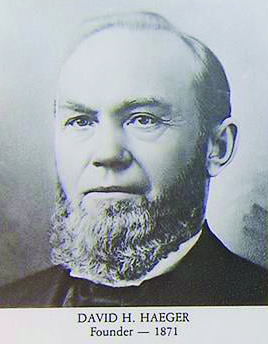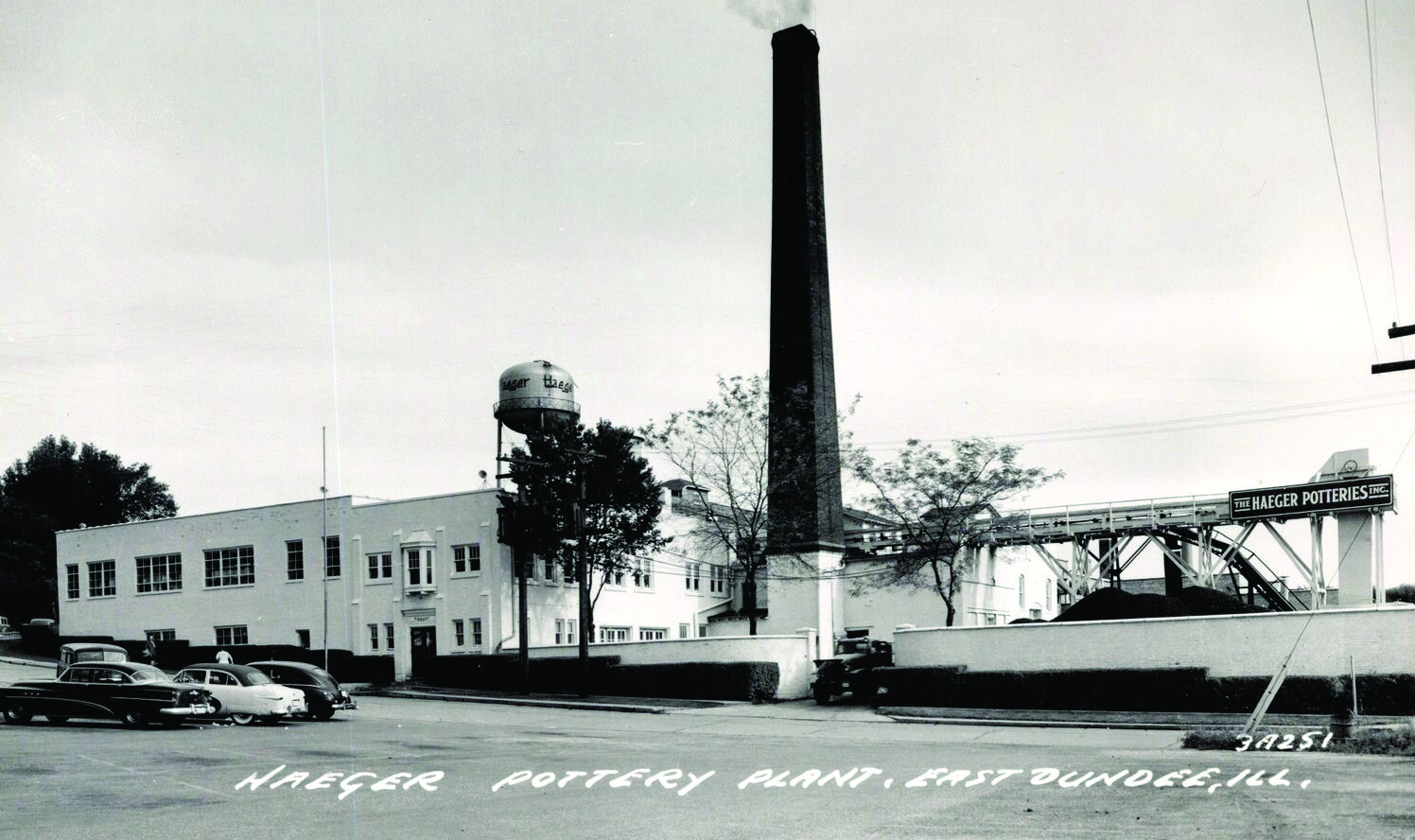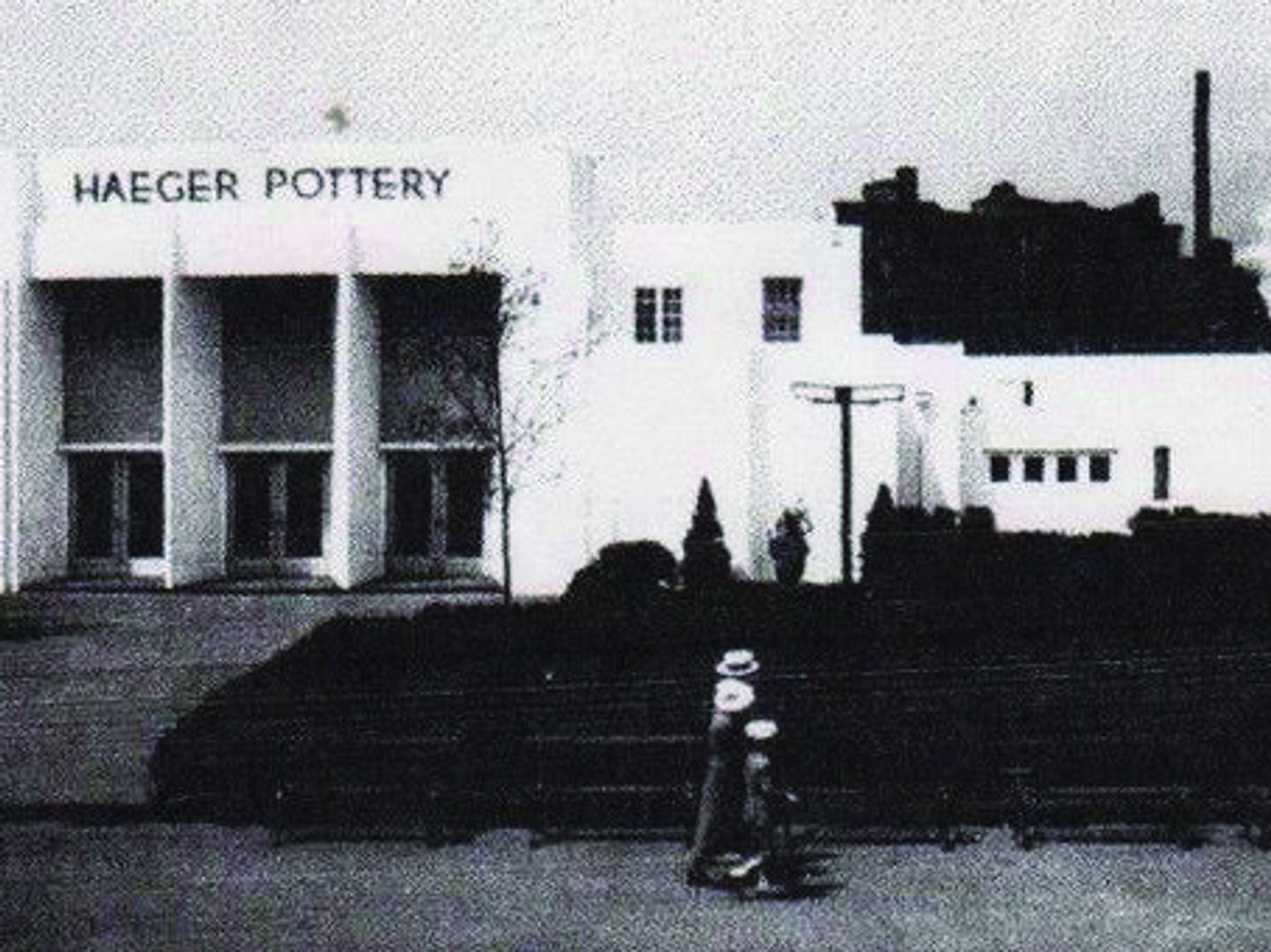
David Haeger, a German immigrant, began his brickyard on the banks of the Fox River in the Dundee, Illinois historical district in 1871. The river banks provided the Haeger brickyard and factory the clay that was used to help rebuild Chicago following the Great Chicago Fire.
By the 1920s, the brickyard production included teaware, luncheonware, crystal and glassware.
Second Generation
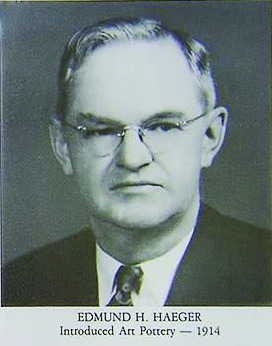
Upon his death, one of David’s sons, Edmund H. Haeger, assumed leadership of the Dundee brick factory. He realized early on the value of brilliant color glazes and distinctive designs. He was responsible for the initial popularity of Haeger art pottery introduced in 1914.
Under Edmund’s leadership. The organization was transformed from a conservative establishment that produced exclusively brick and tile, into the world’s largest art pottery. From the first piece of Haeger artware in 1914, the pottery utilized both lustrous gloss/glazes and soft glowing pastels. The early pieces were marked with a triangle- shaped label. The glazes would include lovely deep roses, yellows, oxblood, and bronzes with gold tones.
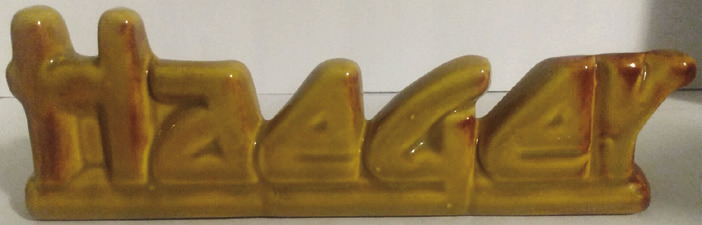
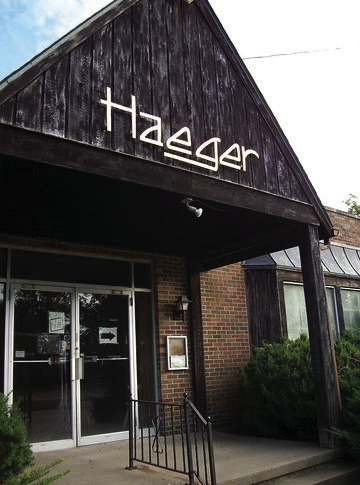
As a highlight in the 1933-34 Chicago World’s Fair (A Century of Progress) Edmund built a complete working ceramic factory, showing both ancient and contemporary modes of production. Edmund Haeger’s decision to build a model “working” pottery exhibit at the 1934 Chicago World’s Fair Century of Progress Exhibition, further introduced the Haeger line to Americans from every part of the country. This modern exhibit included a large display of Haeger’s wares, as well as a complete working factory. The pottery produced on this site was exhibited and sold in the adjacent showroom.
A residence was also a part of the exhibit building where Edmund’s daughter, Barbara, stayed and worked the duration of the World’s Fair. More than forty million people visited the World’s Fair in Chicago with many taking part in this educational exhibit, watching the making of Haeger pottery. Without realizing it, they were, in fact, watching history being made.
Third Generation
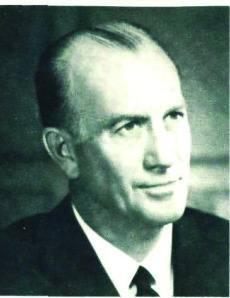
Family leadership continued at Haeger with the appointment of son-in-law Joseph F. Estes as general manager in 1938. The Royal Haeger line of artware and lamp bases he introduced is one of the most respected in the field.
In 1938, he was instrumental in starting the Haeger Potteries in Macomb, Illinois. Located in an area rich in clay deposits, this plant produced a complete line of pottery for florists. In 1954, Joseph F. Estes was named president of The Haeger Potteries, Inc. He became chairman of the board of Haeger Industries, Inc., in 1979.
Fourth Generation
The fourth generation of Haeger leaders was represented by a son, Nicholas Haeger Estes, and a daughter, Alexandra Haeger Estes, the great-grandchildren of the founder, David H. Haeger. The need to diversify, and the rich clay deposits in central Illinois, prompted the opening of a second plant at Macomb, Illinois in 1969. This plant, The Royal Haeger Lamp Company, was devoted entirely to the manufacture of lamp bases and shades. In 1979, Nicholas Haeger Estes, son of Joseph F. Estes, became president of this company. (Nicholas Estes still resides in Macomb today). In 1979, Alexandra Haeger Estes, a daughter of Joseph P. Estes, was appointed president of the Haeger Potteries of Dundee. In February 1984, Alexandra was elected president of the Haeger Potteries of Macomb.
Haeger: A Leader in the Field Haeger maintained its position as leader in the field of ceramic production through careful management of its facilities, and by streamlining (mechanizing and automating wherever possible), by employing leading designers from all over the world, and by staying in tune with the public’s moods and wants.
The staff at Haeger boasted many fine designers during its history, many of whom learned their art in the great pottery centers of the Old World. Many of these designers came from Coppenhagen, Sweden and Finland.
Haeger was known for its famous glazes, which have been imitated but never successfully copied. The glaze covering a piece of pottery had to be perfectly mixed and blended. It had to be hard and durable when fired, but it couldn’t break or crack. Above all, the color had to be clear and lustrous. The dipping had to be dexterously done to ensure a uniform coating of the bisque. The possible shrinkage from firing had to be estimated so that body and glaze will contract proportionately to avoid cracking or breaking.
Haeger maintained permanent major showrooms in the following locations, and added new lines twice a year: Atlanta, Bedford, Mass., Columbus, Dallas, San Francisco, Northville, MI, Kansas City, Denver, High Point, N.C., Los Angeles, Minneapolis, New York City, Seattle, and Reston, Va.
The Most Famous Designer
Over the years Haeger employed many designers, one of Haeger’s most famous designers was Royal Arden Hickman. He had natural talent for any medium of creativity; paper, crystal, aluminum, clay, wood, etc. Hickman was never addressed as anything except “Hick”, and he signed many of his sketches and personal drawings with that signature.
Hickman was born in Willamette, a small Oregon town, in 1893. At 14, he began working for the Willamette Paper Mill, and at 16 he was drawing plans for the mill’s new warehouse.
Hickman’s poor eyesight prevented him from serving in WWI, and while recuperating from a heat stroke he had while working in the Panama Canal, he was sent to California for therapy. He was given clay to mold, to exercise his hands, and with a pocket knife and a crochet hook, Hickman began his long and highly successful association with artware.
Mr. Edmund Haeger, having previously met Royal Hickman through a distributor in California, knew this was the man he wanted as a designer for Haeger. In 1938, the Royal Haeger line was launched and was an instant success. (The name Royal may or may not be coincidental) The public’s acceptance of the Royal Haeger line was instantaneous. The pottery built a second large tunnel kiln to meet the sales demand of their new line, and one year later, in 1939, the Royal Haeger Lamp Company was established. The company thrived. Hickman stopped working fulltime for Haeger in 1944, but continued to freelance in the 1950s. Hickman died in 1969.
Coming soon, Part 2 of the History of Haeger Pottery “Haeger Comes to Macomb, Illinois”.
Credits: Collecting Royal Haeger by Lee Garmon and Doris Frizzell Macomb A Pictorial History by John Hallwas The House of Haeger 1914 - 1944 by Joe and Joyce Paradis