“Now the moon shines tonight on pretty Red Wing, the breeze is sighing, the night bird’s crying, For afar ‘neath his star her brave is sleeping, While Red Wing’s weeping her heart away.” “Red Wing” written in 1907 by Kerry Mills and Thurland Chattaway The songs relevance to this story follows: It comes as no surprise that the town of Bushnell, Illinois wanted an opera house. Following the Civil War, many towns established these opera venues in the 1880s and 1890s, with Galesburg being as early as 1870. Key regional examples of nearby opera houses included Rushville (1882), Aledo (1904), Monmouth (1908), Alexei’s (1889), Macomb (1873) and Ellisville (1891). Also, there was the Raritan Opera House, the building which still stands preserved today (but the website says it is permanently closed).
The definition of an opera house in the late 19th century was: Any large, 2nd story meeting space with a stage, hosting traveling troupes, lectures, graduations, town meetings, etc. Opera houses were seen as community centers, offering such culture to a small town as live theater, music, civic events, and of course, opera.
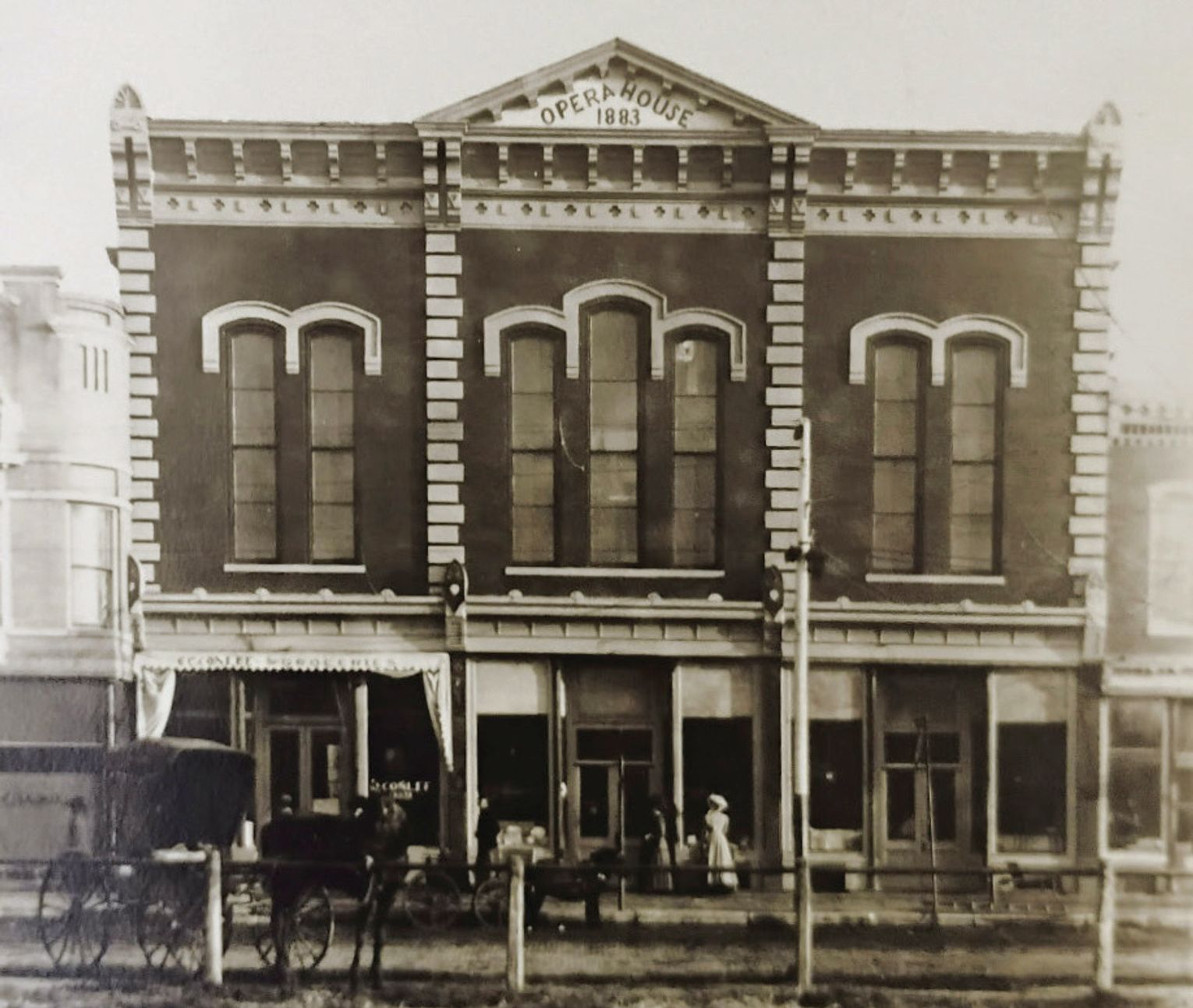
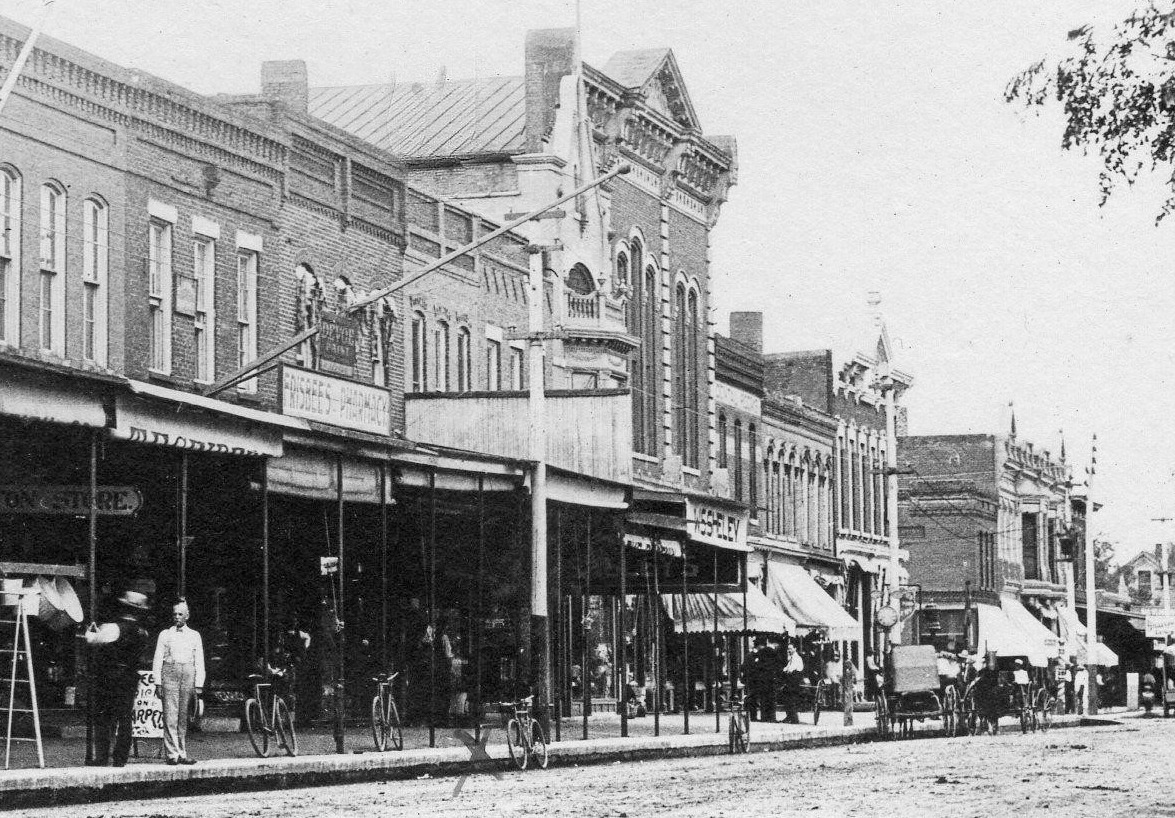
The Bushnell Opera Building Today, a thriving Ace Hardware store occupies the East Main Street address of 426. Owned by the Batsons, the small town hardware store offers everything a builder or homeowner could want, from paint to tools to generators. But upstairs, there exists a former entity in itself. A place probably unknown to most Bushnell residents, including this writer, who lived in Bushnell until age 11. The upper floor of Batson’s Ace Hardware is the wonderfully preserved home of the Randall’s Opera House, otherwise known as the Bushnell Opera House. This writer was lucky enough to be allowed to see the 153-year-old structure in person. It did not disappoint.
Construction 1883
The Randalls, R.S. Randall, and H.L. Randall, along with S. Houghton, began construction in June1883. It was finished on January 1, 1884, and was billed as “one of the finest and most complete halls of amusement in this part of the state.” The building measured 60 x 90 feet in the foundations, and was 60-feet tall. Two storerooms were found on the ground floor, while the opera house occupied the second story. The stage was 25 x 60 feet in dimension and was handsomely fitted with a drop curtain, scenery, stage fittings, and all other accessories of a well kept theater. The building was valued at $22,000. The auditorium was fitted with opera chairs and everything was arranged for the comfort of the patrons.
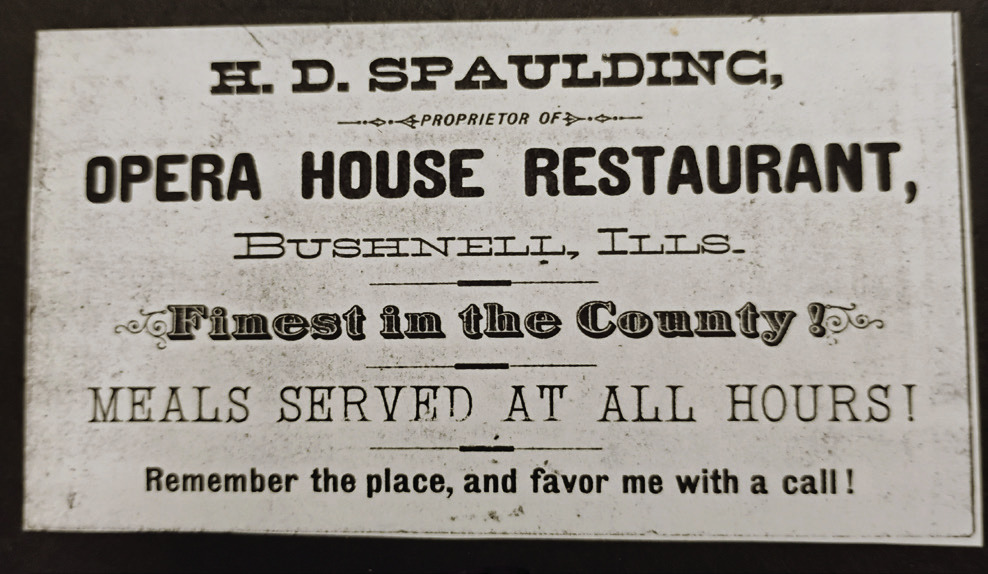
It is reported that there were printed, perfumed programs for the first event held at the Randall’s Opera House. The house was full, holding 610 people. Lectures, touring musical shows and Vaudeville acts were held in the opera house, and the building was also used for graduations, dances and local plays. In the early 1900s, the high school basketball team played their games in the opera house and the girls also had a team. An interesting sidenote: In general, opera houses of this era were located on second floors, the reason being that the first floor was typically rented out to merchants to make money.
While there was no doubt reason to worry about fire, with the oil and gas lighting of the day, accidents happened. Some operas or converted theaters did worry about fires on second floors with large groups of people present. Macomb had a theater fire in 1925, and decided to move their venue to the first floor. Fortunately, there is no record of Bushnell Opera House ever having a major fire.
The Performers
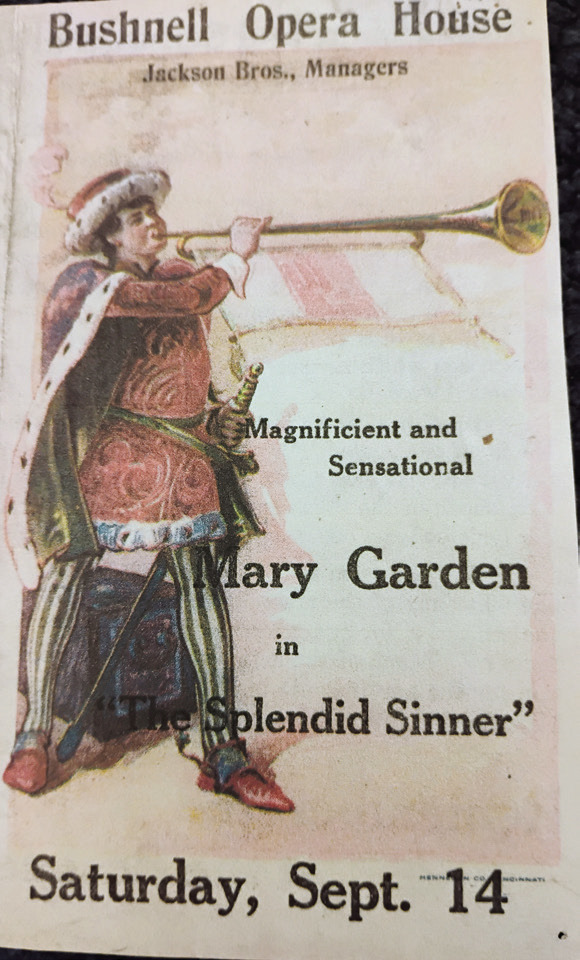
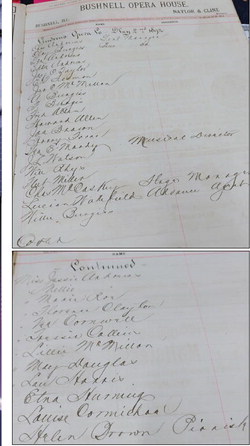
The Bushnell Historical Society, now located on East Main Street, has a wonderful collection of Bushnell Opera House memorabilia. One of its most precious items is a large bound ledger book containing the names of every cast member that performed in a show. The names for the most part are written in calligraphy, along with the date of the performance and the name of the production in Bushnell, Illinois. Oftentimes the most artistic cast member would then, usually with colored pencils, decorate the page according to the play’s theme.
The railroad was a significant part of the popularity of opera houses because they allowed theatrical companies to travel from town to town. Most traveling groups stayed three or four days in town. Bushnell was located at the junction of three railroads, two lines of the Chicago, Burlington and Quincy and one of the Toledo, Peoria and Western Railroad. The main line from Chicago to Quincy passed through Bushnell, as well as the line from Rock Island to St. Louis. There were eight passenger trains daily each way from Bushnell. A perfect scenario.
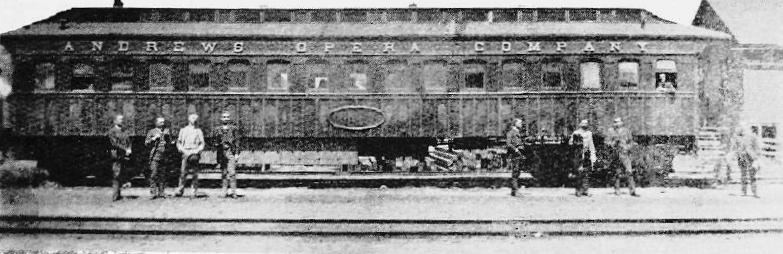
Traveling Family Troupe in Horrible Train Accident, Still Performs in Bushnell On January 15, 1892 a horrible passenger train accident occurred on the Northern Pacific railroad at Jonesville, the first station east of Brainerd, MN. At 3:50 a.m. on that day, two women met their deaths, while 20 others were injured. Onboard was the Andrews Opera Company.
The Andrews Family Opera was founded by the family of John Redding Andrews, a Methodist minister who left Illinois in 1865 to settle in St. Peter, MN with his wife and children. The company started as a traveling family vocal troupe in 1875, and they added a cornet band and Swiss bells to their performance before emerging as an opera company in 1884. Their performances were moderately priced and were seen in small towns and cities throughout the Midwest.
The train which the Andrews family was riding on was going from Duluth to Grand Forks. The train was running at the usual rate of speed, when it struck a broken rail. The sleeper car, with the opera company onboard, went down an embankment, landing bottom side up. Flames broke out from all sides of the car and burned so rapidly that the crew could do very little. When it was thought that all had been rescued, a search revealed the fact that Mrs. Ed Andrews, wife of the leader of the troupe, and her nurse were missing. They were later found deceased. Twenty passengers, including troupe members, were taken to hospitals and special doctors from Brainerd brought in by special train.
Mrs. Andrews was better known by her stage name of Nannie Wilmington. She was the soubrette of the cast, a character with a playful, mischievous personality, who sometimes used cleverness to reach her goal, and was very popular. She also left behind a small baby.
What is significant is that in the Bushnell Opera House ledger, currently kept at the Bushnell Historical Society, on May 2, 1892 the Andrews Opera Company performed in Bushnell. Just three months after the horrific train wreck their names, all 32 of the troupe, are written in beautiful calligraphy. Some of the performing members' names are the same names who had been badly injured and/or burned in the January train wreck. This gives adage to the old saying “the show must go on”.
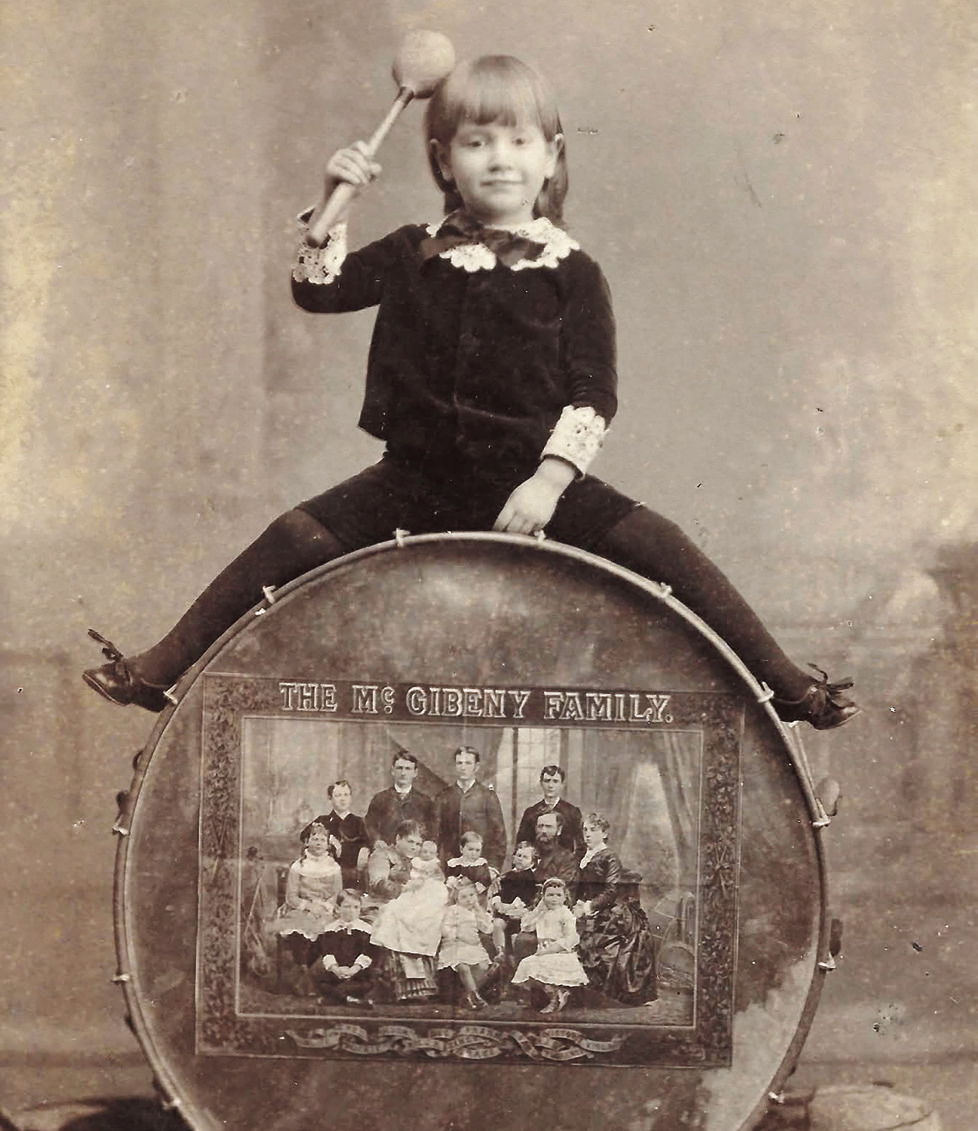
Other troupes such as the McGibeny Family performed at the Bushnell Opera House. James B. McGibeny, his wife Hannah and their many children had not only a national following, but a transatlantic following as well. The family had been touring since 1875, rode the rails in their own custom-built Pullman Palace car, and had played the White House just the year before, entertaining Rutherford B. Hayes.
One newspaper wrote: “The appearance of the twelve McGibenys on the stage is so pleasing and homelike that it is impossible not to feel attracted to them. There is a novelty and a freshness about all they say, sing, play or do that is most pleasing and entertaining.” One need only visit the Bushnell Historical Society and flip through the pages of the casts that performed at Bushnell, to appreciate what a vital contribution the opera house gave to the community.
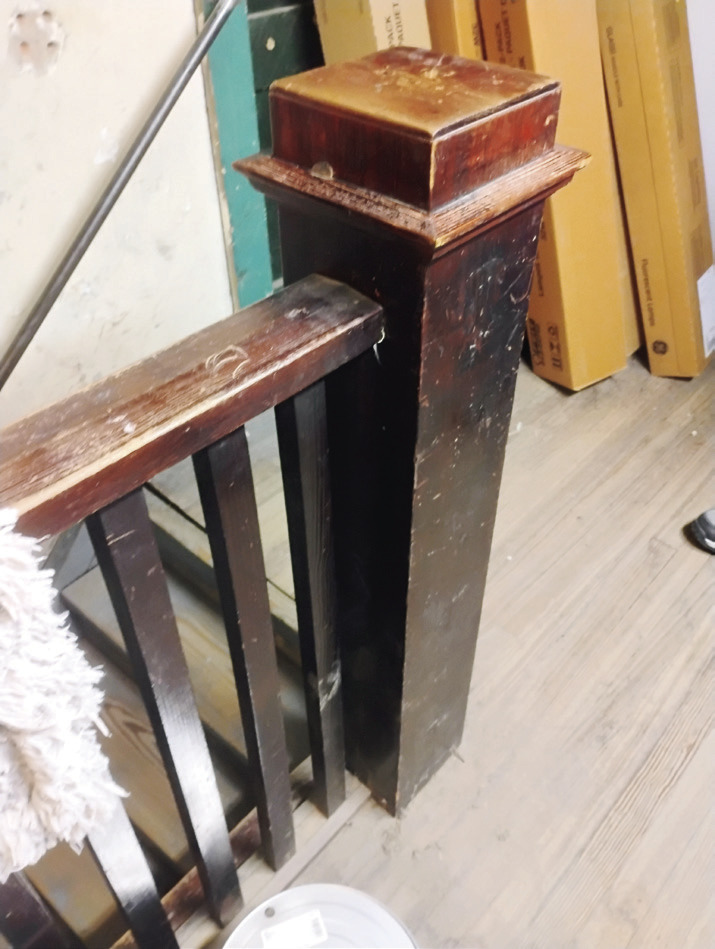
My Tour of the Bushnell Opera House I have an old soul and a love for history, so when I had an opportunity to see the Bushnell Opera House firsthand, I took it. We walked to the back of the Batson’s Ace Hardware store and went up a fairly narrow, steep set of stairs that turned and then went back the other direction. The rail and the newel post on the top stairs is stained a beautiful rich mahogany, and Stacy Batson explained that in the absence of wood stains in those days, ox blood was used. We then stepped into the opera house itself. To say I was stunned is an understatement. The large, gymnasium-sized room feels frozen in time, the wall plaster intact, the ceiling of tin tiles remarkably preserved. The balcony rail in the back is also still there, except for a small section the Batson’s used in their private home. The balcony rail was also stained in ox blood.
The stage has been removed, but one can see its imprint that measured 25 X 60 feet. Oh, if walls could talk. Still remaining are the ticket booths, the dressing rooms, and a possible concession stand. I don’t recall seeing restrooms but surely they were there. When standing in the Bushnell Opera House that was built in 1883, one certainly does not feel as if it is 2026. One can almost close their eyes and smell the popcorn and hear the thunderous applause and the joyful laughter.
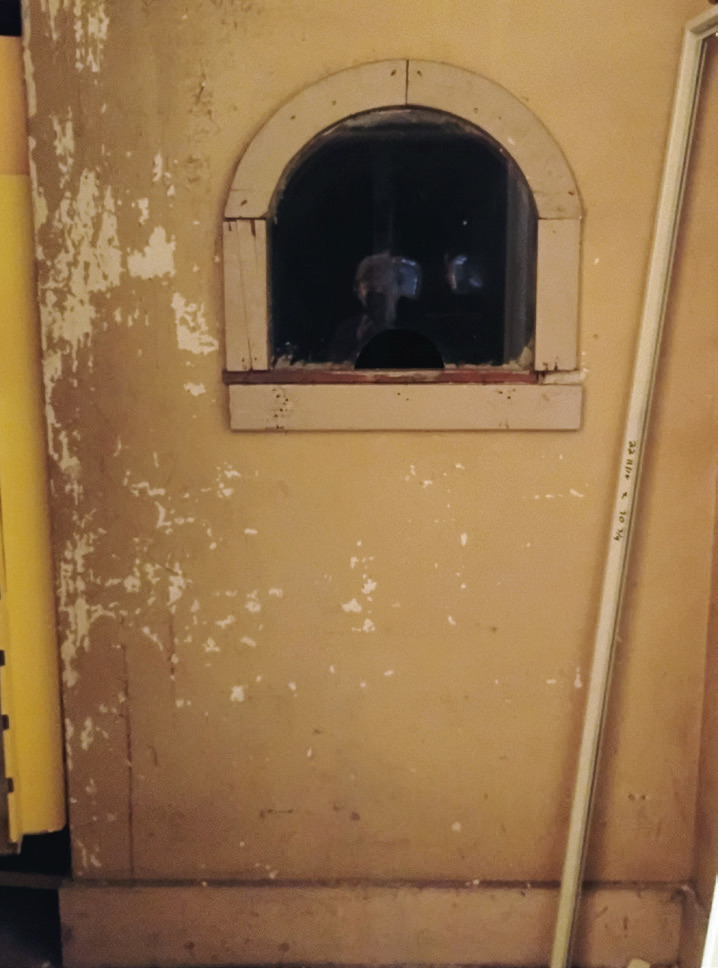
The Music Still Plays The Batsons use the opera house for some overflow product storage, and occasionally are up there moving or retrieving things. And that is when they usually hear it. Not often, and not always the same person. Several people have heard it. On the east end of the opera house, high up on a wall, is an older style speaker. It is not known what it was even used for, a wire runs to it perhaps for some later year when a club or organization used the room, but the wire is disabled and has been for years. Both Stacy and her husband David have heard it. A faint, tiny sound emitting from that black speaker high on the wall.
Here is where I decided they weren’t pulling my leg when they said, “It’s always the same song.” By now my curiosity had piqued. I asked Stacy what was the song they heard, and she said that they didn’t know the name of the song but that it's a very familiar tune. Then, Stacy said “It’s the music the ice cream truck plays.” I got chills. I knew the song.
“Red Wing was a popular 1907 American song written by Kerry Mills (music) and Thurland Chattaway (lyrics), notably adapting its melody from Robert Schumann’s “The Happy Farmer.” It tells the story of a Native American girl mourning her lost love, it became a Tin Pan Alley hit and a widely adopted Bluegrass/ Folk fiddle tune. Its melodic, often accordion-style, chorus is widely recognized serving as a nostalgic auditory trademark for mobile ice cream vendors.
The End of the Opera House Most local opera houses faded by the 1920s-1930s due to motion picture competition from dedicated movie theaters and strict fire safety regulations. Many opera houses were converted into retail, warehouses, or smaller theater spaces. Today, several are recognized as crucial, yet often endangered components of Illinois downtown historic districts, with ongoing efforts in places like Aledo to restore them. “Now the moon shines tonight on pretty Red Wing, the breeze is sighing, the night birds crying, For afar ‘neath his star her brave is sleeping, While Red Wing’s weeping her heart away.”Perhaps only a few can hear it.
Credits: Bushnell Historical Society Mary Martin, Judy Brooks, Jerry Eisele A Look Back... Bushnell, Illinois 1854-2004 (A Sesquicentennial History) Bushnell Public Library Macomb-A Pictorial History (John E. Hallwas) Western Illinois Museum Connie Sabetti David and Stacy Batson