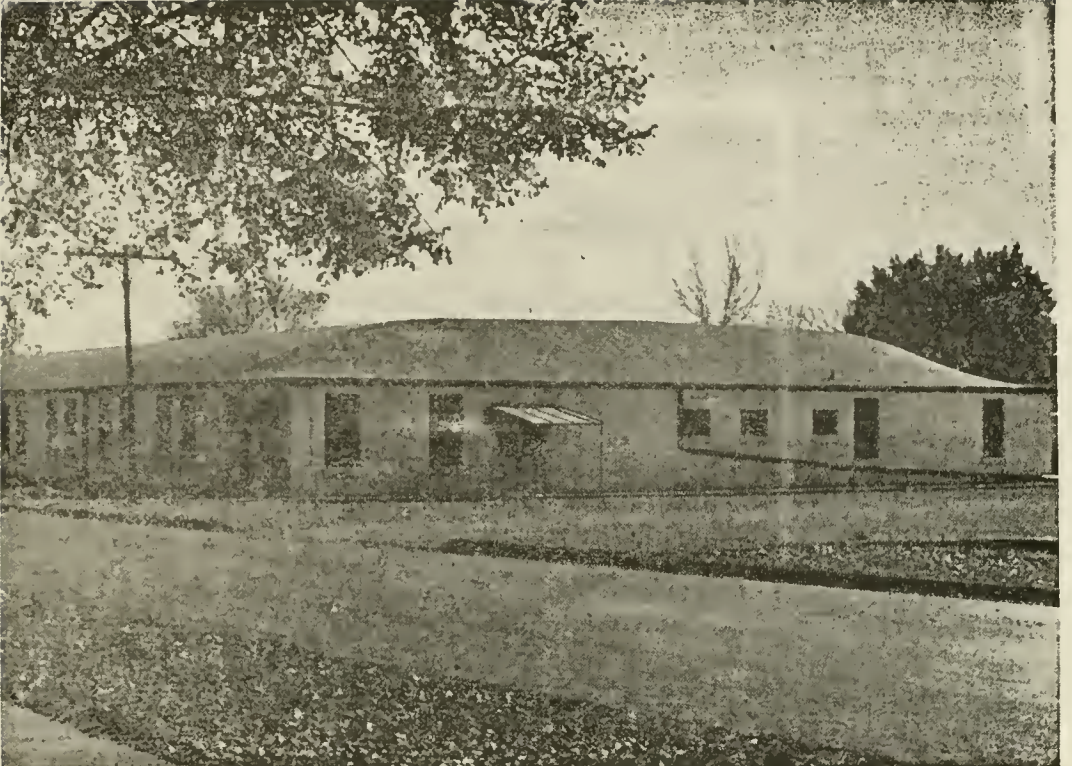
One would be remiss, when writing about the industrial history of Bushnell, Illinois, to not mention Blue Bell, Inc. A second source has the name of the business listed as Blue Bell Overall Co. Information on the Bushnell factory has been hard to find. Some accounts of persons who worked there or had relatives or friends who worked there, conflict with other accounts written or spoken memories.
The Bushnell Blue Bell plant was a branch of Blue Bell, Inc., which was the world’s largest producer of work and sport clothes. The parent company claimed to be capable of producing over one million garments annually. The Bushnell facility, according to a 1954 publication, “Bushnell, Illinois,” said that the plan on East Barnes Street employed 80 persons, mostly women, but had the capacity to employ up to 200. The specialty of the Bushnell factory, at least at that time, was listed as “ladies and girls jeans.”
This writer could not determine exactly what year Blue Bell, Inc. started production in Bushnell. Ivan Zuck was manager of Blue Bell in Bushnell for many years, possibly 28 (some of those years may have been at the Abingdon plant). Zuck also worked at Midwest Control Products another 13 years as plant superintendent, and retired in 1980.
So, by doing the math, the Blue Bell plant in Bushnell, possibly could have been open as early as 1939-1940, or thereabouts.
Incidentally, in Ivan Zuck’s obituary, a third name for the plant is listed, Blue Bell Garment Factory. And Blue Bell is written as one word, Bluebell. Most other sources list it as being two words.
History of Blue Bell
Blue Bell, Inc. was originally founded by Charles Hudson in Greensboro, NC as the Hudson Overall Factory in 1904. The Blue Bell Overall Company was named in 1919 after railroad workers, who were major customers, gifted the original factory a brass bell that became covered in blue denim dust.
Entrepreneur R.W. Baker originated a company known as Big Ben, which merged with Blue Bell on Jan. 1, 1926. With the merger, the name of the company remained Blue Bell Overall Company. In 1936, the company became known as Blue Bell Globe. Blue Bell bought out Globe Superior in that same year and changed the name to Blue Bell - Globe Manufacturing Company.
The names of many of the plants were shortened simply to Blue Bell, as was the case with Bushnell.
In 1944, Blue Bell acquired the Casey Jones Company. The plants in 1936 were located in Greensboro, NC and Middleboro, KY.
The Globe Superior plants were located in Abingdon and Canton, Commerce, GA and Columbia City, IN. So the Bushnell plant came after 1936.
During WWII, many Blue Bell plants sewed combat pants, jungle suits, regulation khaki dress and fatigue clothing. After the war, Blue Bell resumed the manufacturing of work clothes and diversified into children’s play clothes and casual apparel for women.
Blue Bell slogans included “World’s Largest Producer of Work and Play Clothes” and “The Big Company that Pays Attention to Little Things.”
Fun Fact: Pat (Hobbs) McNeely, Bushnell, worked at Bluebell from 1957-1958.
Pat still has her check stubs.
When starting at Bluebell she made .90/hour and was making $1/hour after receiving a raise.
Wrangler
Blue Bell took over the brand “Wrangler” when they acquired Case Jones in the mid-1940s. The Wrangler line was developed in 1947.
The authentic vintage pieces from 1947 to the mid-1960s feature a Blue Bell icon above the “Wrangler” script, and this is often called the “Blue Bell Period.”
Early vintage models (11MW) featured a button fly, 11-ounce denim, seven belt loops, shifting to 13-ounce denim by 1952.
Wrangler’s Blue Bell collection often used 14-ounce left-hand twill, offering a slightly snugger waistband and had “nicer and cleaner” stitching, often reproducing vintage-style tags. Original items from this era, particularly 1950s-1960s jackets (24MJ2) and jeans, are highly sought after by collectors.
In the mid-1940s, Blue Bell employed Bernard Lichtenstein, also known as “Rodeo Ben,” who worked closely with cowboys to help design jeans for rodeo participants. In 1948, the iconic “W” stitch was adopted for back pockets due to a trademark issue with Levi Strauss and Company.
From all accounts, Bushnell’s Blue Bell was not a bad place to work, and the company was known for putting the welfare and contentment of its employees first, emphasizing goodwill and respect. But make no mistake, it was hard work. Some of the people I interviewed remember their relatives saying how hot it got, especially in the summer, with all the machines running. Also, workers had to meet a daily quota of garments to receive a full paycheck.
Today, Wrangler jeans are now primarily manufactured overseas in countries, including Mexico, China and Indonesia. While most production moved out of the U.S. in the early 2000s, some special collections, such as the “Rooted Collection,” are still made in the USA using American-grown cotton.
A Day at Blue Bell
A typical day at Blue Bell factory, such as Bushnell’s, might have looked like this:
• School groups passing through on tours.
• State and federal politicians, and representatives from foreign countries, coming in to learn more (and who might’ve wanted to copy plant operations).
• Visits from suppliers, such as the Universal Button Company, Scovill Manufacturing Company and Coats and Clark Thread Company.
• Representatives from the national headquarters in Greensboro.
What You Would Have Seen at Blue Bell Any of the Blue Bell plants would probably have looked like this:
• A large open room with many windows and as many as 200 ceiling fans to help combat the sweltering heat.
• Glistening hardwood floors that were easy to sweep.
• The smell of massive bolts of denim fabric.
• Bins of rivets.
• The sound of thudding and subsequent steaming and hissing of pressing machines.
• Hundreds of cones of thread.
• Garments organized by size, style and dye lot.
• Lines of whirring sewing machines.
Final Thoughts
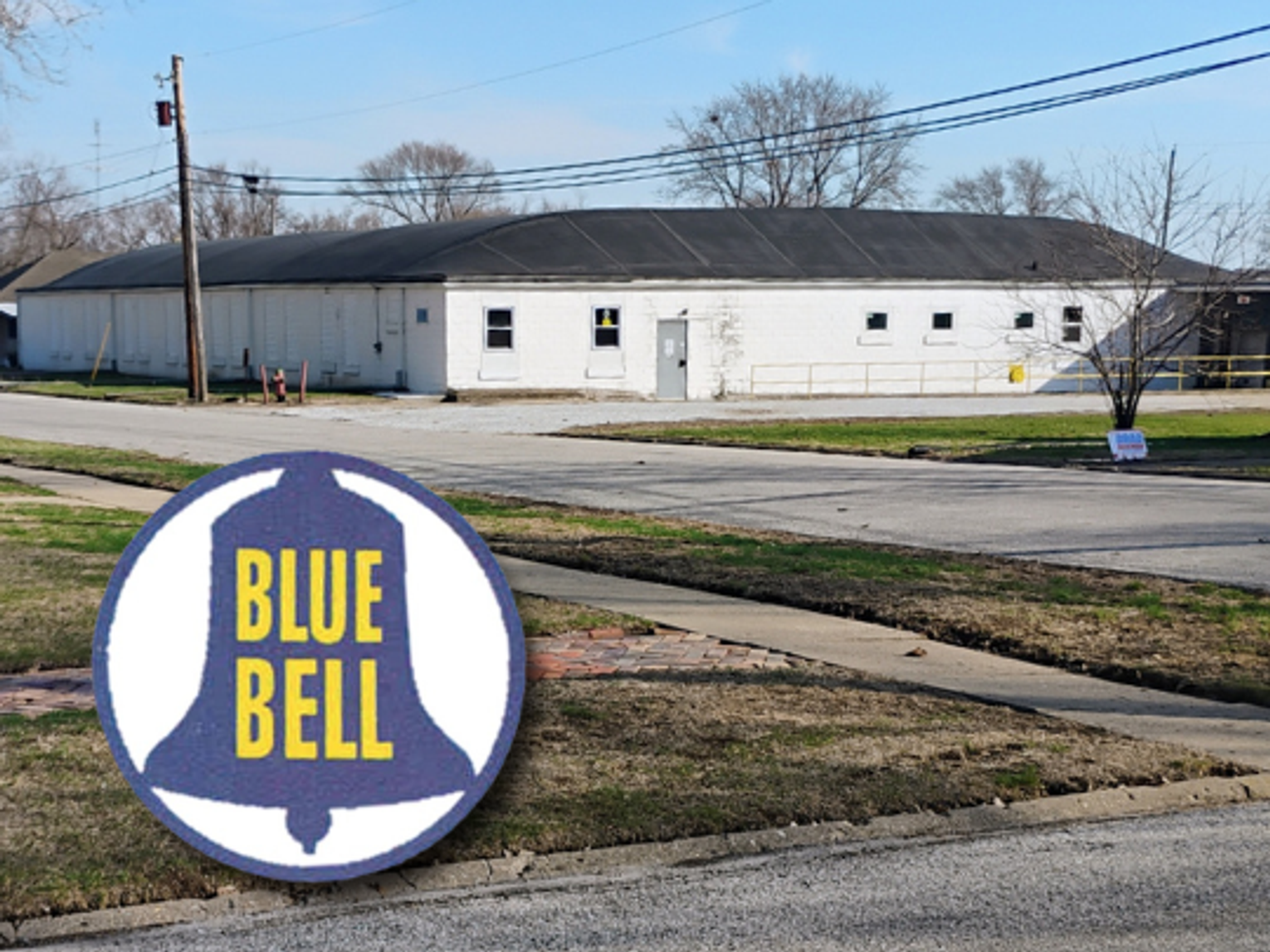
The Blue Bell Bushnell plant building still stands on East Barnes Street and is in good condition. Dave Elder has purchased the old Blue Bell building, which was most recently used by Vaughn & Bushnell/Marshalltown, and is completely renovating the inside and out. Blue Bell, like the Mickleberry Meat Processing Plant, is only a memory now to the senior citizens of Bushnell, some of whom worked there. And who among us has worn a pair of Wrangler jeans, not knowing that the patent was once held by a Bushnell, Illinois business.
Postnote: This writer was not able to ascertain a closing year for Blue Bell or the reason for closing. It was likely in the 1960s or 1970s.
Credits: WIU Archives & Special Collections Unit “Bushnell, Illinois” (1954) Bushnell Historical Society “Blue Bell Factory Revisited” by Susie Duncan Sexton Bushnell Public Library Pat (Hobbs) McNeely, Bushnell