Women's History Month 2026 - Leading the Change: Women Shaping a Sustainable Future – Part 3: Dr. Ruth Tunnicliff & Josie Westfall
Celebrating McDonough County’s 200th & the Women Who Made a Difference
As McDonough County celebrates its 200th anniversary and March is Women’s History Month, The Community News Brief is pleased to showcase the McDonough County women of yesteryear who led the change in numerous ways. Part 1 featured Clara Bayliss, Lida Crabb and Rebecca Everly, while Part 2 focused on the lives of Rose Jolly, Dr. Elizabeth Miner and Sadie “Mother” Moon. This is the final story in the three-part series focusing on the women who paved the way, shattered glass ceilings and made a difference, not only in Macomb and McDonough County, but also in the world beyond.
On Sept. 12, 2015, the Macomb Woman’s Club GFWC dedicated the McDonough County Women’s Social Services Memorial on the west side of Chandler Park, “Facing the Storm,” which honors, memorializes and celebrates women in Macomb. The bronze statue and monument memorialize the women who made it their life’s work to protect children, women and animals before laws and societal norms were in place to do so. The eight women named on the monument benefitted the Macomb community by stepping out and making a difference: Clara Bayliss, Lida Crabb, Rebecca Everly, Rose Jolly, Dr. Elizabeth Miner, Sadie Moon, Dr. Ruth Tunnicliff and Josie Westfall.
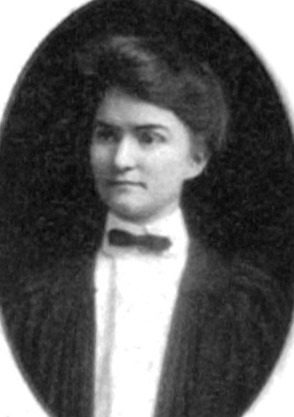
Dr. Ruth Tunnicliff (1867-1946): A Pioneering Infectious Diseases Researcher Macomb-born physician Dr. Ruth Tunnicliff, who came into this world in 1876, was tutored at her Macomb home, and then attended Vassar College and received her A.B. degree with honors at the age of 19. In 1901, after her father’s death, she moved to Chicago with her mother and sister. It was there that she took pre-med courses at the University of Chicago in the late 1890s, followed by medical study at the Women’s Medical College at Northwestern University and Rush Medical College. She received her M.D. from Rush in 1903 in the first class to graduate women (nine women and 250 men).
Her intention was to become a clinical doctor, but “she was apparently influenced by Chicago’s world famous, female-operated humanitarian institution, Hull House... she lived (while a student) at Hull House, the innovative center for social service founded by Jane Adams. It may have been the concern of those social activists about sanitation and public health that made Tunnicliff abandon clinical medicine for bacteriology.” (quote from The Biographical Dictionary of Women in Science, 2000).
After graduating from Rush, she joined Chicago’s John McCormick Institute for Infectious Diseases (later known as the Hektoen Institute) and worked with famed bacteriologist Ludvig Hektoen. She stayed in that capacity for almost 40 years, and was one of the few women engaged in medical research during the early years of the century.
Dr. Tunnicliff is credited for her pioneering research on various types of streptococci, but her major work included the discovery of the diplococcus present in the secretions (eyes, nose, mouth) of measles patients in 1917. Tunnicliff produced measles in animals, and then injected them with a serum containing an antitoxin developed from the diplococcus, making her the first to develop an inoculation to prevent this devastating, yet common, disease.
In a column written about Dr. Tunnicliff by local historian John Hallwas, “She produced over a hundred papers on the causes of common diseases like scarlet fever, influenza, diptheria and meningitis. But perhaps her greatest achievement was in the prevention of measles, which in the early 20th century attacked some three to four million Americans every year.” Her achievements were remarkable, but she always struggled against gender bias. Despite being a distinguished research bacteriologist at the renowned McCormick Institute, she was never accepted as a teaching faculty member because of her gender. Dr. Tunnicliff, who died in 1946, is buried alongside other family members in Macomb’s Oakwood Cemetery.
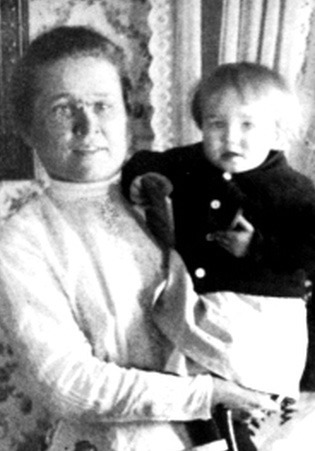
Josie Westfall (18731941): First Female City Judge & Founder of the McDonough County Orphanage As the founder and matron of the McDonough County Orphanage, it is estimated that Josie Westfall, also known as Aunt Josie, helped over 500 orphaned and abandoned children during her lifetime.
Born in 1873, Westfall was the descendant of local pioneers. A career-oriented woman, she was a dressmaker before moving into social justice work. As there were no public facilities in Macomb for the care of orphaned children, some were housed at what was known as the County Poor Farm, which was not suitable for children. When two orphans became the focus of the community’s concerns, it was Westfall who stepped forward to care for them. Before a single year had passed, she was providing a home for 19 children, and the county board of supervisors agreed to supply $25 per month to assist her in the children’s care. Along with her fellow humanitarian, Rose Jolly, the pair spent years together doing charity work, and shortly after Jolly founded the local Humane Society in 1909, Westfall and Jolly opened their first orphanage at 524 East Carroll St. in Macomb. As the need grew, more space was needed, so in 1913, an Orphanage Board was appointed and the County purchased a 12-room house at 415 N. Madison Street to relocate the orphanage. An addition was soon added to the home, as the number of children grew to 67.
In 1914, even more funds were needed for the orphanage, and with that in mind, Westfall ran for city judge, with the sole intent of donating her salary for the children’s care. She won the election because of the support of female voters; however, her male opponent challenged the election on the grounds that women were not allowed to run for political offices of constitutional origin. Even though the Illinois Women’s Suffrage Act was passed in 1913, the suit claimed the Act didn’t authorize women to vote in that judicial election, so the Illinois Supreme Court overturned her election, and her hopes of becoming a city judge were dashed.
Yet Westfall would not be deterred from her mission of supporting the orphanage and its charges. She held the organization together by pleading for public and private contributions, and she planted a huge garden on the orphanage grounds to remain viable and sustainable. It was not unusual for her to preserve as many as 1, 000 jars of fruits and vegetables annually to keep the orphanage supplied with food.
In spite of her efforts, funding for the orphanage continued to be inadequate throughout the years, which led Westfall to launch a fund drive, which netted close to $60,000, the amount needed for a new facility, which was a remarkable feat during the Great Depression. Thanks to her fierce determination, in 1933, she moved almost 70 children into the new brick building in the 800 block of West Jefferson Street.
Eight years later, Westfall passed away at the age of 68, and the orphanage closed later that decade.
*Excerpts taken from WIU Archives & Special Collections; the writings of John Hallwas; Woman’s Club of Macomb; and online sources (Macomb Journal archives, University of Illinois Carli Press, etc).