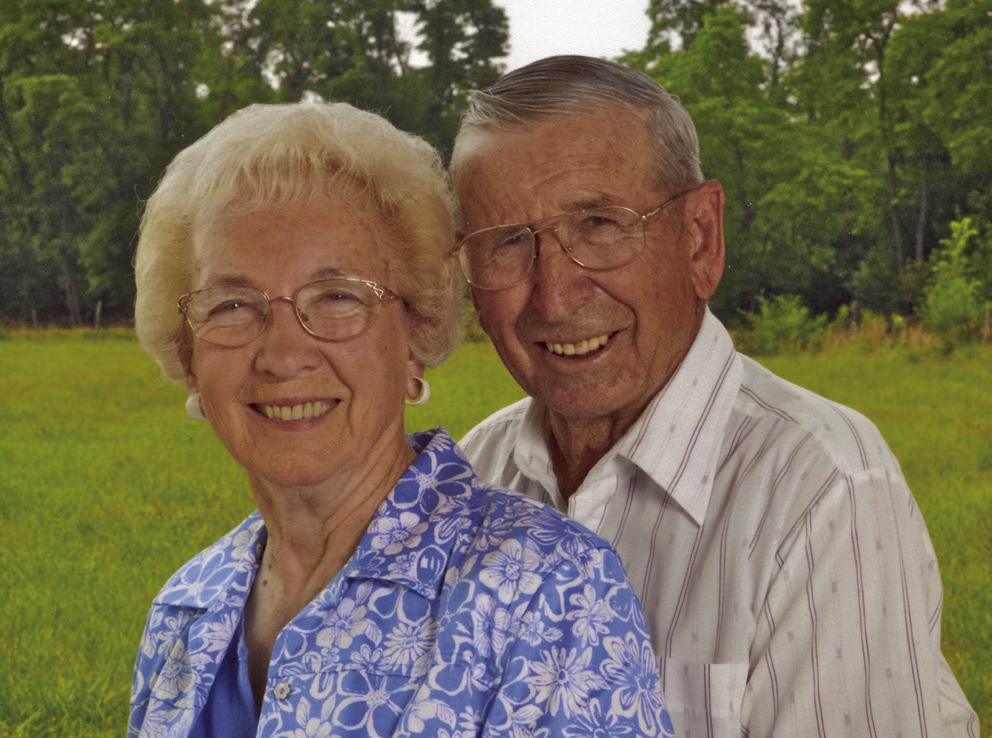
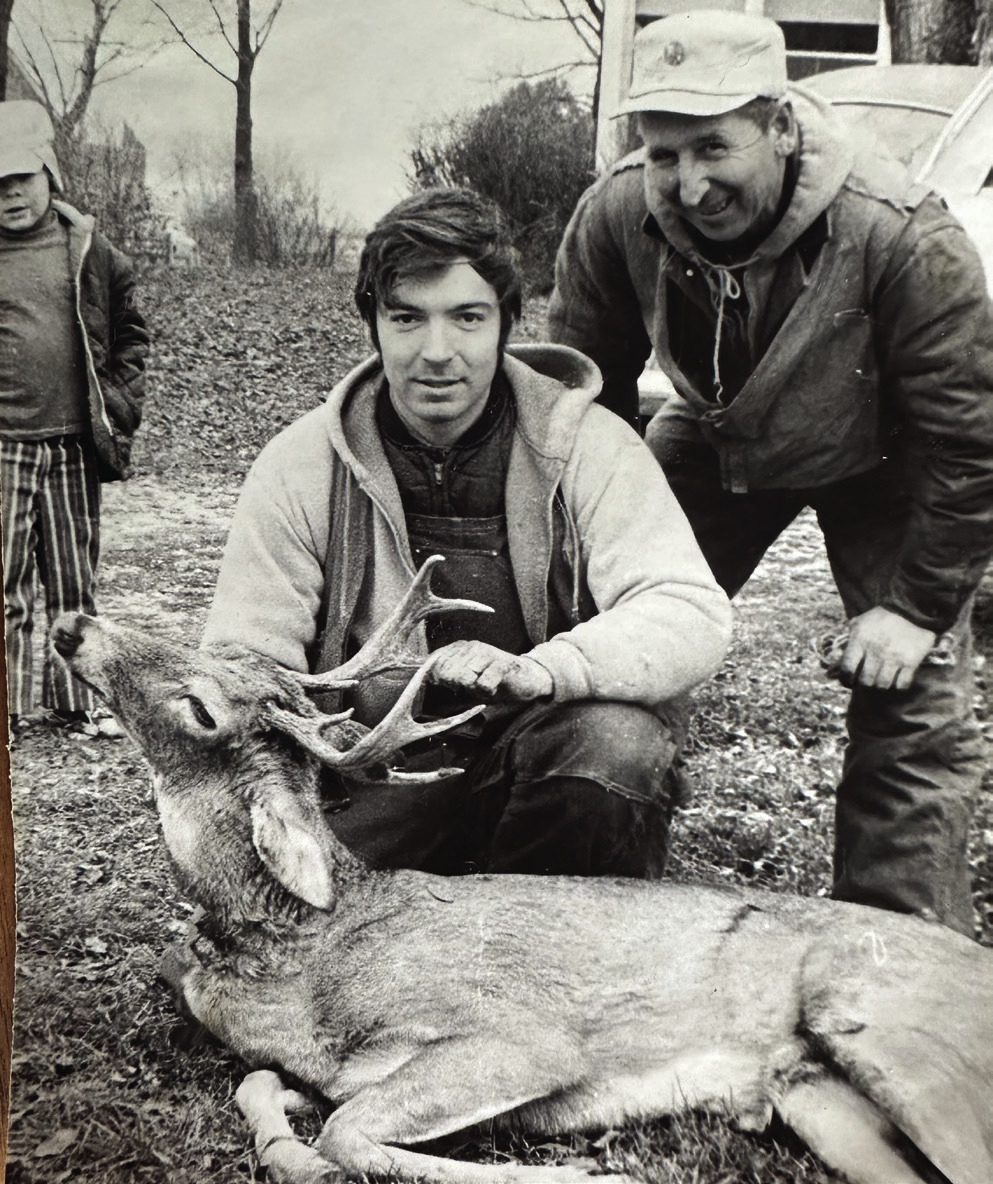
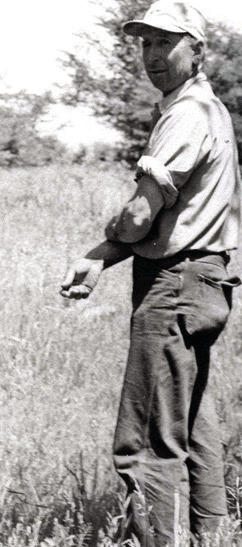
Author’s Note: This is an essay based on a eulogy that I gave for my grandfather in July of 2014. It represents a long term effort on my part to think about and understand the profound loss of the peoples that once inhabited the abandoned rural landscapes of Forgottonia that we drive through today at 74 miles an hour. In July, 2015, I collaborated with an excellent editor from the magazine Land Report and published “The Last Sunshine Farmer”.
I think the long-term significance of the essay, if there is one, is that people like my grandparents were both very similar and very different from who we are today – and even more different from the generations to come.
These people that we occasionally look at in old black and white pictures or perhaps heard stories about when we were children, lived in a world every bit as colorful and lively and interesting as our own.
In many ways though, I think the people of my grandparents’ generation were quite different from us and in important ways.
They lived in a world that was quieter, greener and relatively intact and unstained – at least relative to modern times. For the most part, they had a great deal more direct, face-to-face contact with family, friends and other members of the community. They interacted with and had working relationships with animals much more than is common today and they lived much closer to the earth, interacting with the landscape on a daily basis. This very traditional way of living gave my grandparents’ generation a very different character than our own. After having meditated on those differences for years, I guess I judge their generation to be simpler, naïve, relatively unsophisticated and yet, paradoxically, wiser than our own.
As we approach the 250th anniversary of the founding of this country, it seems like a good time to reflect on some of the things that truly made our country great. One of those things has been our farming heritage.
Another one of those things is a free and independent press. I am so pleased that this paper’s founder, Lynne Campbell, and her outstanding team at Community News Brief are finally receiving some of the recognition they deserve for managing to succeed at such a difficult time for truly local newspapers. Please join us in supporting our local paper to make sure that outstanding local news coverage and entertaining histories, stories and commentaries continue in McDonough County for many years to come.
In any case, it gives me great pleasure to bring those two great traditions together and be able to share this story of my grandfather with his people, the people of McDonough County.
My grandfather, Alvin John Curtis, was born in Bethel Township of McDonough County, west central Illinois, in 1915. When he was a boy, cars were rare, the combustion engine was a new and unusual thing, and most people still traveled by foot or by carriage or on horseback. When my grandpa was young, his neighborhood was a great patchwork quilt of small fields, hedgerows, and farmsteads. The small towns and communities of McDonough County were lively, vibrant places full of local people and local commerce. On Saturdays, neighboring farmers and their families came to town to get their hair cut, to buy supplies, and to socialize. On Sundays, the churches were full of local people who gathered to hear the word of God and to meet with their friends and neighbors. It was a good time to grow up in this area. In some ways, perhaps, maybe it was the best time.
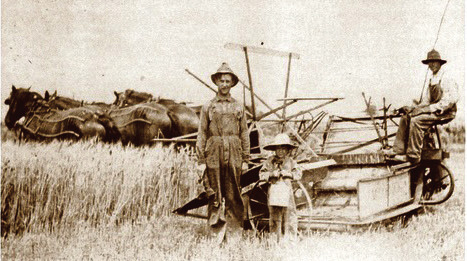
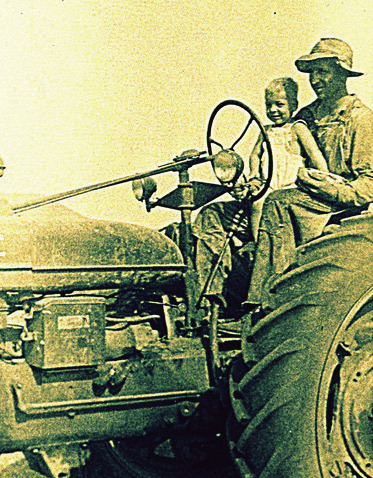
When my grandfather started farming on his own in the 1930’s, many farms were still almost entirely powered by the sun. This fact seems remarkable today, given the fossil fuel dependence of modern agricultural operations and the industrial food system as a whole. In those days, many farmers still plowed, cultivated and harvested with teams of horses or mules, the traditional “engines” of the small farm. The horses were fed oats, grass, hay, and other crops raised on site, as were the cows, pigs, chickens, and other animal members of the farm. The manure from these animals was carefully collected and returned to the soil to improve the fertility for future crops, creating an elegant closed loop that helped to make Grandpa’s farm self-sufficient.
Corn is king in this part of the world, and that was also true in Grandpa’s day.
Until Grandpa reached his mid-30’s, the planting, cultivating, harvesting, storing, and feeding of corn was all done by hand and with horses. I am amazed by the idea of harvesting, shucking, loading, and unloading 80 acres or more of corn by hand.
Grandpa would buy specialized gloves for corn harvesting. Each glove had two thumbs. Grandpa would wear through one side of the gloves before dinner – what we now call lunch – and then wear the “back” side of the gloves in the afternoon and evening. By the end of the day, the gloves were worn clean through and he’d have to start with a new pair of gloves the next morning.
Imagine, if you can, hand harvesting and shucking corn from before sunrise to after sunset every day for weeks at a time. Now imagine doing that in December and into January with the temperature below freezing. And of course there were all of the chores that needed to be done both before and after that long day. After the wagon was unloaded, the horses had to be fed and cared for, all of the cows had to be milked, and the other livestock looked after.
Grandpa defined himself by his work.
He was a man known for his work ethic or “working like a man,” as he might have put it. Manual labor was a central part of Grandpa’s workday most of his life, and he was a physically powerful man well into his 70’s.
There was no end to the tasks that Grandpa took on in caring for his stock, building and repairing fence and buildings and maintaining equipment.
My grandfather was a caretaker and a steward. Grandpa had a deep connection to his farm that I think might be hard for people to understand today. His farm was a lot more to him than a piece of land to make money from. He was always looking for ways to improve it. Over the years, he took all of the erodible land out of production, and had several ponds and dams built to protect against heavy rain. He and Grandma put a lot of thought and energy into maintaining the perennials around the house, many of them planted by my great-grandmother. For many years after he’d given up most of the farm work, Grandpa planted thousands of trees in different plots around the farm. As long as he was able, Grandpa always spent part of the day out on the landscape that had been a part of his life since his earliest memories.
I think Grandpa’s farm work shaped him as much as he shaped his farm. As was the way with good farmers who grew up working with stock, Grandpa was patient, gentle, and humble. He was a problem solver. He was honest and hard working. He had a great sense of humor and he laughed easily. As far as I know, Grandpa never drank alcohol, or smoked or swore – unless you count, “What the Sam Hill!” He was reluctant to criticize, and quick to be generous. He was fair and honest in his dealings with others. Grandpa always cleaned his plate.
My grandfather would not have been considered unusual in his time. He was a farmer just like most of the men of his generation were. But men with his work ethic, his character, and his dedication to his place, his family, and his neighborhood are rare today, and I can’t help but feel that those of us who remain hardly measure up to Grandpa’s “greatest” generation.
Grandpa died in July of 2014, just short of his 99th birthday. Afterward, I spent a lot of time thinking about the man that I had observed and loved, and the stories he told me about his life. A few days after he died, the newspaper obituary reported his age, his occupation, where he lived, which of his family members “preceded him,” and which “survived.” To me, this account seemed an empty and impoverished picture of a man who lived so long and so well, and who represented what was best about our people and our part of the world. I wanted to think about his life and death more personally and more visually. I don’t know what happens when we die. But I can imagine what it might have been like for Grandpa when he died that July morning.
I imagine Grandpa’s release and the sudden freedom from the decrepit bag of bones that was once his strong and able body. He feels a lightness and a sense of relief and contentment.
For the first time in decades, Grandpa’s vision, his hearing, and all of his senses are crystal clear.
He finds himself on the familiar landscape of his farm, but it is the farm of his childhood. He is a six-yearold running down a familiar footpath, carrying a clay jug of water from the house out to his father, John Luther, and his older brothers, Vilas and Damon, as they cut and bundle the wheat under a blazing sun. As he squeezes through a gap in the fencerow he notices that the world seems alive with the sounds of the many farms in the neighborhood. He hears and recognizes the voices of people talking, shouting, laughing, and calling, and then the sounds of the cows, pigs, horses, chickens, and other animals both domestic and wild. There are no sounds of motors.
Grandpa returns to the house with the empty jug, ducks under the clothes drying on the line, and goes into the summer kitchen. He peeks through the doorway and sees his mother and his Aunt Hattie working with his oldest sister, Nelly, to get dinner ready. His younger sisters are also helping.
Mildred is on the porch setting out the plates. Helen is making last-minute trips to the garden to bring in carrots, green onions, and the very first ripe tomatoes. Florence is putting the finishing touches on blackberry pies.
The whole house is filled with the comforting sounds of the Curtis and Davidson women visiting in Swedish and English as they prepare to feed the men. Grandpa’s stomach rumbles as he takes in the smell of chicken, onions, and potatoes frying.
The scene shifts and Grandpa is now a man in his early 30’s. The sun is just peeking over the horizon, and the roosters are crowing all over the neighborhood as Grandpa walks through the outbuildings of their first farm in Hire Township. He scratches the backs of his dairy cows, speaking to them softly and soothingly, and sees that their bags are tight with milk. The barn cats take notice of his visit, and the kittens meow in excitement, anticipating a squirt of milk expertly directed at their mouths.
Grandpa moves on to the horses. They are like old friends. This is a good team and it is his last. He knows that he and Grandma will be buying a tractor soon.
Agriculture is changing, and Grandpa isn’t going to be left behind. Nevertheless, he is proud of his beautiful horses. He raised them from colts and trained them as a team.
These horses are like an extension of his body when they are out together in the field plowing, harrowing, seeding, and cultivating.
They have kept him company on those cold evenings in January as he works his way down the quarter-mile rows pulling ears off the dry corn stalks. All of his life, Grandpa has treated all of his animals with care and affection, but the connection to his horses is special.
Grandpa heads out toward the clover pasture where the pigs have recently been moved, and is joined by his dog, Tippy.
Grandpa smiles big, and Tippy, tail wagging furiously, approaches Grandpa to have his ears rubbed. It’s a joyful reunion. Grandpa owned, raised and befriended many dogs in his lifetime, but only a handful of them were good help. Tippy was the best of the lot. The two of them take one last look over the hogs together, Grandpa scratching the backs of the old sows with a stick as they grunt appreciatively, Tippy checking the fences and moving quickly to correct any pigs that seem out of place.
On the way back toward the house, Tippy and Grandpa look over the fields. The corn is tasseling and looks very good, probably some of the best in the county. This cropland is good, black prairie dirt; but Grandpa feels the dissatisfaction of not quite feeling at home here. He still longs for the old home place of his childhood.
The scene shifts again and Grandpa is in his mid-50’s. He is back at the old farmstead in Bethel Township after purchasing it from his siblings. He has just sold the last of his pigs, and with the proceeds will pay off the farm. He and Grandma have worked hard for 35 years, even farming two farms for a while, living thriftily, and putting every extra nickel toward the mortgage. Grandpa feels an overwhelming sense of relief and accomplishment.
Finally, Grandpa is back in the present. It is Sunday morning, July 13, 2014 and the sun is already high. It’s time to make one final journey through and over the farm that he has shaped and that has helped shape him most of his life. Grandpa knows this landscape more intimately than he does his own body, and passes through it as silently as a shadow. It’s cool for July, and the corn is green and thick.
Grandpa looks over the dry dams and ponds and the marginal cropland that he has reforested. He is satisfied with the work completed, but feels the tug of the jobs not finished, the projects unrealized, the parts of the land that need attention. He knows he has to let those go. It is for the next generation to decide how it cares, or does not care, for the land.
He passes through the gate into the big pasture that has long since become woods. The morels are long gone, and the mayapple umbrellas have largely disappeared under honeysuckle and roses. Grandpa sees the last of the wild strawberries, and notices that the first blackberries are ripe. Here and there he sees signs of the wild animals that he and his family have hunted, fished and trapped for generations: rabbits, fox squirrels, possum, red and gray foxes, raccoons, channel cat, sunfish, bass and bullheads, snapping turtles, bullfrogs, geese, ducks, turkeys, and deer. Grandpa pauses for a moment at the sound of quail calling to each other in the distance. He smiles.
Those calls give him a sense of hope.
Finally, Grandpa arrives at the opening at the top of the bluff that overlooks the creek and the bottoms. He basks a moment in the warmth of the bright sunlight, breathes out and settles in himself.
He is ready now. He releases his hold and his demands on his landscape, his loved ones, and the life that he has led for 98 years. He looks up, and then he’s gone. He goes to join those who have preceded him. Those who remain are diminished by his absence. We are left to do the best we can, without him.
The last conversation I had with Grandpa was when I stopped for a few minutes on my way back from visiting his farm a week or so before he died. Grandpa was unusually lucid that day, and we talked for “quite a little while,” as they used to say. What I remember most is Grandpa saying, “Well, I guess I’m never going to get out of here,” meaning the dark, sterile room in the health care unit of his retirement home. I responded, “No, Grandpa, I don’t think so. But what would you do if you could leave?” Grandpa paused for a minute, and he answered with one word: “Farm.”
My grandfather was a farmer and he never wanted to be anything else.
My grandfather, Alvin John Curtis lived a long life, a full life, a good life, a strong and clean life. I challenge you to think of a better one. He fulfilled his moral obligations to the land, to his farm, to the animals that he cared for and worked with, to his family and to his community.
It’s left to the rest of us to live up to his example.
John Curtis is a teacher, a consultant for nonprofit organizations, the director of the Macomb UU, and the founder and executive director of The Giving Gardens, based right here in McDonough County.