The History of Colchester: The First Business Owners & Entrepreneurs - Part 2
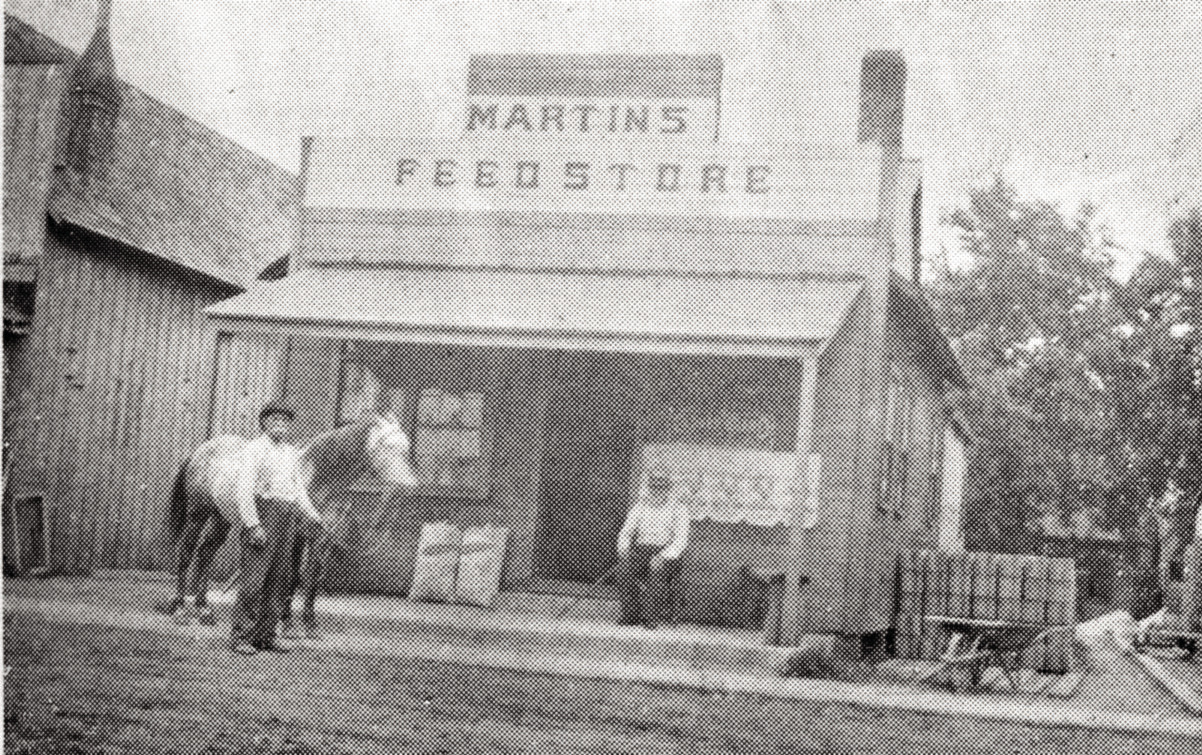
As with the gold strikes in California and in the frigid Canadian wilderness during the mid-1800s, a capitalist support system soon sprouts up to accommodate workers, their families and other fortune hunters, some of dubious character. In the early years of Colchester's history, credit the railroad with making settlement viable. Equally important was the influx of people into the community who brought with them products, services, and amenities needed for daily life.
So, who were these 'first' businesspeople in Colchester.
D.W. Campbell built the first store, selling groceries.
He opened his 16x18-foot pine board store on January 9, 1856. According to compilers Ruth Chenoweth and Sara Wisslead Semonis in their 1992 history of McDonough County, the Campbell family lost a 13-month-old child, the first death in the new town.
John Patrick opened the first general store later in 1856.
Shortly after, John Shults built the first hotel in the winter of 1855-56 and named it Chester House, with an addition in 1859.
Ownership changed hands several times. A second hotel called the Union House opened in 1869, owned by J. D. Trew.
Other businesses soon followed: Samuel Greenwood's blacksmith shop (1855-56); C. W. Wettengel's shoe shop (1857); Maggie Slocum's millinery business (1863); J. W. Webster's drug store; and Abraham Newland, Jr.'s general store.
Of Newland, Clark's history noted that he was one of town's major entrepreneurs.
Two weeks after leaving the army at the end of the Civil War, he invested all his savings and started a general store in Colchester, but with a different business model: 'The little 'one-horse store' has grown to mammoth proportions [by 1877]. ... Unlike other towns, nearly all the goods sold is on time, the miners receiving their pay monthly at a stated time and therefore it becomes necessary they should purchase all goods required by them payable at such a time and it is consequently a matter of convenience to them to purchase their entire supplies from one house. ... Each miner, or his family, is supplied with a book in which all entries are made, and therefore it is not known by each whether he is going beyond his means or not.'
The above passage nearly describes a variation of indentured servitude in a folk song written by Merle Travis and made popular by Tennessee Ernie Ford — 'Sixteen Tons' — 'I owe my soul to the company store.'
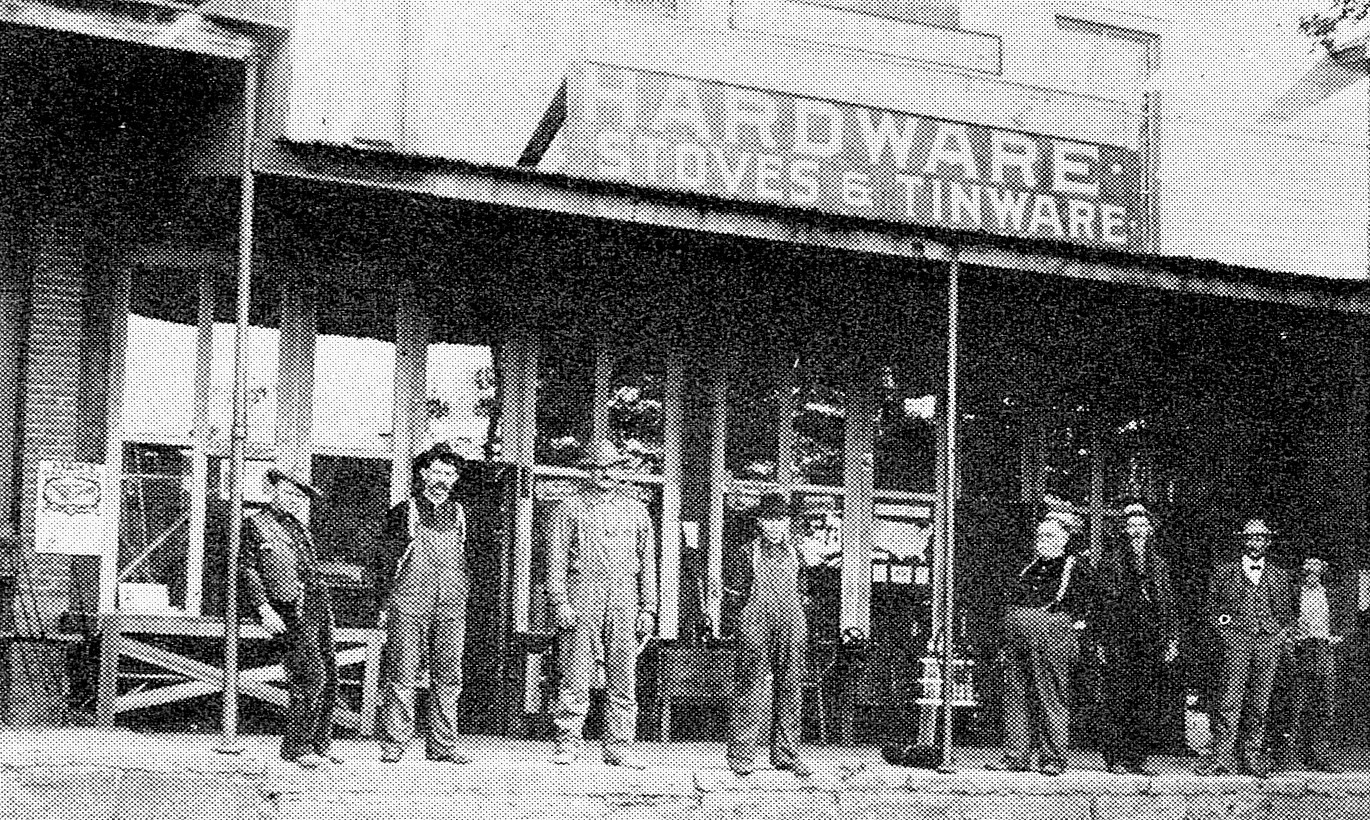
In the 1870s and '80s, more business arrived in the swelling community, among them the following: Thomas Bowman's furniture and ag implements business (in 1870); W.A. Wayland's drugstore (1875); Ole E.
Wold's jewelry store (1877); William Consene's books, stationary, musical instruments and sewing machines products (1878); and Milton Agnew's hardware, farm implement and raw metals store (1883).
The first published newspaper associated with Colchester was called The Granger in 1873. It was published by H. H. Stevens in Macomb, but he moved the business to Colchester in 1880 and renamed the paper Colchester Independent.
Van L. Hampton became owner/editor in 1884. However, in 1885, Stevens started up a competitor paper called The News, which, according to Chenoweth and Semonis, precipitated a feud with each editor publishing insults about the other.
The first bank, founded by E.D. and J.W. Stevens, opened in 1881. John Drury in his book, 'This Is McDonough County Illinois,' published in 1955, claims that the first church was erected by Methodists, but more likely the first church was constructed in 1853 as part of the present Argyle Bible Church, north of Argyle Lake State Park.
A Methodist Church was formed in 1862. Drury also claims that Rev. Stephen Brink preached the first sermon.
The first physician was M. C. Archer in 1857, followed soon after by W. H. Weir.
A skating rink operated by H.W. Smith, F.P. Blunt, and H.H. Stevens open in 1884. It measured 40x104 feet. It was built for $2,000 and featured a hardwood floor.
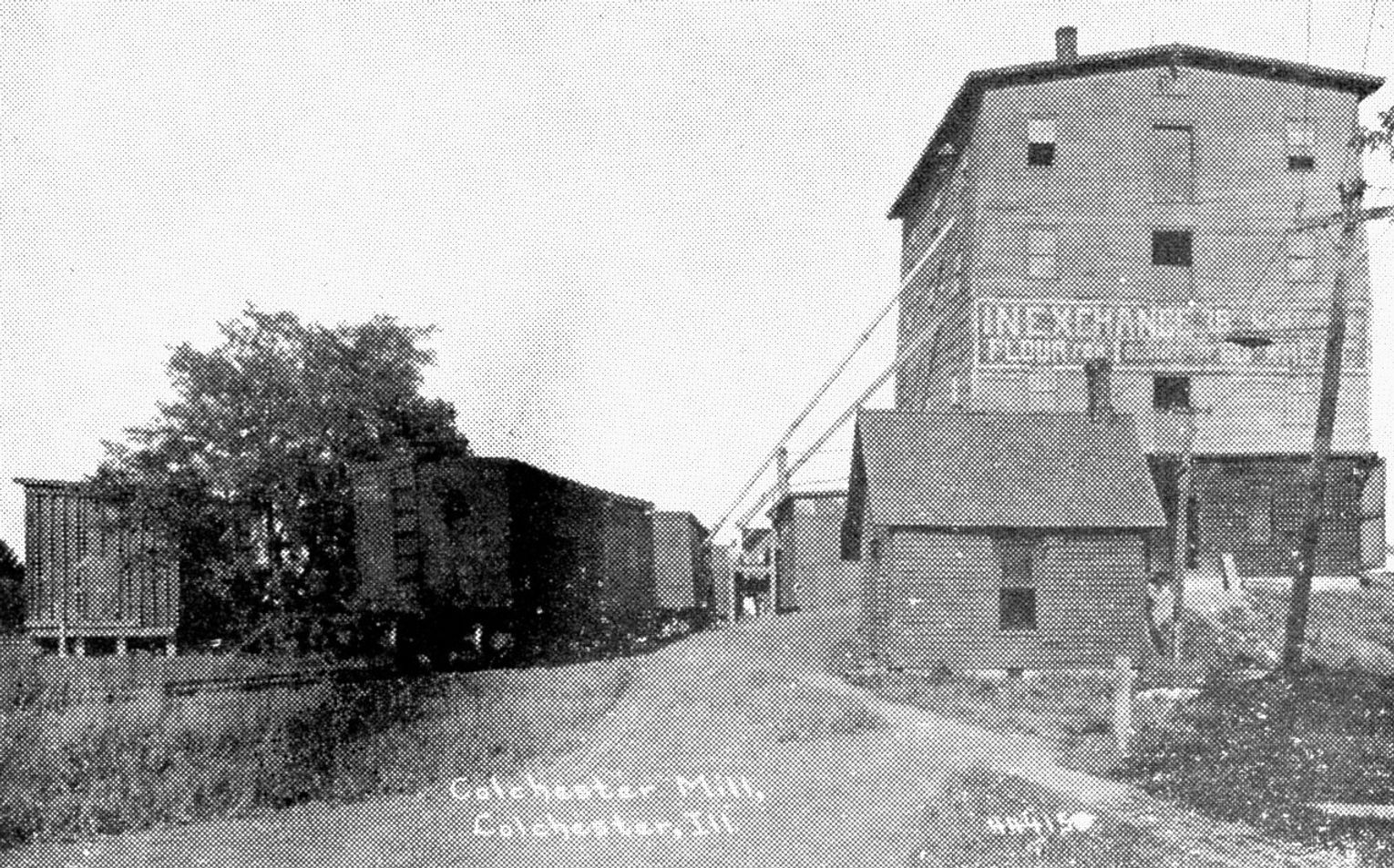
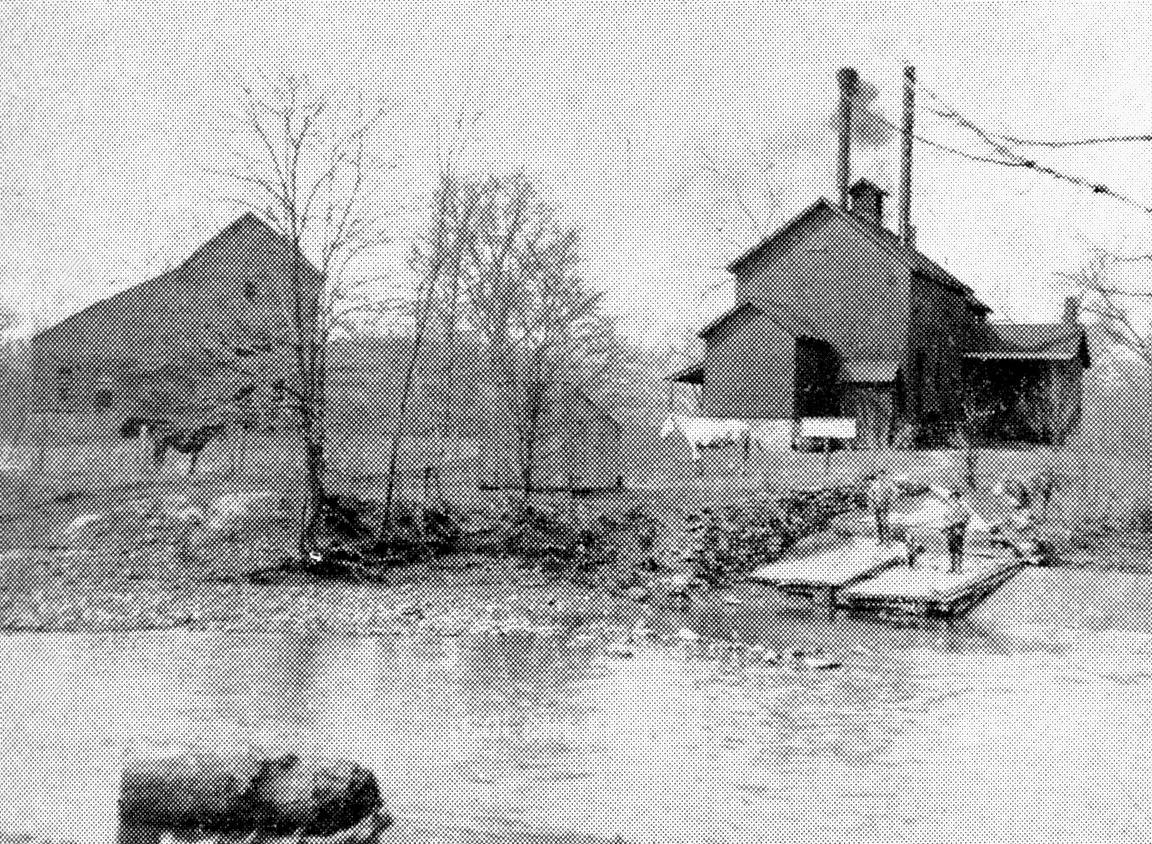
The Daisy roller mill built by N.P. Tinsley opened for business in Macomb in 1850, but then was moved to Colchester in 1882, milling up to 125 barrels of fine flour a day.
The first school was built the winter of 1856-57. It was a 20x30-foot wooden board structure built in 'barn fashion.' The first teacher was Cyrus Hoyt. A six-room brick structure was built in 1866-67, with an addition in 1882. C. W. Parker was the principal with W.L. Patrick, Mrs. Bell Young, Clara Berges, Mary Hoyt and Ella Hume as teachers.
A cornet band, said to be the largest in McDonough County, formed in August 1879, conducted by W.R. Hampton with about 20 instrumentalists, all male.
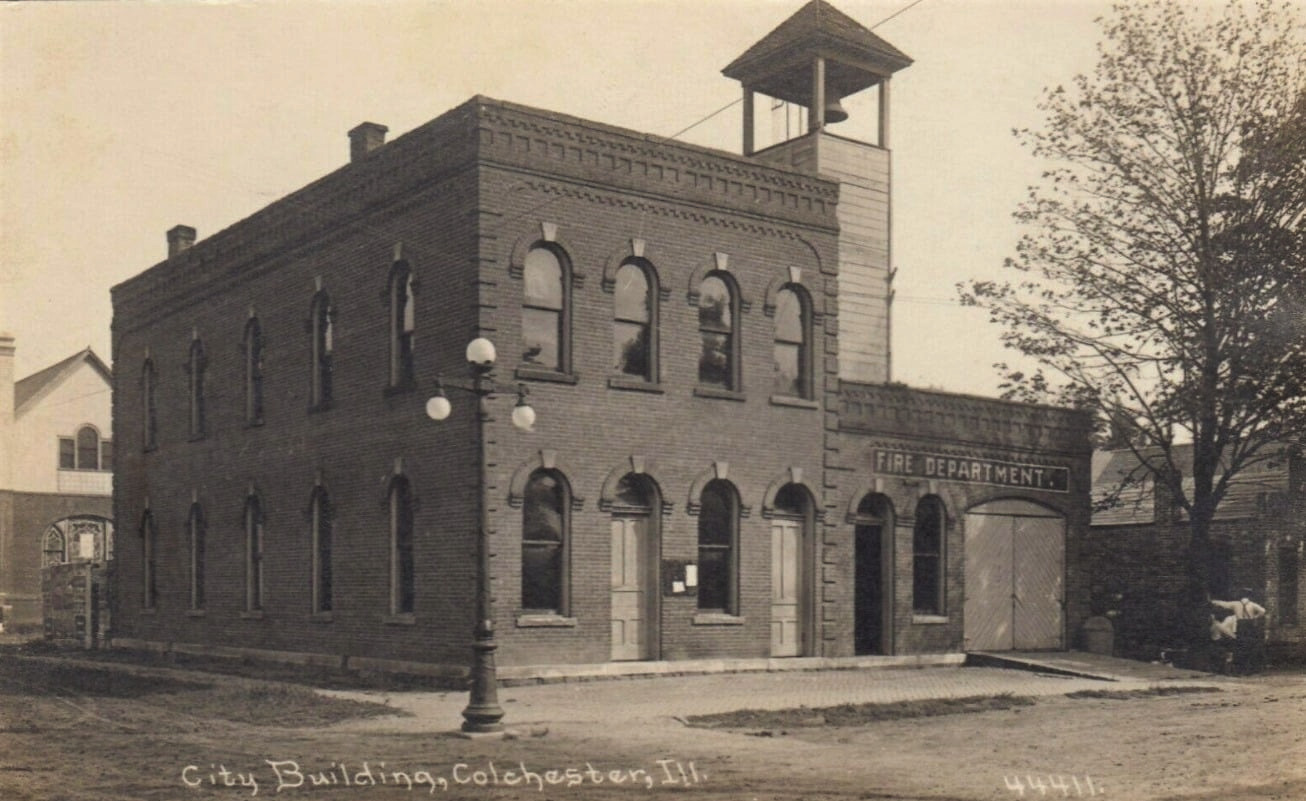
Lastly, a number of 'societies' rose up in Colchester. The first was the Colchester Lodge No. 272, Independent Order of Good Templars on May 1, 1859. The Colchester Miners' Friendly Society was formed April 8, 1867. Other societies included the Chester Lodge No. 30 A.O.U.W. (Ancient Order of United Workmen) and the Women's Christian Temperance Union, organized January 15, 1884.
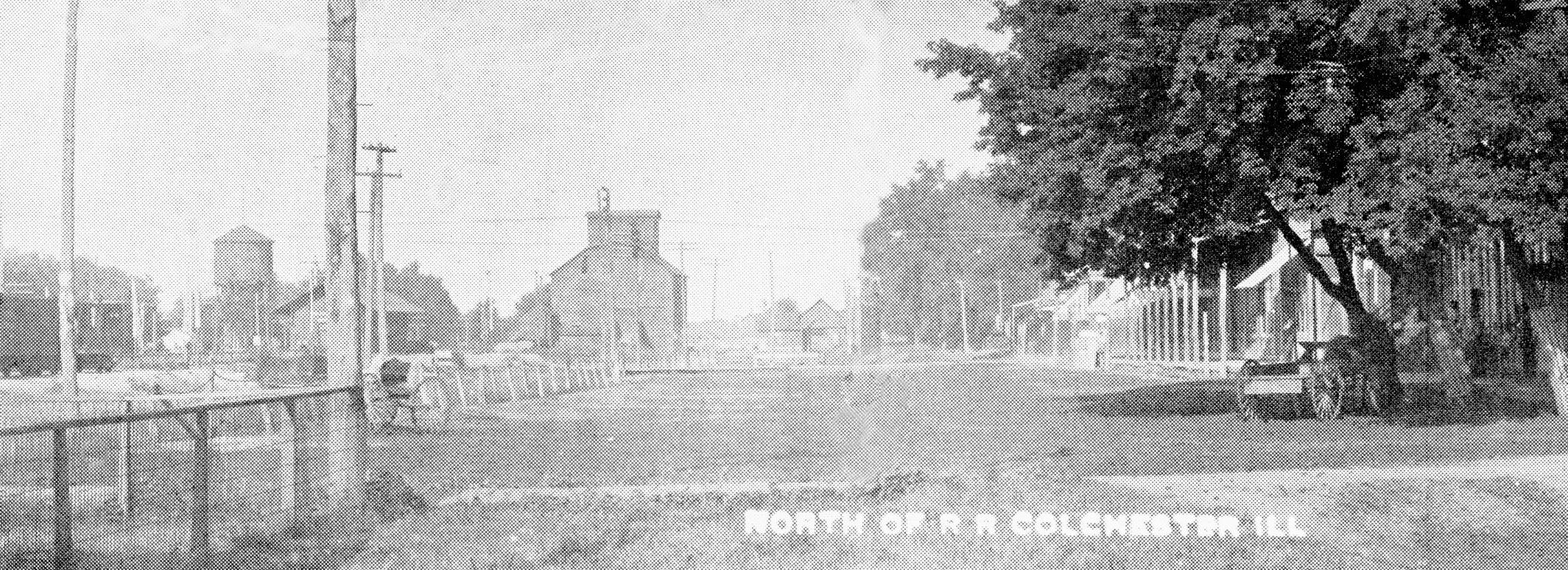
From this catalog of businesses and organizations, in the span of 20 years, a couple of primitive log cabins near Crooked Creek blossomed into Colchester — a thriving community with a distinctive identity of its own.
Sources: Clarke, S.J. History of McDonough County, Illinois. Springfied: D.W. Lusk, 1878. (entire book available on google books) Drury, John. This Is McDonough Co. Ill. Chicago: Loree Co. 1955. (available at archive.org/details/thisismcdonoughcOOdrur History of McDonough County, Illinois. Springfield: Continental Historical Co., 1885. (reproduction by Unigraphic Inc., Evanston, Ind., 1980; sponsored by McDonough County Historical Society) History of McDonough County Illinois, Vol. 1. Ruth Chenoweth and Sara Wisslead Semonis, compilers. Dallas: Curtis Media Corporation, 1992. (sponsored by McDonough County Genealogical Society) Moon, June. Multum in Parvo': A History of Colchester, Ill. June Moon 1956. Macomb: McDonough County Genealogical Society, 2003.
Rezab, Gordana. Place Names of McDonough County, Illinois:Past and Present. Macomb, Ill.: Western Illinois University, 2008. (available at archive.org/details/placenamesofmcdoOOreza/mode/2up