Women's History Month 2026 - Leading the Change: Women Shaping a Sustainable Future – Part 1: Clara Bayliss, Lida Crabb & Rebecca Everly
Celebrating McDonough County's 200th & the Women Who Made a Difference
This year's Women's History Month theme centered on sustainability goes beyond environmental interests … it involves financial sustainability, community resilience, leadership succession and intergenerational equity.
As McDonough County celebrates its 200th anniversary, The Community News Brief is pleased to showcase the McDonough County women of yesteryear who led the change in numerous ways.
On Sept. 12, 2015, the Macomb Woman's Club GFWC dedicated the McDonough County Women's Social Services Memorial on the west side of Chandler Park, 'Facing the Storm,' which honors, memorializes and celebrates women in Macomb. The bronze statue and monument memorializes the women who made it their life's work to protect children, women and animals before laws and societal norms were in place to do so. The eight women named on the monument benefitted the Macomb community by stepping out and making a difference: Clara Bayliss, Lida Crabb, Rebecca Everly, Rose Jolly, Dr. Elizabeth Miner, Sadie Moon, Dr.
Ruth Tunnicliff and Josie Westfall.
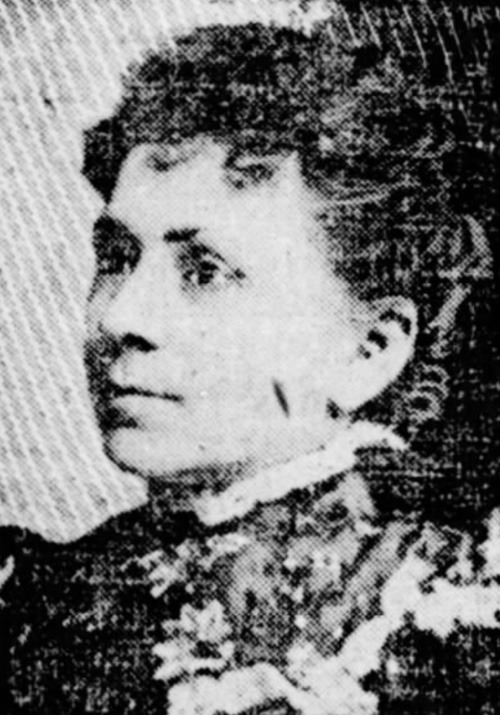
Clara Bayliss (1848 1948): Educating Parents Clara Kern Bayliss was born in 1848 on a farm near Kalamazoo, MI. Though unusual for women at that time, she graduated from high school and continued her education at Hillsdale College. In 1871, she became the first woman at Hilldale to receive a college degree.
It was also at college that she met her future husband, Alfred Bayliss, whom she married shortly after graduating. Clara taught school for a year in LaGrange, IN for one year, where Alfred served as school superintendent. The couples had two daughters, born in 1872 and 1874, and it was also during this time that Clara earned her master's degree from Hillsdale in 1874 … once again, a woman ahead of her time.
The Bayliss's moved a few more times, eventually landing in Springfield in 1898 when Alfred became Illinois Superintendent of Public Instruction. While he edited 'The Child Study Monthly,' Clara began editing a section of the journal, 'The Educational Current.' She reprinted segments from books and articles by noted educators along with her own comments as it was her belief that parents needed to be educated along with the child. As the head of the Education Committee of the Illinois Congress of Mothers, Clara felt schools and churches should be clubhouses for the community where learning took place.
She also encouraged school libraries, and nature study for children.
In her story, 'Vacation Studies for Young Naturalists. IX. Hidden Beauties of Ocean and Lake,' published in The Buffalo Enquirer in 1899, Bayliss wrote: 'If the young naturalist will, take his observation along with him and, whenever possible, his microscope, also, he will be amazed at the in which he lives. He should have a bird book and a beetle book in which to note the dates of appearance and disappearance, the songs, flight and habits of his winged friends.' In her role with the committee, she also spoke in many towns about the need for parents and teachers working together. Her work and that of others led to the formation of the PTA.
When Alfred was selected as the second president of Western Illinois State Normal School in Macomb in 1906, the family moved to McDonough County where Clara was active in organizing and motivating local women. She established The Child Culture Center in 1907, and the statewide meeting of the Illinois Congress of Mothers was held in Macomb in 1909 due to her efforts. One year later, Clara started the Macomb Chapter of the DAR, serving as its first regent.
In addition to her education advocacy work, Clark was an established author of children's books, which she started writing in the 1890s.
Her focus was on Native Americans as she believed it was important for children to learn to appreciate people of other cultures. During a 30-year period, Clara wrote several books such as 'The Cliff Dwellers' and 'Old Man Coyote,' which can still be found today (tinyurl. com/ClaraBaylissBooks) In 1911, Alfred was thrown from a horse and died. Clara continued her work, including leading a local group of women who raised money to begin a local orphanage. She also inspired her daughters to social activism, and they headed the volunteer effort of supervised, instructed play at the orphanage. Kernie went on to become a social worker and Zoe became Dean of Women at the University of Wisconsin.
Clara died in 1848, just a few days before her 100th birthday. She is buried in Oakwood cemetery beside Alfred and their daughters.
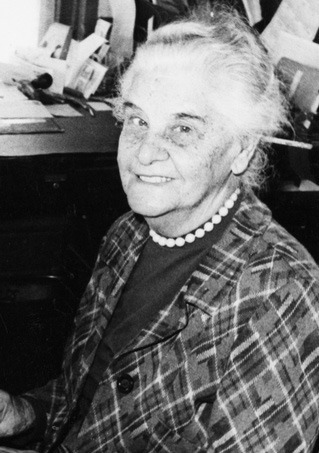
Lida Martha Crabb (1887-1981): A Newspaper Pioneer Not only was Lida Crabb a pioneer in the McDonough County newspaper business, she was a social justice advocate who staunchly believed that family was important; that the downtrodden and unfortunate should be provided jobs and assistance to help them change their lives; that everyone should work to create a better future; and that there were no substitutes for good literature and an appreciation of history.
Crabb had a soft spot for girls in need, and she and her husband, Carle, took in a young high school girl who nearly ended up in the Geneva School for Girls. Eileen was taken into the family, worked alongside the family on the farm, became a news stringer for the Peoria Star, and worked at Crabb Publications while attending Western Normal School. Eileen went on to become president of the National PTA. In 1936, the same year their adopted daughter graduated from Macomb High School, the Crabbs went into the newspaper business.
When Carle passed away in 1950, it was Lida who stepped up and assumed the editor's job. During the next 23 years, not only did Lida sustain Crabb Publications, a group of six McDonough County newspapers, but she also increased the number of subscribers. It was believed that the increase in newspaper sales was largely due to the number of women who enjoyed reading her column, and she continued to focus on appreciation for the community in general and for the people she interacted with. As local historian Kathy Nichols of Western Illinois Archives & Special Collections noted said in a 1995 article, 'Mrs. Crabb spoke of and to her readers as a kind of extended family. She expressed pleasure with their achievements and regret for their misfortunes. And in doing so, she was a groundbreaker in our region, a newspaper professional who provided what many people, especially women, were anxious for—personal contact with someone like themselves, which helped to foster a sense of belonging.'
During her lifetime, she was honored with such recognitions as The Governor’s VIP Award for her column, and because she championed the maintenance of cemeteries, she also received the DAR Medal of Honor. Lida was a crusader for the maintenance of old cemeteries in the county, spearheading a referendum in 1974 for a tax supporting their maintenance; however, it failed by a narrow margin.
Lida eventually became the oldest newspaper columnist in Illinois, writing her final column a day before her death at the age of 94.
'Folks, I just don't seem to be getting any better. I may write another column, I may not, but I must say you have all been wonderful. You have shared your life with me, and now I have shared mine with you. We have waged a lot of battles, won some, lost some, but they have been stimulating, exciting, and never dull.' – 'A Day at a Time.'
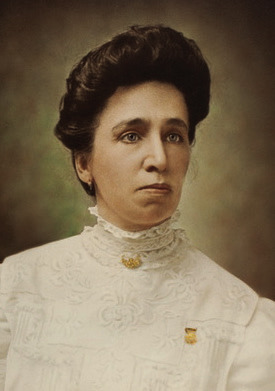
Rebecca Everly (1870 1942): Senior Citizen Care & A Park for All to Enjoy If Rebecca Everly were alive today, she would no doubt be pleased with the results of a legacy she left to McDonough County residents, particularly senior citizens. Nestled in the 800 block between South Randolph and South Lafayette Streets is the Everly House, constructed in the early 1950s with funds from the Everly Trust, which was established after Rebecca's death. This year will mark the senior living center's 73rd year.
Rebecca survived her brother and sisters and as there were no other living relatives, she became sole heir to the entire Everly Estate, which was quite substantial. Before her death, she acquired 292 acres in Eldorado Township and two commercial buildings in Macomb that once housed Galloway Bakery and the S and J Café. Following Everly's passing in 1942, three trustees were instructed to establish and maintain 'The Everly Home for the Aged' for 'worthy aged persons' residing in the county, 'admitting only aged people of good moral character and of honorable reputation ... and those who are able to do so pay a proper fee for their care and keep, with the proceeds of payment for the maintenance and upkeep of such home.' She further stipulated that persons not able to pay for their care or maintenance, but worthy, be cared for without charge.
The trustees selected and purchased the grounds where the home of Archie Fisher was located. At that time, the firm of West and Weber, architects and engineers with offices in Chicago and Galesburg, were chosen and began work on plans to construct a home suitable for 40 residents. The site was chosen because of its “beautifully wooded sloping grounds” which architects and engineers declared “admirably suited to the purpose desired.” However, because of WWII, materials and labor were not available. It was impossible to get contractors to bid on construction until the end of 1948.
Construction finally began in 1951, and the doors of the Everly House opened March 1, 1953 In addition to ensuring a home for the elderly, her love of the outdoors and picnics led her to leave $50,000 in her will to purchase real estate and equipment to 'buy land adjacent to and to be used in conjunction with the existing Macomb City Parks.' The purchase became Everly Park, located on the north end of Macomb, under the direction of the Macomb Park District.
*Excerpts taken from WIU Archives & Special Collections; the writings of John Hallwas; Woman's Club of Macomb; and online sources (Macomb Journal archives, University of Illinois Carli Press, etc).