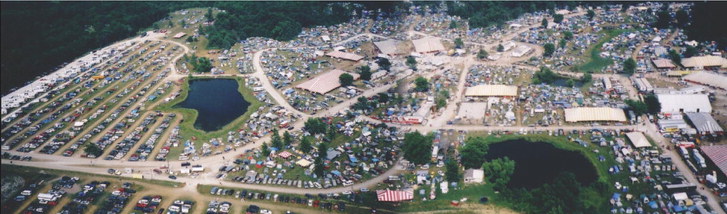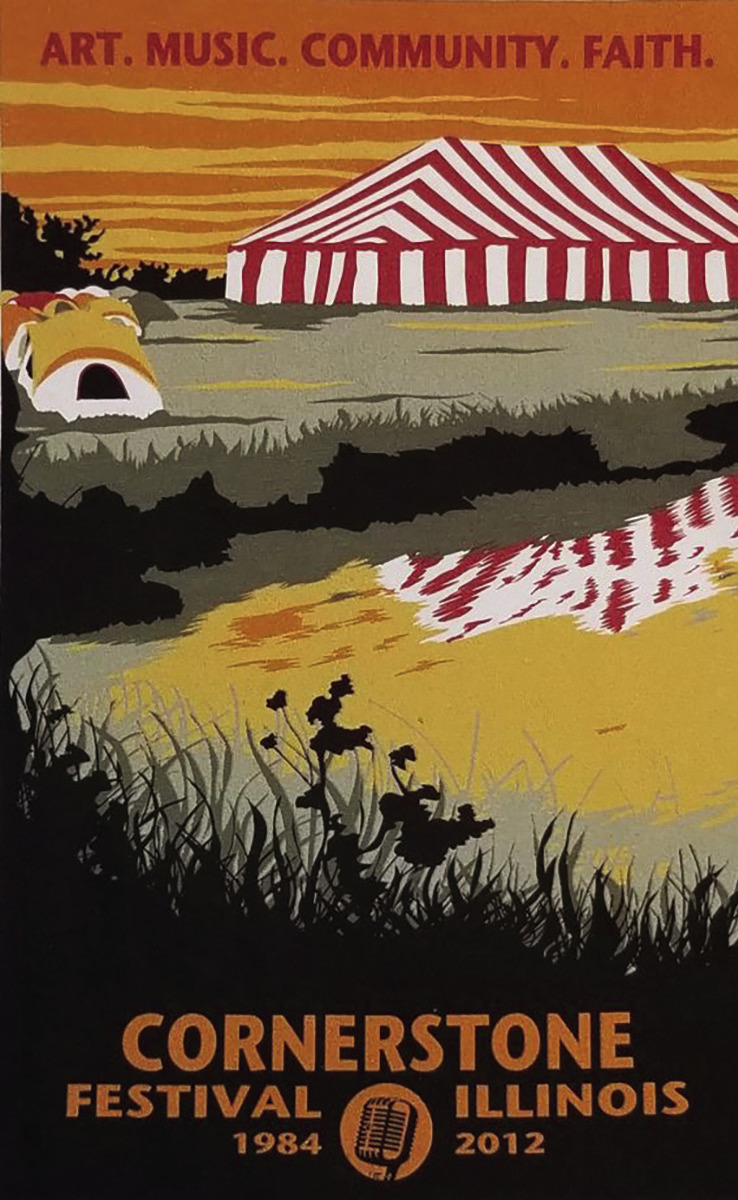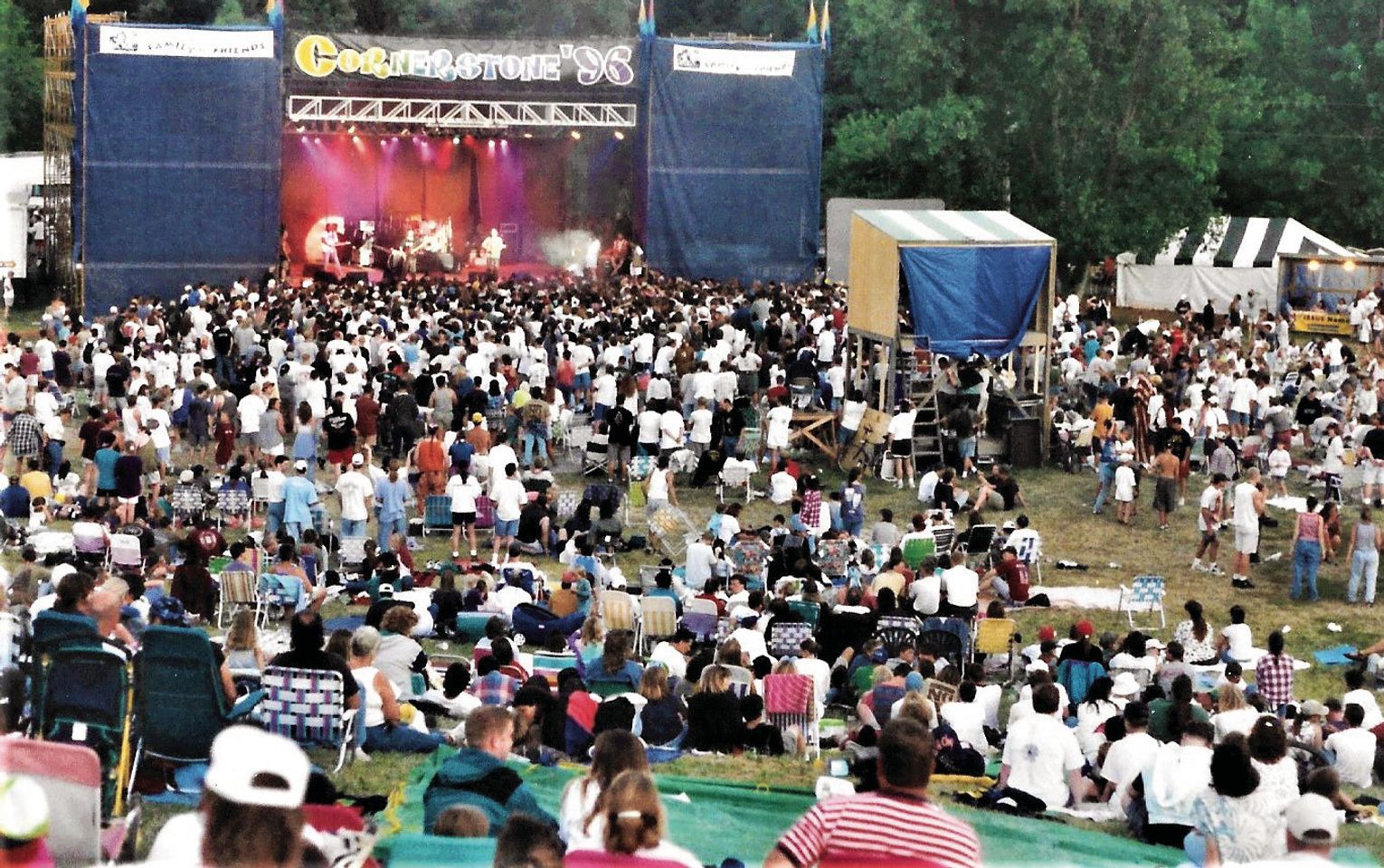
In 1991, rural Bushnell welcomed Cornerstone Music Festival to a 579-acre property, previously referred to as Lake Wildwood.
Henry Huang, festival director, explained that Jesus People USA had moved their Cornerstone Music Festival to Bushnell after outgrowing the 92-acre Lake County Fairgrounds in Chicago. Jesus People USA at that time was a Christian community of about 500 people who lived uptown and in inner city neighborhoods in Chicago.
The Covenant Church started as an outgrowth of the 1960s and 70s “Jesus Movement” and then joined the Evangelical Covenant Denomination, an offshoot of Swedish Lutheranism, dating to 1880.
In 1991 interviews, JPUSA described themselves as “a group of believers who have formed a nonprofit Christian community with a three-fold purpose: to proclaim Christ’s message of salvation, nurture and instruct Christians according to sound Biblical principles and to lovingly provide practical assistance to the poor. To support the organization, JPUSA had several ministry-owned businesses. They did interior and exterior painting, dry wall installation, carpentry, roofing, relocation and had a roofing supply center. The group published Cornerstone magazine, which at that time had a nationwide circulation of 55,000.
JPUSA had their own professional hard rock band, REZ, which traveled worldwide. The remainder of their income (5%) came from donations. Jesus People USA members lived in a communal arrangement and were not paid individually.
Instead, the housing, clothing and food needs were met in exchange for their service. At the time of this source’s publication (2004), JPUSA operated one of the largest free hot meal programs in Chicago, serving 150-300 people daily. They also helped needy persons with baskets, furniture and clothing needs, on top of this, they operated a thrift store.
They provided emergency shelter for homeless and runaways, and free moving service for poor people needing to relocate.
JPUSA conducted Sunday church services, operated a Crisis Pregnancy Center and provided free counseling for those with problems.
Members of JPUSA worked as chaplains at Cook County Jail, local nursing homes, detention centers and hospitals.
What does this have to do with Bushnell, Illinois?
Cornerstone Magazine, in the late 1970s, came up with an enormous idea.
Why don’t we start our own music festival? Their vision was to address the same issues brought out in the highly successful Cornerstone Magazine. They would invite speakers and teachers from around the world and showcase musicians whose music styles were a little different-more raw, edgier, bolder. Music intended to appeal to those not normally drawn to Christian music.
How History was Made In 1984, staff member Henry Huang was chosen to direct the Cornerstone Festival. The first festival drew about 4,000. Attendance eventually surpassed 12,000. In 1991, Cornerstone prepared to move to Bushnell, Illinois. The site they had found, a 579-acre lake property four miles east of Bushnell, would allow enough room for about everything JPUSA wanted to offer.
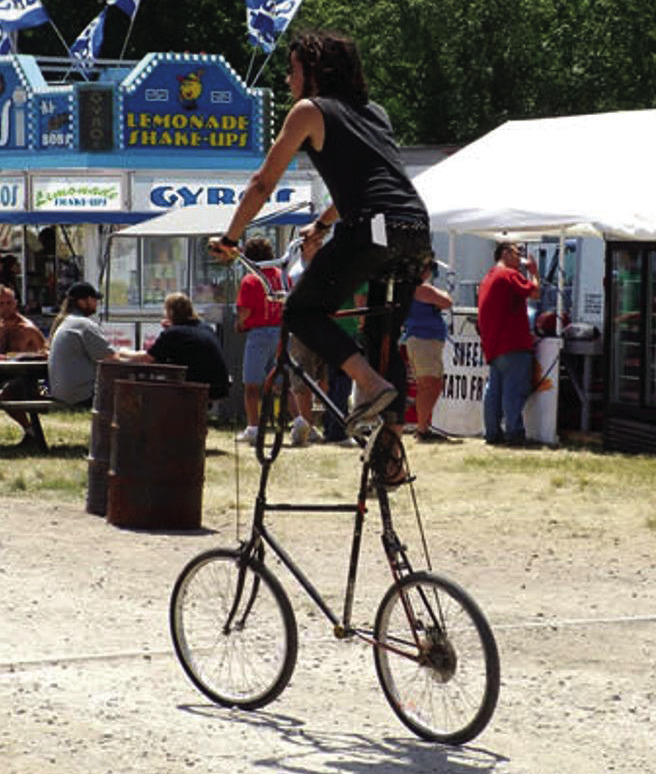
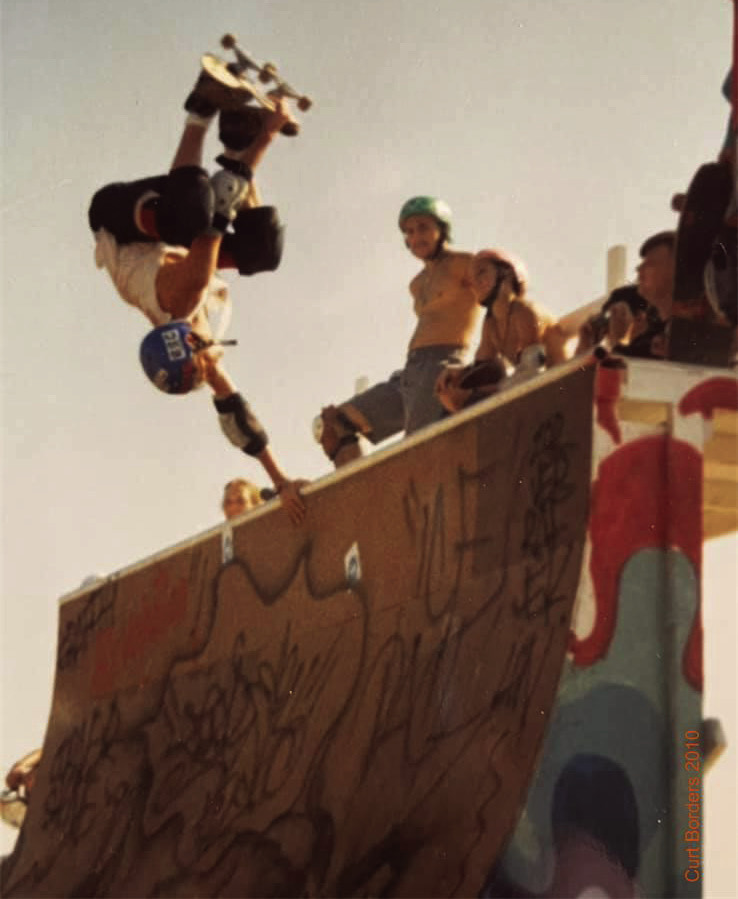
Cornerstone brought to Bushnell, Illinois one of the most diverse music programs of its time. Artists from almost every genre were represented-everything from Celtic music, to blues, thrash/hardcore, to straight rock ‘n’ roll. There were also areas available for the attendees to skateboard, swim and fish. Those with children could find children’s programs, games, movies, art classes, etc.
Cornerstone only lasted four days but the impact it had on Bushnell, Macomb, and the surrounding areas was hugely noticeable, from 1991-2012.
The four-day 1991 event featured more than 50 bands and eight stages and drew over 12,000 people. The population of Bushnell in 1990 was 3,288. Perhaps the most interesting aspect of a huge rock festival converging in a small, agricultural town was the reaction of the local residents.
Reminiscing with Curt Borders
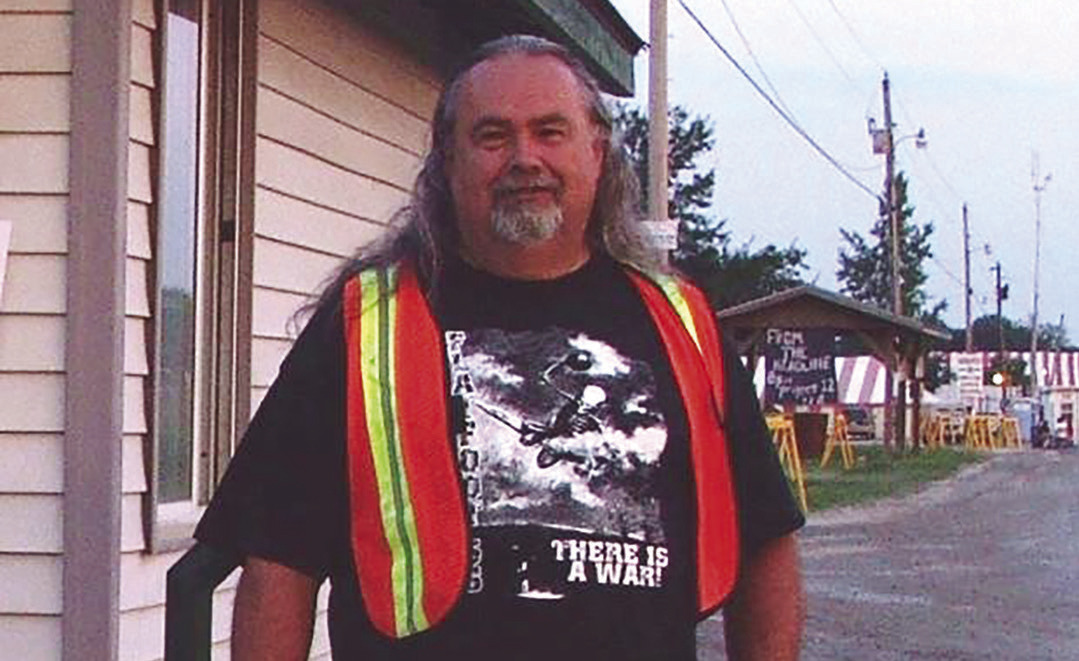
For over 20 years, Curt Borders, a Bushnell native and 1970 graduate of Bushnell-Prairie City High School, served with the Jesus People USA team for the legendary Cornerstone Music Festival. Borders, who has lived in the Quad Cities since the 1980s, was already acquainted with the Christian music community through youth pastorships and his love for music.When the Jesus People USA group found the 579-acre property east of Bushnell to move their festival to, Borders was a natural to run the event.
The soft-spoken, laidback man who has also worked for the Tandy and Case IH companies, describes those early Cornerstones as “learning experiences.” The first festival drew about 4,000 people, which would swell over the years to over 12,000. The former privately-owned Lake Wildwood Haven was a perfect remote location for the mostly young adults who would travel to Bushnell from all over the world.
Borders specifically remembers campers coming in who had come from Brazil and Panama.
Each year the three-day event would have a new slogan. Two of those slogans in the early days were “Breaking New Ground” and “Raw Truth.” Borders describes the popularity of Cornerstone, which was sometimes referred to as “Baby Woodstock,” back then as “a different time.”
Most cities, including Macomb had what were known as “Christian coffee houses.” Young people affiliated with youth groups, as well as the general public were very keenly aware of the top bands and their names. Now, Borders states the coffee houses are gone and kids don’t know the bands.
Attendees were allowed to report one day ahead of time to set up camp, which generally consisted of a tent, some lawn chairs, and coolers with groceries. For many of the younger campers it may have been one of their first times away from their parents. That is representative of the faith the parents placed on the safety of the festival and the reliability of the safety directors looking out for the campers. Many of Cornerstone-goers arrived in rural Bushnell in older, beat-up cars with “Cornerstone or Bust” scrolled on the windows. Many arrived with empty gas tanks, as the young drivers miscalculated the amount of money they would need to make the long trip, from, say, Canada.
Borders’ main duty was supervising the main gate activity and volunteers.
After his gate shift ended, he would work with security around the grounds. One memorable night was checking in and then parking a bus of teenagers from a MTV cross country tour. Borders also recalls campers trying to create look-alike wristbands because once they had reached the Cornerstone grounds they did not have enough money to get in. The broke campers weren’t sent home, instead they were told to turnover the fake wristbands and they were allowed to work around the grounds emptying trash etc. With wristbands being worth as much as $150 each, it was not feasible to let campers in free, Borders stressed.
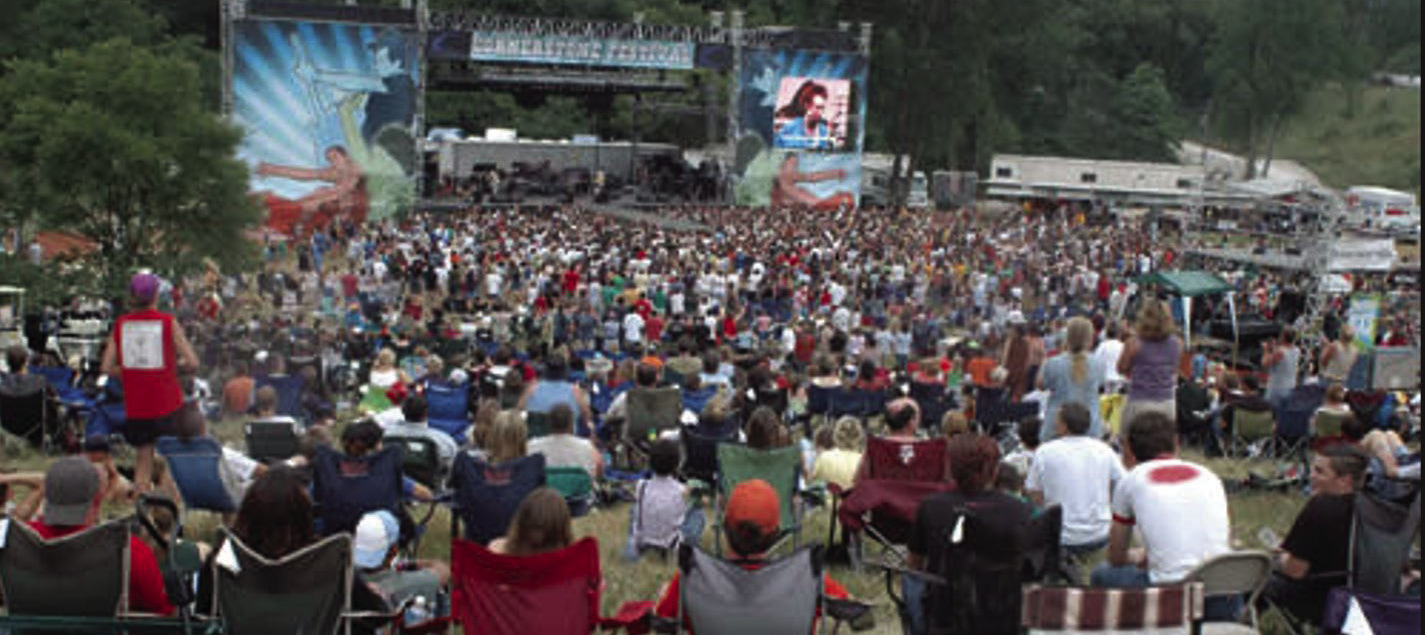

With 12,000 strangers plopped down in the middle of prime Illinois farm ground, one might think there would have been some personality conflicts. But the Fulton County farmers watched in amazement as the hundreds and hundreds of cars maneuvered down the Murphy Blacktop and turned onto Cornerstone Road. Many local landowners, including this writer, were allowed to tour the grounds free of charge, a token of appreciation displayed by the Cornerstone directors.
Cornerstone, when it came to music, was the real deal. The bands arrived on the “backroad” from Highway 95 in semis complete with crews. Many were the top bands in the country. Resurrection Band, or REZ, is credited as one of the forerunners of the Christian metal genre and Christianity Today has called them “The most influential band in Christian music history.”
Other notable performers included Sixpence None the Richer, Pillar, Project 86, The 77s, Daniel Amos, Steve Taylor, The Choir, Blindside and Children 18:3. The festival, including its early Chicago years, ran from 1984-20212 and featured a vast array of Christian alternative, rock, metal and punk bands.
One year, when the Charlie Daniels Band made an appearance, Borders recalls the festival directors checking coolers for alcohol. Any car coming into the grounds with alcohol had to leave it at the gate, alcohol was against the rules. Overall, believe it or not, Borders states that Cornerstone was not a magnet for alcohol and drugs. Some may have been sneaked in, against the festival rules, but according to Borders, it was never a major problem.
Although the festival only ran three days, preparation for the campers took months. Mowing, vendor and display tents, full-blown grocery stores (Hy-Vee, County Market), first aid stations, shower houses-all of it took planning and work ahead of time.
Curt Borders’ eyes twinkled when I asked him about the overall behavior of 12,000 young people gathered in one place. Their behavior, he claims, was very good. The largest problem with the youth was the occasional youthful prank that came along. Such as tipping outhouses, duct-taping fellow campers to utility poles and the like.
During the course of Bushnell’s Cornerstone, Borders recalls no serious injuries taking place. One year, possibly 1998, high winds flattened major tents (a possible tornado). Campers were able to seek shelter and Borders recalls having 30-40 young people on the front porch of his director’s cabin.
The facility wasn’t perfect, sometimes if you were too late the water in the shower houses was ice cold. Sometimes the dust from the many roads was thick. Some years the heat was oppressive, high 90s with no air conditioning to be found.
But in hindsight, the years of Cornerstone east of Bushnell, Illinois, were probably some of the best memories ever for thousands of young music lovers.
The campers were a huge three-day economic boost in themselves. The Bushnell businesses remember lines of people. Hardees, the hardware store, Ludlums, Wal-Mart in Macomb … the campers bought and bought and bought. They bought swimming supplies, fishing supplies, lawn chairs, tarps, t-shirts etc. The money that flowed into the surrounding area was phenomenal. Not to mention gasoline, tires and repairs for their cars for the long trips home. And music to listen to.
Curt Borders said the decision to end the Bushnell Cornerstone Festival was devastatingly hard. Times were changing-costs were increasing and there were more festivals across the country to pick from. The festival was not to be reconvened in the Chicago area.
Cornerstone was over.
With sadness in his eyes, Borders remembers the last night of Cornerstone in 2012. Campers and workers had built out of cardboard and wood a Viking ship. It was launched from the shore and then ignited with flaming arrows. Everyone watched it burn, the symbolism all too apparent. As the boat burned, an era ended.
The Festival on a Farm Violet Ohlwine remembered hearing about Cornerstone on the radio. Her sister, Florence, responded “It’s too wild, like Woodstock.” Many young festival- goers convinced their parents to let them go by showing them that the event was being held on a farm!
The sisters recall the first Cornerstone in 1991 being terribly hot. “We felt like we were in Saudi Arabia. Plus, there were chiggers, poison ivy and bugs. It was a year of discovery. The whole experience was just awesome- the guitars, the music, sharing campfires and hot dogs. We were amazed that everyone left their camping gear out in the open all night and it was still there in the morning.”
The second year was a little better, but then came 1993, the year of the great Mississippi flood. Copious amounts of rain drenched the campground. Campers walked in mud and wore plastic bags on their feet. Some felt the weather brought everyone even closer together. The Bushnell merchants were very helpful and supplied umbrellas, ice and any other items that might make the camping less miserable.
Bushnell will never forget those years when Cornerstone converged upon them, young people seeking a place to concentrate on God.
Credit:A Look Back… Bushnell, Illinois 1854-2004 by Rollene Storms and Peggy Wood