The Community News Brief talked with a solar provider, local government officials and homeowners and landowners to learn more about community solar farms, the environmental aspects and the pros and the cons of going solar within a community. This is the second in a three-part series on community solar.
Keith Hevenor of Nexamp, which has four solar farms – either established or readying for construction – in the county, noted that their primary guidelines for development come from the permitting and zoning policies of the host communities. First and foremost, before any construction begins, Nexamp will coordinate with the municipality to ensure all requirements are met, followed by participating in public meetings/town halls for residents to voice concerns, ask questions and get information.
“Once we gather all of that information, because we’re a little unique in that we are one of the few integrated solar developers, which means we do the initial development process, our own civil and electrical and mechanical engineering, construction through our clean energy deployment department, vegetation and long-term upkeep. We invest in the community we’re in and we go 100 percent above and beyond what’s needed as we’re a part of each community,” he added. “We take all feedback into consideration. We’ve reduced the size of a project, established greater setbacks, set panels lower, added more vegetation and berms to screen from view and more to satisfy neighbors and abutting property owners.”
According to Hevenor, Nexamp works with local environmental/conservation committees to ensure the construction and installation won’t disrupt procreation/ mating/nesting of insects, birds and mammals.
Nexamp has about 350 projects across the country, and has learned a lot over the years to ensure its projects are environmentally responsible.
“We’ve learned a lot by maintaining wildlife corridors and protecting wetlands. It is really amazing what happens with smaller animals and birds who actually build nests and beds under the panels and on the racks,” he said.
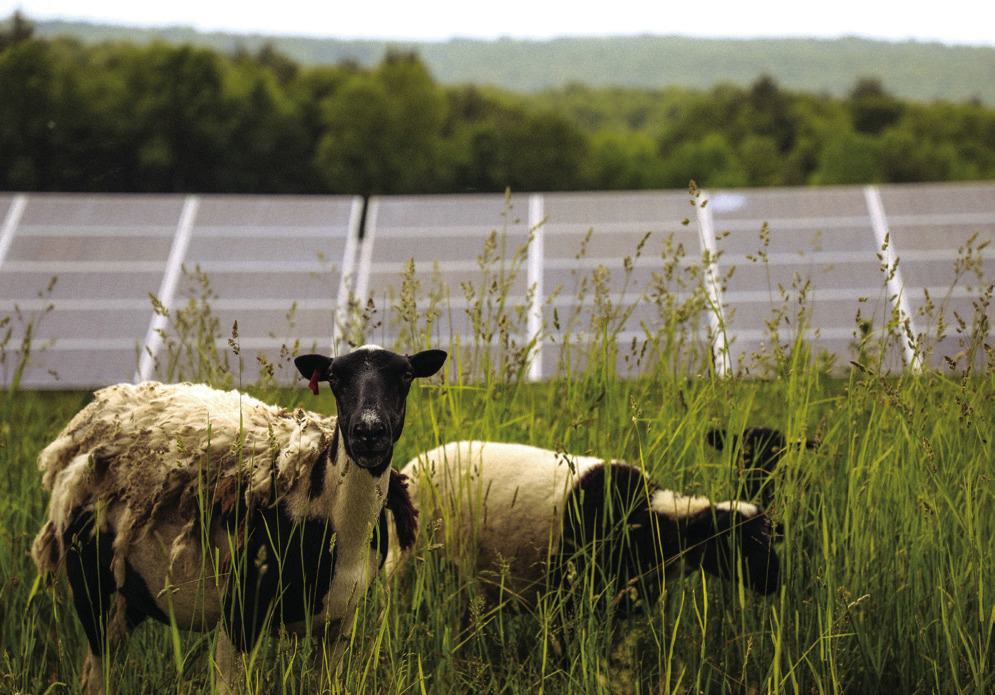
“And with about 70 of our projects, we’ve recently hired shepherds and are deploying sheep for grazing on around about 1,000 acres. We’re still figuring this out in Illinois because the state requires pollinator planting, so we can’t have sheep eating that.
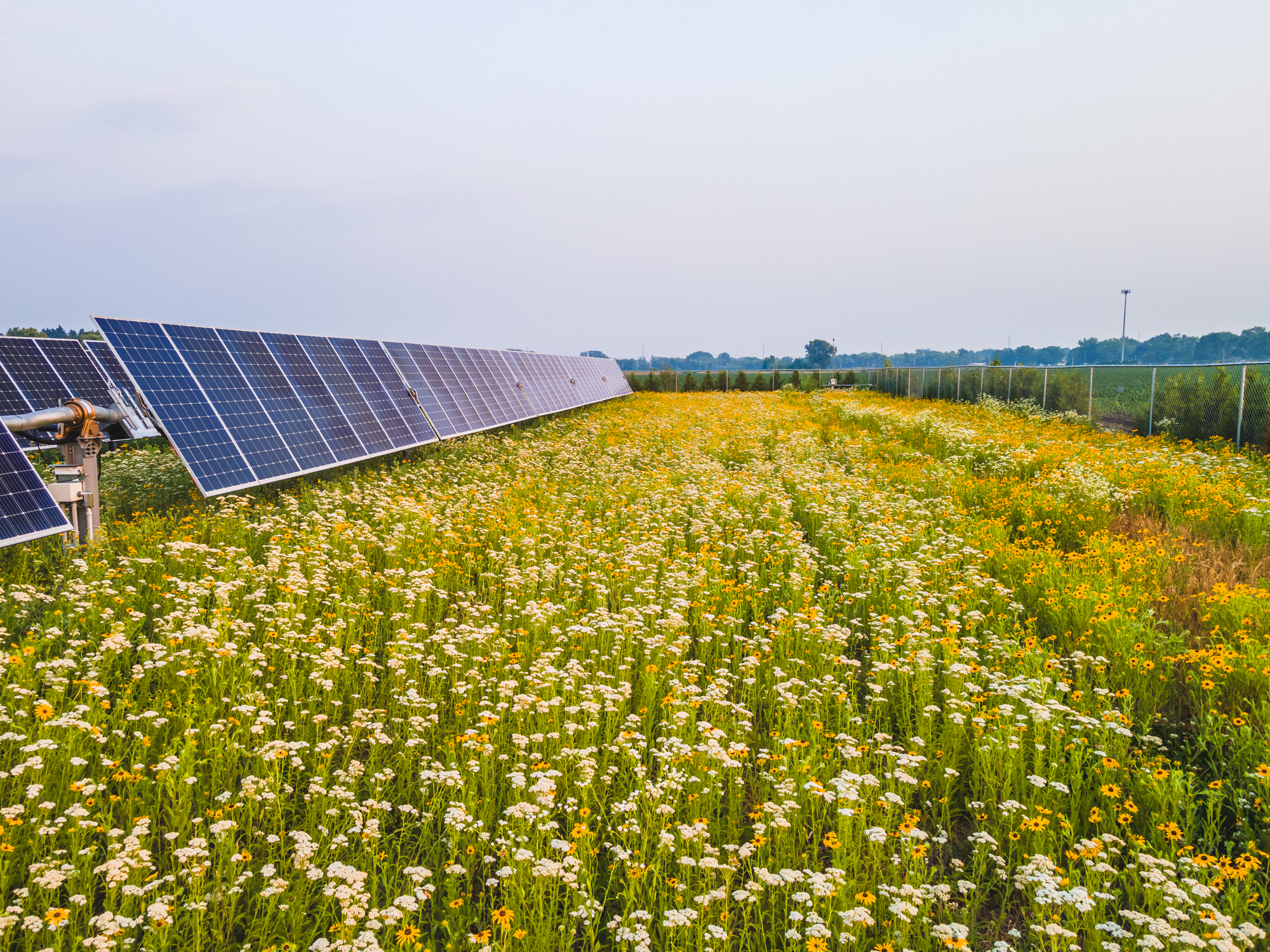
We’re trying to determine if we can do a pollinator perimeter so we can expand the grazing program into Illinois.”
While he noted there will be some disruptions to the land, Nexamp staff work with local experts and authorities to ensure they’re as environmentally responsible as possible and adhering to restrictions. To date, nearly 100 of Nexamp’s projects have been certified wildlife habitats by the National Wildlife Federation. This requires the company to document and maintain several qualifications, from natural food sources, water sources, safe nesting habitats and more.
In a March 2024 fact sheet from the Natural Resources Conservation Service (NRCS), a division of the United States Department of Agriculture, “Conservation Considerations for Solar Farms,” the NRCS noted that soil erosion is a key concern that’s often a consequence of construction projects. With solar farms, wind erosion can cause problems when wind-blown soil ends up on the surface of panels, reducing electricity output and possibly leading to permanent damage, the NRCS stated. Steps to take during the construction and operation to conserve the soil include limiting disturbance and compaction, preserving onsite topsoil, and maintaining healthy vegetative cover under and between panels.
In addition, The Farmland Protection Policy Act is intended to minimize the impact federal programs have on the “unnecessary and irreversible conversion of farmland to nonagricultural uses. If agricultural farmland will be converted to a nonagricultural use, producers, landowners and developers should make every effort to minimize the impact and maintain the possibility for the land to be converted back to agricultural use.”
“Although these projects typically cover multiple acres of land, the actual footprint is very light. We usually pour one or two small concrete pads to support the transformers, but other than that, the racking that holds the solar panels is just individual steel poles that are driven into the ground,” he explained.
“Every project we build holds a decommissioning bond for the complete cost of removing and recycling materials and returning the land to its original use, often farming. That money is there and protected no matter what happens to the project or our company.”
As for the panels themselves that are being installed today, they have a 25- to 30-year warranty so not a lot will be up for recycling for several years. That said, there are panels that are damaged or fail for some reason and can’t be returned, so there is currently a small stream of panels up for disposal. Nexamp partners with several solar panel recyclers nationwide. The panels are received at a hub and dismantled, with up to 95 percent of the panels reclaimed.
“While we don’t have a high volume of panels that need recycling yet, there have been some pilot projects that are facilitating ways to get the panels, which still have about 85 percent life left at the end of the warranty, into a second life in developing nations,” Hevenor explained. “That 85 percent efficiency can still be valuable for a village with no power source, so as an industry we will be looking to see if these can be used for another 20 years elsewhere. Why dismantle and dispose of a panel that still has 85 percent of life left in it?”