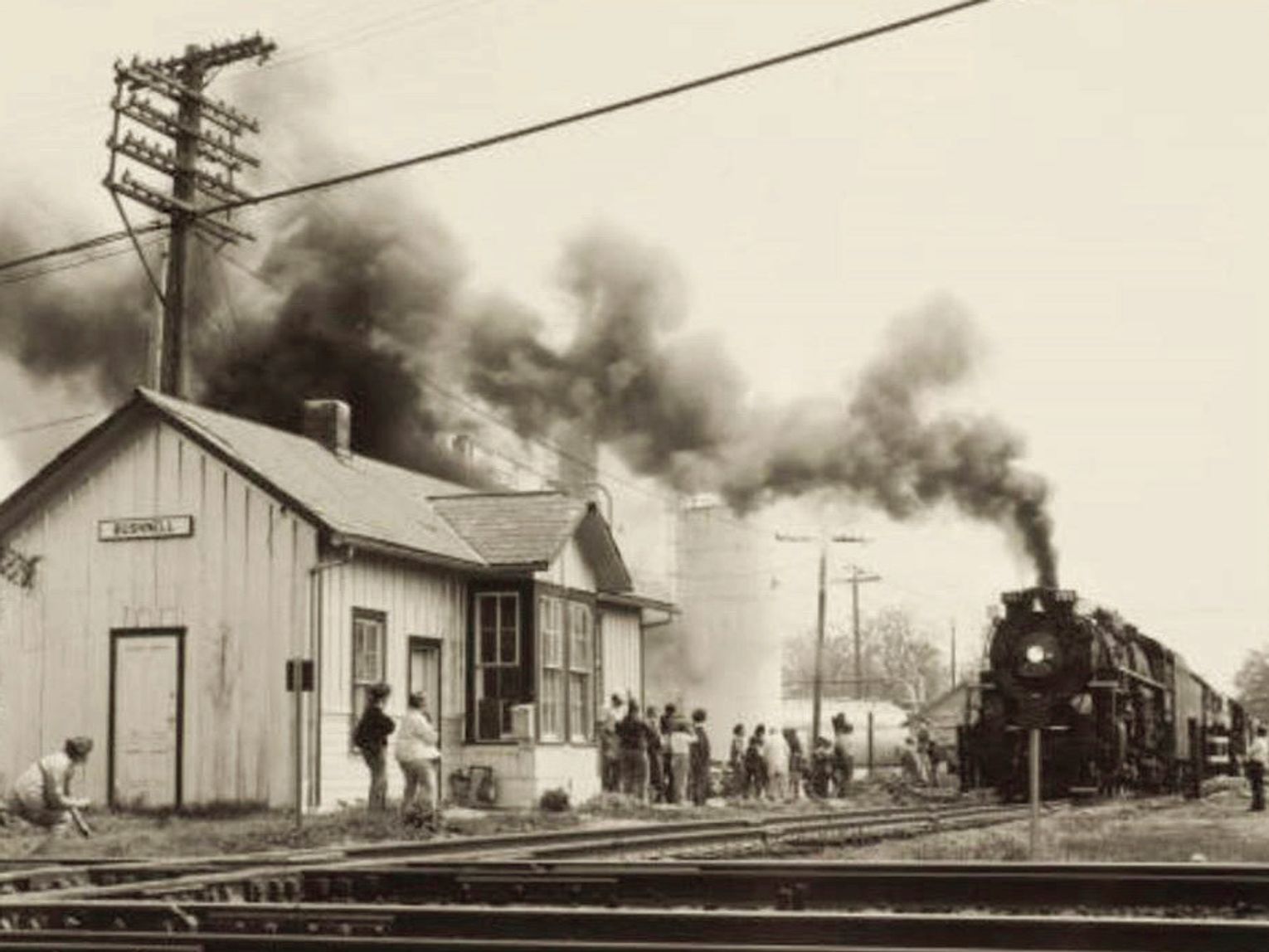
The Northern Cross Railroad was completed in the mid-1800s and the Toledo, Peoria, Warsaw Railroad in 1867. Consequently, Bushnell became a major manufacturing center due to easy access of freight and passenger train service. Goods could be sent all over the U.S. In an era of primitive roads and horse and buggy transportation, travel by Pullman car was quite welcome.
Ayers & Decker Manufacturing Co.
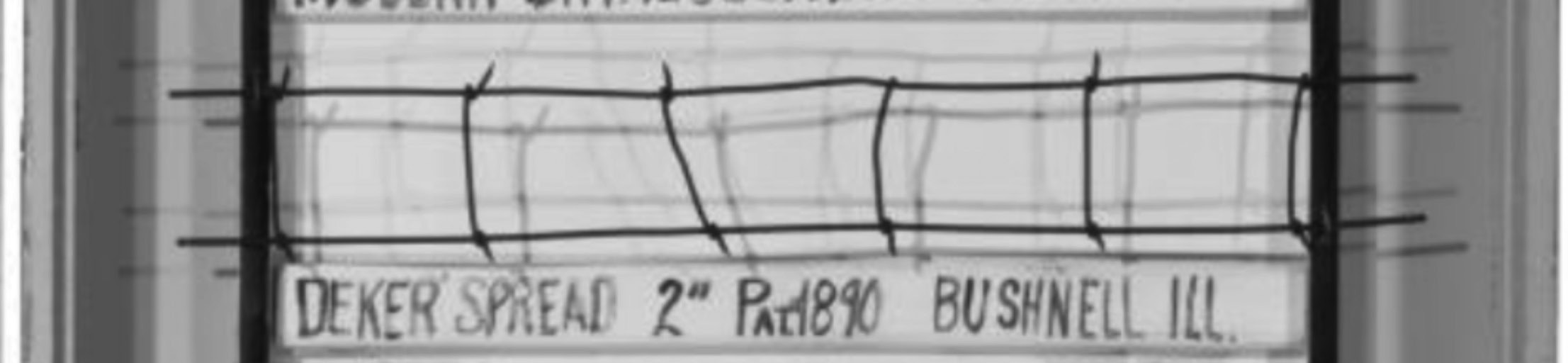
In the 1870s, Illinois became a prominent state in the development of practical fencing for the west. The field was wide open for the invention of barbed wire fencing, as other types of fencing such as wood and smooth strand had proven ineffective. Bushell, Illinois played an important part in western migration with the manufacture of 'Decker Spread' barbed wire in the 1870s.
It is believed that in 1876, Alexander Decker and James Ayers were granted several patents on barbed wire. They operated a hand machine in a back room of Ayers’ wagon shop, approximately located at 138-148 E. Hail Street. The 'Decker Spread,' patented in Bushnell, was very popular on the western prairie. However, during the 1870s and 1880s, larger companies came to be such as I.L. Ellwood & Company of DeKalb, Illinois.
Truman Pioneer Stud Farms
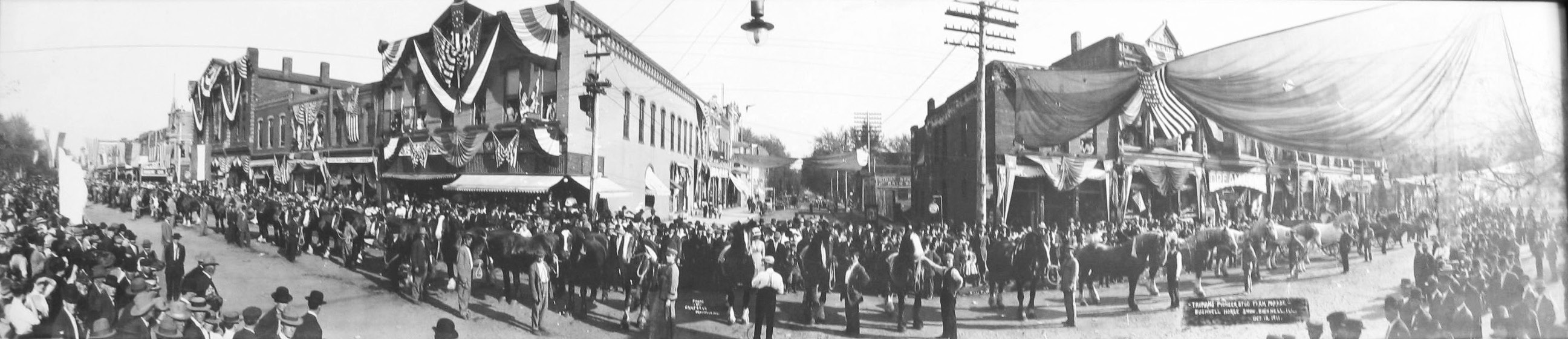
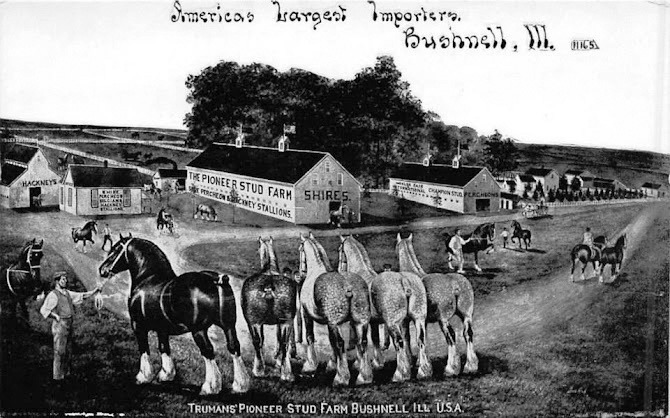
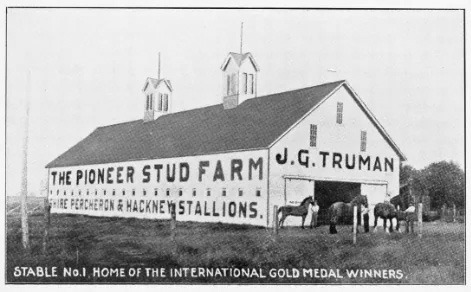
In the 1880s, the most important horse breeding farm in McDonough County was the Truman Pioneer Stud Farm. By the early 1900s, the farm had won national acclaim and the Trumans were known as 'America's Largest Horse Importers.' Bushnell, Illinois had become the 'Horse Capital of the U.S.A.'
Jonathan Hall Truman was born in Whittlesea, Cambridgeshire, England in 1842. His claim to fame is that he purchased the first shipment of live fat cattle from the United States for England, shipping 90,000 head of cattle during his first three years of operation. During his cattle buying trips to America, Jonathan became convinced that top-notch English and European horse stock would be well-received in America. He also became convinced that draft horses in America needed improving. He sought to breed a Shire, which was more compact in form, eliminating the long back, loose loins and short ribs of the horses he saw in Chicago. Truman began shipping English Shire horses bred on his two farms in England. He used only top prize-winning animals and his horses often sold for between $1,000-$5,000.
Eventually, Truman's horses brought five to ten times this amount.
Jonathan Turman set up a headquarters in America in 1884. He purchased 39 acres of land in (near) Bushnell located at the intersection of the Chicago, Burlington, and Quincy and the Toledo, Peoria and Western (previously the Toledo, Peoria, Warsaw) Railways.
Truman continued to buy land, eventually owning 92 acres. The spread was named 'Truman's Pioneer Stud Farm.” What made this a perfect location? The excellent railroad facilities.
When Truman first came to Bushell, the horse barns and hospital were located on West Main. After these burned, they bought the Melvin Farm south of Bushnell between the railroad tracks. A large six-bedroom house accommodated three of the Truman brothers and the traveling horse salesman when they were in Bushnell.
At the St. Louis World's Fair in 1904, the Trumans won nearly every prize that could possibly be won, including six gold medals, eight diplomas and $2,891 in premiums on Shire horses alone, of which they had entered 25 head.
Continue reading the Community News Brief for more business and manufacturing history as well as the people of Bushnell
Credits: A Sesquicentennial History by Rollene Storms and Peggy Hood, 2004 Macomb-A Pictorial History by John Hallwas, 1990 Atlases of McDonough County, Ill., 1871-1913 A Look Back....Bushnell, Illinois 1854-2004. A Sesquicentennial History McDonough County Illinois Genealogical Society Western Illinois Museum