End Goal is Public Park
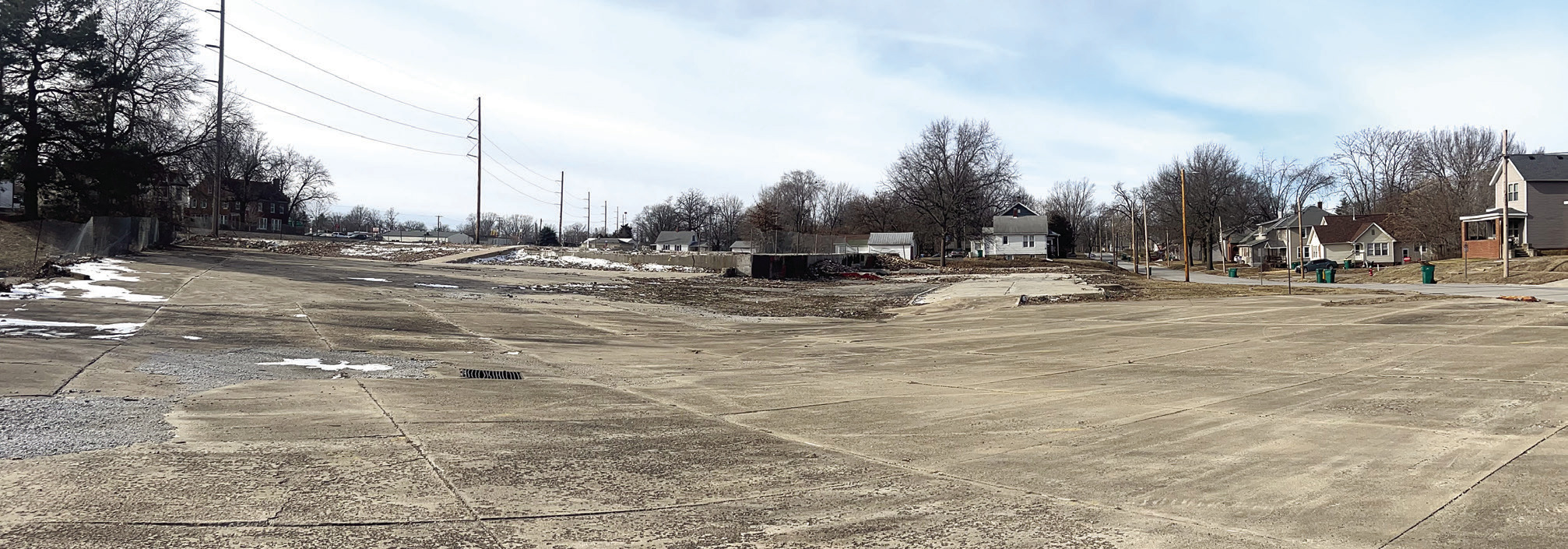
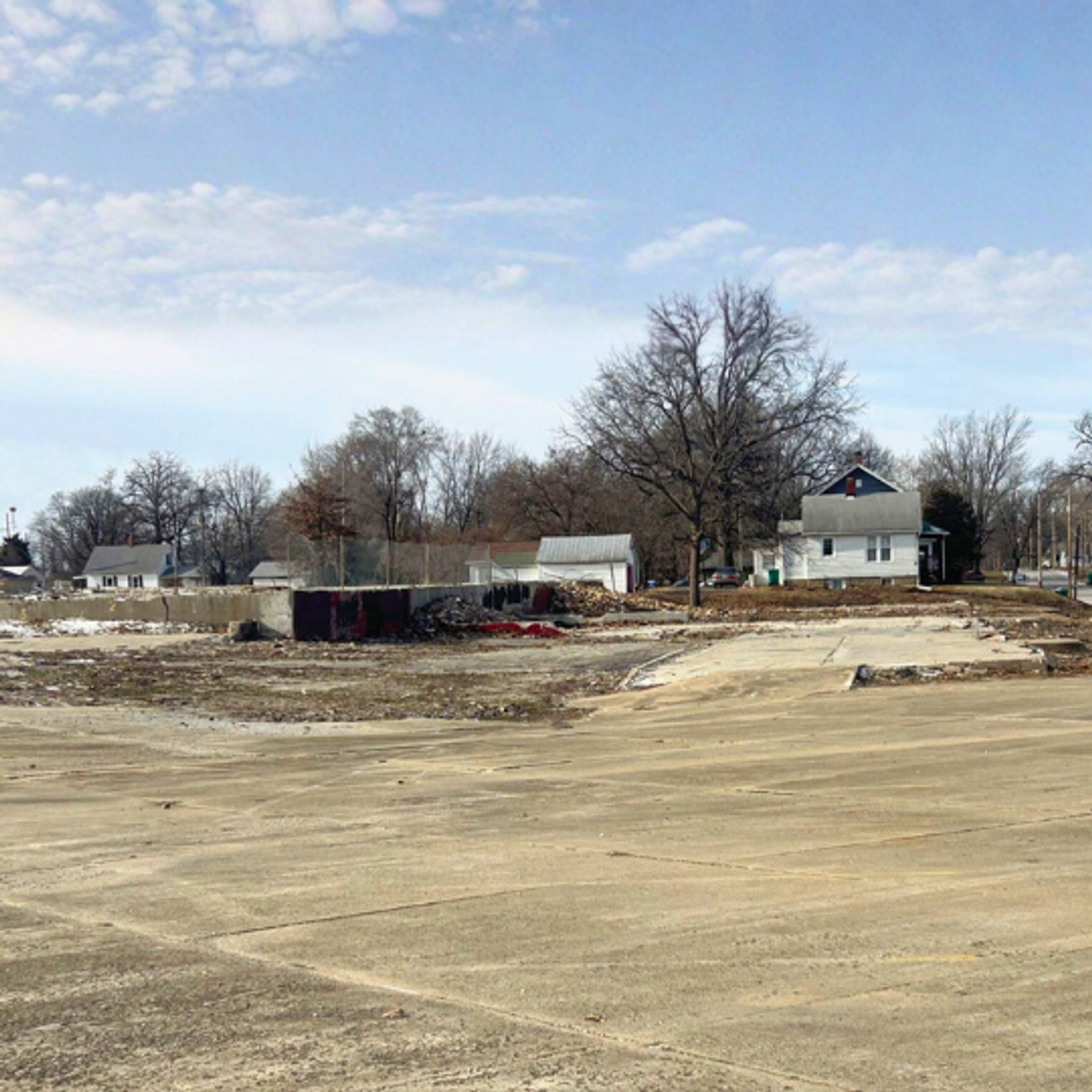
For nearly 12 years, the former Haeger Pottery factory and office on West Calhoun Street sat empty before it was razed in 2021. All that’s left is a concrete lot…but thanks to Prairie Hills Land Bank Authority, a partnership with the Prairie Hills Resource Conservation and Development in Macomb, the property could be transformed into a city park by late 2027.
The property, last appraised at $600,000, was donated in December to the land bank, which was established Aug. 1, 2025 as a freestanding unit of local government in Macomb and five other communities in west central Illinois (Colchester, Carthage, Dallas City, Monmouth and Manito). Across the U.S. there are currently 300 land banks. The Haeger property is the first project of the newly-created Macomb-based land bank authority.
According to Prairie Hills Executive Director Victoria Livingston, the organization, working with an environmental grant consulting firm, is finalizing a U.S. Environmental Protection Agency (EPA) Brownfield Program grant to obtain nearly $1 million in funding to remediate the property to remove lead, arsenic and other contaminants from the soil to turn the area into a park. The land bank is expected to hear by May if the grant will be awarded. Last week, Livingston held a public meeting at the Spoon River College Community Outreach Center to share information about the grant and the project, and get more feedback from the community. Approximately 31 area residents were in attendance.
“We heard some really good things, like history of the site, safety concerns with the tracks nearby, what they’d like to see if it is turned into a city park and other questions,” Livingston shared. “People are really glad to see that we’ve got something moving.”
If the EPA grant falls through, Livingston said they’ll explore other funding sources; however, due to the cost of getting the land to park-like conditions, without the grant, the cheapest way to cap the contamination is a slab of concrete, which is exactly what the Land Bank Authority does not want to do. That’s the last resort, after all other options are exhausted, she stressed.
“We’re optimistic about the EPA grant funding, and when we’re finished with remediating the land, we’ll pass it back to the City of Macomb for a city park,” Livingston added. “We expect funds to be released in October from the grant; however, we can begin pregrant activities as soon as July. We’ll have everything lined up and ready to go so work can begin as soon as funds are available.”
Before remediation work begins, the first order of business will be securing the property with fencing. Phase II of the project is soil testing, which will be done before the soil can be removed as specific parameters will be in place for the removal. After the testing is done and parameters set, then the work will include the removal of tons of concrete and soil. The contaminated soil will be properly disposed of at a sanitary landfill. She estimates they’ll need to remove approximately two- to three-feet of soil to ensure acceptable levels. Currently, her staff is not seeing any issues with groundwater contamination at the site. After removal, the Illinois EPA and U.S. EPA will conduct final testing and then sign off on the project. Fresh soil will be put in, along with new concrete for a parking area and sidewalks. Once the project is done, all maintenance turns over to the City of Macomb.
“It’s really a joint effort with the city. While our responsibility ends when the sod is laid and the concreate installed, we’ll help with any grant writing for the park. There are several grants out there for outdoor spaces for children,” Livingston pointed out.
“The city is fully supportive of this project. Without the land bank’s participation, this would not be possible,” said Macomb Mayor Mike Inman. “It has been a long process, but we look forward to seeing it through. It’s the most viable means to remediate a blighted property that neighbors have had to deal with for far too long.”
As for the Prairie Hills Land Bank Authority, it’s only getting started, Livingston noted. The authority’s two main goals include addressing vacant, deteriorating community spaces, including commercial buildings, along housing demolitions and restoring the land for a new residence or green space. When a property is turned over to the authority, it’s held in the “bank” for a set period, then is turned into a better use of the space, like the former Haeger property transforming into a city park. The land bank is a “home rule” member, which means they can share their home rule status with their partner communities. This helps expand a city’s legal ability to move things forward when it comes to derelict properties, she explained.
“While we’re just in the beginning stages of the land bank, we’re looking at a lot of areas, like Monmouth and Carthage, at how we can replace homes that have been razed, and looking at the potential for green spaces in place of dilapidated properties,” Livingston said. “We’ve seen a handful of downtown buildings that could use work, and we’re working with those owners to inform them of the options we have available.”
To learn more about Prairie Hills and their services, visit prairiehillsrcd.org.