Celebrating McDonough County’s Bicentennial
Bushnell, Illinois was platted Aug. 29, 1854 by County Surveyor William Rile. Nehemiah Bushnell was president of the Northern Cross Railroad, and the townspeople honored him by naming their community after him. He was also an attorney and a member of the state legislature, who facilitated the Northern Cross Railroad into the Chicago, Burlington and Quincy Railroad. Bushnell was also known as a scholar with a kind heart and generous and forgiving temper.
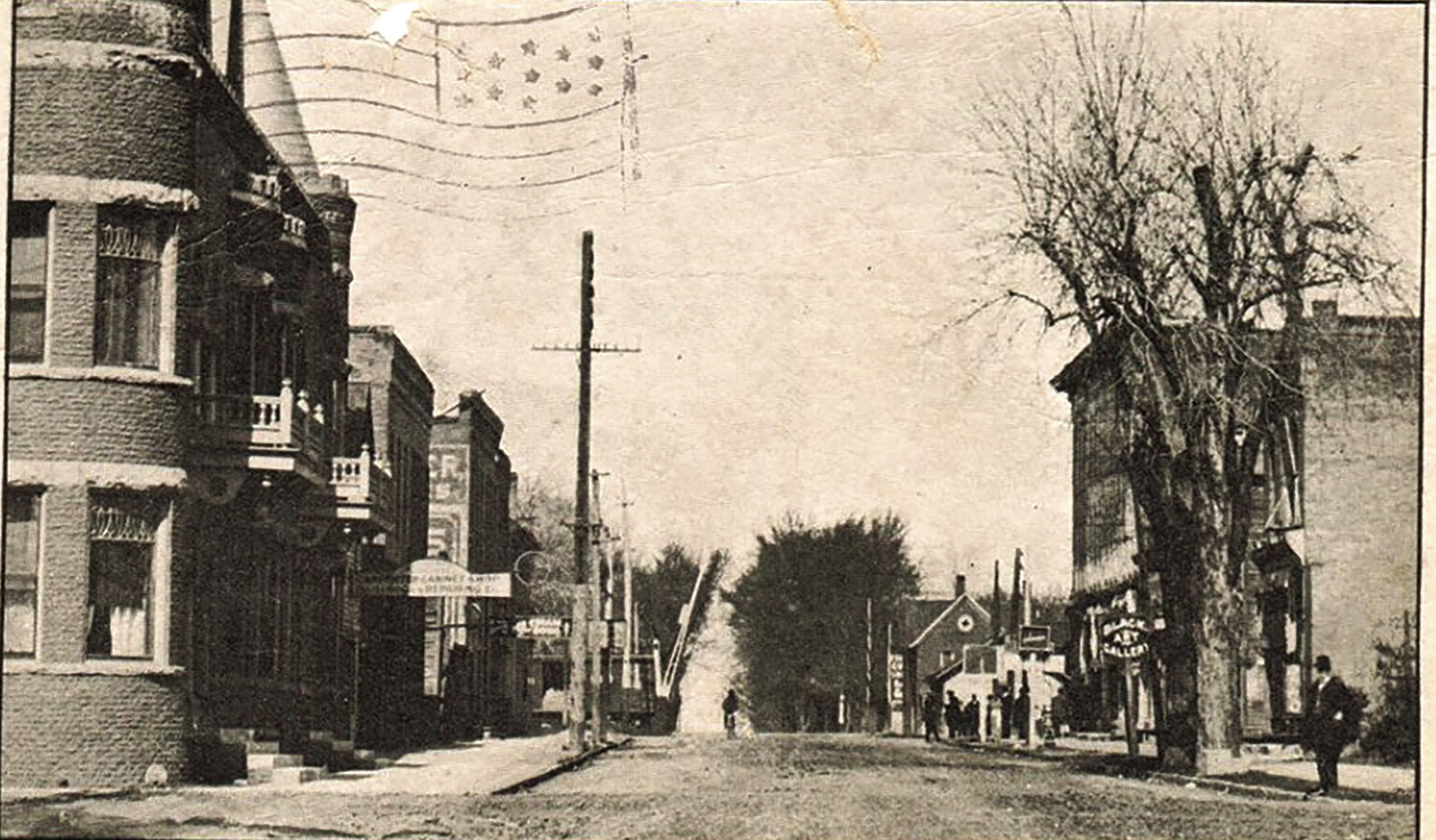
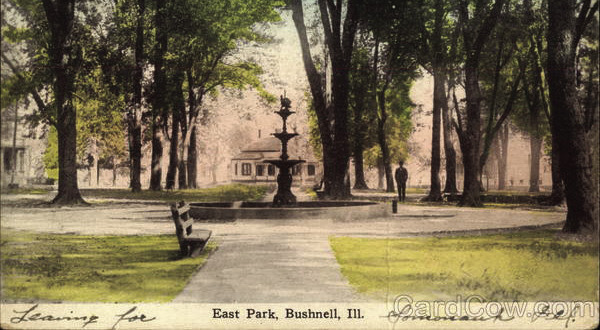
The City of Bushnell was laid out in 1854 before the completion of the Northern Cross Railroad. Rile, as the surveyor under the direction of John D. Hail, D.P. Wells and Iverson L. Twyman, laid out the town, running streets parallel with the railroad which had been graded through the proposed site. The quarter was divided into 48 blocks of 12 lots each, the blocks being 360 feet square. Two streets, running parallel with the railroad, one on either side, were made 70 feet wide, with all others made 60 feet wide. The first public sale of lots was made in May 1854, with around 70 lots sold from $30 to $120 each, for an approximate total of $6,000. The proprietors gave two blocks of land for parks, one on each side of the railroad. Elias Beaver planted soft maple trees, which soon furnished ample shade for recreational purposes. A band stand was erected in the East Park and it was there that band concerts, Fourth of July celebrations, political rallies and other gatherings were held.
Bushnell Gets its Own Electric Plant
In Summer 1937, a committee researched how nearby communities created their electricity. A private company had been furnishing electricity to Bushnell- Central Illinois Power System or CIPS. After several referendums, it was decided in April 1939 that Bushnell could finally have their own electricity plant.
The Municipal Light Plant started producing electricity on Thursday, June 27, 1940. Many of the Bushnell residents soon requested service from the new plant as its rates were 10% less than CIPS. The plant started with three turbine engines and could produce 600 kilowatts of electric power. Improvements over the years raised the kilowatt production to 2050. By 2000, the electric company had two substations that were capable of producing 8700 kilowatts of power.
The Bushnell Waterworks
In 1894, the Bushnell Waterworks was first established, and by 1902, there were on record 101 water users, but it was believed many were using water from hydrants and not paying.
Bushnell has a modern water tower that was built in 2004.
The first city sewer system was built in 1910 serving the east side of town, while the west side had a smaller system. In 1948, a new facility was built on the west side of town, and was re-done in 1974. The east lagoon was built in 1989 and the west in 1991.
Early Fire Protection
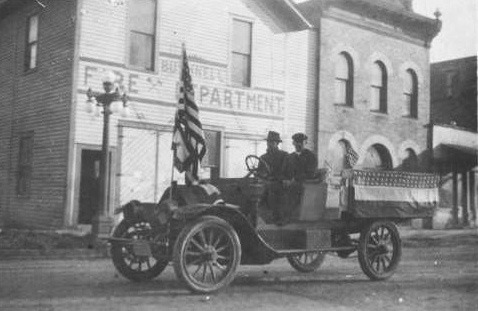
The Bushnell Fire Department was formed in 1877. If a fire was reported, the city's councilmen would report to the fire department and start a bucket brigade, hoping that a supply of water was close enough to the fire and enough buckets and people could be found to extinguish the fire. In October 1869, the City of Bushnell purchased, from the Chicago Fire Engine Company, an engine for $484. A place was needed to keep the new engine, and a building at the northeast corner of Crafford and Hurst Streets was rented for $80/ year (the Randolph House).
In 1870, the Bushnell City Council put forth an ordinance requiring a minimum of twice yearly inspections by the fire wardens of buildings which had stoves, fireplaces, stove pipes, chimneys, funnels, etc. and also established the city's authority to require repairs or changes when necessary.
The City of Bushnell put forth a list of very specific rules concerning fires and combustible materials. For example, straw and hay could not be stacked within 75 feet of any building where a fire may be kept. Stove pipes must be separated from the roof by at least three inches or by sheet iron.
Pitch, tar, resin, turpentine, etc. could not be used in the city except in an open area at least 20 feet from any building. Candles or other lights could not be used in a stable except if the light was secured within a tin house or gas lantern. Any stove or furnace in any building within the city must have been placed on a platform of brick, sheet iron or other incombustible substance. No one except a retailer could keep, have, possess or store any gun powder within the city limits for private use in quantities exceeding one pound.
The Bushnell Fire Department was first organized in 1877 and was known as the Alert Hook and Ladder Company. In 1891, the department became a part of the city government and began to buy new equipment. By 1927, the State of Illinois passed the Fire Protection District Act. By May 1952, it was decided to create a new department built around the old Bushnell City Fire Department. In 1953, a new firehouse was built in Bushnell, and in 1955 Prairie City voted to join the Bushnell Fire Protection District. The Bushnell firemen trained in first aid and many had further extensive medical training.
In 1953, a Ladies Auxiliary was formed. Dues were set at $1 and if a member missed any meetings or was late attending a meeting they were fined 10 cents. The Auxiliary was divided into committees and each group had a three month stint when they were responsible for serving coffee and sandwiches to the firemen in case of a fire. In 1954, the Ladies Auxiliary purchased a water heater for the firehouse and new silverware for the kitchen. They also began taking used and new clothing to families who had experienced a house fire. The Bushnell Ladies Auxiliary over the years has made generous donations to the Recreation and Cultural Center, the swimming pool, the American Field Services and the B-PC High School Prom. They have also worked the pool concession stand and had floats in the Town and Country Fall Festival and B-PC Homecoming parades.
As of 2004, the Bushnell Fire Protection District encompassed 120 square miles, including Bushnell, Prairie City, Bardolph, Walnut Grove and New Philadelphia. At that time there were 24 miles of water mains and 198 fire hydrants.
The department is financed through local taxes. Some special equipment is purchased through memorial money and fundraisers.
Bushnell Gets a U.S. Post Office
Mail was first received in Bushnell Township by going to the Half-Way House, located 3.5 miles west of town. It was here that the stage coach drivers going to Rock Island stopped to eat a meal and exchange horses.
Bushnell's Post Office also was housed at the corner of East Main and Gridley Streets in Markham's Store, and later into the Cole Building on East Hail Street.
On May 13, 1936, Postmaster John R. Markley received a Western Union telegram from Congressman Chester Thompson telling him that the Carl Westberg Company of Chicago were low bidders for the new post office building and that work would start in two weeks.
The amount of the contract was for $47,184. Many local laborers were hired to work on the building, with pay ranging from 10 cents/ hour for concrete workers to $1.25/hour for plumbers.
The new building was finished and occupied in 1937.
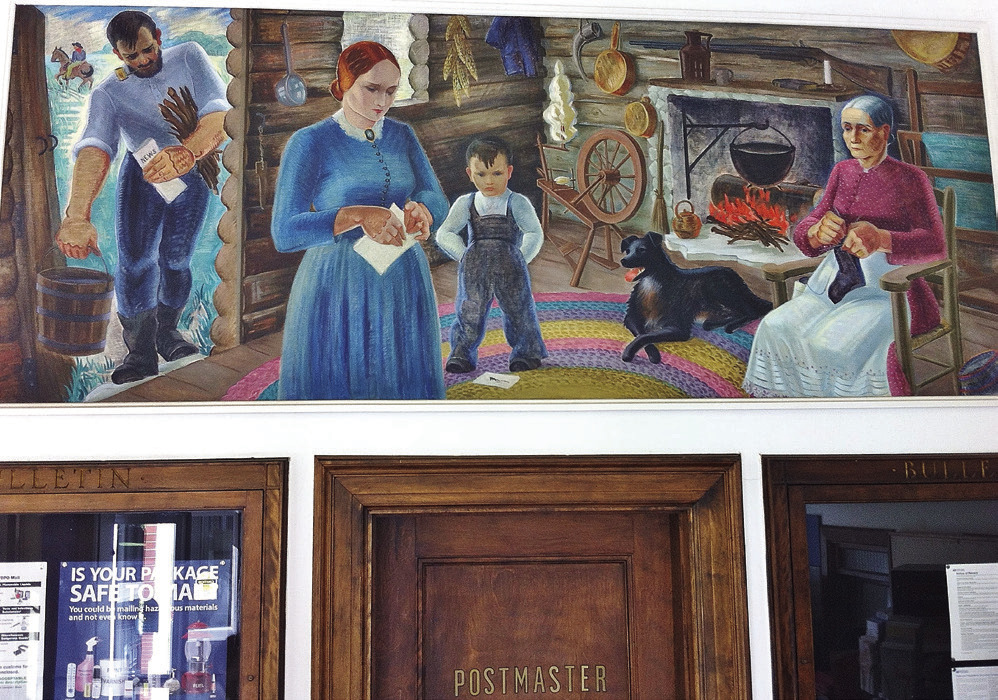
In 1938, Miss Reva Jackman was commissioned to paint a mural on the west wall of the new post office lobby as part of the New Deal Arts Projects. The oil painting was done on canvas and depicts a rural family in a log cabin receiving their delivery of mail. It was painted in her studio and brought to Bushnell and installed where it still hangs today. Jacksman was paid about $560 for the mural.
The U.S. Postal Service referred to the murals as 'a vital part of America's national heritage, as they comprise the only comprehensive public collection portraying the culture and character of the American people for a given period- and every effort must be made by the Postal Service to preserve and safeguard these cultural assets-for present and future generations.'
With time, the Bushnell Post Office mural began to age, so on Oct. 3, 2003, staff arrived from the Chicago Conservation Center to clean the Bushnell mural. By the end of the day, they had it ready for the sealer.
Credits: A Sesquicentennial History by Rollene Storms and Peggy Hood, 2004. Macomb-A Pictorial History by John E. Hallwas Atlases of McDonough County, Ill.1871-1913 A Look Back...Bushnell, Illinois 1854-2004. A Sesquicentennial History
Editor’s Note: As McDonough County celebrates its 200th year, the Community News Brief will continue to publish a series of stories focusing on the communities that make up the county and the part they played in McDonough County’s successful history.