Editor’s Note: On Jan. 9, U.S. District Judge Arun Subramanian issued a 14-day temporary restraining order, preventing the administration from withholding funds for the Child Care and Development Fund (CCDF) and Temporary Assistance for Needy Families (TANF).
The restraining order is set to expire today (Jan. 23), leaving local governments and aid organizations grappling with an uncertain financial future. On Jan 8, Illinois Attorney General Kwame Raoul filed a lawsuit with the attorneys general of California, Colorado, Minnesota and New York challenging the Trump administration’s attempt to freeze $10 billion in federal funding that provides support for children and families. {https://tinyurl. com/ILAGLawsuit}
On Jan. 6, the Trump administration announced it was withholding funding for programs that support families in need in five Democratic- led states - California, Colorado, Illinois, Minnesota and New York - following accusations regarding alleged fraud at a Minnesota- based daycare. According to the Associated Press, the U.S. Department of Health and Human Services, which oversees the program, will require the states to provide extra documentation to access the funds.
One such fund, the Child Care and Development Fund (CCDF), which subsidizes day care for low-income households, enabling parents to work or go to school, will be impacted.
According to Susan Gale Perry, CEO of Child Care Aware of America in an NPR story on the topic, many states already have controls in place to prevent fraud.
The Illinois Department of Human Services (IDHS) shared a memo with Macomb-area daycares which points out that as of Jan. 7, the agency does not anticipate funding will be impacted immediately. The Community News Brief reached out to Macombarea child care centers to learn how their respective organizations would be affected if, and when, the funding stops.
The Community News Brief also sat down with Wee Care Day Care Center Director Tracy Bollinger to discuss how the cessation of funds will affect the longtime daycare, which is based at Macomb's public housing on the city's east side. All of the 33 children attending Wee Care, which has been serving families for 54 years, receive some level of funding from the CCDF, Bollinger said. 'Low-income families have always been our target audience,' she added.
Bollinger finds it 'unbelievable' that the level of fraud alleged in Minnesota could actually be occurring given the sheer number of checks and balances in place within Illinois' child care system. While she said she's not sure of other states, knowing what she knows about the Illinois system, she's curious how it could occur. Any center receiving state funds undergoes numerous audits, but for Wee Care, which is under the auspices of the IDHS, the magnifying glass is much larger. As an ExceleRate Illinois and Smart-Start center, the Macomb daycare undergoes audits and inspections several times a year by at least five state and local agencies, along with large scale reviews every three years.
In addition, before a parent can even qualify for services at Wee Care, Bollinger must cross-reference income with state agencies to verify check stubs to ensure the appropriate amount is charged.
Parents pay anywhere from $1 to $250 a month for child care, and in order to receive CCDF assistance, proof must be shown they're attending school and/or working.
'Contrary to the narrative that has been shared lately, our parents aren't deadbeats just dropping off their kids,' Bollinger stressed. 'We are not babysitters. We use an educational curriculum, even for toddlers. We are an educational service that prepares the children we serve for school, and our parents are doing what they are supposed to do to ensure their children are cared for.'
Bollinger added that she and her staff aren't doing what they do to 'get rich.'
She's been with the organization for 38 years, and she has a handful of teachers who have been with her for well over 20 years. They're credentialed, and they have to complete 20 continuing education credits each year as part of the ExceleRate program, which exceeds the Department of Children and Family Services' minimum requirements.
'We are doing what we are supposed to do,' she stressed. 'The Illinois system is not a free-for-all. You cannot operate a child care center in Illinois without scrutiny, licensure and monitoring.'
If the fund trickle down from the state stops due to the federal freeze, Bollinger said the center can operate for a few months as it has some insurance money in reserves as a result of a 2020 fire that destroyed the center.
'Personally, I think – I hope – it will get resolved.
But, if by chance it does not, our center would close because we have no private pays. The families that Wee Care serves, will not be able to work and/or attend classes due to lack of child care, and it would have a ripple effect as these working parents are the backbone of our community … retail workers, delivery workers, school bus drivers, nursing home staff, group home staff, factory workers and more,' she concluded.
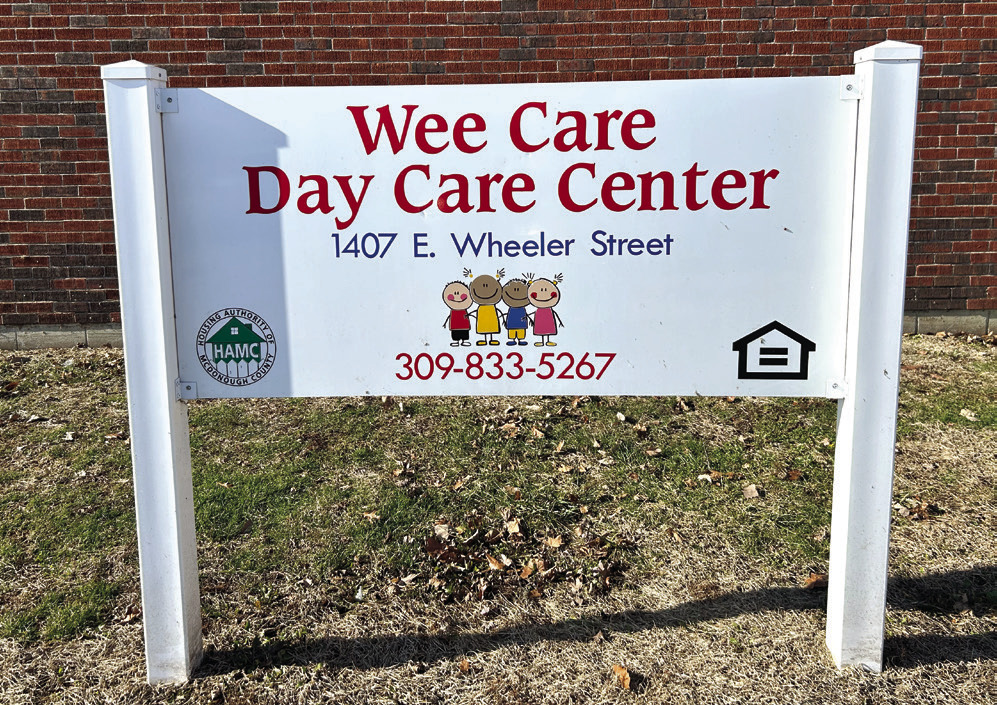
All of the children served at Wee Care ill be impacted by the child care funding freeze.
'It's just so frustrating, especially when people – our governor included – who have never had to use child care are fighting over this. But at least our governor gets it. He knows how vital our services are for families and children.'
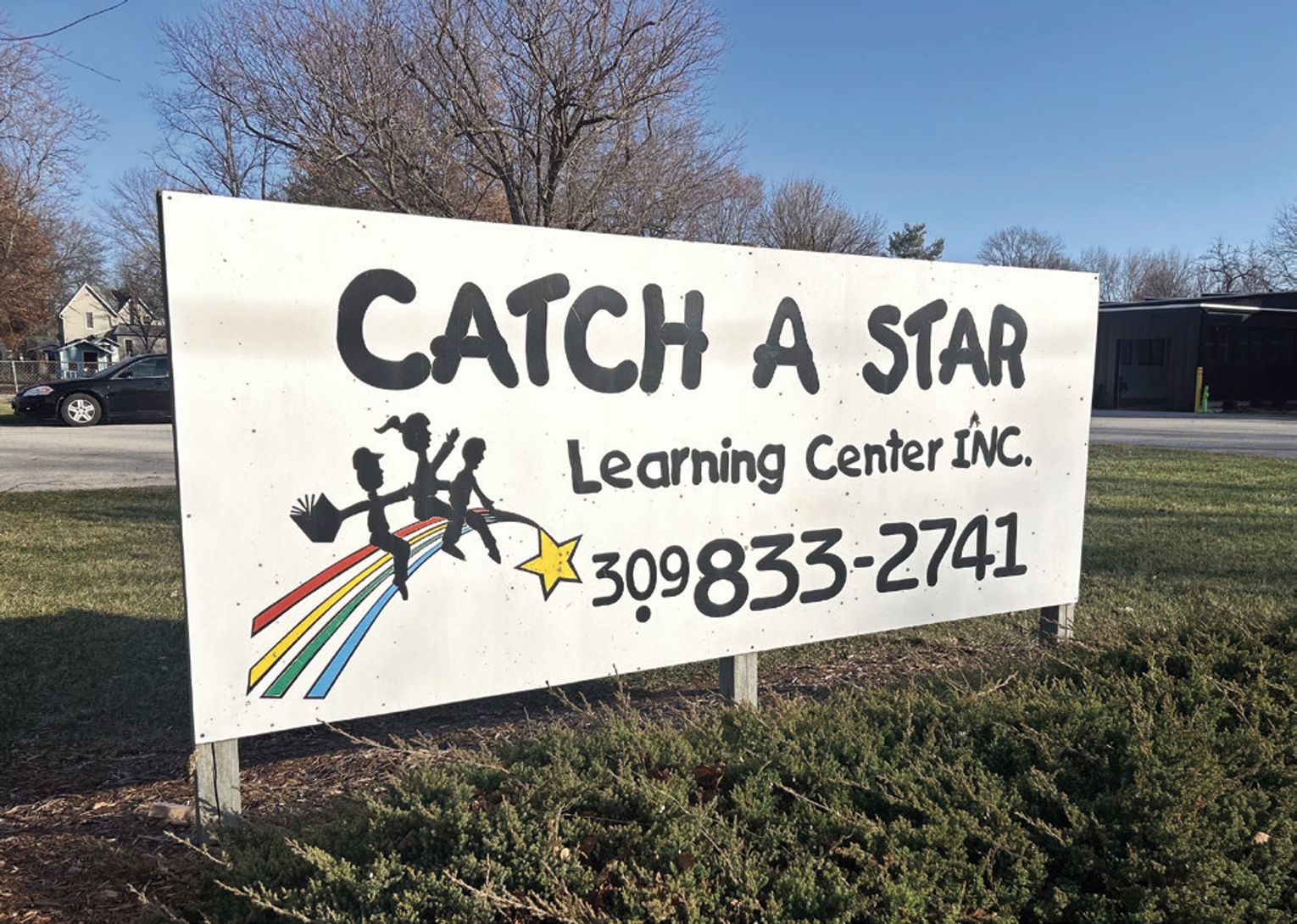
Kimberly Hare, director and owner of Catch A Star Learning Center (CAS), shares Bollinger's concerns over the announcement as CAS relies on the funding for its Child Care Assistance Program via the Illinois Cares for Kids program. Around 42 percent of Catch A Star children – roughly 72 of the 170 children enrolled – qualify under the program.
'This program is huge for helping single/separated/ divorced parents with a minimal monthly co-pay amount. They don't have to stay in a bad relationship, quit work or stop pursuing their education because they are parents. They are able to work toward a better future with the help of the daycare assistance and become independent by obtaining better jobs,' Hare pointed out. 'And when they are in the program, as long as they fall within the income guidelines, they can still receive raises at work without the fear of losing their childcare or the assistance that allows them to achieve their goals.'
In order to help childcare centers find qualified staff, the current child care program was updated so that center employees who meet the income guidelines can be approved and pay $1 a month for child care, Hare added.
'Again, this is huge for Catch A Star. Being able to offer, basically, free daycare to employees, is a tremendous benefit,' she explained. 'It is also a comfort working in the same facility as your child, though they are not allowed to work directly in that classroom. I think this gives us an advantage when someone is comparing potential job offers.'
Hare shared that New Mexico was the first U.S. state to offer free, universal child care to all residents, regardless of income, when its program launched Nov. 1, 2025. The program expands the state's existing Child Care Assistance Program, removing previous income limits and family co-payments to make care accessible to all families.
Current childcare costs in McDonough County include $285 per week for infants up to two years of age; $230/week for two-year-olds; three- to five-year-old child care is $200 weekly, while after school care is $100 each week. Summer programs typically are $200/week.
YMCA of McDonough County CEO Nick Knowles noted while the YMCA is extremely concerned as nearly 45 percent of those families served at the child care center would be impacted, the organization is waiting to learn more from its partner agencies, the Department of Children and Families Services (DCFS) and Child Care Resource & Referral (CCR&R).
Sara Mixer, executive director of Parent and Child Together (PACT) for West Central Illinois, said their program is unique as it does not receive state funding, so the impending funding freeze should not impact the Macomb center. However, the freeze will touch several other Head Start programs and community agencies that children and families rely on through the state, she added.
Other funds targeted for the five Democratic states include Temporary Assistance for Needy Families (TANF) program and Social Services Block Grants (SSBG), of which, the Western Illinois Regional Council (WIRC) based in Macomb receives SSBG funding from the state via the federal grant. According to WIRC CEO Stacy Nimmo, her organization has not yet received any direct communication on the impact; however, WIRC leadership is following the matter closely.
The Office of Illinois Gov. J.B. Pritzker issued a statement Jan. 6, pointing out that freezing $10 billion in federal funds includes the $1 billion allocated to Illinois for social services and child care. On Tuesday evening, Pritzker noted that the federal Administration for Children and Families sent letters to the State of Illinois freezing all funds for programs and services provided by the Child Care and Development Block Grant, Social Services Block Grant and Temporary Assistance for Needy Families.
The Community News Brief reached out to area representatives and senators – Norine Hammond, Dan Swanson and Mike Halpin – for a statement on the announcement that would impact agencies and organizations in their respective districts. Sen. Halpin provided the following statement: 'It is shocking, but not surprising that this federal administration would punish children and families here in Illinois. This is another example of the current federal government eroding our social safety net. I will be looking at ways to delay impact to our local providers while the state contests this likely illegal action in court.' Neither Hammond's nor Swanson's offices responded to the request for a statement.
Rep. Eric Sorensen, whose district includes Macomb, shared the following on social media: '… Singling out families in a few 'blue' states is completely un-American. We must work for the benefit of ALL Americans. We're not the 'Blue States' or the 'Red States,' we are the United States. I'll be joining my colleagues in Illinois to fight for families in our state.' Senators Dick Durbin and Tammy Duckworth also issued a joint public statement condemning the freeze.