This is the last of a threepart series about changes at McDonough District Hospital that have affected and improved its services.
Here, President and CEO Bill Murdock shares the hospital’s efforts to ensure its future in Macomb.
In nearly 70 years, McDonough District Hospital has grown from a single structure to six buildings on its Grant Street campus.
Continued expansion has led to a sports medicine and rehabilitation gym on North Lafayette Street and clinics in Bushnell and Monmouth.
However, as outpatient services increased, inpatient numbers decreased. The hospital that had 104 beds when it opened in 1958, now has 48. The average number of inpatients is 10 per day.
Many services that required spending at least one night in the hospital, including surgeries, are now outpatient procedures. However, having rooms available for patients who require a higher level of care remains a priority for MDH.
Seeking a new designation to increase funding To help secure MDH’s continued success, it is seeking Medicare’s critical access hospital status. Critical access hospitals receive greater Medicare reimbursement and access to grants that help them remain open. They are reimbursed at 101 percent of their reasonable costs for Medicare services instead of a fixed payment rate. Now, MDH receives about 50 cents from Medicare for every $1 it charges for patient care. With 50 percent of its patients enrolled in Medicare, the hospital is losing money.
The critical access hospital designation exists to ensure the financial health of small rural hospitals.
“Small hospitals don’t have patient volumes like the bigger hospitals do,” Murdock said. “If we didn't have these hospitals, people would have to travel greater distances to get care.”
There are 57 critical access hospitals in the state, according to the Illinois Critical Access Hospital Network.
To receive the designation, a hospital’s average daily patient census must be 25 patients or less. It also must provide 24-hour emergency care, which is available at MDH. The third major criterion is having a distance of 35 miles or greater to the closest critical access hospital. MDH falls short here. Memorial Hospital in Carthage is 26.9 miles from MDH and Culberson Memorial Hospital in Rushville is 27 miles away.
“[Vice President of Business Strategy] Patrick Osterman and I have been working with our legislators to see if we can get them to bend on that rule because it's critical for us to go critical access,” Murdock said. “It'll be seamless for the patient.
You won't see any difference.
It's just a whole reimbursement scheme that Medicare has devised to pay critical access hospitals a little bit more for their care.”
Opening a retail pharmacy for convenience and revenue
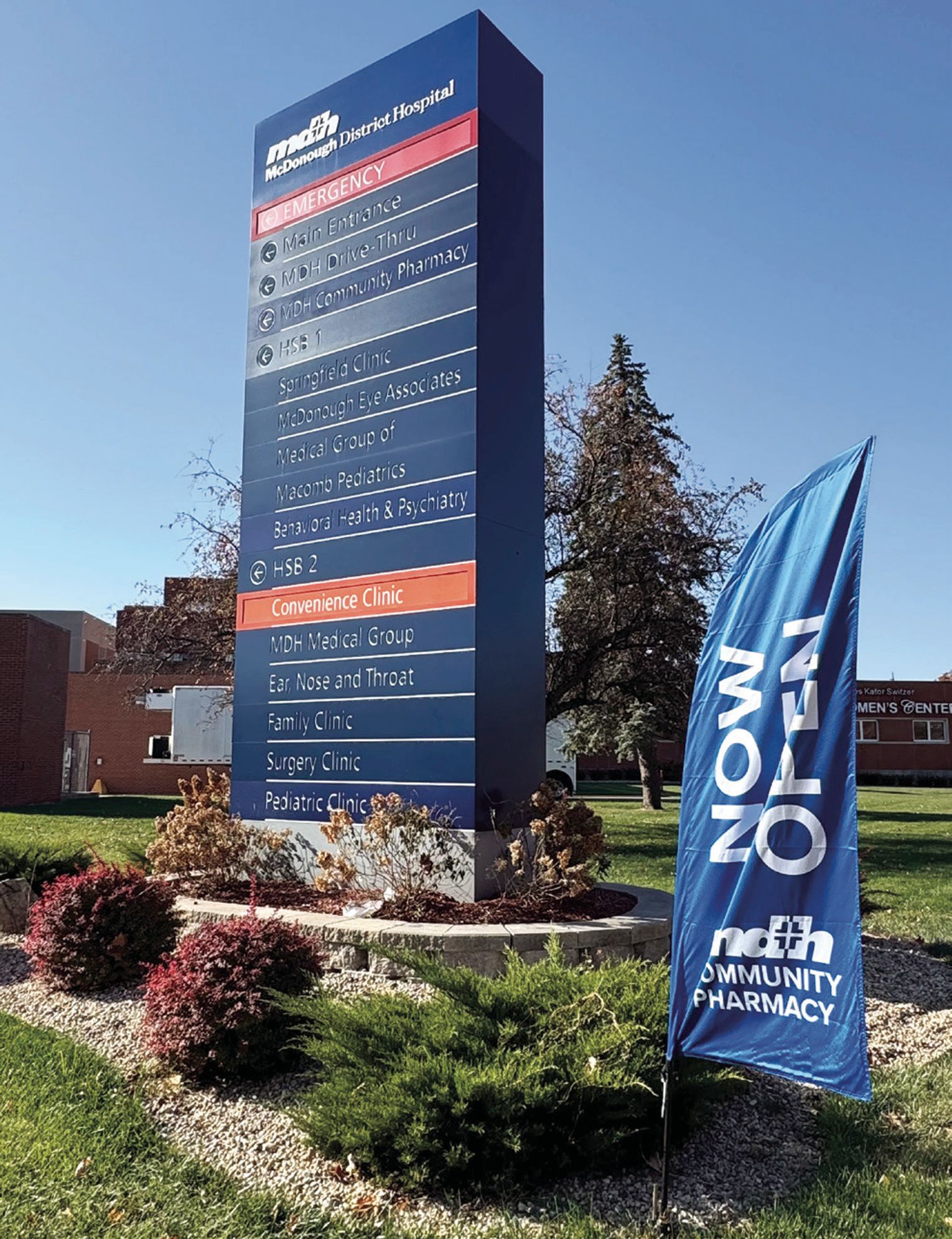
In another effort to increase income, the hospital opened MDH Community Pharmacy on its campus in January 2025. Besides providing convenience for patients as they leave the hospital or clinics, revenue from the for-profit entity helps support operations at the non-for-profit hospital.
Other retail pharmacies like Walgreen’s, CVS and Hy-Vee are for-profit businesses too.
Murdock said making pharmacy leadership changes and altering hours of operation have improved pharmacy efficiency.
“We put the right people in the right spot now, I believe, and they're taking it to the level that we needed to do,” he said. “We shifted our weekday hours from 9 to 9 to 8 to 8 to meet the needs of patients who go to the our Convenience Clinic first thing in the morning, and we expanded our hours on the weekends to 8 to 6.”
MDH Community Pharmacy also offers a unitdose packaging system for medications, which primarily is used in long-term care settings to enhance safety and monitoring.
Working together to recruit physicians and other health care providers A nationwide physician shortage that began more than 20 years ago is worsening. In 2024, the Association of American Medical Colleges projected the U.S. will face a shortage of 86,000 physicians by 2036. There also will be a shortage of nurse practitioners and physician assistants, who help fill the gap in providing health care services, especially in rural areas.
“One of the challenges we have is just getting providers to take a look at us when we’re recruiting,” Murdock said. “But we're finding that once we can get them here to take a look at us, they love us. They love the place, they love the community, the university, the town. It's just trying to convince them where Macomb, Illinois, is and why they need to locate here. But again, once we get them here, they really fall in love with the community and embrace it.”
MDH is trying a new strategy by sharing recruitment efforts for an orthopedic surgeon with Memorial Hospital. The physician would work at both hospitals.
“We thought it would look more appealing if we worked together,” Murdock said.
“We've had a lot of interest and, hopefully, we'll make an announcement pretty quickly that we'll have somebody on board.”
Murdock said Memorial Hospital competes with MDH for patients, “but we're stronger if we work together as partners. We need to work together as a region to bring the health care that's needed.”
Eliminating duplication of services in the region Murdock said MDH, Memorial Hospital, Blessing Hospital in Quincy and Quincy Medical Group are considering ways to save money by eliminating duplication of services.
“One hospital could take a service line and another could take a different service line,” he said. “Why don't we do it that way instead of both of us trying to provide the same service and splitting the margins? It's a little different mindset. How can we provide a service that is better for this region so people don't have to leave the region? We talk about not wanting people leaving our hospital for care, but we don't want them to leave the region.”
Obstetrics services is an example. MDH enhanced its birthing unit with the 2020 opening of the Doloris Kator Switzer Women’s Center, where 240 babies are born each year. Culbertson Hospital stopped providing obstetrics services in 2013, and Memorial Hospital stopped the service in 2022.
The Illinois hospitals closest to Macomb that provide obstetrical care are Graham Hospital in Canton, 38.7 miles; OSF St. Mary Medical Center in Galesburg, 52.9 miles, and Blessing Hospital, 68.1 miles.
Boosting the hospital’s cheering section “Shop local” is the theme for preserving businesses in small communities. That means choosing your community hospital too.
“People have the perception about health care that bigger is better, which isn’t always true. They think they have to travel out of town to get the level of care they think they need,” Murdock said. “I don't think people realize what a gem we have right here on our campus.
I'm not saying we have it all here, but we have a lot here.”
Murdock said a recent MDH patient who had been hospitalized in larger hospitals in the past said her treatment in Macomb was the best hospital care she’d ever had. It’s a familiar story.
“We want the community to be our biggest cheerleader, saying, ‘Hey, this is what MDH offers, and this is why you need to go here’,” he said.
For example, “going here“ means choosing MDH for cardiology services. In 2020, MDH began a clinical affiliation with Blessing Hospital to provide appointments with a cardiac nurse practitioner in Macomb. The hospital also offers CT heart scans to detect calcium buildup in the arteries. Although procedures like cardiac catheterization and openheart surgery aren’t offered in Macomb, patients can return to the hospital for outpatient cardiac rehabilitation.
“We're always evaluating new services,” Murdock said.
“We're hopeful about bringing in new services. And then on the flip side, there might be some services that just don't get utilized enough to support them.
“I can’t say enough about community support. We need everybody to be an advocate for MDH. We're going to be here. We may not look the same as we do today, but we want to stay here as long as we can and keep it going.”

One requirement of Medicare’s critical access hospital status is providing 24-hour emergency care. MDH has had a 24-hour emergency department for more than 50 years.
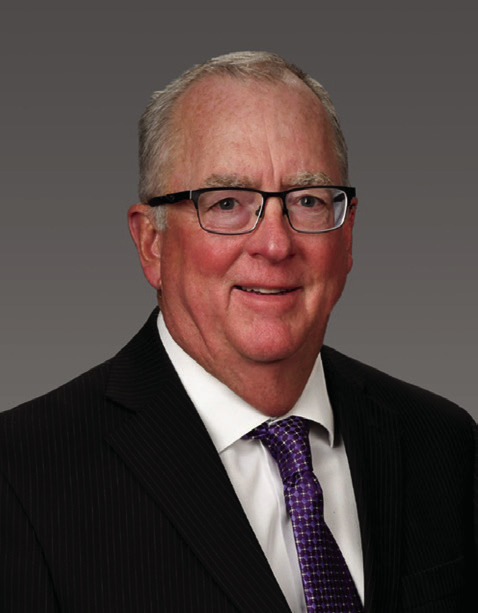
Bill Murdock