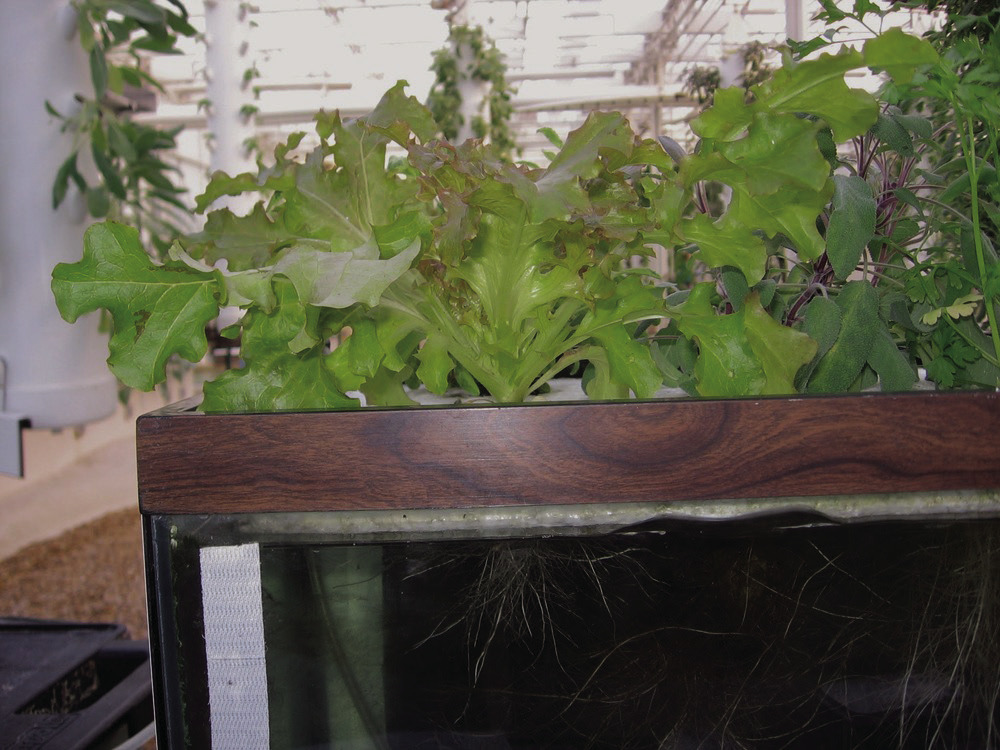
When you think of growing fruits and vegetables, you probably think about putting plants in the ground or into pots. However, you don’t always need ‘dirt’ to grow plants. In a hydroponic system, soil is replaced with a nutrient-rich water solution that provides the necessary nutrients for plant growth.
Why try hydroponics?
Hydroponic systems are more efficient than growing plants in the ground. Plants grown hydroponically often mature faster and produce more compared to plants grown in soil. It may seem counterintuitive, but hydroponics also uses less water.
Growing hydroponically also allows for more flexibility. Gardeners can grow year-round indoors and in areas where growing in the ground or in pots isn’t an option. Additionally, because plants are not grown in soil, soil-borne pests and diseases are less of a concern.
There are some drawbacks to growing plants hydroponically, though.
Hydroponic systems are more expensive to set up when compared to growing in pots or in the ground.
These systems may also require more management, such as monitoring water levels, nutrient concentrations, and pH.
Hydroponic systems There are a variety of different hydroponic systems that can be set up. Like many things, they can be rather simple or extremely complex. Here are a few options homeowners often start with: Wick system: A wick draws the nutrient solution from a reservoir into the growing medium (often perlite, vermiculite, or coco coir). This system is passive, so no electricity is required.
Deep water culture or floating raft: Plants are held in net pots and placed in rafts (foam/polystyrene) that float on the nutrient solution. The roots are submerged in the nutrient solution. Even though these are passive systems, they need an air pump and an air stone to keep the roots oxygenated.
Nutrient film technique (NFT) and ebb and flow: These systems are more complex. They utilize pumps to pump nutrient solution from a reservoir to the plants. The nutrient solution is then recycled for future use.
Getting started at home Like any new endeavor, it’s best to start small. You can build your own system or purchase one. Many commercially available systems geared towards homeowners come with grow lights integrated into the systems.
If growing indoors, leafy greens (lettuce, kale, spinach, etc.) and herbs are good plants to start with. They grow quickly and take up minimal space.
Plants grown in a hydroponic system require a substrate to support their growth. Like hydroponic systems, there are numerous options available. Some commonly used substrates include coconut coir, perlite, vermiculite, rockwool, and expanded clay pellets.
Depending on the substrate or system being used, containers such as net pots may be necessary.
Finally, you’ll need to select a nutrient solution to use. While you can formulate your own hydroponic solution, there are pre-made solutions available, many of which are even formulated for specific crops.
Once your system is set up, be sure to check water levels, keep the solution fresh, and monitor the pH (most plants prefer a pH range of 5.5–6.5). When you're done harvesting your crop, make sure to clean your system between crops to prevent algae and salt buildup.
Good Growing Fact of the Week: The word hydroponics comes from two Greek words - ‘hydro’ meaning water and ‘ponos’ meaning labor. This term was first used in 1929 by Dr. William Gericke, who is considered the father of modern hydroponics.