Each year, Illinois passes new bills that usually go into effect Jan. 1. Among the statutes are often laws that can impact local healthcare providers. Two such laws involve McDonough District Hospital, and the staff and administration stand ready to comply to ensure quality care and service.
Under House Bill 3489, pharmacists are now allowed to dispense contraceptives, including emergency contraceptives, without requiring a doctor's prescription. For Pharmacist Shane Miller, who is the supervisor of MDH's Community Pharmacy, this is a welcome bill that ensures access to not only emergency contraceptives, such as Plan B, but general birth control medications, such as 'the pill.'
'This new bill is very important, especially in a college town like Macomb where there is limited access to family planning resources,' Miller explained. 'We will have a pharmacist on staff who will be trained to counsel and assess patients to ensure we safely dispense birth control, particularly if someone is medically complex.'
Miller noted that his staff will begin dispensing birth control by the summer months, following the completion of the training protocol. Plan B will continue to be dispensed on a walk-in basis, and like the emergency contraceptives, individuals, whether they are regular clients of MDH's Community Pharmacy or not, will be able to walk into the pharmacy to get their birth control needs met during the pharmacy's business hours. While this is a necessary service in Miller's opinion, one thing currently 'up in the air' is the cost to both the patient and the pharmacy.
'The cost is the wild card right now. We don't know exactly how insurance companies will cover this as they do not currently recognize pharmacists as health care providers,' he shared. 'Insurance companies will determine patient cost, but as we are a notfor- profit organization, we do have programs to help those determined to have a financial need pay for the assessment and visit. We are here as a service to our community.'
As for other costs related to prescriptions in regard to the changes in the Affordable Care Act and Medicaid, Miller said that unfortunately many patients will likely see their overall costs go up for insurance and medication copays.
'Traditional Medicaid patients will be insulated; however, those patients with income-based marketplace insurance will be impacted,' he concluded. 'It makes me sick that we're going in the wrong direction with regard to affordability.'
Another bill related to health care is House Bill 1312, which requires hospitals to establish protocols for immigration agents' interactions with patients, mandates policies for verifying agents' authority, protects patient privacy and prohibits disclosure of immigration status. According to MDH's Vice President for Business Strategy Patrick Osterman, the county hospital already has in place protocol regarding disclosing patient information to law enforcement, so complying with the new bill was simply adding a section about immigration agents' access.
'We will not disclose information about our patients, including their immigration status, to law enforcement personnel or immigration agents without a valid subpoena, order or warrant issued by judge, nor without a review by our privacy officer and HIPAA compliance,' Osterman explained.
Furthermore, hospital staff cannot ask patients or their family members about immigration status unless medically necessary, he added. Staff also cannot disclose immigration status, citizenship or nationality immigration to Immigrations and Customs Enforcement (ICE), Department of Homeland Security (DHS) agents or Customers and Border Protection (CBP) officers without a judicial warrant.
A new addition to MDH's policy related to law enforcement officials includes verification and documentation of law enforcement credentials, which includes scanning their photo ID and their badge/department ID. The hospital also will provide a waiting room for law enforcement personnel separate from the emergency room in the event they need to question individuals in regard to a potential crime or situation.
'Law enforcement cannot walk in off the street to ask if we have a possible suspect in our care,' Osterman pointed out. 'We work closely with law enforcement, of course, as they are our community partners; however, if someone comes in to seek care and is not in police custody, we cannot disclose information to agents. We can provide a waiting area for law enforcement personnel, but we cannot say who is here seeking treatment.'
Osterman also stressed that MDH will not turn anyone away for medical care, regardless of their status.
For a full list of new laws taking effect Jan. 1, 2026, including how area representatives and senators voted, visit ilga.gov.
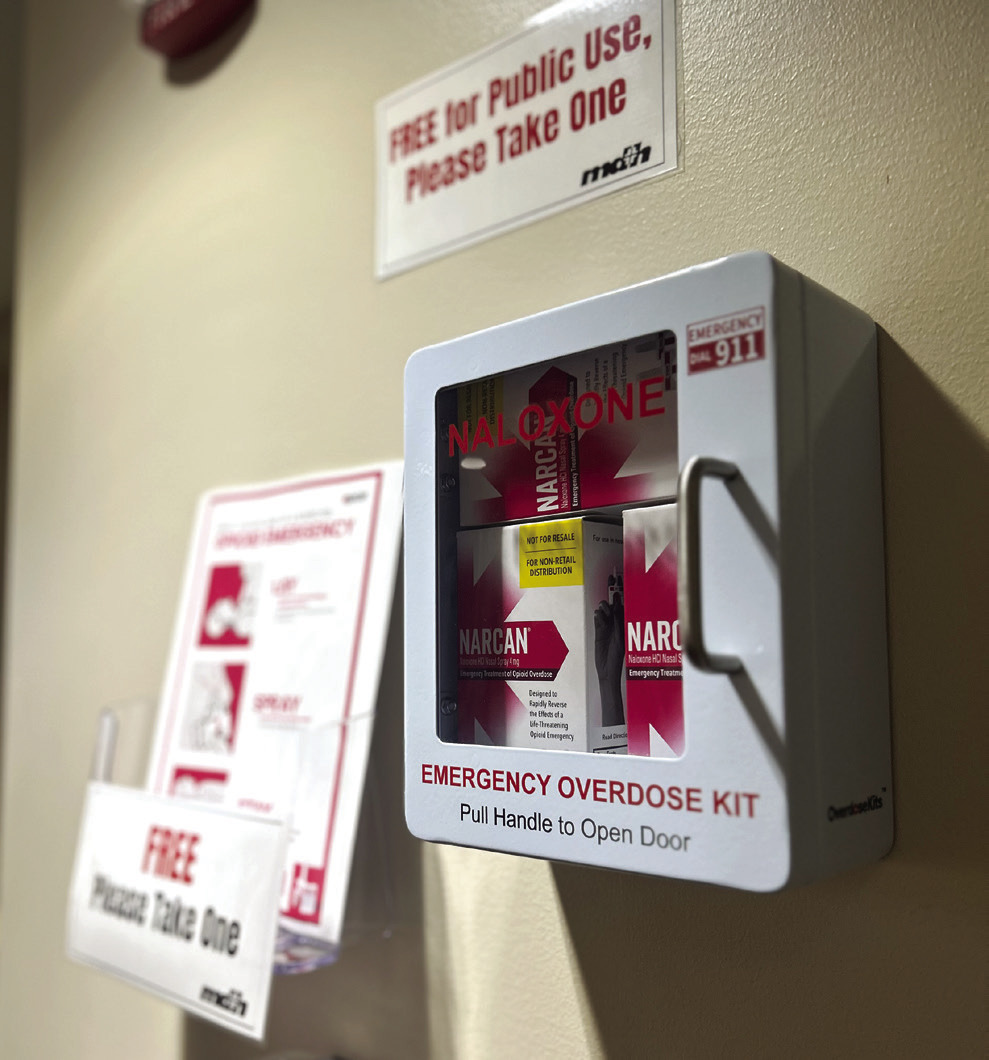
MDH provides free Narcan in its Community Pharmacy, as well as in the ER Department's vestibule