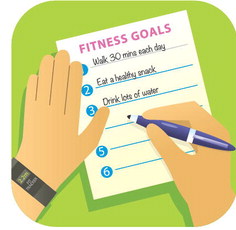
The number one new year's resolution in the U.S. is to exercise more, followed closely by eating healthier and losing weight {Statistica}, with the fitness industry seeing a significant annual surge in January, sometimes over 40 percent compared to December, as people try to make good on their goals for the new year. The YMCA of McDonough County's Fitness Director Tanya Schmidt offers this advice: 'simply start.'
'The hardest part is showing up and committing. Take the first step by walking into the gym, signing up for a class you have been curious about or starting with something you feel comfortable doing. Focus on building the habit of showing up rather than trying to do everything perfectly from day one,' she pointed out. 'That first official step toward commitment is often the most difficult. Once you take it, everything becomes more manageable.'
Let's Get Physical
So how does someone go about their fitness journey, especially if they're new to exercising, or haven't exercised in some time? Choose something you genuinely enjoy, Schmidt shared. The most successful fitness program isn't one that someone thinks they should be doing, but the one they truly want to show up for as enjoyment builds more confidence, consistency and long-term success.
'When people find something they enjoy, it often naturally leads to exploring and advancing in other areas of fitness and wellness. For example, if someone enjoys pickleball, they may become motivated to improve coordination, endurance and strength to enhance their game,' she explained. 'Start with the activity you enjoy at a level that feels right, and allow your interests to grow organically. Avoid pressuring yourself to do everything at once. That is often when people burn out and abandon their goals.'
Just like doing something one enjoys, staying motivated takes practice and consistency, and as interest builds, motivation builds, Schmidt noted. But, it's also important to remember that it's normal to feel less motivated at times, but when the activity itself is something one enjoys, discipline becomes easier.
'Fitness is not linear. There will be days when you feel stronger and days when you feel fatigued due to sleep, hydration or stress. This is normal and should not be discouraging,' she said. 'Tracking progress over longer timeframes, such as monthly rather than daily, can be far more encouraging. Look at how your endurance, strength, balance or overall ability has improved from the beginning of the month to the end, rather than focusing on day-to-day fluctuations.'
A few other things to remember, she pointed out include starting small and building gradually, and that movement does not have to begin in a gym. Simple acts such as walking, taking the stairs, parking farther away or doing short workouts at home all count. And above all, consistency matters far more than intensity at the beginning.
'Facilities like the YMCA offer a welcoming environment, structured programs, group classes and professional support that can make getting started feel less intimidating and more enjoyable,' Schmidt explained. 'Community- based fitness can provide accountability, variety and encouragement for people at all fitness levels.'
'Scale-ing' Back
Schmidt stressed that getting fit and into better shape is not about the number on the scale. Weight naturally fluctuates, and muscle weighs more than fat. Instead, pay attention to changes in overall body composition, how your clothes fit and how you feel physically, she pointed out.
'More importantly, focus on your quality of life. Are you more active? Do you have more energy? Can you lift more, move more comfortably or keep up better with daily activities,?' Schmidt said. 'These are the most meaningful indicators of progress, and the rest will follow over time. Set realistic goals at three, six, nine and twelve months. Depending on individual circumstances, progress may take more or less time. Your journey is personal and should never be compared to someone else's.'
Exercise: It Does a Body – and Mind – Good Besides improving physical health, exercise increases endorphins and other mood regulating chemicals, which can significantly benefit mental health. Physical activity is often recommended for individuals experiencing depression, particularly when done in the morning, as it can help boost mood, energy, and confidence throughout the day.
'For individuals with anxiety, exercise can help regulate stress responses by burning off excess adrenaline and tension,' she said. 'Finding the right time of day to exercise, especially during periods when anxiety tends to peak, can be particularly effective in restoring emotional balance and improving overall wellbeing.'
ROYGBIV: Eating the Rainbow (and no, that doesn't mean Skittles) While hitting the gym to strength train or joining a Zumba class or just making a daily walk a priority, as the old saying goes 'abs begin in the kitchen.' In addition to moving your body, a balanced diet is key to becoming healthier, according to Schmidt. She generally recommends avoiding fad diets, as they are rarely sustainable long-term and can result in a rebound effect once stopped. A well-balanced approach that includes carbohydrates, starches, proteins, fruits and vegetables is the foundation people can always return to, she noted. And while the pounds may seem to melt off at first, rapid weight loss is often the result of losing water weight and inflammation, rather than true fat loss, that's why the weight often returns when carbohydrates or starches are reintroduced into a diet.
'Sustainable nutritional weight loss should be gradual,' Schmidt added. 'Slow and steady truly does win the race.'
Before embarking on a fitness regimen, including dietary changes, Schmidt encourages individuals to see their physician first, particularly if they have health conditions that could require a specialized diet. But for almost anyone, eating a variety of fruits and vegetables, often referred to as 'eating the rainbow' helps ensure a broad range of vitamins and minerals. Try to minimize processed foods as much as possible. Even foods marketed as healthy can contain preservatives and additives that are not ideal for long term health.
We've Only Just Begun (or Starting Over) It is never too late to start, and it is never too late to start again, Schmidt stressed. Setbacks are part of the process, and missing a day, a week or even a month does not mean failure.
'Do not wait for the next New Year or the perfect time to restart,' she concluded. It is okay to adjust your pace, lower intensity or ease back in. The sooner you return, the faster your body will regain what you previously accomplished. Progress is resilient, and your body remembers more than you think. And most of all, give yourself grace.'