[Part 1 of this story focused on the operations of a typical Fire Protection District in McDonough County. Part 2 looks at the human side of people who willingly put themselves in harm's way.]
About Those Brothers
Having your blood brother beside you through perilous firefighting or medical emergencies has to be stressful. That's what gives great depth and psychological insight into the stories of the Fire Chief and the EMS Chief for Colchester, Mike and Rob Phelps.
Rob said that he always knew he wanted to be a police officer or firefighter as soon as he graduated from Colchester High School in 2000. He joined in May of that year, but by July he was thrown into one of his most challenging firefighting experiences. 'On my first few calls, I was new, so I didn't do a whole lot,' he recalled. 'My first fire call was the Chandler block fire (corner of Lafayette and Calhoun streets just off the Macomb square) on August 12, 2000. That was a significant fire. They had to call in all the other neighboring fire districts, even from Monmouth.'
Working his way up through the ranks to Assistant Fire Chief, Rob was elevated to Fire Chief in July 2016. He said, 'I don't know that I really wanted the job, but I'm glad I did and would do it all over again.' Though a 'fulltime volunteer Fire Chief,' Rob's regular career is serving as a McDonough County Sheriff. He has been working full-time at the Sheriff's office since 2011 and is currently serving as Lieutenant of Investigations since 2022.
Michael, the young brother, has had a more circuitous journey. Currently, he is a full-time supervisor for Life Guard Ambulance Service stationed in Macomb, but he too has worked his way up through the ranks of EMS to the top classification of Paramedic. Back in high school, he watched his older brother get involved in the local fire district and admired the brotherhood of those he knew who served. He thought 'I can do that.'
After high school, Michael moved to Minneapolis, Minnesota, where he earned his EMT license. He started out as a dispatcher. 'I really liked it, but I felt that every call I took, I wanted to leave there and go help them.' He discovered he wanted to be out working in the field, which he did for the next 10 years. Moving around through Minnesota and Illinois and Kansas City, Missouri, and briefly in Schuyler County, he said he 'watched a bunch of old, jaded paramedics treat people inappropriately and not the way I felt individuals should be treated. I got my paramedic license so that I could curb that. I was the one who could make decisions now. That pushed me on to being an advanced provider because I felt people weren't being treated right.'
Michael attended Lincoln Land Community College in Springfield. He then had to finish a field internship that amounted to 550 hours of unpaid work, including hospital and clinical hours and working out in the field with ambulance calls. (Side note: We learned that a distinction is made between EMT and Paramedic. The latter requires much more training and is considered the epitome of the profession. Michael politely reminded us that he was a Paramedic as well as an EMT.) When he moved back to the Colchester area, Michael said that he felt the need for a more pronounced EMS side for the CFPD and that it should be more progressive.
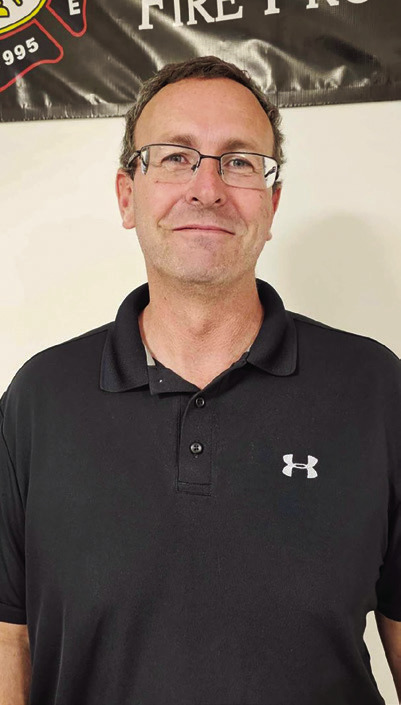
Rob Phelps
'I can't be here 24/7, so I want [the EMTs] to know everything I know so that they can give that kind of care when I'm not here. I want them to think on their own and make those hard decisions.'
As with most first-responder professions, there is an abundance of paperwork. Reports must be filed at both the state and federal levels. Since funding comes almost exclusively through public taxes, restrictions and transparency create another level of 'volunteer' work. Rob said that he really appreciated when Michael moved back into the area because his advanced medical skill set allowed him to shift some of the EMS burdens on to Michael's shoulders. Michael groaned when citing the reporting, equipment inspections, surprise visits, and audits as well as the consequences of having the system shut down if not in compliance.
As brothers, Rob said that he and Michael have their ordinary sibling squabbles, but they are close as families. 'We pretty much have the same vision (for the CFPD).
We want to provide the best service to residents of the community. Our families live here,' Rob said, 'so we have a high expectation for our department. You have to want to serve your community.'
First Responder Burden For an insight into what it's like to cope with the high stress of first-responder situations, Rob and Michael both presented a different angle than expected. The tone of our conversation began to shift when they were asked about what might happen to their brother during a call. Neither seemed that worried about the dangers each face. All volunteers share the same 'band-of-brothers' mentally. 'You don't think about it,' said Rob. 'You do your job.'
However, both expressed much more concern for what each has to encounter in their regular jobs.
Rob knows the kind of life-threatening situations paramedics face in metropolitan areas when Michael worked in Minneapolis and Kansas City. Likewise, Michael worries about the daily 'what ifs' that face police officers when they are involved in arrests and apprehensions. Each has been placed in what Rob called 'doozy' situations even here in the Macomb area. He said that paramedics now wear bullet-proof vests when out on a call.
Michael said that he gets more stressed when Rob is working at the Sherrif's office rather than in the fire department. As fire chief, Rob is more of a leader as the commander. He is less involved in the actual firefighting situations. Likewise, Rob prefers to have Michael more on the outside making the decisions when answering calls. 'He's seen [stuff].
I want him outside when other people are on the inside. Yes, I worry [about his firefighting duties] but not as much as when he's on his other job.'
That brings us to something few of us consider about first-responders — the psychological effects of handling some of the most traumatic situations outside of combat. It wears on you; you really can't shut it down when the event is over. If you're a 24/7 volunteer, you also carry your job with you. Michael said, 'I don't take anything for granted (as a paramedic). I walk into every house with my guard up, checking things out. I've been in many scenes where people pull out guns, knives. I've seen other paramedics be severely injured. It's kind of like PTSD in the military.'
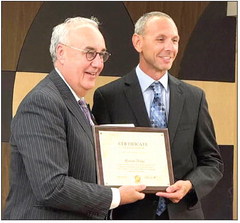
Michael Phelps was honored at the 2025 McDonough County Quality of Life Award, pictured here with Mayor Inman.
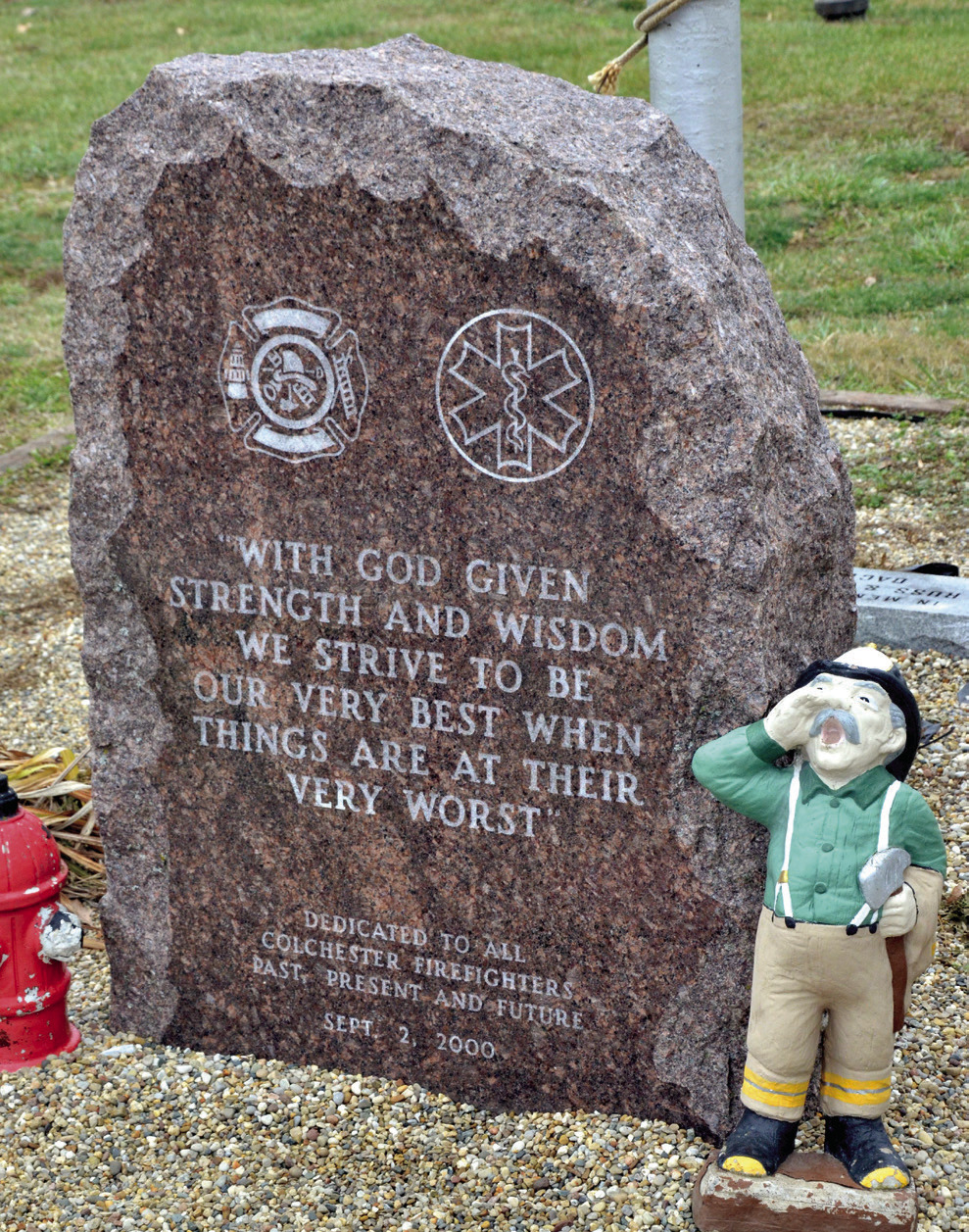
Memorial stone honoring members of CFPD
Rob added, 'We see just as much (stuff) as any other first-responder department does.
We've been to the fatal car crashes. We've been to the shootings.'
The Colchester Fire Protection District has a chaplain as part of their team. The role is currently being held by Jim Clayton, pastor of the Colchester Methodist Church.
Chaplains rarely go out on calls. They may be asked to assist in school bus related incidents or school shootings where counseling is needed. Instead, the chaplain may be more vital for the firefighters themselves rather than for victims of fires or accidents. Sometimes, a responder needs to decompress and someone to talk to.
When asked how responders handle stress, Rob said 'We're all just ...' and then hesitated. Michael immediately interjected 'Cynical,' meaning that 'we've seen so much [stuff] that it doesn't really bother us any more.' But then Rob said, 'I would say it doesn't, but it affects you in different ways.
We may not think it affects us, but people around us can see that it does.'
Rob recalled one of first calls as an EMT involving the beating death of a two-yearold girl. 'I'll never forget that. It just burns in your brain. There are certain things you do or events that just trigger something like that and bring it all back. I know Michael has had to deal with the death of a four-year-old who was murdered in Kansas City. You try to block it out, but it never goes away.'
Both Rob and Michael emphatically said that these traumatic experiences are common for all responders. 'The other fire district (personnel) have the same types of calls, the same equipment issues, the same training, the same vibrating pager 24/7.
That's what a rural fire department is. A lot of people hold you to a higher standard and expect you to do the same thing a full-time fire department should do, and they should.
We do the same things they do. People don't really understand what it's like.'
Michael immediately chimed in, 'I don't know how may times I've heard that. People come on and spend a few months, and once a year goes by, they're like, 'I had no clue what this is about.' All the hours of training, the demand, the sleepless nights, the mental stress.' Rob concluded our conversation by saying, 'We've dedicated our lives to this. It's stressful, its time-consuming, it's overwhelming. And it's humbling.'
Maybe now you have some idea of what people in the heavy canvas coats and big floppy rubber boots and distinctive helmet while snuggled in the cab of a bright, shiny red fire truck have to go through to merit that role.