The days of the bucket brigade are long gone — groups of local citizens banding together to battle blazes.
Today, fire fighters face much more challenging obstacles in protecting their communities. However, the same sense of brotherhood still exists.
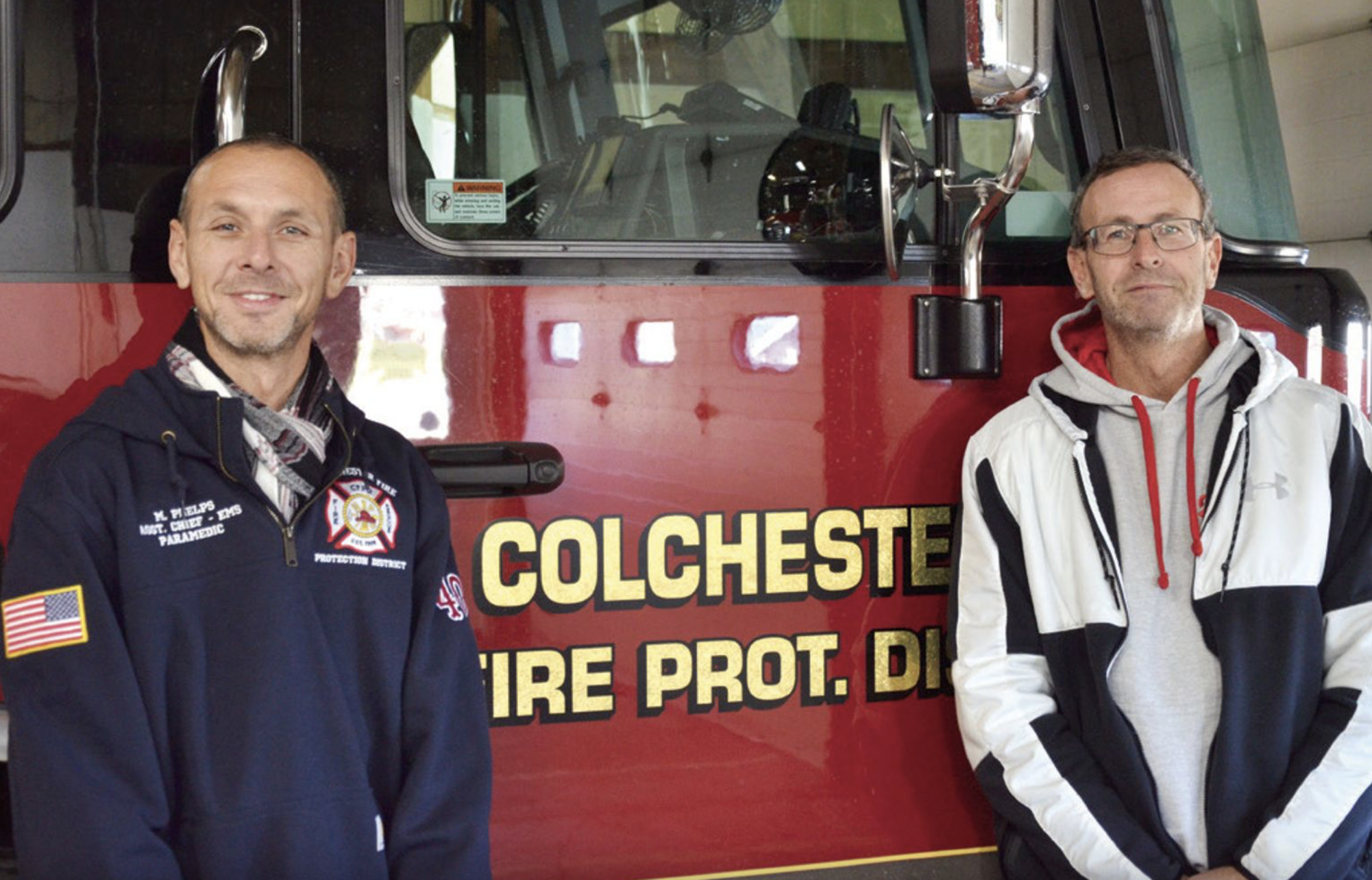
That’s especially true of the Colchester Fire Protection District (CFPD) with brothers Rob and Michael Phelps as part of the organization’s leadership.
The District
The Colchester Fire Protection District, its official name, was first established in 1995 and funded through property taxes. It covers 144 square miles of south central McDonough County serving territories in Colchester, Chalmers, Tennessee, Emmet, Lamoine, and Bethel townships as well as portions of northern Schuyler County and eastern Hancock County. Operating out of facilities in downtown Colchester, the CFPD currently maintains a crew of 25 volunteers with an operating budget of around $380,000 dollars, mainly from tax assessment. Donations, fundraisers, and memorials account for a small portion of the budget. Therein lies the challenge for this district as well as all the other districts in the area.
At present, Rob Phelps is the Fire Chief while his younger brother (by two years) Michael serves as Assistant Fire Chief, mainly focusing on emergency medical services. Rob indicated that when he first joined after graduating high school in 2000, the department averaged about 120 calls a year. Today, that number has jumped to 375 as of December 18, meaning firefighters average over 30 calls a month, or more than one a day. However, Michael said that of those calls, 85 percent are now for medical services — ranging from stubbed toes to fatal incidents.
Rob suggested that a number of factors contribute to this increase: a less healthy, aging population; changes in Medicare and Medicaid and insurance coverages; people placing more calls for less severe situations. That puts more burden on the ambulance and EMTs rather than on the firetruck and fire fighters, which was the original purpose for the district.
Rob described the process when volunteers first receive calls on their pagers. They rush to the firehouse where he and the leadership team determine what personnel is available as well as what vehicles should be sent and with what equipment. When a call comes in, a 911 dispatcher notifies CFPD and the closest adjacent fire district as well as the Life Guard ambulance service. Michael stressed that there is Standard Operating Procedures, but it often has to be modified depending on who is available to answer the call.
The leadership hierarchy is made of the Chief, the Assistant Chiefs, and the Captains. Whoever is the senior firefighter answering a call makes the ultimate decisions of what vehicles and equipment is needed. A TV screen in the firehouse registers who is responding, but if only three people show up, then previously assigned duties have to be carefully adjusted. Some firefighters aren’t fully trained to enter a burning structure; the main line fire truck has only a couple of qualified operators; and since medical emergencies predominate, enough EMTS may not be available.
If the call is only for medical assistance, the rescue squad doesn’t require any special equipment. Responders can arrive with the equipped rescue vehicle and in street clothes to tend to the emergency. All these parameters have to be assessed in scant minutes, much like battlefield triage.
“Any time we get called out to a medical response, an ambulance has to come out too,” Rob said. “We are only able to provide Basic Life Support (BLS) as opposed to Advanced Life Support (ALS). If the call is for a stubbed toe, you’re tying up an ALS service that might be needed for something more severe.” This changing landscape of services from fighting fires to treating injuries accounts for many of the problems local fire districts are trying to solve.
That’s why the CFPD is the only fire district in the county to have instituted, through a referendum in 2014, a separate EMS tax assessment in tandem with a fire protection assessment.
That has allowed them to significantly upgrade the kinds of medical services they can provide while maintaining and improving their fire fighting capabilities.
Recruitment and Training
Both Rob and Michael stress the need for volunteers. While they’ve had an increase in membership during the last few months, volunteers are in great demand. Michael noted that when he joined in 2017, the crew numbered only 12 but has now expanded to 25.
Rob explained that most volunteers aren’t employed in the city of Colchester. When a call goes out, they have to travel from other places of work, if they are able to do so. There are no specific background requirements to becoming a member of the department, only, as Rob joked, having a driver’s license, no criminal record, and a pulse. All training and equipment is provided by the district without any charge to the volunteer.
Much of the training is done in-house in Colchester.
Michael, as a national certified paramedic teaches the First Responder and EMT classes. Macomb has facilities available for additional training, and the department sends members to the Illinois Fire Service Institute in Champaign, Ill., for more advanced training. Members have a probationary period and have to meet a checklist of skills, and they regularly meet on Monday nights for three hours of training. All equipment is provided by the department, though some members may choose to purchase some “cool tools” on their own.
These volunteers soon learn how time-consuming serving as firefighters can be.
They are on call (when available) 24/7/365. Certainly this puts a burden on family and social life. But — get this — firefighters are compensated for their talents — a whoppin’ $15 a call (equivalent to minimum wage flipping burgers) for who knows how long regardless of weather or hour of the day. All to put their lives on the line and to handle potentially horrific situations.
That’s what it means to be a volunteer fire fighter. As Michael said, “You put in all that training beforehand to get certified to go into that burning house for practically nothing, except for the reward of saving someone’s life.” That’s why being a volunteer firefighter might be one of the highest callings for an individual in her or his community.
“We hope that readers of this article will understand what we do and peak their interest in getting involved,” Rob said.
Tools of the Trade
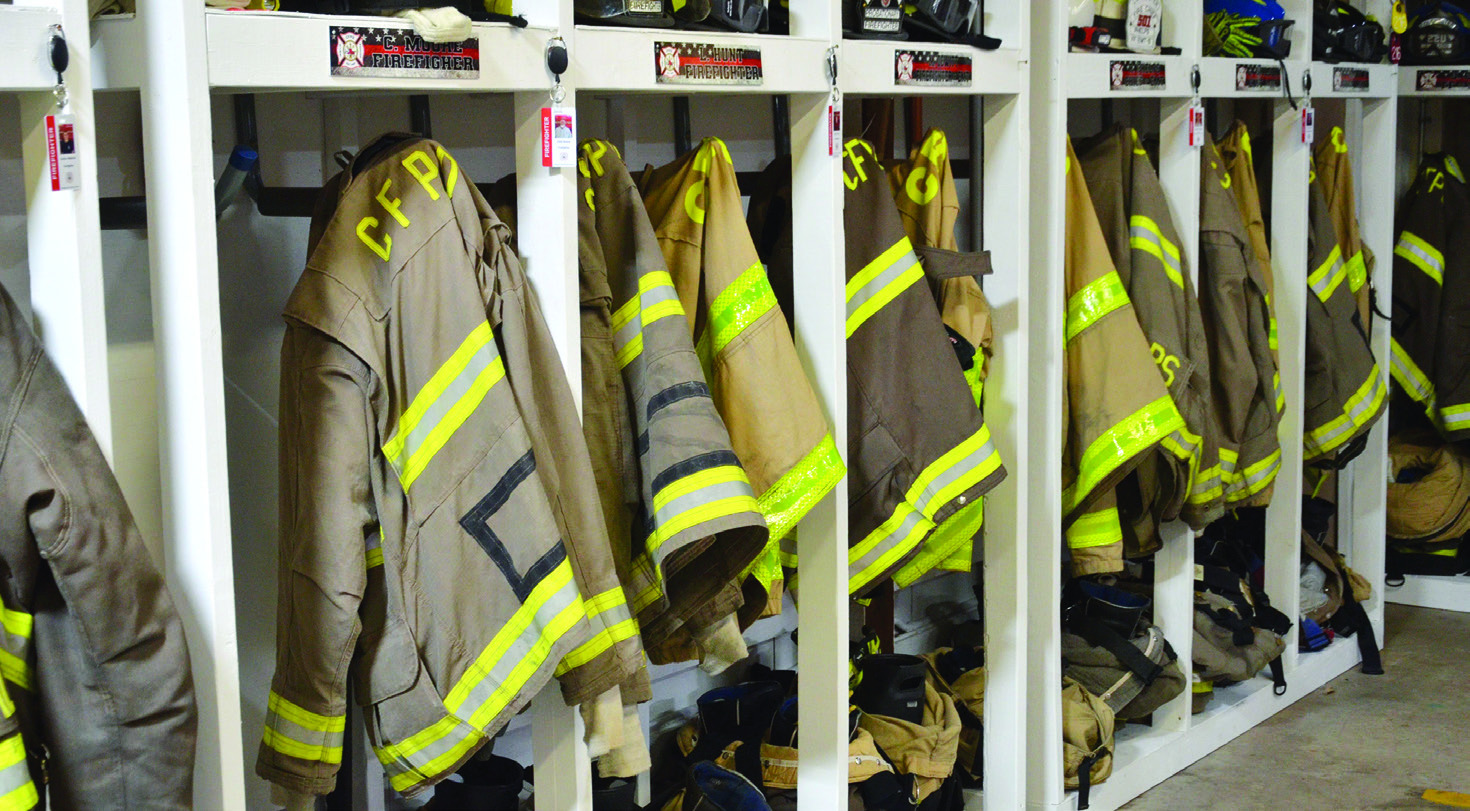
Aside from all the macho gear firefighters get to wear, volunteers have a much more technical collection of tools to increase efficient and service. One of the issues Rob has noted in recent years is the increase in the number of “lift assists” — situations in which obese patients have to be lifted, either by falls or simply from bed. No matter how sturdy a firefighter may be, it often takes more than two to lift these patients, if two are even available. An inflatable “lift assist” pad is now used to bring fallen victims to a sitting position.
The department also has acquired a drone with AI capabilities for aid in gaining an overview of structural or field fires as well as for location and tracking of lost individuals or fleeing perpetrators. Because of the EMS tax base, the department was able to acquire a Lucas machine for providing manual CPR and an advanced cardiac monitor that transfers EKG data directly to McDonough District Hospital for analysis.
It’s the big red firetrucks that typify most people’s impression of a fire department. These vehicles and all of their special features don’t come cheap. Rob said that their main line engine cost $308,000 in 2014 when they traded for it. Today, that same vehicle would cost over $1 million, and they’d have to wait five years to get it. The nation-wide demand for suitably equipped fire engines plus the supply- chain disruptions caused by COVID-19 all contribute to the delays and increased costs. Replacing their current rescue squad van, usually the first on the scene, would cost over $300,000. Other pieces of necessary equipment are two Scott airpacks, which cost $29,000 for the two, and vehicle extrication tools, which cost $39,000. All that gear, all that training, all that specialized equipment, all that ridiculous compensation of $15 per call is paid for through the community’s tax base.
Rob and Michael have goals for the upcoming years. They’d like to get a few of their current members (volunteers) to enroll in an advanced EMT course, taught by Michael. This ranking fits between a regular EMT and a paramedic. It would allow the department to upgrade their licensing for more advanced services.
“The quicker we can provide advanced care, the better chance the patient has for survival,” he stressed.
Most of us take for granted the risks emergency first responders face in terms of personal safety and time commitments. The next time you hear those sirens blaring in your community, say a prayer for those individuals rushing to the aid of their neighbors.
Continues next week with Part 2 — The Price of Service.
Insight into the human elements that make up the character of first responders, especially the impact on brothers.