Bus Routes, Pulpits, and Classrooms
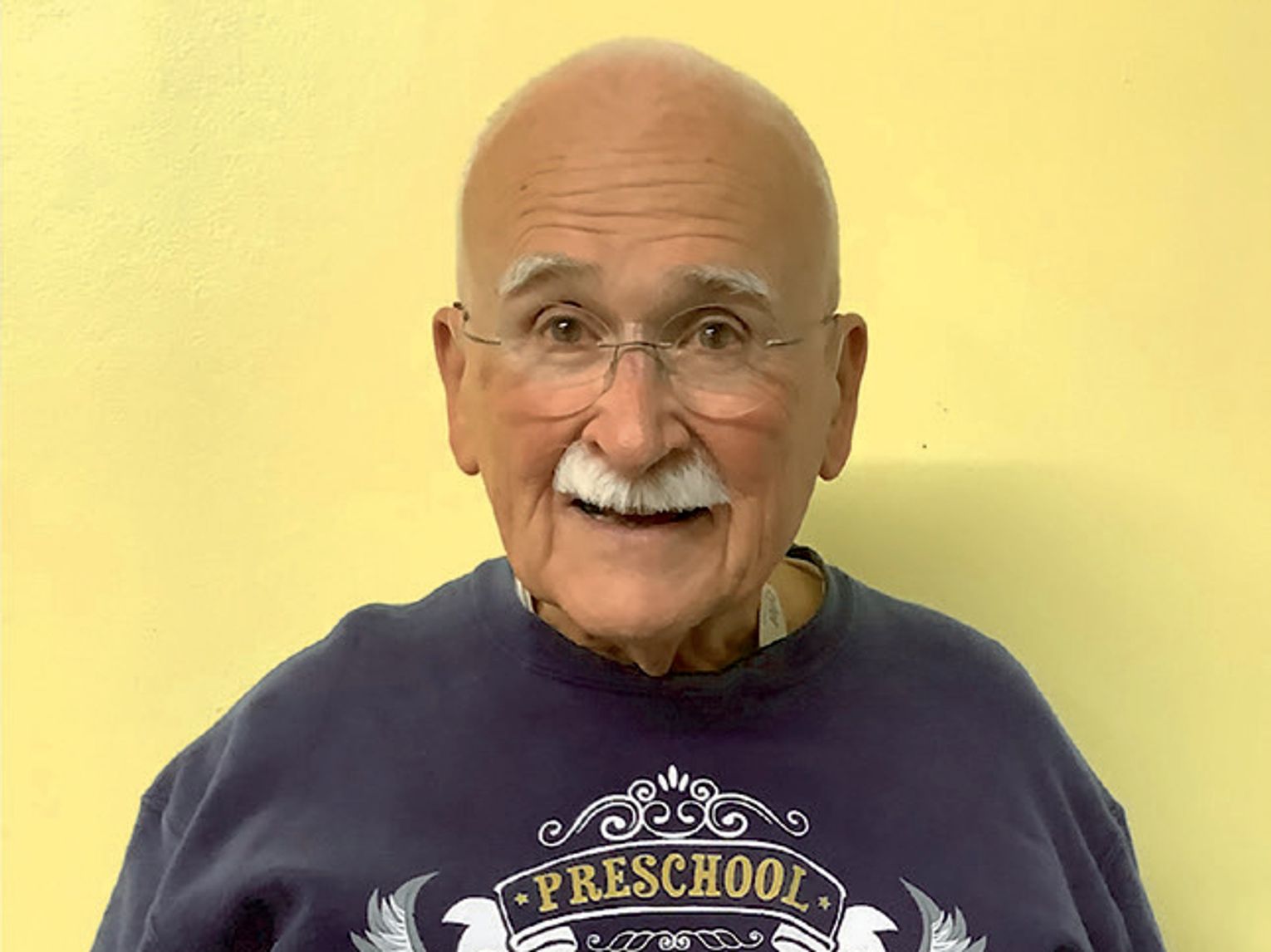
In today’s economy, some people have to rely on more than one job to make ends meet. But what would it be like to juggle three careers simultaneously? For an answer, one might want to have a cordial chat with A. Lee Unger.
Back Story
To understand the multi-career life of Lee Unger, one has to go back to his early years. He comes from Schuyler County, specifically. The eldest of six children to Edwin and Lorraine (Bunfill) Unger, Lee attended Ross Grade School (a country school near the present day Rushville Treatment and Retention Facility) for 1st through 8th grade. His freshman year was at Rushville High School, but then the family moved to Ozark Bible Institute and Academy in Ozark, Arkansas. His father, a farmer, was hired as farm manager for the Institute, and his mother was a teacher at the academy where Lee schooled for his sophomore year. The family then returned to the Rushville area farm for his junior year. But another move saw the family at Farmer City, Illinois, for Lee’s senior year.
By happenstance, during Lee’s summer at Ozark Institute, he attended a church camp. Also attending was 15-year-old Glenda Fosdyck and her younger sister Kay. They were from Macomb and had traveled by train, by themselves, to participate in this camp. Their father Dale was a preacher in the Macomb area and fond of the Ozark Institute, which he had attended once. It was there that Lee first met Glenda.
“I was smitten, but it took Glenda longer! We broke it off after a few months, and got back together in 1964.She was the only girl I ever dated!”
Now, about those three careers.
Transportation
Just about anyone who has driven a school bus in west central Illinois over the last couple of decades has gone through mandatory training under Unger’s direction. For Lee, the process of becoming an Illinois certified school bus driver instructor came at a fortuitous time. He was serving as safety coordinator for First Student, the former bus contractor for Macomb School District, when the official Regional Office of Education (ROE) instructor was retiring. He mentioned to then Regional Superintendent Bob Baughman that he’d be interested in taking on the role and was encouraged to do so.
The state of Illinois has very stringent regulations for both instructors and bus drivers. Lee had to first observe someone teaching a bus driver certification course as well as a refresher course for drivers already certified, which he did at Pekin. Then he had to be observed teaching classes — the basic class at Pekin and the refresher class at Chatham. After these teaching demonstrations, his mentor instructor wrote a letter of recommendation to the ROE who then submitted it to the state for final approval.
Unger shared that during his trial teaching at Chatham, the building had a power outage, so he had to teach the two-hour class in semi-darkness with only emergency exit lighting.
Once certified, Unger served the McDonough/ Hancock counties’ ROE district. A few years later, that district was merged with the Fulton/Schuyler counties’ ROE to create the present ROE#26. Lee was the only certified school bus driver instructor in that new district for about three years after the merger. (ROE 26 now has three school bus instructors.) To keep himself certified as an instructor, he was required to attend a state-conducted yearly class in June and to maintain a Red Cross card.
Unger taught his last class in August of 2025 after 19 years of service in training school bus drivers.
As a side transportation note, Unger briefly was a semi driver for DCM out of Galesburg. He had numerous stories about the hardship of long-haul driving — disruption of sleep cycles, time away from family, mechanical breakdowns, especially of air brakes.
Education
The story of Lee’s journey as a school teacher interlocks with the third career described later. At the age of 16, Lee felt the call to become a preacher. However, looking around his rural upbringing, he noticed that country preachers were, in his words, “starving preachers.” Therefore, if he had any plans to go to seminary, he’d first have to earn an undergraduate degree.
Since he found personal value in working with children, he enrolled at Western Illinois University in the late 1970s to earn a degree in elementary and early childhood education. However, Lee knew that financing an education would be difficult, so he was hired on as a civil service “Building Service Worker” (custodian) at WIU and was assigned to Horrabin Hall. He knew that as a university employee he would be able to use tuition waivers, basically working his way through college.
With degree in hand, he enrolled at Lincoln Christian Seminary in Lincoln, Illinois. There he took a one-day class once a week, thus avoiding having to stay on campus, a policy the seminary felt aided students who were also employed elsewhere. He remained in the cycle for three years.
Meanwhile, Lee served as a fifth grade teaching assistant at LaHarpe for a year. He was offered a job as a kindergarten teacher (likely one of the few males in the state in such a role) but turned it down because he was already serving as a pre-school teacher at a day care. He indicated that he “messed up” by not taking the kindergarten position because doing so would have headed him down the path of public school teaching.
Back in the 1970s and early 1980s, Illinois didn’t have such a serious teacher shortage problem, especially in the Macomb and WIU area.
Through these teaching years, Lee was also fulfilling that 16-year-old teen’s dream of becoming a preacher.
For a period of three years, he served as director of the Wesley United Methodist Christian Child Development Center in Macomb as well as the church’s religious education director. In the Fall of 2020, he went back to the Child Development Center as an interim director for seven months!
“It was the biggest church I’ve ever been a part of, and it was probably the happiest three years of my life,” he said. “I have a lot of warm feelings for the Wesley United Methodist Church.”
For a short period, Lee served as director of the Lincoln Christian Church Child Care Center in Lincoln, Illinois. To round out his teaching “career,” Lee also substitute taught at many area schools. He also served four years on the Northwestern school board, three of them as president. This was during the time when Northwestern and LaHarpe were joining together as a co-op football program. Also during this time, the Northwestern district went through three different superintendents. To say those four years on the school board were stressful is an understatement.
Preaching
That dream of filling a pulpit at some church came to fruition during his college years. He first served as minister at Fandon Christian Church (Disciples of Christ) and then for a short time combined that preaching role with a ministry at a church in Marietta. From there, he served as pastor of the First Christian Church in Blandinsville with a dual charge at the now-closed Old Bedford Church.
Then came his tenure at Wesley day care and a brief stint as a truck driver and factory worker. Soon he was back in the pulpit at a church in Pontoosuc along the Mississippi River followed by his service at the day care in Lincoln. He stayed in Lincoln during the week and returned to McDonough County to serve at the Old Bedford Church on Sundays. Eventually, issues at the Lincoln day care as well as the wear-and-tear of traveling back and forth made that role no longer viable. So he returned for a second tour of duty with the Fandon Church.
Because Lee isn’t officially affiliated with a specific denomination, he has filled the pulpit for a variety of area churches and denominations. “In one year’s time, I served in four different counties and preached at 18 different churches,” he said.
“I did start keeping records in 2010! For a two-year period from June 2015-2017, I preached 51 times at 15 different churches in four different counties!”
It was during this time that he became involved in a clergy covenant group, through the Colchester United Methodist Church.
He was encouraged to meet with the United Methodist District Superintendent about getting appointed as pastor for the LaHarpe, Durham, and Terre Haute United Methodist Churches (the LaHarpe church has since closed). Currently, he is still serving Durham and Terre Haute churches on a regular basis.
Given his “supply preacher” background, Lee can’t say for sure how many funerals and weddings he’s conducted, but he owes his willingness to serve in these capacities to Richard Allen who was the minister at Blandinsville before Lee’s time. Allen was known as the “marryin’ and buryin’” preacher because he’d perform those services for anyone. That’s why Lee feels compelled to continue the practice for a couple of reasons.
For one thing, he said that some people just seem to like his way of preaching.
He told the story of getting the opportunity to conduct a wedding because of the way the father of the bride liked how he conducted a funeral for the father’s mother. For another reason, funeral directors will often seek his services because regular pastors of congregations either don’t want to or can’t perform them because of church regulations. Many denominations restrict their ministers to conducting services only for their members. That creates problems for many families who aren’t members of a specific church. He told another story of conducting a grave side service for a woman who was not a member of a certain church though her daughter was and both had been regular in attendance.
So Lee found himself preaching the funeral service while the deceased’s preacher was sitting in the front row.
While he regrets having not kept detailed records over the last 40 years, he estimates he’s conducted 18-24 funeral services a year. Last year, for the first time, he conducted three funerals in one day. “You have to be sure not to get them mixed up!’ he chuckled in that distinctly Lee Unger way.
Lee is also a bit of a traditionalist when he fills the pulpit, but he admitted to doing something at his Terre Haute service November 30 that he hasn’t done in the last nine years. He always wears a tie and suit when he preaches, but that Sunday he went tieless. He said one of the male congregants hardly recognized him without his tie. Lee also boasted that he rarely wears the same tie twice, that he has enough of them to wear a different one each Sunday for three years.
Lee couldn’t help relating one final preaching story.
He may be one of the only preachers around here to conduct a jail house wedding. The story, as Lee told it, is that a man got arrested for stealing copper and feared he’d be spending time in a state penitentiary. “He had a girl friend and three children who lived in Colchester. At that time, the rules were that if you were in the state penitentiary you didn’t have visitation rights for anybody you weren’t married to. He wanted to get married so that she could visit him in prison,” Lee recounted.
At the time, Lee was living in married student housing at WIU and preaching at Fandon. He was neighbors to a man who worked as an investigator for the public defender. The prisoner asked his public defender, as Lee recalled, “Do you think you could find anybody who would do a wedding in a jail?” and Lee’s neighbor replied, “I think I know somebody who would.” Lee indicated that John Bliven, who was county sheriff at the time, allowed the wedding on the condition that there would be no publicity or reporting about it.
Lee said he did everything by the book. He arranged for the marriage license from the county clerk. He sat in the jail cell and counseled the man about marriage, and he went to the woman’s apartment in Colchester and likewise counseled her. On the day of the wedding, he drove the bride to the jail.
They met the groom and his best man, who happened to be the accomplice to the copper theft, while the bride was attended by the female police dispatcher as maid-ofhonor. All five congregated in the “drunk tank” for the perfectly legal, and secret, wedding.
Family
Lee and Glenda have been married for 60 years and are the parents of three children. They lost their eldest daughter Toni back in 2007.
Dustin is currently working third shift at Walmart as he has for the last 21 years.
He’s an assistant manager or “lead person on over-night stocking.” Youngest daughter Bridget is married and lives in Eureka, Illinois, with her husband Richard Munson, who is in the IT department at Caterpillar. Bridget is basically the financial manager for four businesses in the Eureka area. They have four children.
Now that he’s dialed back his bus driver instruction and teaching duties, though still continuing as a minister for two churches at the age of 81, he remains in close proximity to his children and grandchildren. He looks forward to yearly attendance in Gatlinburg, Tennessee, at the Bluegrass Christmas in the Smokies event, from which he recently returned last November and has already made plans to attend in 2026.
One final note: That initial “A” in Lee’s name stands for “Allen.” In his mother’s family, all the children were known by their middle names, and she promised that each of her children would be known by their given first names. However, Lee rebelled and chose to use a first initial and go by the the name of Lee. He claimed it was the only act of rebellion he exhibited during his youth.
As this interview ended, Lee had to rush off to LaHarpe in order to run the sports shuttle to Dallas City.
The next week, he’s scheduled to run a regular bus route Monday and Tuesday for LaHarpe and then a regular bus route on Thursday for Illini West. As they say, if you want to get something done, ask a busy person.
Even though wearing three hats can be exhausting, Lee seems to be another example of a local community personality who just can’t help continuing to serve someone somewhere somehow and our community is the better for it.