Editor's Note: At press time, SNAP benefits could restart as early as Wednesday, according to the U.S. treasury secretary.
SNAP benefits stopped as of Nov. 1. Two federal judges in Massachusetts and Rhode Island ruled on Friday to use emergency funds to pay SNAP benefits, which help feed 42 million Americans, during the government shutdown. Judge Jack McConnell of Rhode Island also directed that these be paid out of emergency funds 'as soon as possible.' Boston Judge Indira Talwani gave the administration until Monday to tell her if it will authorize reduced SNAP benefits for November.
Supplemental Nutrition Assistance Program (SNAP) serves 1.9 million people across Illinois, including 64,000 families in the 17th Congressional District, which includes McDonough and other west central Illinois counties. With the Nov. 1 stoppage of SNAP benefits due to the ongoing federal government shutdown, area food pantries and organizations are bracing for the impact.
However, even before the shutdown, local organizations that are designed to address food insecurity were feeling the pinch due to rising grocery and other costs, as well as tariffs and uncertainties facing many Americans.
Kelly Shiraki, manager of The Good Food Pantry (GFP), a division of the Western Illinois Regional Council, said the pantry has seen an even greater influx of visitors during recent months, and she anticipates that to grow even more with the cessation of SNAP benefits.
Through the first six months of 2025, the pantry served an average of 366 households (909 people) per month. Between June and September, the average number of households jumped up to 423 households (1,158 people) per month, and on Oct. 23, the GFP broke a single-day record number of visits, with 211 people being assisted within a four-hour period. In the month of October, alone, over 1,000 people have needed assistance.
'This situation highlights just how quickly hardworking families can find themselves in crisis through no fault of their own,' said WIRC CEO Stacy Nimmo. 'Our Good Food Pantry team is preparing to meet this surge in need, but we can't do it alone. Community support— whether through donations, food drives, or volunteering— will make all the difference for our neighbors during this uncertain time.'
Anyone who lives in McDonough County and whose household income is at or below 200 percent of the federal poverty level is eligible to receive support from Good Food Pantry, which is open from 1-5 p.m. Tuesdays and Thursdays. For example, a single person making $2,608/ month or less (before taxes) would qualify. The pantry also serves individuals who are unhoused or lack access to kitchen facilities.
According to Shiraki, multiple shoppers have shared their fears and concerns about how they will make ends meet during the SNAP pause. To address the growing need for services, the pantry is increasing the number of certain items each household can take. In addition, the pantry periodically offers 'Surplus Days' when anyone in need, including the pantry's regular customers, can pick up items that are available in large quantities such as milk, fruit, chicken and fish.
'We are also being mindful to balance those product increases within our budget so we can offer as many of the same products as possible during every pantry day,' she added. 'That way, people do not worry about there being a better day to shop due to us having more variety.'
River Bend Food Bank, which is headquartered in the Quad Cities, delivers around 18,000-20,000 pounds of food each month to the Macomb pantry, at a cost of roughly $5,000-7,000/month.
The food items are steeply discounted price-wise, Shiraki explained, and if purchased wholesale would cost the pantry just over $14,000/ month. Over 20 million meals are distributed from the River Bend warehouses to hundreds of food pantries in the Food Bank's network every year.
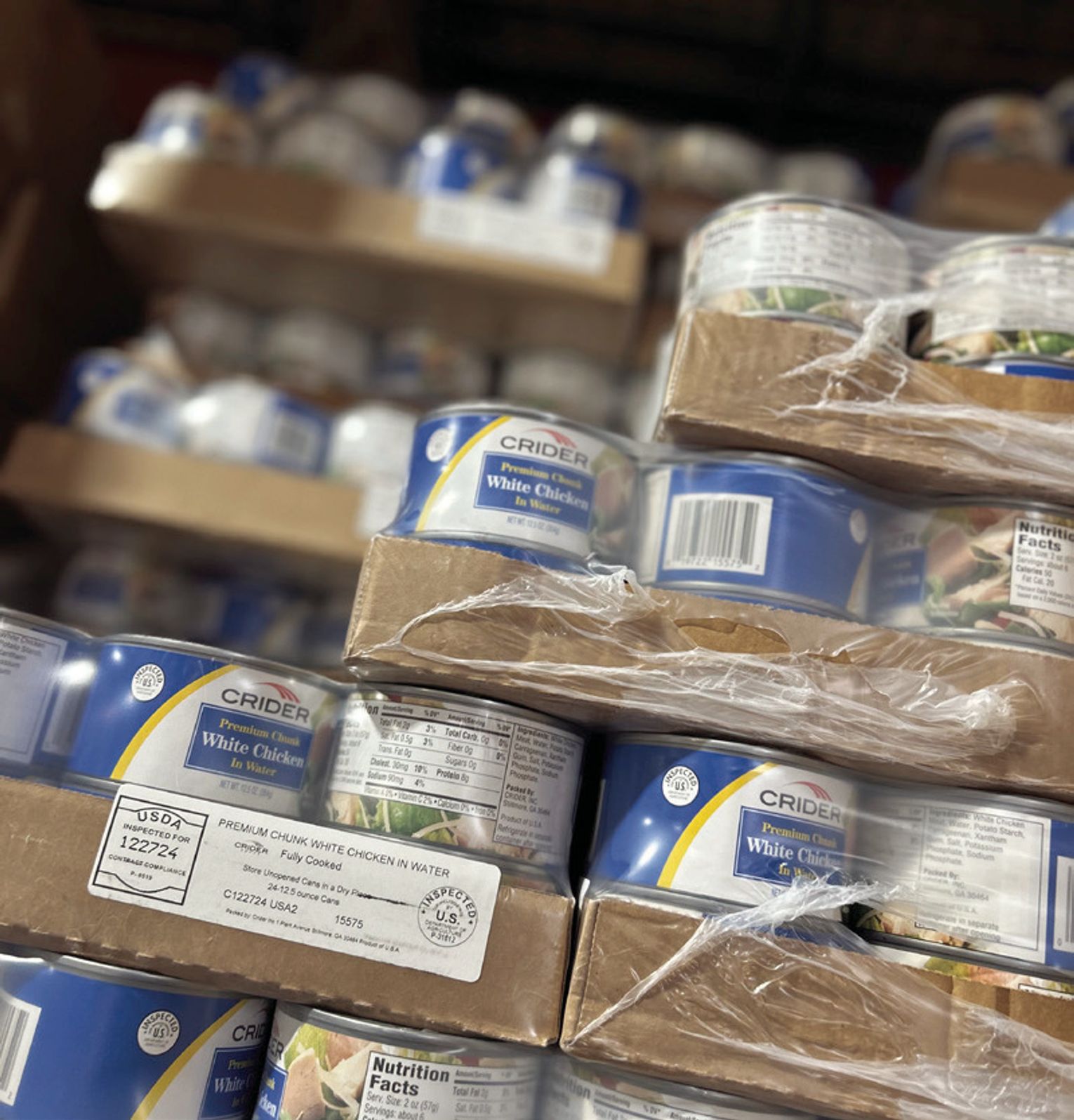
In addition to the items provided via federal grants through the River Bend Food Bank, the GFP is also deeply rooted in community efforts and continues to rely heavily on the generosity of local donors to meet the needs of their neighbors, Shiraki shared. Monetary donations make the greatest impact, which allows staff and volunteers to purchase bulk food at a discount through River Bend, as well as locally for items on sale. The pantry also receives some commodities through the United States Department of Agriculture (USDA). In addition, over 900 pounds of fresh fruit and vegetables were donated each month during the summer months from Giving Gardens, University of Illinois Master Gardeners, Deadhead Plant Ranch and community members.
At a recent 'Government Shutdown' rally in Chandler Park, hosted by the McDonough County Democratic Central Committee, a food drive was held in conjunction with the event, which resulted in collecting 165 pounds of food and $150 in donations, which will be provided to the Good Food Pantry, according to food drive organizer Caren Bordowitz.
Donated food items are accepted from 8 a.m.-4 p.m., Monday-Friday, at the WIRC office. Shelf-stable/ nonperishable food, such as canned proteins (think tuna, salmon, beans); pasta and sauces; condiments and basic spices, are always in demand.
If someone wishes to make a financial donation, they can go to wirpc.org/donate to make a donation online or by mailing/dropping off a check or cash at WIRC, Attn: Good Food Pantry, 133 West Jackson Street, Macomb, IL 61455. Individuals interested in mission on social media or spreading the word to someone in need.
'Individuals interested in helping in any way can contact me at (309) 313-2048 or at [email protected],' Shiraki said. 'Visit wirpc.org or find us on social media to learn more about our impact or to make an online donation.
Together, we can ensure no one in our community goes hungry, regardless of what challenges come our way.'
Additional Resources
The Macomb Salvation Army provides monthly food boxes, as well as a free food line every Monday, Wednesday and Friday at 10 a.m. their 505 N. Randolph St. location.
According to Salvation Army Capt. Ron Felt, the Macomb church is doing all that it can to keep up with the demands already being placed on the organization's pantry.
The Crossing Food Pantry, 1600 W. Jackson St., 5-6 p.m., Thursdays. There are no set criteria to use The Crossing's food pantry, which is designed as a drive-/walk-up pantry. Note: During the week of Thanksgiving, the pantry will be open Wednesday, Nov. 26. According to Kennedy Greenlief, The Crossing Food Pantry serves around 35-40 families each week.
First Christian Church Emergency Cupboard, corner of West Jackson and McArthur Streets in Macomb, is available for anyone who is in need of a nonperishable food item any time of day or night. Individuals can simply help themselves, noted Jan Rockwell, who helps organize the church's emergency cupboard. Donations of non-perishable items are welcome.
A temporary food pantry has been established at Colchester City Hall, 500 E. Roberts St., for residents of the West Prairie School District who are losing SNAP benefits.
Tentative hours are 4-6 p.m., Thursday and 11 a.m.-1 p.m., Saturday. Donations may be dropped off at City Hall during regular office hours and Colchester Library during regular business hours. For more information, call (309) 333-7088 or (309) 221-8886.
The Bushnell Area Ministerial Association (BAMA) Food Pantry, 293 Cole St., is available the first and third Tuesday, from 5:30-6:30 p.m., and Saturday, from 9-10 a.m., each month. Residents must live within the BPC School District. For more information, call (309) 883-3018.
Mobile Food Pantry/River Bend Food Bank, various dates and McDonough County locations. A mobile food pantry will be held beginning at 9:30 a.m. (registration), with distribution starting at 10 a.m., Friday, Nov. 7 at Western Hall on the WIU-Macomb campus. For more information, call (309) 837-3357.
Information, including dates of upcoming mobile pantries, is posted on the Samaritan Well Facebook page (facebook.com/samaritanwellincmacomb).
The Industry United Methodist Church operates a food pantry from 5-6:30 p.m. on the third and fourth Mondays of the month, while deliveries are made on the first Sunday of the month. To sign up for both distributions, call (309) 221-8223.
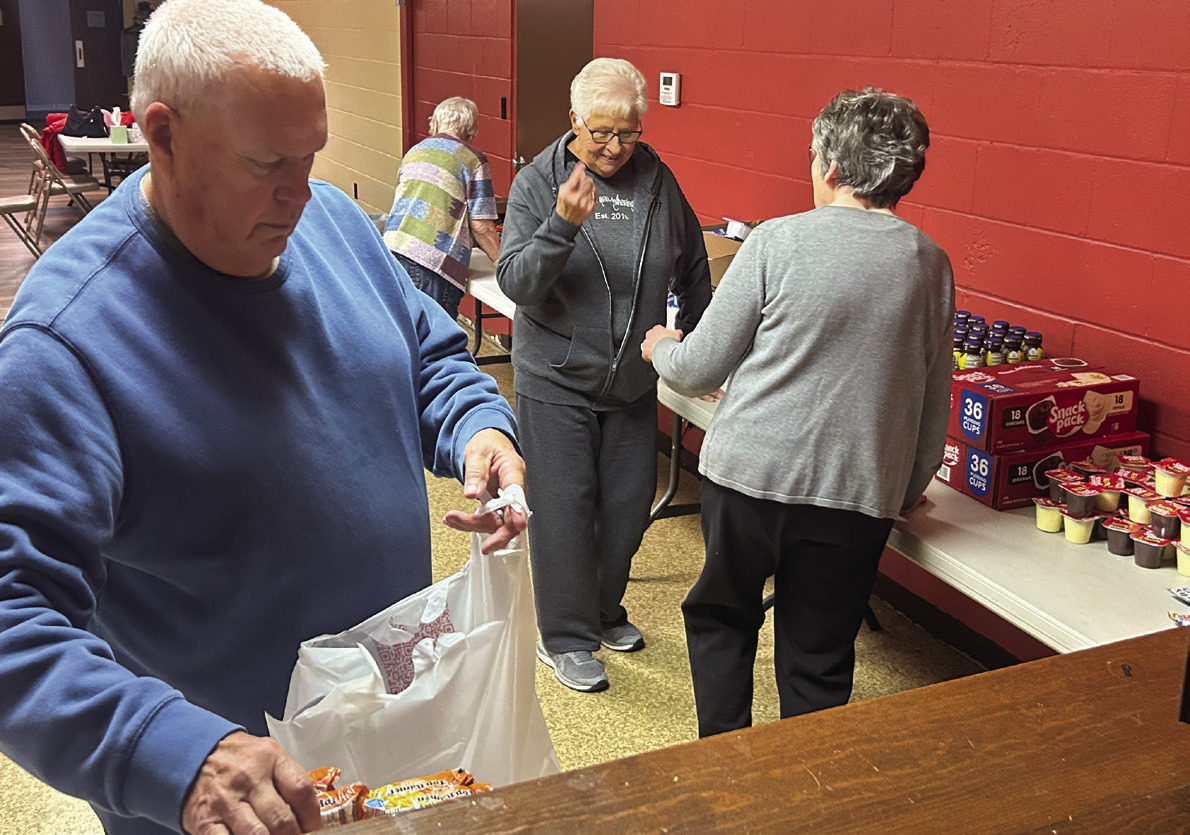
To help combat the growing need for a steady and balanced diet outside of school hours, The Colchester Area Gathering Place, a 501(c)(3) nonprofit, has provided bags filled with food to schoolchildren in Colchester since 2016. By working with West Prairie South Elementary School and the Junior-Senior High School, letters are sent home for parents, who can then request the weekend lunches for their student(s). Presently, the group sends 76 bags home every week, at a cost of nearly $14,000-plus each school year to fund the program. Individuals who would like to volunteer or donate to The Colchester Area Gathering Place can contact Janet Dixon at (309) 333-8771. Individuals who are aware of a child (or children) who would benefit from the program can contact the Colchester School District or Dixon at the number above.
Monetary donations can also be sent to The Colchester Area Gathering Place, 711 Macomb St., Colchester, IL 62326.
While the growing season has come to a close, in the spring and summer, Giving Gardens (GG) of Macomb provides numerous free public gardens, which are available and open to anyone, that provide fresh produce, herbs and more: Wesley Foundation Garden, 1325 W University Dr.; Bushnell Garden, 181 E Hail St.; Colchester Garden, W. Market St.; Project Insight Garden, 330 N. McArthur St.; Unitarian Universalist Garden, 300 Wigwam Hollow Rd.; Eisenhower Tower Garden, 322 W. Piper St.; Lincoln School Garden, 315 N. Bonham St.; Mt. Calvary Garden, 1500 E. Pierce St., and First Presbyterian Garden, 400 E. Carroll St. According to GG Director John Curtis, he plans on establishing even more community gardens in 2026.
WIU Food Pantry, Horrabin Hall 10. Note: Open to WIU students, faculty and staff only.
Due to rising costs and needs, one longtime McDonough County staple, Loaves & Fishes of Macomb, was forced to close its doors.
September 2024, Loaves & Fishes of Macomb announced it was temporarily closing because of lack of funds. The charitable organization, which provided monthly grocery vouchers, served on average of 435 families monthly and was spending over $15,000/month. Since the start of 2025, more than 3,905 households were served and close to $123,000 in food vouchers were distributed by Loaves & Fishes of Macomb.