On Monday, October 27 at Spoon River College Auditorium on the Macomb Campus, speaker Rick Klinedinst of Canton spoke of a local unsolved mystery, to a riveted overflowing crowd.
The topic of Mr. Klinedinst’s lecture was that of the 1953 disappearance of Fay Rawley, a Fulton County man who drove to Macomb one evening to see a lady friend, left her place around 7:50pm, drove east down Jackson Street and well into the history books, fore he was never seen again. Except that in reality, someone did see him later that night and put an end to him, or so we think.
This writer heard of Fay Rawley at a young age. Born in 1956, I was old enough to read by 1960 or 1961. I had overheard adults talking about a man in Fulton County that had just plain vanished and their theories.
I was playing one day with my brothers in our yard when we lived on Seven Hills Road in Fulton County. I noticed a faded blue, dilapidated station wagon had pulled into our driveway and was slowly creeping up the gravel road towards our house.
Being an early reader, and quite a good reader, my eyes were drawn to the stenciled letters on the back left long window.
Much to my horror, the letters read R-A-W-L-E-I-G-H. I knew quite well who “Rawley” was. I tore for the house to tell my mom that the “Rawley” man was not only alive and well, but that he had surfaced and chosen our house to come to!
My mother assured me that this was a different “Rawley” man, this Rawleigh man only wanted to sell us salves, ointments, liniments- those types of things. That was my introduction to Fay Rawley, around age 7.
Mr. Klinedinst took a hard survey of “Who has never heard of Fay Rawley?” One woman raised her hand, only to explain then that she was not from this area. So out of a room of 50-60 people-every single person had knowledge of, and no doubt curiosity about, the disappearance of Fulton County farmer Fay Rawley. It was obvious that many of the people had driven from out of town to attend Rick Klinedinst’s talk-one can surmise that many of those in attendance were from Fulton County.
Before I delve into the story of Fay Rawley, I must stress there is more than ample information available on the internet about this story. It has been written about over the years many, many times. Authors like Charlie Parkinson and Phil Luciano come to mind, the latter having done a story about Fay Rawley in the Peoria Journal Star.
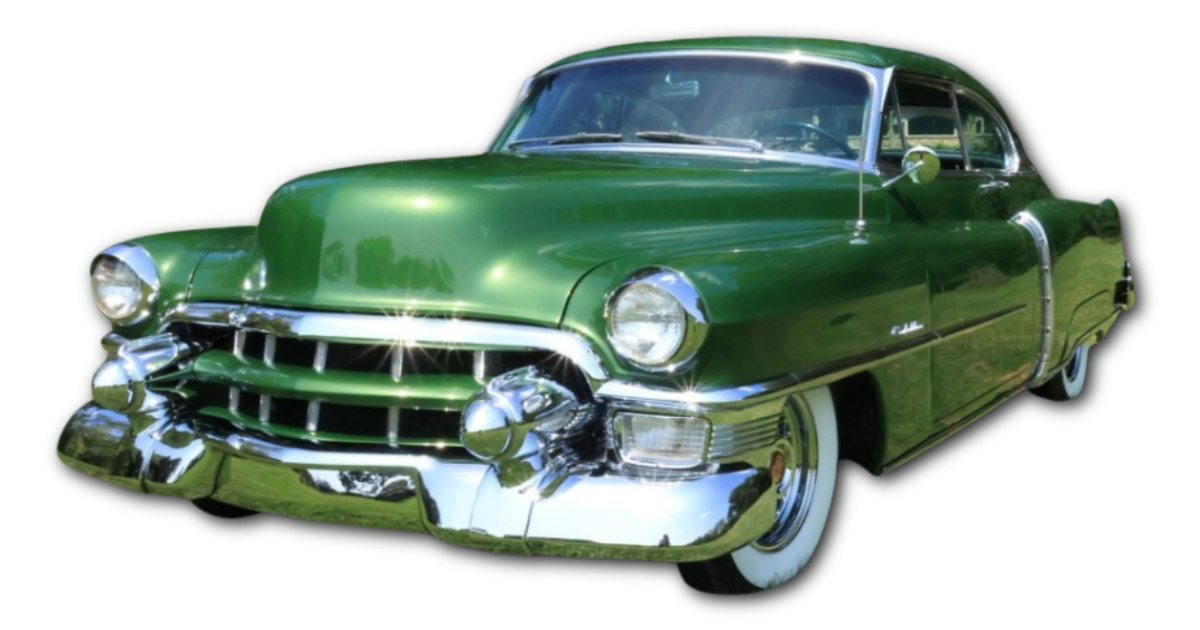
While much has been written about the vanishing of Mr. Rawley, the articles all end the same. No one knows. No one knows exactly who ended his life and erased all trace of him and his new 1953 emerald green Cadillac from the face of the earth.
So who was Fay Rawley?
Fay Rawley was born Jessie Fay Rawley on October 30, 1898 in Summum, Illinois. For those who don’t know, Summum is an unincorporated community in Fulton County. Summum is located adjacent to US Route 24 northeast of Astoria, in Woodland Township.
Summum’s name came from the type of coal found there (cyclothem), which extends over much of Western Illinois but is typically only a few inches thick.
One place the Summum coal reached minimum thickness was just north of Summum itself, where a strip mine was operated in the mid-20th century, from 1948-1955 by Key Coal Company and for some time after by Peabody Coal Company. The strip mine was later reclaimed.
Summum’s other claim to fame was Smiley Burnette, who was born there in 1911. Lester Alvin Burnette was an American country music performer and a comedic actor in western films and on the radio and TV, playing sidekick to Gene Autry, Roy Rogers and other B-movie cowboys. He had a regular role on CBS-TV’s Petticoat Junction in the 1960’s.
But other than the Peabody Coal mine and Smiley Burnette, the village of Summum was pretty calm. That is, until Fay Rawley disappeared.
Fay Rawley became, over the years, a prominent farmer, former bank president (Astoria Bank) and a township supervisor. Figures vary but at the time of his disappearance his estate was estimated to have been at least worth $300,000. In today’s figures he would be worth anywhere from five to eight million dollars, with farmland exploding in monetary value.
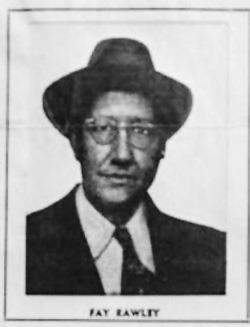
Fay Rawley, as legend goes, was somewhat of a showboat. Not an overly handsome fellow-5’8”, 175 pounds, balding, bad eyesight, dentures and a slight posture stoop-Rawley made up for these deficiencies with his money, charisma and taste for fine cars.
Rawley was known to be a kind and generous man, who even after his stint as a bank president, continued to make off-the-book loans to individuals down on their luck.
Rawley was also known for carrying large sums of cash, rolls of up to $65,000 at one time (nearly $600,000 today). He enjoyed a colorful social life, was somewhat of a restless individual who would sometimes drive his new 1953 green Cadillac down to the Key Coal Company just to visit with the miners working the late night shift.
Rawley was married to Hazel Freeman and they had two boys-John William Rawley who died very young, and Rovert D. Rawley who was killed in a car wreck in 1961. At the time of Rawley’s disappearance he and his wife were divorcing and in fact the divorce became final, after many years of negotiations, the day after Rawley vanished into thin air.
It appears that not everyone liked Fay Rawley. Rawley seemed to have a love for women, which may or may not have lead to a couple of incidents just weeks before his disappearance. In one incident, someone threw acid on his car and there had been a couple of attempted hit and run incidents-suspects were never identified.
Sources say the same thing-he supposedly had a girlfriend in Macomb that he visited the night before he vanished.
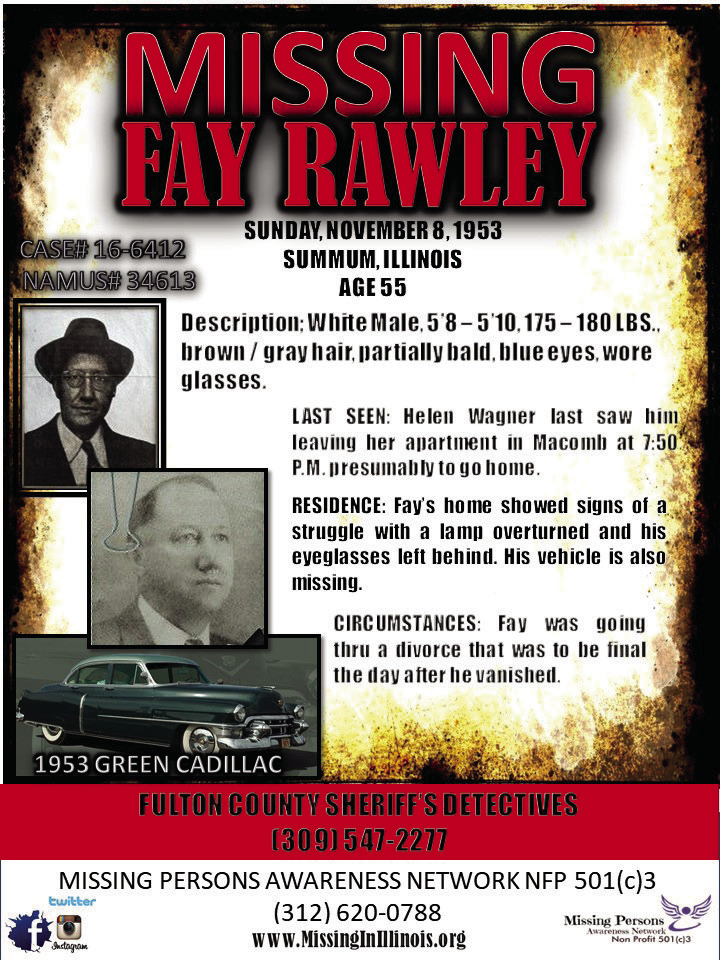
That girlfriend, Helen Wagner, said she last saw Fay when he left her apartment in Macomb around 7:50pm on November 8, 1953, in his new green Cadillac.
During that visit, Helen had delivered to Rawley some news that possibly could have devastated him. She told him that she had decided to reconcile with her husband, and that she wouldn’t be seeing Rawley anymore. Witnesses claim to have seen Rawley’s car at the Key Coal Company later that night, but since it was a common occurrence, no one really paid attention.
It is not clear when the family realized that Fay was missing. But when they did, a visit to his house on the highway showed signs of a struggle. In the house Rawley’s eyeglasses lay on the floor near his chairglasses he needed to see. His pants lay on the floor near the chair as well. A lamp was, in some reports, overturned and in other accounts it just says the lamp had been left turned on. It was, in fact, the employees of the coal mine that noticed that his outside porch light had been on day and night, which was out of character.
When it was realized that Fay Rawley was, indeed, missing, an attorney froze all of Rawley’s accounts. Rawley’s son and family publicized that Fay was missing, offered rewards, and advertised the fact all over west-central Illinois and elsewhere-to no avail. Fay Rawley had vanished.
Sheriff Virgil Ball, elected in 1954, was determined to solve the crime. An ex-marine, former miner, police officer, and county treasurer, spent many a sleepless night trying to figure out who killed Fay Rawley. Because Ball was convinced that Fay Rawley had been abducted from his home, murdered somewhere, put into the trunk of his car and buried in Key Coal mine.
Ball received tips that gave him a pretty good idea as to who may have committed this brazen crime. But he had no proof. He had no body, no car, for that matter, what if Fay Rawley, under pressure from his divorce and his mistress dumping him, decided just to vanish with the roll of cash he had in his pocket. Highly unlikely and out of character-but the question lingered-could Fay Rawly have staged his own death?
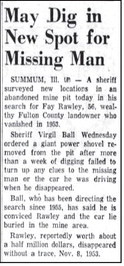
Sheriff Ball was convinced that Fay Rawley was buried at the bottom of the Key Coal mine, and with that in mind there were two “digs” that took place.
The first dig was in 1957. This dig became a spectacle. Thousands of spectators came from all over the country to watch officials dig a 150 foot opening. The dig was plagued with rain and collapsing sidewalls, making the operation extremely dangerous.
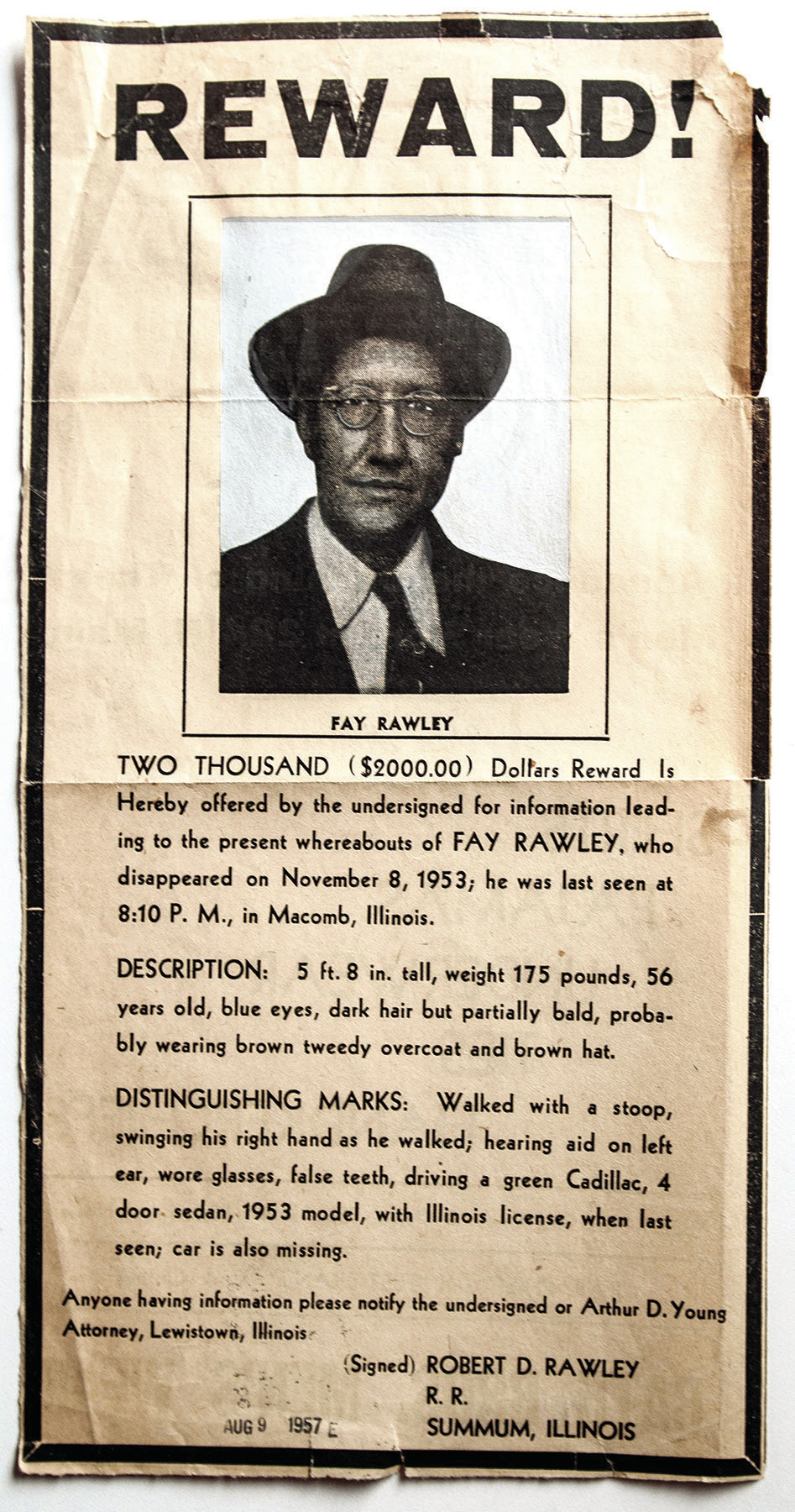
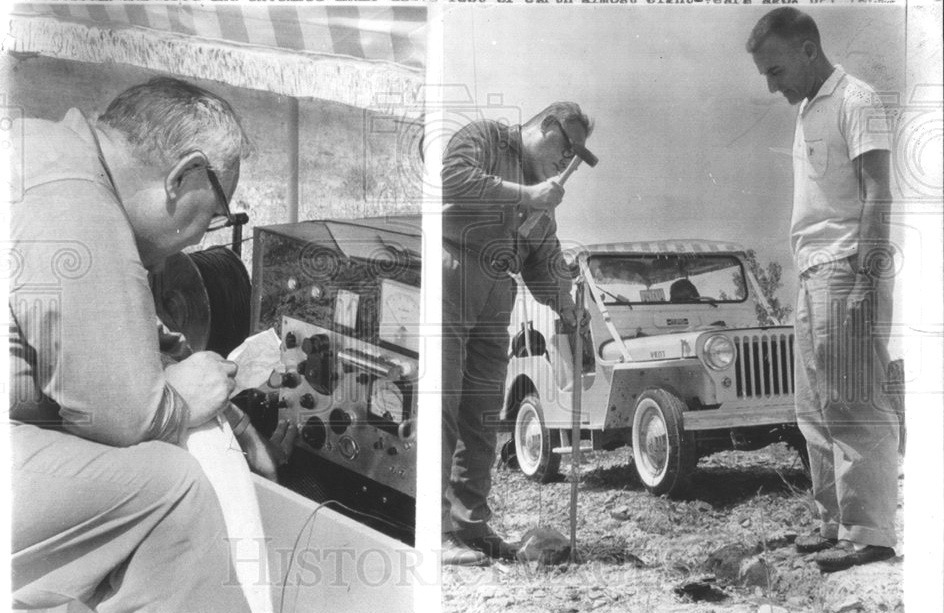
The “dig” became a carnival, with even the national media taking part. College students, one of whom would later become a prominent Fulton County Judge, set up a sandwich booth that earned thousands of dollars. National magazines such as Life, Look, and the Saturday Evening Post sent reporters. A local teen wrote “The Ballad of Fay Rawley” and sang it at the scene.
Witchers and Diviners were even allowed at the dig site. After seven days, Ball and the Peabody Coal Company had enough-all that had been found were some chips of green paint, which GMC later verified as possibly being from the 1953 green Cadillac.
The problem with digging was that it was just too expensive, it interrupted the work of the mine and it was very dangerous. Peabody Coal Company was extremely worried about liability. And what if they did find Fay Rawley? How would they prove who murdered him and buried him in the bottom of the coal mine?
A second dig in 1962, financed by Sheriff Ball, took place in a different section, and lasted three weeks. A drill did hit a metal object, but by that time Peabody Coal said enough is enoughthey ended the search due to potential risks and legal responsibilities.
One can only wonder if they were oh so close to solving the disappearance of Jessie Fay Rawley.
The folklore of Fay Rawley continues today and remains one of Illinois’ most enduring cold cases.
Rick Klinedinst’s class finished by discussing all of the theories and questions participants had. Below are some of them.
1. Could Fay Rawley have driven into the mine itself? Distraught over divorce and break-up with his girlfriend?
2. Could the Key Coal Mine be the wrong place to look? The Illinois River lies just 10 miles away from Summum.
3. Could Fay Rawley have flirted with the “wrong” coal miner’s wife? Could his burial in the coal mine have been a joint endeavor of several coal miners with access to the shovels? And no one talked?
4. Was Fay Rawley somehow involved with the mafia?
5. Could Fay Rawley, an intelligent man, have staged his own disappearance and left to start a new life, somewhere such as South America?
6. Could Fay be buried somewhere around Summum, in plain sight so to speak, and his car taken to St. Louis to be “chopped up”?
All valid, interesting and chilling theories. At the end of the day-where is Fay Rawley?