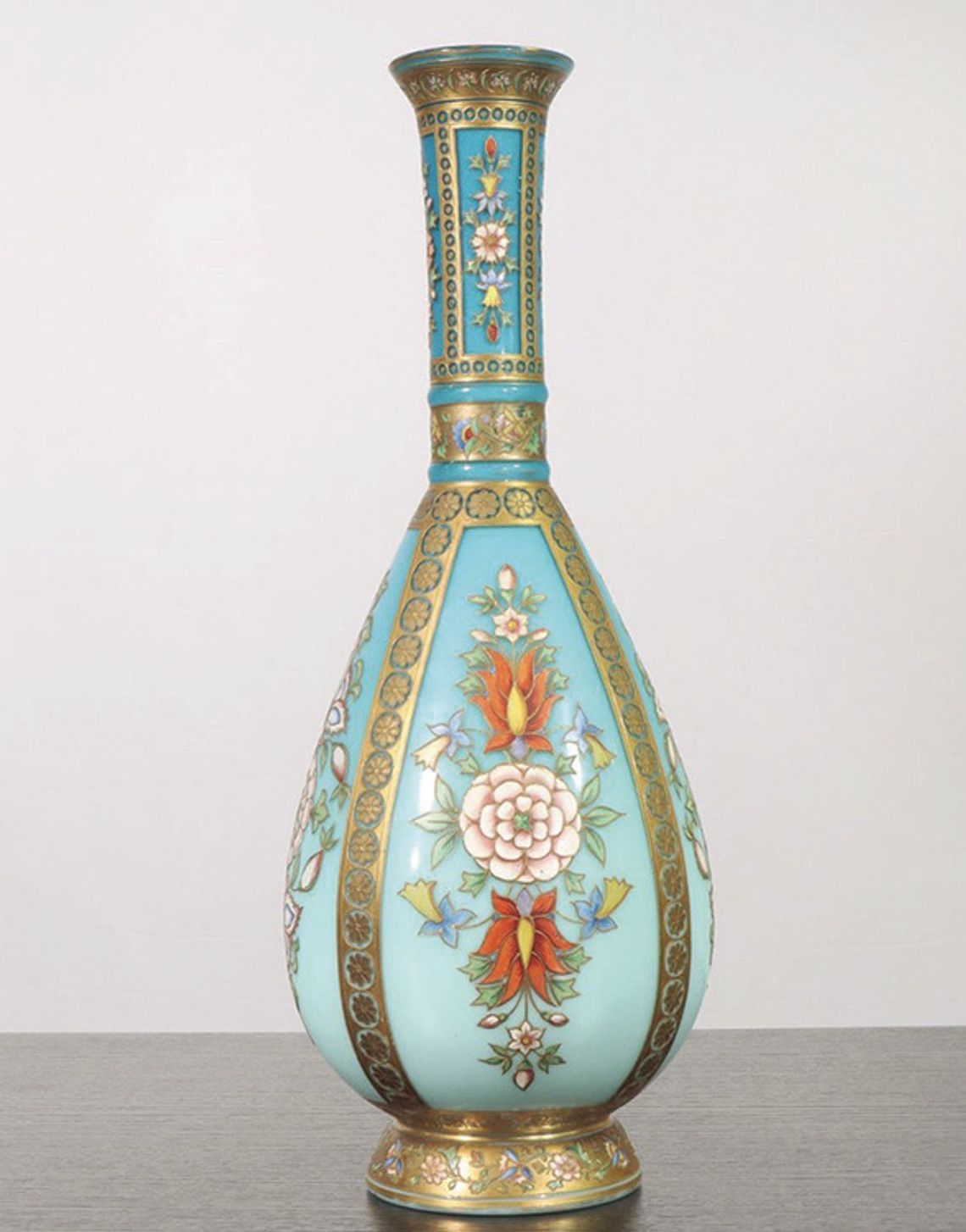
Crystal, amethyst, amber, emerald, ruby: Decorative glass is often made to capture the vivid color and intense sparkle of gemstones. It isn’t limited to transparent stones, either. A type of opaque matte glass called opal glass or opaline became popular in Europe in the mid-19th century.
Inspired by Venetian lattimo (milk glass) made since the 1500s and English Bristol glass of the 1700s, opal glass is a semi-opaque glass, usually white or a light color, with a slight iridescent sheen. Decorators found that it made a beautiful background for gilt or enamel designs, like this blue opaline vase that sold at Alderfer Auction for $307.
The auction described the vase as “French style,” and opaline was at its most popular in France in the mid-to late-1800s. About the same time, the opal gemstone experienced a resurgence in popularity. Believed to have magic powers and healing properties in ancient and medieval times, it was considered unlucky in the 1800s.
One of the superstitions surrounding it is that, as the October birthstone, it brought bad luck to any wearer born in any other month. However, Queen Victoria, who was born in May, defied superstitions with her love of opals. She wore opal jewelry, gave it as gifts and promoted the newly established Australian opal mines. By the art nouveau period of the late 1800s, opals were a favorite stone for jewelry. Perhaps this influenced the popularity of opal glass.
Q: I am wondering how much my 1932 Luke Appling jersey might be worth. The interesting thing about this jersey is that it is the only year that Mr. Appling wore the number 8 over his historic career.